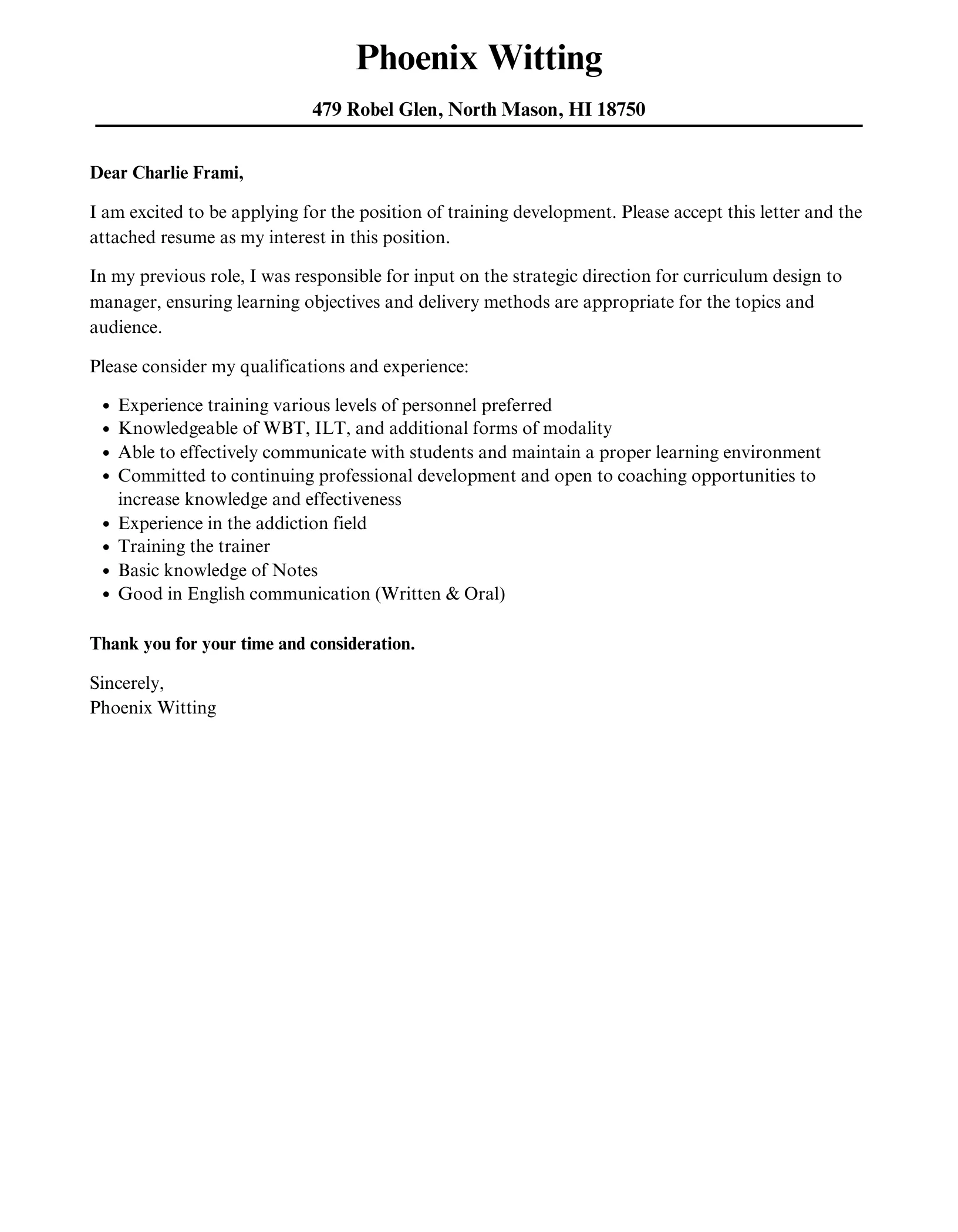
Understanding the Training Position Cover Letter
A training position cover letter is more than just a formality it is your first real introduction to a potential employer. It serves as a critical tool for showcasing your qualifications, expressing your enthusiasm, and demonstrating your suitability for the training role. This document is your chance to make a strong first impression and set yourself apart from other applicants. A well-crafted cover letter provides context to your resume, allowing you to highlight specific skills and experiences that directly align with the job requirements. It’s an opportunity to explain why you are the perfect fit for the position, going beyond simply listing your qualifications. This guide will provide you with essential tips and techniques to create a compelling cover letter that increases your chances of landing your dream training role.
Why a Cover Letter is Crucial
In the competitive job market, a cover letter is your personal marketing tool. It allows you to tell your story, adding depth and personality that a resume alone cannot convey. The cover letter gives you the space to elaborate on your experiences, connect your skills with the company’s needs, and show that you have taken the time to understand the role and the organization. A great cover letter is a game-changer; it shows that you are a serious candidate who has put thought into the application. It helps humanize your application by providing insight into your motivations and aspirations. It demonstrates your communication skills and professionalism, which are highly valued in any training position. A well-written cover letter can significantly enhance your chances of getting an interview and securing the job.
Key Components of a Training Position Cover Letter

A training position cover letter comprises several essential components that work together to present a complete picture of your suitability for the role. These components, when effectively combined, create a document that grabs the attention of the hiring manager and sets you apart from other candidates. Structuring your letter logically and thoughtfully is vital; each part of your cover letter must serve a purpose and must contribute to the overall effectiveness of your application. Pay close attention to the flow of your document, from the header to the closing, and remember that consistency and clarity are your best friends. Here’s a detailed breakdown of each component to guide you in creating a compelling cover letter.
Your Header
The header should include your contact information (Name, address, phone number, and email address) and should be placed at the top of your letter. This ensures the hiring manager can easily contact you. Make sure your contact information is current and professional. A clean and well-formatted header makes a good first impression and shows attention to detail. Ensure your email address is professional.
Your Contact Information
Your contact details should be clearly displayed at the top, making it easy for the employer to reach you. Include your full name, professional-looking email address, phone number, and mailing address. This information allows the hiring manager to quickly access your details if they decide to pursue your application further. Correct and up-to-date contact information is crucial for a smooth recruitment process.
Date and Recipient Information

Below your header, include the date of the cover letter. Then, include the hiring manager’s name and title (if known) and the company’s name and address. This demonstrates that you have taken the time to personalize your application. If you don’t know the hiring manager’s name, use a professional salutation, such as ‘Dear Hiring Manager’. Accuracy in these details is essential to make a good impression and show your attention to detail.
Professional Salutation
Begin your cover letter with a professional salutation, such as “Dear Mr./Ms./Mx. [Last Name]” If you don’t know the hiring manager’s name, ‘Dear Hiring Manager’ is acceptable. Avoid generic greetings like ‘To Whom It May Concern’. A personalized salutation shows that you have researched the company and the role, which can make a positive impression. Ensure the correct spelling of the name.
The Opening Paragraph
Your opening paragraph is your first chance to grab the reader’s attention. Clearly state the training position you are applying for and how you found out about the opportunity. Briefly mention your key skills and qualifications that align with the job description. The opening should be concise, enthusiastic, and make the reader want to continue reading. Make sure it is tailored to the specific job and company you’re applying to, demonstrating that you have a clear interest in the role.
Express Your Interest

Express your genuine interest in the training position and the company. Explain why you are excited about the opportunity and what specifically attracts you to the role or organization. Demonstrating a strong interest from the start sets a positive tone and shows the hiring manager your enthusiasm. Expressing sincere interest makes your application more memorable.
Highlight Your Relevant Skills and Experience
In this section, highlight your relevant skills and experience that align with the job description. Focus on the key requirements outlined in the job posting and provide specific examples to showcase your abilities. Quantify your achievements whenever possible to demonstrate the impact of your work. Tailor your skills and experience to match what the employer is looking for, making sure you directly address their needs and expectations.
Tailoring Your Skills
Tailor your skills to match the job description. Analyze the requirements and identify the skills and experiences that the employer is looking for. Use keywords from the job description to highlight your relevant abilities. This shows the hiring manager that you understand the role and the company’s needs. Customization is crucial for demonstrating your suitability for the position.
Quantify Your Achievements

When describing your accomplishments, use quantifiable results. Instead of just saying ‘Improved training programs’, state ‘Improved training program effectiveness by 20%’. Numbers and statistics provide concrete evidence of your impact. This is more impactful than vague statements and helps the employer understand the value you can bring to the role. Quantifiable results demonstrate how you can contribute to the success of their training initiatives.
Demonstrate Your Passion for Training
Show your passion for training and development. Share your enthusiasm for helping others learn and grow. Mention any training methodologies or tools you are familiar with, and explain why you enjoy the training field. This passion is crucial for a training position as it will drive your performance and make a lasting impact. This will help you stand out as a candidate and enhance your appeal.
The Body Paragraphs
The body paragraphs are where you provide detailed examples of your skills and experience. Structure your paragraphs logically, using clear and concise language. Focus on what you’ve accomplished, the tools you’ve used, and the impact you’ve made. Show, don’t just tell, by providing specific instances where you have excelled in a training or related role. Use the STAR method (Situation, Task, Action, Result) to illustrate your achievements effectively. This structure helps to showcase your skills in a relatable and impactful manner.
Focus on Transferable Skills

Highlight transferable skills such as communication, leadership, problem-solving, and adaptability. These skills are relevant to any training position, regardless of your prior experience. Provide specific examples of how you’ve utilized these skills in various situations. Highlighting such skills demonstrates your ability to quickly learn and adapt to different training environments. Focus on the key competencies that make you a well-rounded and effective candidate.
Showcase Your Research on the Company
Demonstrate that you’ve researched the company. Mention specific aspects of the company that interest you, such as their mission, values, or training programs. This shows that you are genuinely interested in the company and not just applying for any job. Tailor your letter to match the company’s culture and values to create a connection. Showcasing your research sets you apart and demonstrates that you are well-prepared for the role.
Address Any Potential Weaknesses
Address any potential weaknesses or gaps in your experience directly, but positively. Frame them as learning opportunities or areas of growth. Demonstrate how you have worked to improve and overcome these weaknesses. This shows that you are self-aware and committed to continuous improvement. It’s important to acknowledge any potential challenges, but always emphasize your willingness to learn and develop.
The Closing Paragraph

The closing paragraph should reiterate your interest in the training position. Summarize why you are a good fit for the role and the company. Express your enthusiasm for the opportunity and include a call to action, such as inviting the hiring manager to contact you for an interview. Ensure your closing is professional, enthusiastic, and leaves a positive final impression.
Restate Your Interest
Reiterate your strong interest in the training position and the company. Briefly recap why you believe you are a good fit for the role based on your skills and experience. Summarize your key qualifications and express confidence in your ability to contribute to the company’s training initiatives. Make sure you leave a lasting positive impression by restating your genuine enthusiasm.
Call to Action
Include a call to action to encourage the hiring manager to contact you. Invite them to schedule an interview or request further information. Provide your contact information and express your availability to discuss your qualifications further. Making it easy for the hiring manager to contact you increases your chances of moving forward in the hiring process.
Formal Closing

End your cover letter with a professional closing such as ‘Sincerely’ or ‘Best regards.’ Follow this with your full name. The formal closing is essential for professionalism and showing respect to the recipient. Using an appropriate closing demonstrates your attention to detail and sets a professional tone. Ensure your closing is consistent with the overall professional tone of your letter.
Proofreading and Editing
Proofreading and editing your cover letter is crucial. Check for grammatical errors, spelling mistakes, and formatting inconsistencies. A polished cover letter shows attention to detail and professionalism. Ensure you proofread the entire document and look for any errors that could detract from your application. A flawless cover letter shows that you are serious about the opportunity and can communicate effectively.
Review for Grammar and Spelling
Carefully review your cover letter for any grammar and spelling errors. Use a grammar and spell-checker tool, and consider asking someone else to review your letter. Errors in grammar and spelling can make a negative impression and undermine your credibility. Ensuring your letter is free of errors is a fundamental step. Careful proofreading reflects your professionalism and shows your attention to detail.
Formatting and Design
Use a clear, easy-to-read font like Arial or Times New Roman and ensure proper spacing and margins. Formatting makes your cover letter visually appealing and easy to read. A well-formatted document is more professional and user-friendly. Consistent formatting throughout the document shows professionalism. Proper formatting also helps emphasize key information and make your letter stand out.
Tips for a Successful Cover Letter
To write a successful training position cover letter, consider following these tips. A well-prepared cover letter enhances your application and increases your chances of securing an interview. Make sure you are thoroughly prepared and can demonstrate your qualifications effectively to the hiring manager. Following these tips will significantly improve the quality and effectiveness of your job application.
Research the Company
Research the company thoroughly before writing your cover letter. Understand their mission, values, and training programs. Mention specific aspects of the company that resonate with you to demonstrate your interest and show your preparation. Showing your research illustrates that you are interested and invested in the role. Tailor your letter to align with the company’s culture.
Customize Your Letter
Customize your cover letter for each training position you apply for. Avoid using a generic template. Tailor your letter to the specific job requirements and the company’s needs. Customization shows that you have taken the time to understand the role. Ensure the content directly addresses the responsibilities and requirements outlined in the job description.
Use Action Verbs
Use action verbs to start your sentences and describe your accomplishments. Verbs like ‘managed,’ ‘developed,’ ‘implemented,’ and ’trained’ make your descriptions more dynamic and impactful. Action verbs show that you are proactive and results-oriented. Using strong action verbs helps create a compelling and engaging narrative.
Keep it Concise
Keep your cover letter concise and to the point. Aim for one page in length. Highlight your most relevant skills and experience without being overly verbose. Concise communication is more effective and shows respect for the hiring manager’s time. Focus on conveying essential information clearly and efficiently.
Sample Cover Letter for a Training Position
Here is a sample cover letter for a training position to help you get started. This example provides a structure and content suggestions to guide your own writing. You can use this as a template, customizing it to fit your specific skills and the job requirements. Ensure that your letter reflects your unique experience and enthusiasm for the role and the company.