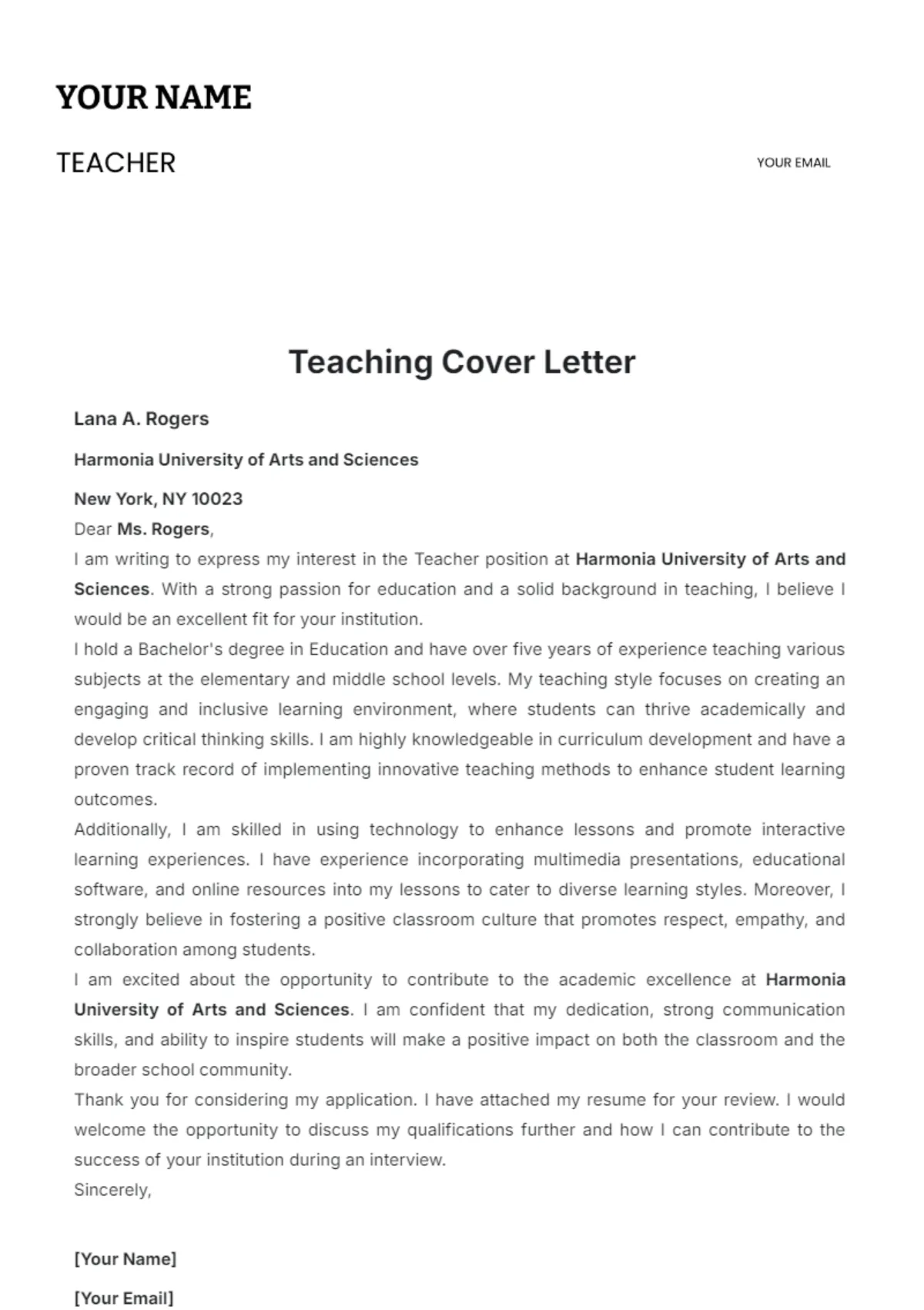
Understanding the Importance of a Teaching Cover Letter
In the competitive world of education, a well-crafted cover letter is your key to unlocking the door to your dream teaching position. Far more than just a formality, it’s a powerful tool that allows you to showcase your unique qualifications, passion, and personality, setting you apart from other applicants. It provides you with the opportunity to tell your story, to connect with the hiring committee on a personal level, and to demonstrate why you are the ideal candidate for the role. A cover letter is your first impression – make it count.
Why a Cover Letter Matters for Teaching Jobs
While your resume provides a comprehensive overview of your experience and qualifications, the cover letter offers the space to elaborate on these points and connect them directly to the specific requirements of the job. It lets you highlight your enthusiasm for the position and the school, showing that you’ve taken the time to understand their needs and that you’re genuinely interested in joining their team. It’s your chance to go beyond the bullet points and create a narrative that demonstrates your suitability and commitment.
The Role of a Cover Letter in the Application Process

The cover letter serves as your introduction, immediately grabbing the reader’s attention and creating a positive impression. It can significantly influence whether your application moves forward to the next stage. In many cases, it’s the cover letter that determines if your resume even gets a second look. A strong cover letter gives you the edge, making you a memorable candidate and increasing your chances of securing an interview. Think of it as your personal sales pitch to the hiring manager.
Key Components of a Powerful Teaching Cover Letter
Contact Information and Salutation
Start with your full contact information, including your name, address, phone number, and email address. Then, address the hiring manager by name whenever possible. If you can’t find a specific name, use a professional salutation like “Dear Hiring Committee.” Avoid generic greetings like “To Whom It May Concern,” which can make your letter feel impersonal and less engaging.
Crafting a Compelling Opening Paragraph

Your opening paragraph is your first and best opportunity to capture the reader’s attention. Briefly state the position you are applying for and where you saw the advertisement. Then, immediately highlight your most impressive and relevant qualification, or share your passion for teaching. The goal is to create immediate interest and entice the reader to continue reading. Keep it concise and enthusiastic.
Highlighting Relevant Skills and Experience
This section is where you delve into your skills and experience, demonstrating how they align with the job requirements. Focus on the most relevant aspects of your background, using specific examples to showcase your abilities. Use action verbs to describe your achievements and quantify your results whenever possible. Tailor this section to the specific needs outlined in the job description, ensuring that you’re directly addressing the school’s requirements.
Showcasing Your Passion for Teaching
A cover letter is a great place to express your passion for teaching. Share your enthusiasm for education and explain what motivates you to work with students. Mention your teaching philosophy, your approach to classroom management, and your commitment to creating a positive learning environment. Show that you are not just looking for a job, but that you are deeply invested in making a difference in the lives of your students. Showcasing your passion is critical for the hiring committee.
Quantifying Achievements and Impact

Instead of simply listing your duties, highlight your accomplishments with concrete data and metrics. Use numbers to demonstrate the impact of your work. For example, instead of saying “Improved student test scores,” say “Improved student test scores by 15% in one year.” This adds credibility to your claims and shows the hiring committee the value you can bring to their school. Providing this information makes it very easy to see the difference you made in the school.
Mentioning specific examples
Use specific examples of your accomplishments to further illustrate your points. Instead of saying “Implemented new teaching strategies,” describe the specific strategies you implemented and the results you achieved. For instance, “Implemented project-based learning, resulting in a 20% increase in student engagement and a 10% improvement in project grades.” The more specific you are, the more believable and impactful your accomplishments will be.
Tailoring Your Cover Letter to the School
Generic cover letters are easily identified and often discarded. You need to customize each cover letter for each school. Showing that you’ve taken the time to understand the school’s mission, values, and specific needs is critical to making your letter stand out. This demonstrates your genuine interest and commitment to the school community.
Researching the School’s Mission and Values

Before you start writing, thoroughly research the school. Visit their website, read their mission statement, and learn about their values and programs. Identify what makes the school unique and tailor your cover letter to reflect their specific needs and priorities. Show that you share their vision for education and that you are excited about the opportunity to contribute to their community. This will help you stand out from other candidates.
Personalizing Your Letter for Each Application
Avoid sending the same cover letter to every school. Customize your letter to reflect the specific requirements of the job and the unique qualities of the school. Show that you have carefully read the job description and understand what the school is looking for in a teacher. Mention any programs or initiatives that align with your experience and interests. This level of personalization demonstrates your dedication and increases your chances of getting an interview. This simple step will help make the most of the opportunity.
Using keywords from job descriptions
Carefully review the job description and identify key skills, qualifications, and keywords. Incorporate these keywords naturally into your cover letter. This helps the hiring manager quickly see that you meet the requirements and are a strong match for the position. Be careful not to overuse keywords, as this can make your letter sound unnatural. The goal is to demonstrate alignment and not keyword stuffing.
Writing a Strong Closing

Your closing paragraph is your final chance to make an impression. Reiterate your interest in the position and the school, and summarize your key qualifications. Ensure the closing is concise, enthusiastic, and action-oriented. Then, include a call to action, expressing your eagerness for an interview and providing your contact information. You want to leave the reader with a clear understanding of your interest and how to contact you.
Expressing Gratitude and Call to Action
Express your gratitude for the reader’s time and consideration. Then, include a clear call to action, such as “I am eager to learn more about this opportunity and discuss how my skills and experience can benefit your students.” End with a professional closing, such as “Sincerely” or “Best regards,” followed by your full name. Make it very easy for the hiring manager to know the next step and how to connect with you.
Proofreading and Formatting Your Cover Letter
Before submitting your cover letter, carefully proofread it for any errors in grammar, spelling, and punctuation. Errors can damage your credibility and make you appear unprofessional. Use a spell checker and grammar checker, but also read the letter aloud to catch any mistakes you might have missed. Use a professional and easy-to-read format, with clear headings and subheadings, and keep the letter concise and well-organized. Formatting and proofreading are critical components for getting the job.
Common Mistakes to Avoid in a Teaching Cover Letter

Ignoring the Job Description
Failing to address the specific requirements and qualifications outlined in the job description is a common mistake. Always tailor your cover letter to the job description, highlighting the skills and experience that directly align with the school’s needs. Ignoring the job description shows that you’re not genuinely interested in the position and are sending a generic letter.
Using Generic Language
Avoid using generic phrases and clichés. Instead, use specific examples and detailed descriptions to showcase your abilities and achievements. Generic language doesn’t distinguish you from other applicants and makes your letter feel impersonal. Be unique and let your personality shine through. Remember, your cover letter is a great place to demonstrate who you are as a professional.
Focusing Solely on Yourself

While you should highlight your skills and experience, avoid making your letter all about you. Focus on how your skills and experience can benefit the school and its students. Show that you understand the school’s mission and are committed to contributing to their community. Demonstrate how you can solve problems, help students learn, and make a difference. It’s best to show that you can solve the hiring manager’s issues.
Examples of Effective Teaching Cover Letters
Template for different scenarios
Different situations might require some slight modification. For example, a new teacher may want to emphasize their passion and enthusiasm for the job, while a teacher with more experience can focus on their past achievements. This template can be used to apply to many types of teaching positions. Modify the sections to fit the needs of the specific job.
Elementary school teacher cover letter
An elementary school teacher cover letter might highlight experience in early childhood education, classroom management, and creating a nurturing learning environment. It may showcase your ability to work with young children, foster a love of learning, and collaborate with parents. Ensure you emphasize skills that are important for younger students, such as patience and understanding. Make sure that you include the ability to work with parents as part of the community.
High school teacher cover letter
A high school teacher cover letter might emphasize your experience in teaching a specific subject, developing curriculum, and preparing students for college or careers. Show your ability to engage older students, implement innovative teaching methods, and manage a classroom with older students. You should highlight any experience with extracurricular activities and mentoring students. Make sure to emphasize your ability to work in high school environment with older students.