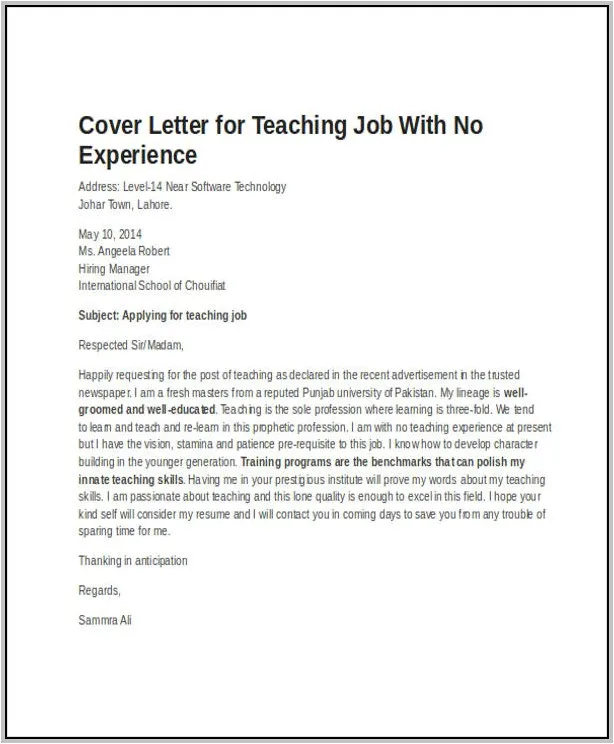
Understanding the Teaching Cover Letter
A teaching cover letter is more than just a formality; it’s your first opportunity to make a lasting impression on a potential employer. It’s a chance to introduce yourself, showcase your personality, and demonstrate why you’re the perfect fit for the role, even if you lack direct teaching experience. Think of it as a personalized advertisement that highlights your unique strengths and aspirations. It provides context to your resume, allowing you to elaborate on your skills and experiences in a way that a resume alone cannot. The cover letter offers a platform to connect with the hiring manager on a more personal level and to express your genuine interest in the school and its mission. The ability to write a good cover letter is a skill that will always serve you well.
Why a Cover Letter is Crucial for New Teachers
For aspiring teachers with no prior experience, a compelling cover letter is absolutely essential. It provides a crucial bridge that connects your potential to the job requirements. When you don’t have years of classroom experience, the cover letter becomes your primary vehicle for demonstrating your abilities, passion, and potential. It allows you to emphasize transferable skills gained from other experiences, such as volunteer work, internships, or other roles. This is also where you can highlight your enthusiasm for education, your understanding of child development, and your commitment to creating a positive learning environment. A well-crafted cover letter showcases your personality and makes you stand out from the crowd of other applicants.
Highlighting Transferable Skills

Transferable skills are the skills you’ve developed in one context that can be successfully applied to another. As a new teacher, you might not have direct classroom experience, but you likely possess a wealth of transferable skills that are highly valued in education. These skills form the foundation of a successful teaching career and should be prominently featured in your cover letter. Identifying and highlighting these skills is the key to demonstrating your potential to the hiring manager. Before you start writing, make a list of the skills you have and how they apply to the role you are seeking.
Identifying Skills from Other Experiences
Reflect on your past experiences, whether they are academic, professional, or volunteer. Think about the tasks you performed, the challenges you overcame, and the skills you used. For instance, if you worked as a tutor, you developed communication, patience, and the ability to explain complex concepts. If you were a team leader in a student organization, you honed leadership, organization, and conflict-resolution skills. Even seemingly unrelated experiences, like customer service or retail, can showcase your ability to communicate, solve problems, and work under pressure. The key is to identify the skills and then connect them to the requirements of the teaching position.
Examples of Transferable Skills
Here are some examples of transferable skills and how they relate to teaching
Communication This is vital for explaining concepts to students, collaborating with colleagues, and communicating with parents. Leadership A teacher often guides students in the classroom. Organization Planning lessons, managing classroom materials, and keeping track of student progress. Patience Working with students of all abilities requires patience and understanding. Problem-solving Addressing student behavior, adapting lessons, and finding creative solutions to classroom challenges. Adaptability Being flexible and adjusting to changing circumstances or student needs. Time management Managing your time effectively to complete tasks and meet deadlines.
Showcasing Passion and Enthusiasm

Passion and enthusiasm are infectious, and they are highly valued in the teaching profession. Your cover letter should convey your genuine excitement for teaching and your commitment to making a difference in the lives of students. Hiring managers want to see that you are truly dedicated to education and that you view teaching as more than just a job. Your cover letter is your opportunity to express this passion and to make yourself stand out from other candidates. If you are excited about teaching, then you should make that apparent to the person reading your cover letter.
Demonstrating Your Love for Teaching
You can demonstrate your love for teaching by discussing your motivations for entering the profession, the aspects of teaching that excite you the most, and your long-term goals in education. Share a personal anecdote that reflects your passion for learning, or describe a time when you inspired someone. Show them that you view teaching as a calling. Explain why you were drawn to this specific school or district and what you admire about its approach to education. Highlighting your specific interests in certain subjects or age groups can also demonstrate your dedication. The more you express your passion, the more likely they are to envision you in their school.
How to Express Your Enthusiasm Effectively
Use vivid language and specific examples to illustrate your enthusiasm. Instead of simply stating you are passionate about teaching, describe what specifically you love about it – for example, the moment a student understands a difficult concept, or the ability to create a positive and engaging classroom environment. Include sentences that convey your excitement, such as ‘I am eager to create a dynamic learning environment where students feel empowered’ or ‘I am thrilled by the opportunity to contribute to the school’s innovative approach to education.’ Tailor your language to match the school’s culture. If the school emphasizes collaboration, use language that highlights your teamwork skills and your willingness to work with colleagues.
Structuring Your Cover Letter for Impact

The structure of your cover letter is critical to its impact. A well-structured letter is easy to read, highlights the most important information, and keeps the reader engaged. Aim for a clear and logical flow that presents your key qualifications in a compelling way. Each section should serve a specific purpose, guiding the reader through your application and making it easy for them to understand why you are a good fit for the position. A well-structured cover letter is far more likely to be read carefully and to make a positive impression on the hiring manager.
Key Elements of a Cover Letter
A standard cover letter typically includes the following elements
Your contact information This should be at the top of the letter. Date The date you are writing the letter. Recipient’s information Include the name and title of the hiring manager, if possible. Salutation Use a formal greeting, such as ‘Dear Mr./Ms. [Last Name]’. Opening paragraph State the position you are applying for and how you learned about it. Body paragraphs Discuss your skills, experience, and why you are a good fit. Closing paragraph Express your enthusiasm and thank the reader for their time. Closing Use a professional closing, such as ‘Sincerely’ or ‘Respectfully’. Signature Sign your name (if printing) and type your name below.
Crafting a Compelling Opening
The opening paragraph is your first chance to grab the reader’s attention. Start by stating the position you are applying for and how you found out about it. If you were referred by someone, mention it here. Immediately after, state your most compelling selling point or a brief statement about why you are a good fit for the role. It is important to show that you have done your research about the school. Express your enthusiasm for the opportunity and your understanding of the school’s mission. Avoid generic openings that could be used for any job. A strong opening paragraph sets the tone for the rest of the letter and motivates the reader to continue.
The Body Paragraphs: What to Include

The body paragraphs are where you elaborate on your skills, experience, and qualifications. Focus on highlighting transferable skills, such as communication, leadership, organization, and problem-solving. Provide specific examples of how you’ve used these skills in the past. If you have tutored, mentored, or volunteered in a teaching capacity, describe those experiences in detail. Address any gaps in your experience by explaining how you plan to overcome them. Showcase your passion for education and explain why you are drawn to the school and its values. Tailor your response to the school’s particular needs and requirements.
Writing a Strong Closing Statement
The closing paragraph should reiterate your interest in the position and your enthusiasm for the opportunity. Thank the reader for their time and consideration. Indicate your availability for an interview and how they can reach you. End with a call to action, encouraging them to review your resume and contact you. Avoid generic closing statements. Instead, express your eagerness to discuss your qualifications in more detail and the value you can bring to the school. The closing statement is your last chance to leave a positive impression, so make it count.
Tailoring Your Cover Letter to the School
One of the biggest mistakes new teachers make is sending out a generic cover letter. It is very important to customize your cover letter for each school and position you apply for. This demonstrates your genuine interest in the school and the role. It also shows that you have done your research and understand what the school is looking for. Take the time to personalize your letter, and your effort will pay off.
Researching the School and Its Values

Before you start writing, research the school thoroughly. Visit the school’s website, read its mission statement, and learn about its educational philosophy. If possible, read any articles, blogs, or news stories that feature the school and its staff. Understand the school’s values, its culture, and its approach to education. Look for information about the school’s programs, its student population, and its achievements. The more you know about the school, the better you can tailor your cover letter to its specific needs and values. Research the school. Then, show them you did.
Customizing Your Letter for Each Application
Address the specific requirements of the job description and highlight the skills and experiences that align with them. Use keywords and phrases from the job posting. Tailor your language and tone to match the school’s culture. In your cover letter, show how your qualifications align with the school’s values and how you can contribute to its mission. Refer to specific programs, initiatives, or values that resonate with you. Demonstrating your understanding of the school will make your cover letter much more compelling.
Formatting and Proofreading for Professionalism
The format and proofreading of your cover letter are just as important as its content. A professional-looking cover letter demonstrates that you pay attention to detail and take pride in your work. Poor formatting and grammatical errors can undermine your credibility and give the impression that you are not serious about the position. So, make sure you have a polished cover letter.
Formatting Best Practices
Use a standard, easy-to-read font, such as Times New Roman, Arial, or Calibri, with a font size of 11 or 12 points. Use consistent margins (1 inch is standard) and line spacing (single or 1.15). Use a professional layout. Avoid using excessive colors, graphics, or distracting formatting. Make sure your name and contact information are at the top of the page. Use clear headings and subheadings to organize your content. Keep the letter concise, ideally no more than one page. Ensure the letter is well-organized, easy to read, and visually appealing. A clean and professional format makes it easier for the hiring manager to focus on the content of your cover letter.
Proofreading and Editing Checklist
Proofread your cover letter carefully for any grammatical errors, spelling mistakes, and typos. Read it aloud to catch awkward phrasing or unclear sentences. Ask a friend, family member, or career counselor to review your letter for feedback. Check your letter for consistency in formatting, such as dates, contact information, and headings. Ensure your language and tone are appropriate for a professional setting. Double-check the recipient’s name, title, and address. Make sure you have included all necessary information and that your contact information is up-to-date. Proofreading is an essential step in the cover letter process.
What to Avoid in Your Cover Letter
Avoid common mistakes that can hurt your chances of getting the job. These mistakes can be easily avoided. Making sure to avoid these common pitfalls is a key step for success. It’s important to follow these suggestions so that you present the best possible version of yourself.
Common Mistakes to Sidestep
Do not make these mistakes
Generic Cover Letters Always tailor each cover letter to the specific school and position. Typos and Grammatical Errors Always proofread carefully. Focusing on What You Lack Highlight what you have to offer. Being Too Informal Use a professional tone. Using Clichés Avoid overused phrases. Exceeding One Page Keep it concise. Talking Negatively About Past Employers Focus on the positive. Not Including a Call to Action Encourage the reader to contact you. Not Following Instructions If the job posting gives instructions, follow them.
Keywords and Phrases to Include
Using the right keywords and phrases in your cover letter is important for two reasons. First, many employers use applicant tracking systems (ATS) to scan cover letters and resumes for keywords. If your cover letter doesn’t contain the right keywords, it may never be seen by a human. Second, using the right keywords helps you highlight your most relevant skills and experiences. It also ensures your letter is clear, concise, and targeted to the needs of the employer. The best way to approach this is to consider some key phrases to make sure you are hitting the key points.
Action Verbs to Use
Using strong action verbs can make your cover letter more dynamic and engaging. They also show what you have accomplished and what you are capable of. Start each bullet point or sentence with a strong action verb that illustrates your accomplishments and skills. Here are some action verbs to consider
Created Designed Implemented Managed Led Organized Developed Motivated Collaborated Communicated Instructed Tutored Mentored Facilitated Assessed Evaluated Adapted Improved Resolved Achieved Increased Reduced Streamlined
Frequently Asked Questions
You might have some questions as you write your cover letter. Here are some of the most frequently asked questions about writing a cover letter for a teaching job. If you have questions about your cover letter, then read on.
Can I use a template?
Using a template can be a good starting point, especially if you’re unsure how to format your cover letter. However, be sure to customize the template. The template should be the foundation, not the entire document. Tailor the content to your specific skills, experiences, and the requirements of the job. Make sure your cover letter sounds like you, not a generic template. When using a template, focus on what you need to make the letter sound like you.
How long should my cover letter be?
The ideal length of a cover letter is one page. It’s long enough to provide enough detail but short enough to keep the reader engaged. Keep your cover letter concise and focused. If you find that you are going over one page, edit your letter to remove unnecessary information or combine sentences. Focus on the most relevant information and present it in a clear and concise manner. A one-page cover letter shows respect for the hiring manager’s time and ensures they read your whole letter.