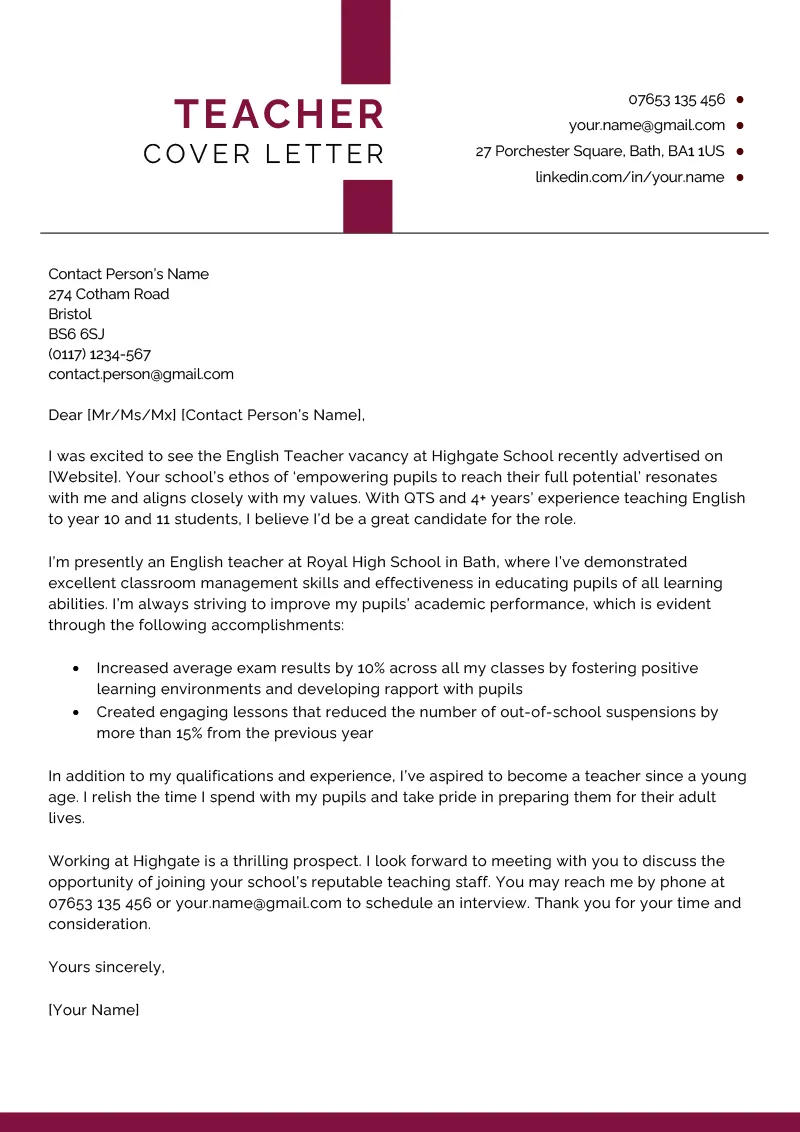
Understanding the Importance of a Teacher Cover Letter
In the competitive world of education, a well-crafted cover letter is your initial opportunity to make a lasting impression. It serves as more than just a formality; it’s your chance to showcase your passion, skills, and suitability for the teaching position. This crucial document complements your resume and provides context, allowing you to connect with the hiring committee on a more personal level. A strong cover letter is often the deciding factor in whether your application makes it to the interview stage. It’s where you can highlight your unique value proposition and demonstrate why you are the ideal candidate for the role.
Why a Cover Letter Matters for Teacher Jobs
For teacher jobs, a cover letter allows you to articulate your teaching philosophy and career goals in detail. Unlike a resume, which is typically a list of accomplishments, a cover letter gives you the space to explain your approach to education, your classroom management strategies, and how you create a positive learning environment. It enables you to connect your experiences to the specific needs of the school, demonstrating that you’ve done your research and are genuinely interested in the position. Furthermore, it provides an opportunity to address any gaps in your resume or explain career transitions, solidifying your candidacy.
Highlighting Your Qualifications and Skills

Your cover letter should effectively highlight your qualifications and skills in a way that is relevant to the specific job description. Focus on the qualities that the school is seeking, such as experience with specific age groups, curriculum knowledge, or technological proficiency. Use the language from the job posting to demonstrate that you are a strong match. Quantify your achievements whenever possible; for example, mention the percentage of students who improved their test scores under your guidance or any successful projects you’ve led. By doing this, you provide concrete evidence of your capabilities and make a stronger case for your candidacy.
Key Components of a Teacher Cover Letter
A compelling cover letter consists of several essential parts that, when combined, present a complete picture of your professional profile. These components include a clear and concise header with your contact information, a professional greeting, a persuasive opening paragraph that grabs the reader’s attention, details of your relevant teaching experience, a summary of your educational background and certifications, a focused section on your skills and accomplishments, a sincere expression of your passion for education, and a closing that reiterates your interest and invites further communication. Each element should be thoughtfully written and tailored to the specific job and school.
Header and Contact Information
Begin your cover letter with a professional header that includes your full name, address, phone number, and email address. Make sure your email address sounds professional; avoid using nicknames or unprofessional language. This section is essential for the hiring manager to easily contact you. Ensure the header is neatly formatted and consistent with your resume. Consider using a simple, clean font to maintain a professional appearance. Your header should be at the top left or right of your letter, providing easy access to your contact information. Ensure your contact information is up-to-date and accurate, so you don’t miss any opportunities.
Addressing the Hiring Manager

Always address your cover letter to a specific person, such as the principal or hiring manager, whenever possible. This demonstrates that you’ve taken the time to research the school and that you are genuinely interested in the position. Find the name and title by searching the school’s website, LinkedIn, or calling the school. If you can’t find a name, use a professional greeting such as “Dear Hiring Committee” or “Dear [School Name] Principal”. Avoid generic greetings such as “To Whom It May Concern,” as it suggests a lack of effort. Addressing the hiring manager by name creates a more personal and engaging connection, making your application stand out.
Crafting a Compelling Opening
Your opening paragraph should immediately capture the reader’s attention. State the specific position you’re applying for and explain where you learned about the opportunity. Then, provide a brief overview of your most relevant qualifications and skills. You can also include a compelling anecdote about your teaching philosophy or a brief statement about why you’re passionate about education. This initial paragraph is your chance to make a positive first impression, so make it count. The goal is to create interest and encourage the reader to delve deeper into your letter and resume.
Showcasing Your Teaching Experience
In the body of your cover letter, provide details about your teaching experience. Focus on relevant positions, highlighting your responsibilities, the subjects you taught, and the grade levels. Quantify your accomplishments whenever possible. For instance, mention how you increased student engagement through specific strategies, improved test scores, or implemented new educational programs. Mention any awards, recognition, or positive feedback you’ve received. By providing concrete examples of your successes, you demonstrate the value you bring to the table. Be specific about your role in previous positions, emphasizing actions and results to make your experience clear and impactful.
Detailing Your Educational Background and Certifications

Include a concise summary of your educational background, including your degrees, the institutions you attended, and any specializations. Mention any relevant certifications, such as a teaching license, endorsements, or specialized training programs. Highlight any honors or academic achievements. Focus on the aspects of your education that align with the job requirements. If the job requires specific certifications or educational qualifications, make sure to highlight those prominently. Showing that you meet the required educational standards will significantly increase your chances of being considered for an interview and will also convey your commitment to the field of education.
Highlighting Relevant Skills and Accomplishments
This section is where you demonstrate how your skills and accomplishments align with the school’s needs. Detail your expertise in areas such as classroom management, curriculum development, differentiated instruction, and assessment. Provide specific examples of how you’ve used these skills to create positive learning environments. Use action verbs and focus on results. For example, instead of saying “I managed a classroom,” say “I implemented a classroom management system that reduced disruptive behavior by 30%.” Highlighting your accomplishments showcases your value, demonstrating that you’re not just qualified but also effective.
Emphasizing Your Passion for Education
One of the most important aspects of a teacher cover letter is conveying your passion for education. Briefly explain your teaching philosophy and why you are passionate about working with students. Highlight what motivates you and how you approach teaching. Share an anecdote or a personal reflection that illustrates your dedication to your students’ success. Show that you are committed to fostering a positive and engaging learning environment. Schools want teachers who genuinely care about their students and are enthusiastic about their work, so let your passion shine through to make your cover letter memorable.
Demonstrating Alignment with School Values

Research the school’s mission, values, and culture, and then highlight how your skills, experience, and philosophy align with theirs. Mention any specific programs or initiatives that interest you and show how you can contribute to the school’s goals. Tailor your cover letter to reflect your understanding of the school and its needs. Mention any volunteer work, community involvement, or other experiences that demonstrate your commitment to supporting students. By demonstrating your alignment with the school’s values, you increase your chances of being seen as a good fit for their community.
Writing a Strong Closing
Your closing paragraph should reiterate your enthusiasm for the position and thank the hiring manager for their time and consideration. Express your eagerness to discuss your qualifications further in an interview. State how you can be reached and offer to provide any additional information they might need. The closing should leave the reader with a positive and memorable impression. Ensure your closing is professional and confident, reinforcing your suitability for the role. This final paragraph is a chance to emphasize your interest and leave a lasting impression.
Expressing Gratitude and Encouraging Contact
Thank the hiring manager for their time and for considering your application. Express your appreciation for the opportunity and reiterate your enthusiasm for the position. Then, provide your contact information again and encourage them to contact you for an interview or with any questions they may have. This step is essential because it reinforces your interest and makes it easy for the hiring committee to move forward. Ending on a positive note with clear contact information makes the follow-up process as easy as possible.
Formatting and Proofreading Your Cover Letter

Before submitting your cover letter, carefully format and proofread it to ensure it is free of errors. A well-formatted and error-free cover letter demonstrates professionalism and attention to detail. Pay attention to the layout, font, and spacing. Ensure your document is visually appealing and easy to read. Correct any grammatical errors, typos, and inconsistencies. Use a professional font, such as Times New Roman or Arial, in a size that is easy to read (usually 11 or 12 points). Proper formatting and proofreading can significantly increase your chances of a positive outcome.
Formatting Guidelines for Teacher Cover Letters
Use a standard business letter format, with left alignment for your text. Keep the letter concise, aiming for one page unless specifically asked for more. Use a professional font, such as Times New Roman or Arial, in a size that is easy to read (11 or 12 points). Use single-spacing within paragraphs and double-spacing between paragraphs. Include your contact information in the header. Be consistent with your formatting throughout the document. Proper formatting ensures your cover letter is readable and professional, enhancing your credibility and attention to detail. Avoid excessive use of bolding, italics, or underlining, as it can distract the reader.
Proofreading Tips to Ensure Accuracy
Always proofread your cover letter carefully before submitting it. Check for spelling errors, grammatical mistakes, and typos. Read the letter aloud to catch any awkward phrasing or inconsistencies. Consider having a friend, colleague, or career counselor proofread your letter for you, as they can often spot errors that you might miss. Proofreading ensures your letter presents a polished and professional image, increasing the likelihood of your application being taken seriously. Double-check the school name, contact person’s name, and job title to ensure all information is correct. A well-proofread cover letter demonstrates your commitment to quality and attention to detail.
Tailoring Your Cover Letter to Each Job

A generic cover letter is unlikely to impress hiring managers. Always tailor your cover letter to the specific job and school. Customize the content to highlight the skills, experience, and qualifications that are most relevant to the position. Demonstrate your understanding of the school’s needs and culture. Use the language from the job description to show that you understand the requirements. Tailoring your cover letter shows that you’ve done your research and are genuinely interested in the position. This increases the chances of your application being noticed and considered for an interview.
Researching the School and Understanding Needs
Before writing your cover letter, thoroughly research the school to gain a good understanding of its mission, values, programs, and community. Visit the school’s website, read recent news articles, and review their social media profiles. If possible, talk to current teachers or staff members to get insights into the school’s culture. Understanding the school’s needs will allow you to tailor your cover letter to show how your skills and experience align with their specific requirements. This demonstrates your genuine interest and increases your chances of making a strong impression, showing your commitment and initiative.
Customizing Your Letter for Specific Requirements
Carefully review the job description and identify the specific requirements and expectations. Then, customize your cover letter to address these requirements directly. Highlight the skills, experience, and qualifications that the school is seeking, using keywords from the job description. Provide concrete examples of how you’ve demonstrated these qualities in previous roles. If the job posting emphasizes particular skills, such as experience with special education or a specific curriculum, make sure to include these skills in your cover letter. Customizing your cover letter shows you can meet the needs of the position and increases your chances of success.
Key Takeaways for a Standout Cover Letter

To create a standout cover letter, focus on these key takeaways. Customize your letter for each job, highlighting relevant skills and experiences. Show, don’t just tell, by providing concrete examples of your accomplishments. Demonstrate your passion for education and your alignment with the school’s values. Proofread carefully and ensure your letter is free of errors. By following these key takeaways, you can create a cover letter that makes a strong impression and increases your chances of landing an interview.
Avoiding Common Cover Letter Mistakes
Avoid these common cover letter mistakes. Don’t use a generic, one-size-fits-all letter. Do not include irrelevant information or repeat your resume verbatim. Avoid spelling and grammatical errors by proofreading your letter. Don’t use jargon or clichés. Don’t be negative or complain about previous jobs. By avoiding these common mistakes, you can ensure your cover letter is polished and professional, leaving a positive impression on the hiring manager.
Cover Letter Examples and Templates for Teachers
Use cover letter examples and templates as a guide, but always customize them to fit your unique qualifications and the specific job. Search online for examples specifically tailored to teaching roles. Pay attention to the structure, language, and tone used in the examples. Then, adapt the format and content to reflect your own experience and skills. Using examples can help you structure your letter, but make sure to incorporate your personal details to make your cover letter unique and impactful. This is crucial in a competitive job market.