Crafting a Compelling Teacher Cover Letter
A well-crafted teacher cover letter is your first opportunity to make a strong impression on a potential employer. It’s a crucial tool in your job application, providing a personal touch and highlighting your unique qualifications. It’s more than just a formality; it’s your chance to showcase your passion for education, your teaching philosophy, and your commitment to student success. This guide will equip you with the knowledge and strategies to create a cover letter that stands out and helps you land your dream teaching job. Remember, the cover letter is your voice, your story, and your first step towards a new chapter in your teaching career.
Understanding the Purpose of a Teacher Cover Letter
The primary purpose of a teacher cover letter is to introduce yourself and your qualifications to a hiring manager. It complements your resume by providing a narrative that explains why you are the ideal candidate for the position. A cover letter allows you to express your enthusiasm for the role, elaborate on your teaching philosophy, and demonstrate how your skills and experiences align with the school’s needs and values. A strong cover letter goes beyond simply listing your qualifications; it tells a story, connecting your past experiences to the future possibilities within the school environment.
Why a Cover Letter Matters for Teachers

In a competitive job market, a cover letter can be the deciding factor in whether or not you get an interview. It allows you to differentiate yourself from other applicants by showcasing your personality, passion, and unique teaching approach. While your resume provides a factual overview of your skills and experience, your cover letter allows you to provide context, explain your motivations, and connect with the hiring manager on a personal level. Furthermore, a well-written cover letter demonstrates your communication skills, which are essential for effective teaching. It also provides the chance to explain any gaps in your experience or provide additional context to your resume information.
Key Components of a Teacher Cover Letter
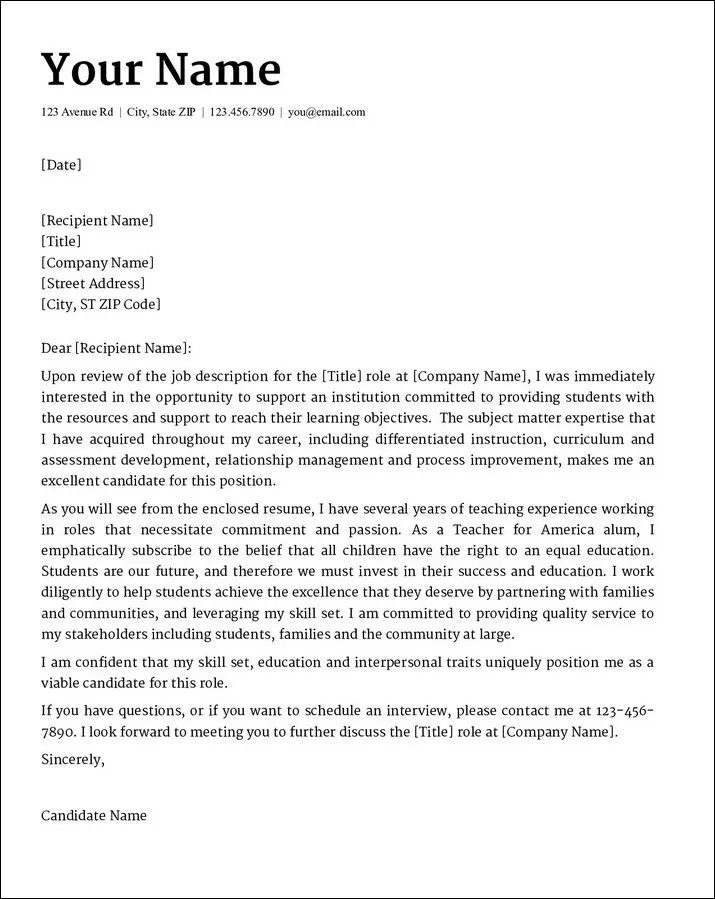
A successful teacher cover letter includes several key components that work together to present you as a strong candidate. Each section plays a vital role in communicating your qualifications, passion, and suitability for the position. From the salutation to the closing, carefully crafting each element will help to ensure your letter is impactful and memorable. A well-structured cover letter should demonstrate your ability to communicate effectively and professionally, which are fundamental skills for any educator.
Contact Information and Salutation
Begin your cover letter with your contact information (name, address, phone number, email) and the date. Then, address the hiring manager by name if possible. Research the school’s website or LinkedIn to find the name of the person in charge of hiring; using their name will make a great first impression. If you can’t find a specific name, a general salutation like “Dear Hiring Committee” or “Dear [School Name] Hiring Team” is acceptable, but always try to personalize it. Ensure all contact information is accurate and professional.
Highlighting Your Teaching Experience

This section is where you showcase your teaching experience. Don’t just list your previous roles; provide details about your responsibilities, the grade levels you taught, and the subjects you covered. Describe your teaching style, and how you foster a positive and engaging learning environment. Focus on the skills and experiences most relevant to the job requirements. Use action verbs to describe your achievements and responsibilities, such as “developed,” “implemented,” “assessed,” and “collaborated.” Mention any special programs or initiatives you led, and how you contributed to student success.
Quantifying Achievements in Your Cover Letter
Whenever possible, quantify your achievements to demonstrate your impact. Instead of saying “Improved student performance,” say “Improved student test scores by 15% in one year.” Use data to showcase the results of your efforts, such as the number of students you mentored, the percentage of students who achieved proficiency, or the positive changes you implemented in the classroom. Quantifiable results make your achievements more concrete and demonstrate your ability to produce measurable outcomes.
Showcasing Your Skills and Qualifications
Clearly state your qualifications and skills relevant to the position. Mention your teaching certifications, degrees, and any special training or expertise you possess. Highlight your skills in areas such as classroom management, curriculum development, lesson planning, and differentiated instruction. Mention any specific technologies or software you are proficient in. The goal is to demonstrate that you possess the skills and knowledge necessary to excel in the role and contribute to the school’s success.
Tailoring Your Cover Letter to the Specific School

Customization is key. Avoid sending a generic cover letter to every school. Research each school’s mission, values, and specific needs. Use this information to tailor your letter, highlighting how your skills and experiences align with their goals. This demonstrates that you’re genuinely interested in the school and have taken the time to understand their unique context. A tailored cover letter shows initiative and demonstrates your commitment to contributing to the school’s specific environment.
Researching the School’s Mission and Values
Before writing your cover letter, thoroughly research the school. Visit their website, read their mission statement, and learn about their values. Look for information about their curriculum, teaching philosophy, and any special programs they offer. Understanding the school’s culture will enable you to tailor your letter to their specific needs and demonstrate your compatibility. Researching the school shows that you are serious about your application and are not just sending out a mass-produced application.
Demonstrating Your Alignment with the School
In your cover letter, clearly articulate how your teaching philosophy, skills, and experience align with the school’s mission and values. Provide specific examples of how you have contributed to similar goals in the past. Explain how you can contribute to the school’s community and student success. This is your opportunity to show the hiring manager that you understand the school’s priorities and are a good fit for their culture.
Writing a Strong Closing and Call to Action

In your closing, reiterate your interest in the position and thank the hiring manager for their time and consideration. Include a clear call to action, such as expressing your availability for an interview and providing your contact information. End with a professional closing such as “Sincerely,” or “Best regards,” followed by your name. A strong closing leaves the reader with a positive impression and encourages them to take the next step in the hiring process.
Expressing Enthusiasm and Availability
Show genuine enthusiasm for the position and the school. State that you are eager to discuss your qualifications further and welcome the opportunity to interview. Make it easy for the hiring manager to contact you by providing your phone number and email address. Expressing your enthusiasm reinforces your interest and demonstrates your commitment to the role.
Proofreading and Editing Your Cover Letter
Proofreading is essential. Errors in grammar, spelling, or punctuation can undermine your credibility and make a negative impression. Carefully review your cover letter for any mistakes, and consider asking a friend or colleague to proofread it as well. Ensure your language is clear, concise, and professional. A polished, error-free cover letter demonstrates your attention to detail and your commitment to quality.
Common Mistakes to Avoid in Teacher Cover Letters

Avoid common pitfalls. Don’t use generic language or clichés, and avoid simply restating your resume. Don’t focus solely on your needs; instead, emphasize how you can contribute to the school. Avoid negative statements or complaints about previous employers. Ensure your cover letter is well-organized, easy to read, and free of errors. Review your cover letter carefully to ensure that you are presenting yourself in the best possible light.
Formatting and Presentation Tips
Use a professional and easy-to-read font, such as Times New Roman, Arial, or Calibri. Keep your cover letter to one page. Use clear headings and subheadings to organize your content. Maintain consistent formatting throughout the document. Make sure the letter is properly aligned and has adequate margins. A well-formatted cover letter is visually appealing and easy to read, making a positive impression on the hiring manager. Consider using a cover letter template to make sure it is formatted correctly.
In conclusion, a well-crafted teacher cover letter is an essential tool in your job search. By following these guidelines, you can create a cover letter that highlights your qualifications, demonstrates your passion for teaching, and helps you win the job. Remember to tailor each cover letter to the specific school and position. Good luck with your job search!