Highlighting Your Qualifications
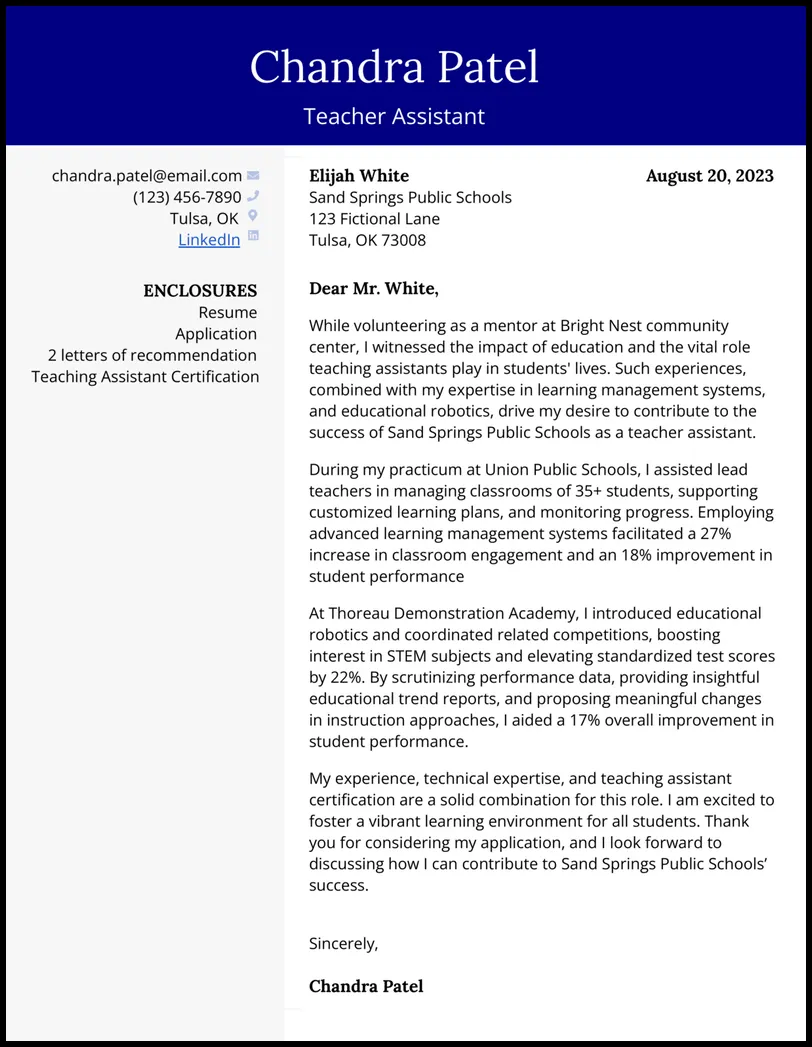
Your cover letter is your first opportunity to make a strong impression. As a Teacher Assistant, you must effectively showcase your qualifications. Start by clearly stating the position you are applying for and how you found the job listing. Then, highlight your most relevant qualifications. This includes previous experience as a teaching assistant, volunteer work in educational settings, or any direct experience working with children. Make sure to mention any certifications or training you possess, such as CPR or first aid. Quantify your achievements whenever possible; instead of simply stating that you assisted in a classroom, mention the number of students you supported or any improvements you helped implement, such as a new organization system. This makes your application more compelling and demonstrates your value.
Emphasizing Relevant Skills
Beyond listing qualifications, emphasize specific skills essential for a Teacher Assistant. Instead of just stating you are organized, provide examples. For example, describe a time you organized classroom materials. Instead of saying you have good communication skills, share an instance where you communicated effectively with parents, teachers, or students to resolve a problem. Choose skills that align with the specific role’s demands, like adaptability, the ability to adjust to different teaching styles, and flexibility, especially when dealing with unpredictable classroom situations. The best cover letters demonstrate how your skills translate into real-world effectiveness. Tailor your examples to reflect the specific needs and requirements outlined in the job description.
Classroom Management

Classroom management is a key skill. Your cover letter should demonstrate your experience in maintaining order and creating a positive learning environment. Describe specific strategies you’ve used, such as positive reinforcement, conflict resolution, and establishing classroom routines. If you’ve worked with classroom management software or systems, mention them. Emphasize your ability to assist the lead teacher in establishing a structured environment, organizing learning stations, or assisting with transitions. Show your proactive approach to ensuring a safe, respectful environment.
Communication and Interpersonal Skills
Strong communication and interpersonal skills are vital. Describe your ability to communicate clearly with students, parents, and teachers. Mention any experience in parent-teacher communication, such as sending emails or participating in conferences. Showcase your ability to build rapport and create a supportive classroom. Provide examples of how you’ve handled sensitive situations. Highlight your ability to listen, provide feedback, and work effectively as part of a team. Emphasize respect for diversity and your understanding of creating an inclusive environment.
Adaptability and Flexibility
The classroom environment requires adaptability. Share instances where you adjusted to changing circumstances, such as curriculum changes or student needs. Highlight your willingness to learn new skills and take on different tasks. If you have experience with special needs students, describe your approach to adapting instruction. Show your ability to remain calm under pressure and manage multiple tasks simultaneously. Emphasize your commitment to providing the best support to students and the lead teacher, even in challenging situations.
Tailoring Your Letter to the Specific Role

Generic cover letters are ineffective. Customize your letter to the specific job and school. Review the job description carefully, identifying key skills and values. Use those keywords and phrases from the job description to demonstrate your understanding of the role. Research the school to learn about its mission, programs, and values. Address how your skills and experience align with their goals. This demonstrates your interest and attention to detail. By doing this, your application will stand out. Always highlight how your contributions will benefit the students and the school community.
Researching the School and Understanding Their Needs
Thoroughly research the school. Visit their website, review their mission statement, and learn about their programs. If possible, find information about the classroom or grade level you would be working with. Use this to tailor your letter to the school’s specific needs. Show how your skills align with their values and goals. Research their reputation, culture, and any challenges they might be facing. Tailoring your letter this way demonstrates your genuine interest in being part of the school community.
Addressing the Specific Requirements
Carefully analyze the job description. Address each requirement directly. If the posting mentions a specific skill, certification, or experience, highlight it prominently. Use the same language as the job description. If the job requires experience with a particular curriculum, provide relevant examples. If the school uses specific software, mention your proficiency. If the job lists qualities like patience or organization, provide examples that showcase those attributes. Addressing the employer’s specific needs proves you understand the role and can meet their expectations. This helps position you as the ideal candidate.
Showcasing Your Passion for Education

Your passion for education should be evident. Teacher Assistants create positive learning environments. Your cover letter must reflect your enthusiasm. Share your genuine interest in working with children and your dedication to helping them succeed. Avoid generic statements. Instead, provide specific examples that show your commitment. Detail a project you undertook, a time you helped a student overcome a challenge, or your motivations for a career in education. Demonstrating genuine enthusiasm is critical to getting noticed.
Expressing Your Enthusiasm and Dedication
Expressing enthusiasm and dedication is essential. Your letter must convey your excitement and commitment. Use strong verbs and descriptive language to convey your passion. Describe your dedication to helping students. Mention teaching philosophies that resonate with you, always tailoring it to the school’s values. Demonstrate your commitment to professional development. These qualities are vital for success.
Mentioning Your Career Goals
Briefly mentioning your career goals can demonstrate your long-term commitment to education. If you want to become a teacher, mention your plans for further education. Express your goals in a way that aligns with the school’s mission. Focus on what you can bring to the role. This adds another positive aspect to your application.
Formatting and Presentation

Proper formatting is crucial. Use a professional font, like Arial or Times New Roman, in a standard size (11 or 12 points). Use clear, concise language with paragraphs and bullet points. Ensure your letter has a clear header, body, and closing. Use consistent formatting, including margins and spacing. Proofread carefully to eliminate errors. A well-formatted letter is easy to read and makes a great impression.
Using a Professional Tone
Maintain a professional tone. Use formal language and avoid slang. Address the hiring manager by name if possible. Show enthusiasm without being overly informal. Use polite language and positive phrasing. Keep it confident and concise. Avoid negative language. Focus on what you can bring to the role.
Proofreading and Editing
Proofread carefully. Errors can undermine your credibility. Read the letter aloud. Have someone else review it. Ensure your contact information is accurate. Proofreading reflects attention to detail.
Including a Call to Action

Include a clear call to action. State your interest in an interview and express your availability. Provide your contact information. Thank the reader for their time. A compelling call to action encourages them to move forward.
Requesting an Interview
End by expressing your interest in an interview. State your availability. Express your enthusiasm. Thank the reader. Show you are serious about the position.
Providing Contact Information
Include your name, phone number, and professional email address. Ensure it’s accurate and professional. Providing contact information reflects your interest.