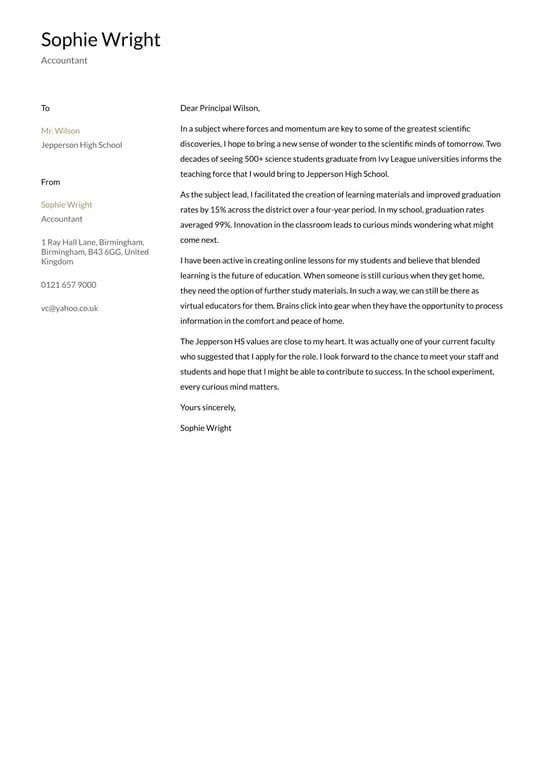
Understanding the Student Teacher Cover Letter
A student teacher cover letter is a crucial document that accompanies your resume when applying for student teaching positions. It serves as your introduction to the school or district and allows you to highlight your qualifications, passion for teaching, and relevant experiences. Unlike a resume that provides a factual overview, the cover letter gives you an opportunity to showcase your personality, writing skills, and understanding of the specific school’s needs. The primary goal is to persuade the hiring committee that you are a suitable candidate for the student teaching placement and that you possess the necessary skills and enthusiasm to excel in the classroom.
Purpose of a Student Teacher Cover Letter
The primary purpose of a student teacher cover letter is to introduce yourself and express your interest in a specific student teaching opportunity. It provides a platform to demonstrate your enthusiasm for teaching, your understanding of the school’s mission, and your ability to connect with students. The cover letter allows you to explain why you are drawn to the particular school or district and how your skills and experiences align with their values and requirements. Furthermore, it provides context to your resume by elaborating on your experiences and providing examples of your teaching philosophies and methodologies. A well-crafted cover letter can significantly increase your chances of securing a student teaching placement and launching your teaching career.
Key Components of a Strong Student Teacher Cover Letter

A strong student teacher cover letter should include several key components to make a lasting impression. First, a professional header with your contact information is essential. Next, a personalized greeting addressing the hiring manager or principal by name if possible. Following the greeting, the body of the letter should be structured into three main paragraphs. The first paragraph should express your passion for teaching and briefly mention your educational background and aspirations. The second paragraph should provide specific examples of your relevant experiences, such as classroom observations, tutoring, or volunteer work. The third paragraph should demonstrate your understanding of the school’s needs and explain how your skills align with their values. Finally, a clear call to action and a professional closing are necessary.
Header and Contact Information
The header of your cover letter should include your full name, address, phone number, and email address. This information allows the recipient to easily contact you. Make sure the header is clearly formatted and uses a professional font. Place the header at the top left or right of the document, ensuring it is easily visible. Consider using a simple, clean design that reflects your professionalism and attention to detail. Double-check all contact information for accuracy before submitting your cover letter to avoid any potential communication issues. A well-formatted header is the first step to making a positive impression.
Personalized Greeting
Always address the recipient by name, if possible. Research the school’s website or contact the school to identify the hiring manager or principal. Addressing the letter to a specific person demonstrates that you have taken the time to research the school and personalize your application. Use a formal salutation, such as “Dear Mr. Smith” or “Dear Ms. Jones.” Avoid generic greetings like “To Whom It May Concern.” If you are unable to find a specific name, address the letter to the “Hiring Committee” or the “Principal.” A personalized greeting makes your application stand out and shows that you are genuinely interested in the opportunity.
Body Paragraph 1 Highlighting Your Passion and Skills

In the first paragraph, clearly state your purpose for writing the cover letter and express your genuine passion for teaching. Mention your educational background, including your major and any relevant coursework. Highlight any specific teaching philosophies or methodologies that resonate with you. Briefly touch upon what inspires you to become a teacher and what you hope to achieve in the classroom. Showcase your enthusiasm for the specific subject or grade level you are interested in teaching. Tailor the content to align with the values and mission of the school or district you are applying to. This paragraph sets the tone for the rest of your cover letter and introduces you as a passionate and qualified candidate.
Body Paragraph 2 Showcasing Relevant Experience
The second paragraph is dedicated to showcasing your relevant experiences. Provide specific examples of your interactions with students, such as classroom observations, tutoring, or volunteer work in educational settings. Describe your role and responsibilities in each experience. Quantify your achievements whenever possible. For example, instead of saying “tutored students,” specify the number of students or hours you worked with. Discuss any challenges you faced and how you overcame them. Highlight any skills you developed, such as lesson planning, classroom management, or assessment. Ensure that the examples are concise, relevant, and demonstrate your ability to effectively work with students and contribute to a positive learning environment. Reference your resume, but provide additional context.
Body Paragraph 3 Demonstrating Your Understanding of the School’s Needs
In the third paragraph, demonstrate your understanding of the school’s needs and how your skills align with their values. Research the school’s mission, vision, and programs to tailor your response. Discuss how your teaching philosophy aligns with the school’s approach to education. Mention any specific programs or initiatives that interest you and explain how you can contribute. Demonstrate your knowledge of any challenges the school faces, such as student diversity or academic performance, and offer potential solutions. Show that you have considered the school’s context and that you can make a positive impact on their students and community. This final paragraph should provide a solid foundation for your ability to be a successful student teacher.
Call to Action and Closing

Conclude your cover letter with a clear call to action, such as requesting an interview or expressing your willingness to discuss your qualifications further. Thank the reader for their time and consideration. Reiterate your enthusiasm for the opportunity and your commitment to making a positive impact. Use a professional closing, such as “Sincerely” or “Respectfully,” followed by your full name. Proofread your cover letter carefully before submitting it to ensure it is free of errors and reflects your professionalism. A strong closing leaves a lasting positive impression and encourages the recipient to take the next step.
Different Types of Student Teacher Cover Letter Examples
Student teacher cover letters can vary depending on the grade level or subject area you are applying for. Each type of cover letter should be tailored to address the specific requirements and expectations of the position. Here are examples for different educational levels.
Cover Letter for Elementary School Student Teacher
When applying for an elementary school student teaching position, emphasize your experience with young children. Highlight any experience with early childhood education, child development, and differentiated instruction. Showcase your ability to create a nurturing and engaging learning environment that encourages exploration and creativity. Mention any experience with early literacy programs or specific teaching methodologies for younger students. Demonstrate your understanding of child psychology, classroom management techniques, and strategies for fostering social and emotional development.
Cover Letter for Middle School Student Teacher
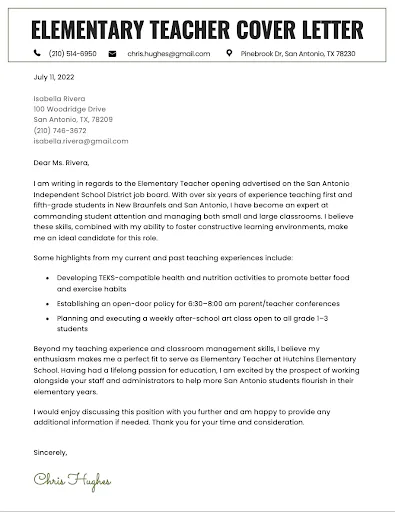
For a middle school student teaching position, focus on your ability to engage adolescents and address their unique needs. Highlight experience working with middle schoolers, teaching specific subjects, or participating in extracurricular activities. Show that you are comfortable managing a classroom of diverse learners and that you can foster a sense of community and belonging. Showcase your understanding of middle school curriculum, adolescent development, and strategies for promoting critical thinking and problem-solving skills. Emphasize your ability to motivate students and encourage their interest in learning.
Cover Letter for High School Student Teacher
When applying for a high school student teaching position, emphasize your ability to teach a specific subject matter. Highlight your knowledge of high school curriculum, advanced teaching methodologies, and strategies for preparing students for college and careers. Showcase your experience working with older students, promoting critical thinking, and creating engaging lesson plans. Emphasize your ability to foster a positive learning environment and support the students’ academic and personal growth. Discuss your understanding of high school students’ social and emotional needs and your ability to manage classroom dynamics.
Cover Letter for Special Education Student Teacher
For a special education student teaching position, highlight your experience working with students with diverse learning needs. Emphasize your understanding of various disabilities, Individualized Education Programs (IEPs), and inclusive teaching practices. Show your knowledge of assessment and data analysis. Demonstrate your ability to create a supportive and individualized learning environment. Focus on your compassion, patience, and commitment to ensuring every student reaches their full potential. Showcase your ability to collaborate with teachers, parents, and other professionals.
Tips for Tailoring Your Cover Letter

Tailoring your cover letter to each specific position is crucial. This shows the hiring committee that you have put in the effort to understand their needs and are genuinely interested in the opportunity. Here are some tips to help you personalize your letter.
Researching the School and Program
Before writing your cover letter, research the school and the specific program you are applying to. Visit the school’s website, read their mission statement, and learn about their programs, values, and initiatives. Understand the school’s demographic, student population, and any specific goals. Identify the key priorities and challenges that the school or district is facing. Use this information to tailor your cover letter by highlighting how your skills and experiences align with their needs. Mention specific programs or initiatives that interest you and explain how you can contribute.
Highlighting Transferable Skills
Identify your transferable skills that are relevant to the teaching profession. These can include communication, leadership, problem-solving, organization, and teamwork. Provide examples of how you have demonstrated these skills in the past. Even if your experiences are not directly related to teaching, you can still draw parallels to demonstrate your ability to excel in the classroom. For instance, if you have experience in project management, highlight your ability to plan, organize, and execute tasks effectively. Show that you are adaptable and can apply your skills to a variety of settings.
Proofreading and Editing

Proofread and edit your cover letter carefully before submitting it. Check for any grammatical errors, spelling mistakes, and typos. Ensure that your writing is clear, concise, and professional. Ask a friend, mentor, or professor to review your cover letter. A fresh pair of eyes can often spot mistakes that you might have missed. Pay attention to the formatting, font, and overall appearance of your cover letter. A polished and error-free cover letter demonstrates your attention to detail and your commitment to excellence.
Common Mistakes to Avoid
Avoiding common mistakes can significantly improve the effectiveness of your student teacher cover letter. Here are some errors to watch out for.
Generic Language
Avoid using generic language that could apply to any teaching position. Use specific examples of your skills and experiences to showcase your qualifications. Tailor your cover letter to each school or district and show that you understand their unique needs. Avoid using phrases that are overused or lack originality. Instead, use specific details and anecdotes that highlight your personality and teaching philosophy. The more personalized your letter is, the more likely it is to resonate with the hiring committee.
Focusing Only on Yourself
While it is important to highlight your skills and experiences, avoid focusing solely on yourself. Demonstrate how you can contribute to the school and the students’ success. Show that you understand the school’s mission and values and how your teaching philosophy aligns with them. Explain how your skills will benefit the students and the school community. Showcase your ability to collaborate with other teachers, parents, and staff. Make sure your letter conveys that you are a team player who is focused on the students’ well-being.
Typos and Grammatical Errors
Typos and grammatical errors can create a negative impression and undermine your credibility. Proofread your cover letter carefully before submitting it. Use spell-check and grammar-check tools, but do not rely on them entirely. Ask a friend, mentor, or professor to review your cover letter and provide feedback. Pay close attention to sentence structure, punctuation, and word choice. An error-free cover letter shows that you are attentive to detail and committed to producing high-quality work.
Where to Find Student Teacher Cover Letter Examples
Reviewing student teacher cover letter examples can provide valuable guidance and inspiration as you write your own. Here are some resources where you can find examples.
Online Job Boards
Many online job boards, such as Indeed, LinkedIn, and Monster, offer a variety of cover letter examples. These examples often include templates and samples tailored to different job titles, including student teaching positions. Use these resources to understand formatting, tone, and language. Adapt the examples to suit your unique qualifications and the specific requirements of the position you are applying for.
University Career Services
Your university career services department is a great resource for accessing cover letter examples and templates. Career counselors can offer personalized feedback and advice. They often have a collection of successful cover letters from previous students. Take advantage of career workshops, resume reviews, and mock interviews to refine your application materials. Seek advice on the best way to structure your cover letter.
Professional Teacher Organizations
Professional teacher organizations, such as the National Education Association (NEA) and the American Federation of Teachers (AFT), may offer resources and examples for student teacher cover letters. These organizations often provide career resources, including cover letter templates and samples. Explore their websites and publications for guidance and tips. Participating in professional organizations can also help you network with experienced educators and gain insights into the job market.