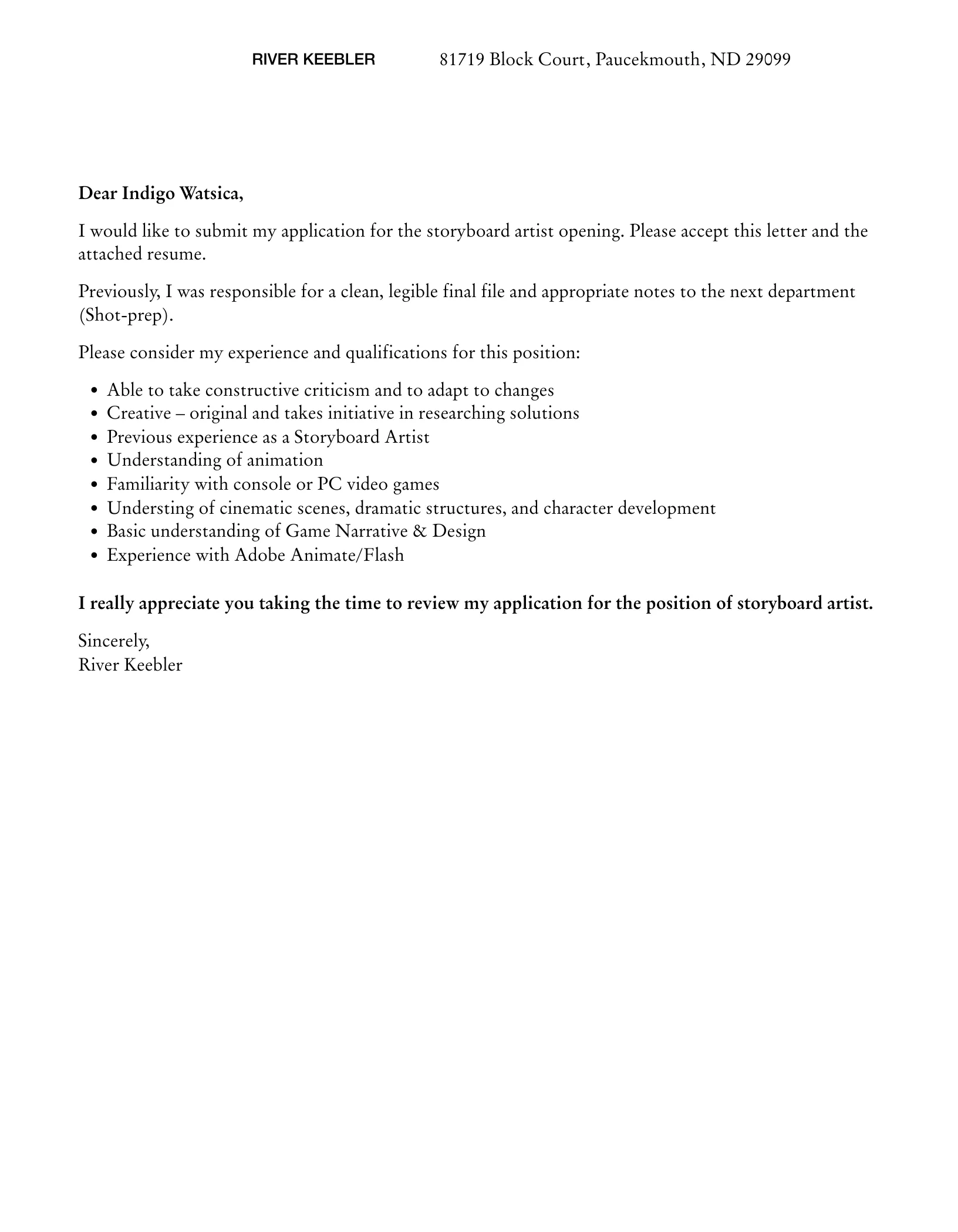
Crafting a Compelling Cover Letter
A storyboard artist cover letter is your first opportunity to make a strong impression on potential employers. It’s a concise yet powerful introduction that highlights your skills, experience, and passion for visual storytelling. Crafting a compelling cover letter involves more than just listing your qualifications; it’s about showcasing your personality and demonstrating why you’re the perfect fit for the role. The cover letter should be personalized, targeted to the specific job, and should effectively convey your enthusiasm for storyboarding. It needs to be well-written, grammatically correct, and free of any errors, as this reflects your professionalism and attention to detail. Remember, this is your chance to stand out from the crowd and secure an interview.
Understanding the Purpose of a Cover Letter
The primary purpose of a storyboard artist cover letter is to complement your resume and portfolio. While your resume provides a summary of your work history and qualifications, the cover letter allows you to elaborate on your skills and explain why you are interested in the specific position. It gives you a platform to express your enthusiasm for the company and the role, and to connect with the hiring manager on a more personal level. Think of it as a bridge that connects your past experiences with the future opportunities. It’s also a chance to highlight any unique skills or experiences that make you a standout candidate, such as your proficiency in specific software or your ability to work collaboratively with other artists. It also serves as a means to personalize your application and demonstrate that you’ve taken the time to understand the job requirements and the company’s values.
Highlighting Your Storyboarding Skills

Your cover letter should prominently showcase your storyboarding skills. This is where you highlight your ability to create compelling visual narratives, your understanding of cinematic language, and your technical proficiency. Detail your experience in creating storyboards for various projects, whether it’s for animation, film, or other media. Mention your expertise in areas such as composition, camera angles, character design, and action sequencing. Also, include any relevant software skills like Storyboard Pro, Photoshop, or other tools you’re familiar with. Quantify your accomplishments whenever possible. For example, instead of simply saying you ‘created storyboards’, mention how many storyboards you completed for a specific project or how you helped improve the efficiency of the production process.
Showcasing Your Portfolio
Your portfolio is the most crucial component of your application as a storyboard artist, but your cover letter should guide the reader towards it. In your cover letter, mention that your portfolio includes examples of your best work, and make sure you provide a direct link to it. Briefly describe the types of projects included in your portfolio, such as animated shorts, commercials, or feature film storyboards. Make sure the portfolio is easy to navigate, with clear organization and descriptions for each piece. Choose the best examples that highlight your skills and match the requirements of the job you’re applying for. If you have specific storyboards related to the project they are working on or the type of work they do, be sure to include these or draw their attention to them. Your portfolio should be available online or easily accessible for review.
Tailoring Your Letter to the Job
A generic cover letter is unlikely to impress. Customize your cover letter for each job application. Review the job description carefully and identify the specific skills and experiences the employer is seeking. Then, highlight the relevant aspects of your background that align with those requirements. Show them how your skills and experience directly address their needs. This could involve referencing specific projects, techniques, or software that match what the job demands. Express your understanding of the role and the company’s goals. Demonstrating that you’ve taken the time to tailor your application will show the hiring manager that you’re genuinely interested in the position and that you’re not just sending out a mass application. This shows you have initiative and attention to detail.
Researching the Company

Before writing your cover letter, research the company you’re applying to. Understand their work, their style, and their values. Visit their website, review their social media profiles, and check for any recent news or projects. This research will give you insights into the company culture and allow you to tailor your letter to their specific needs and expectations. Demonstrating that you know about the company and what they do shows your genuine interest. It allows you to show how your skills and experience align with their work, and why you’d be a great fit for their team. Mention specific projects, clients, or company values that resonate with you. This will make your application stand out and show the hiring manager that you’re taking the initiative.
Formatting Your Cover Letter
The layout and formatting of your storyboard artist cover letter can impact how it’s received. Use a professional font like Arial or Times New Roman in a readable size. Keep the letter concise and easy to read. Use clear headings and bullet points to break up large blocks of text, which makes it easier to scan. Ensure proper spacing between paragraphs and sections to avoid a cluttered appearance. Your contact information, including your name, phone number, email, and portfolio link, should be prominently displayed. Also, tailor your cover letter to the specific medium, like paper vs email. Your formatting demonstrates your organization skills and attention to detail, which are essential qualities for a storyboard artist. A well-formatted letter leaves a better impression.
Proofreading and Editing
Before submitting your cover letter, always proofread and edit it carefully. Errors in grammar, spelling, or punctuation can undermine your credibility and distract from your message. Ensure the tone is professional, and the language is clear and concise. Read the letter out loud to catch any awkward phrasing or typos. Have someone else review the letter to provide a fresh perspective and catch errors you might have missed. Pay close attention to the flow of the letter to ensure it tells a coherent story. A polished, error-free cover letter demonstrates your attention to detail and professionalism, which are valuable attributes for a storyboard artist. It’s worth taking the time to ensure perfection.
Tips for a Memorable Letter
To make your cover letter memorable, consider incorporating a few unique elements. Start with a strong opening that grabs the reader’s attention. Show your personality and enthusiasm. Mention specific projects that align with the job you are applying for. Demonstrate your understanding of the company’s work and their goals. End with a clear call to action, such as expressing your interest in an interview or discussing your portfolio further. A well-crafted, memorable cover letter shows that you’ve gone above and beyond to demonstrate you’re a great fit for the role. It shows that you’re not just seeking a job, but are also ready to make a positive contribution to the company. Be confident and sincere, and let your passion for storyboarding shine through.