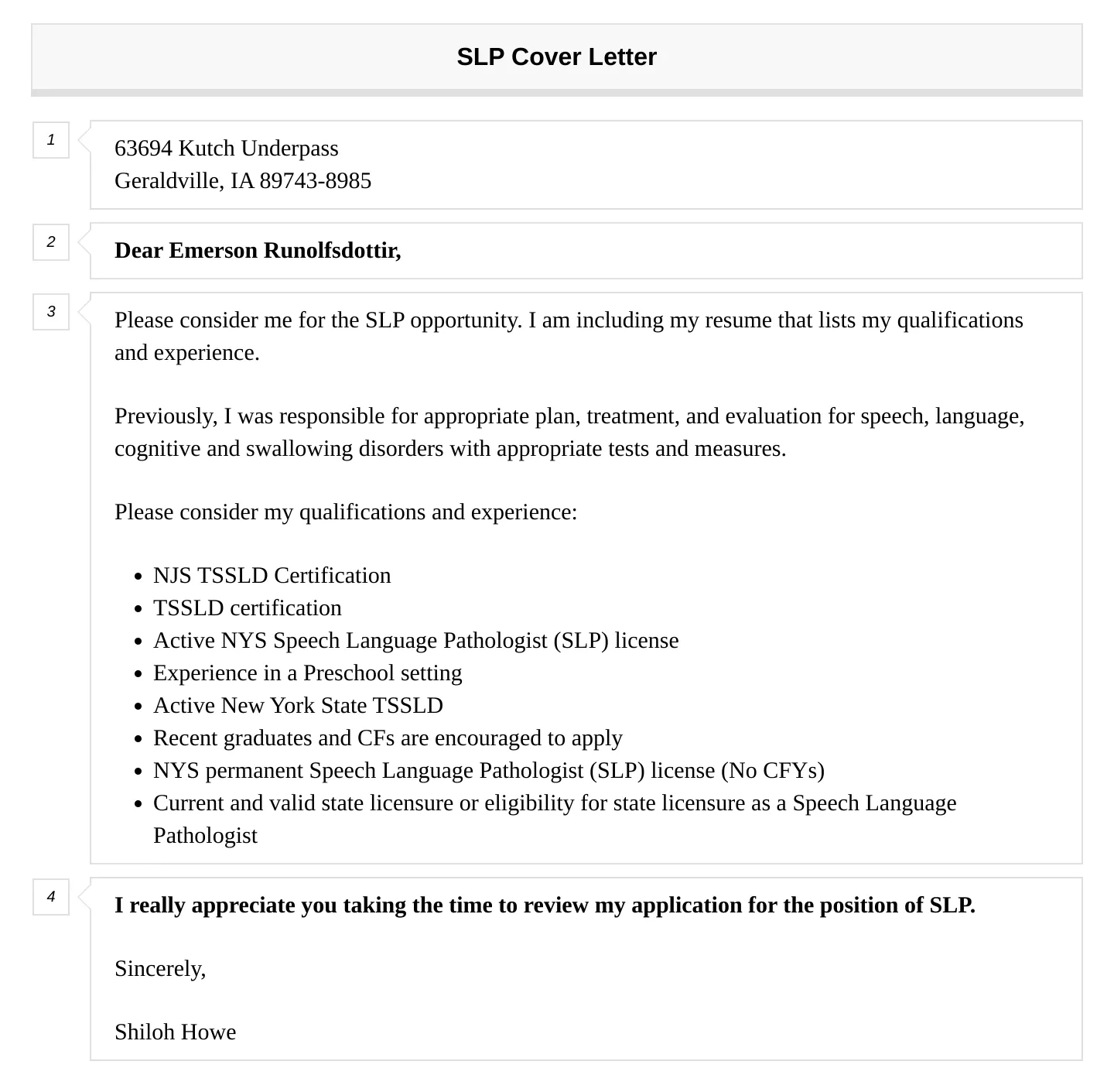
Understanding the Importance of an SLP Cover Letter
As a Speech-Language Pathologist (SLP), your skills and experience are vital in helping individuals of all ages overcome communication and swallowing disorders. However, to secure your desired SLP position, a well-crafted cover letter is just as important as your resume and educational background. In a competitive job market, a compelling cover letter can set you apart from other applicants, showcasing your unique qualifications and passion for the field. It’s your first chance to make a strong impression and persuade potential employers that you are the perfect fit for their organization. This introduction aims to emphasize the critical role a cover letter plays in the SLP job application process.
Why a Strong Cover Letter Matters
A strong SLP cover letter offers a personalized introduction beyond the information provided in your resume. It allows you to highlight specific skills, experiences, and achievements that align with the job requirements. It’s an opportunity to demonstrate your personality, communication skills, and enthusiasm for the role. Recruiters and hiring managers often read cover letters first to assess a candidate’s writing ability, attention to detail, and understanding of the position. A well-written cover letter shows that you’ve taken the time to research the organization, understand its needs, and tailor your application accordingly. This proactive approach significantly increases your chances of landing an interview.
Key Components of a Winning SLP Cover Letter

Contact Information and Salutation
Start your cover letter with your full name, contact details (phone number, email, and LinkedIn profile URL, if applicable), and the date. Then, address the hiring manager by name if possible. Researching the hiring manager’s name shows your attention to detail and interest in the position. If you cannot find the hiring manager’s name, use a professional salutation such as “Dear Hiring Manager” or “Dear [Department Name] Hiring Team.” Avoid generic greetings like “To Whom It May Concern.” The use of proper salutations immediately establishes a professional tone and demonstrates respect.
Writing a Compelling Opening
Your opening paragraph should immediately grab the reader’s attention. State the specific position you are applying for and where you saw the job posting. Briefly mention your most relevant qualifications or a key achievement that aligns with the role’s requirements. Consider stating your enthusiasm for the role and the organization. For example, “I am writing to express my keen interest in the Speech-Language Pathologist position at [Organization Name], as advertised on [Platform]. With over [Number] years of experience and a passion for helping individuals with communication disorders, I am confident I possess the skills and dedication to excel in this role.”
Highlighting Your Skills and Experience

This is where you elaborate on your skills and experience. Focus on the qualifications mentioned in the job description. Provide specific examples of how you have applied these skills in previous roles. Use the STAR method (Situation, Task, Action, Result) to illustrate your accomplishments. For example, “In my previous role at [Previous Employer], I was tasked with developing and implementing individualized treatment plans for pediatric patients with speech and language delays. (Situation and Task) I collaborated with a multidisciplinary team, including parents and educators, to create engaging therapy sessions. (Action) As a result, I saw a [Percentage]% improvement in my patients’ communication skills within [Timeframe]. (Result)”
Tailoring Your Letter to the Job Description
Customize your cover letter for each job application. Carefully review the job description and identify the key skills and qualifications the employer is seeking. Highlight how your skills and experience match these requirements. Use keywords from the job description throughout your cover letter. This shows the hiring manager that you have read the job description carefully and understand the position’s needs. Customization is key; a generic cover letter will not make a lasting impression.
Quantifying Your Achievements
Use numbers and data to quantify your accomplishments whenever possible. For example, instead of saying, “I improved patient outcomes,” say, “I improved patient outcomes by 20% within six months.” Quantifiable results demonstrate the tangible impact of your work and make your cover letter more compelling. Examples of quantifying your achievements include the number of patients you’ve worked with, the percentage of improvement in patient outcomes, the number of training programs you’ve conducted, or the efficiency gains you’ve achieved in your previous roles.
Showcasing Your Passion for Speech Therapy

Express your passion for speech therapy and helping individuals improve their communication skills. Explain why you are drawn to this profession and what motivates you. Share a specific experience that ignited your passion, such as a positive impact you made on a patient’s life. For example, “My passion for speech therapy stems from witnessing the transformative power of communication. In my previous role, I had the privilege of working with a non-verbal child who began communicating through assistive technology. The joy and independence this brought to the child and their family solidified my commitment to this field.”
Demonstrating Your Understanding of the Role
Show that you understand the specific requirements of the SLP role you’re applying for. Briefly mention the populations you have experience working with, the types of assessments and interventions you are familiar with, and any relevant certifications or specializations you possess. Demonstrate that you have researched the organization and understand its mission and values. Mention how your skills and experience align with the organization’s goals.
Adding a Call to Action and Closing
End your cover letter with a clear call to action. Express your enthusiasm for an interview and how you can contribute to the organization. Reiterate your interest in the position and thank the hiring manager for their time and consideration. Provide your contact information again. For example, “Thank you for considering my application. I am eager to discuss how my skills and experience align with the needs of your organization. I am available for an interview at your earliest convenience and can be reached at [Phone Number] or [Email Address].” Use a professional closing, such as “Sincerely” or “Best regards.”
Common Mistakes to Avoid in Your SLP Cover Letter

Generic and Vague Language
Avoid using generic or vague language that could apply to any candidate. Instead, provide specific examples of your skills and achievements. Do not simply say, “I am a good communicator.” Provide evidence, such as, “I effectively communicated complex information to patients and families, resulting in improved treatment adherence.” Use action verbs and avoid clichés.
Typos and Grammatical Errors
Proofread your cover letter carefully for any typos or grammatical errors. Errors create a negative impression and suggest a lack of attention to detail. Use a grammar checker and have someone else review your letter before submitting it. Double-check all names, titles, and contact information. Ensure that your writing is clear, concise, and grammatically correct.
Focusing Too Much on Yourself

While it’s essential to highlight your skills and experience, avoid making the cover letter all about yourself. Focus on how you can contribute to the organization’s success and meet its needs. Demonstrate your understanding of the role and the organization’s mission. Frame your accomplishments in terms of the benefits you brought to previous employers and how those skills will translate to this new role. Show that you are a team player and eager to contribute to a positive work environment.
Formatting and Presentation Tips
Choosing the Right Font and Font Size
Select a professional and easy-to-read font, such as Times New Roman, Arial, or Calibri. Use a font size between 10 and 12 points. Ensure your cover letter has consistent formatting, including margins, spacing, and alignment. Use bolding for headings and subheadings to improve readability. A well-formatted cover letter is visually appealing and easy for the hiring manager to review.
Maintaining a Professional Tone

Use a professional and respectful tone throughout your cover letter. Avoid using slang, informal language, or overly casual phrasing. Maintain a positive and enthusiastic tone. Be confident in your skills and experience, but avoid arrogance. The tone you choose should align with the professional environment of the organization you are applying to.
Proofreading and Editing Your Cover Letter
Proofread your cover letter multiple times. Check for typos, grammatical errors, and inconsistencies. Ask a trusted colleague or friend to review your letter for clarity and accuracy. Proofreading is a critical step that helps eliminate errors that might detract from your application. Taking the time to proofread and edit your cover letter demonstrates your attention to detail.
Final Thoughts
Crafting a winning SLP cover letter requires careful planning and attention to detail. By following the guidelines outlined in this article, you can create a cover letter that showcases your unique skills, experience, and passion for speech therapy. Remember to tailor your letter to each job application, highlight your accomplishments with quantifiable results, and express your enthusiasm for the role. A well-written cover letter is an essential tool for landing your dream SLP job. So, invest the time and effort to create a compelling cover letter that helps you stand out from the competition and secure that interview.