Understanding Shipping & Receiving Cover Letters
A shipping and receiving cover letter is your first chance to impress a potential employer. It’s a crucial document that accompanies your resume when applying for positions in shipping, receiving, warehousing, or related fields. This letter serves as an introduction, highlighting your skills, experience, and enthusiasm for the role. A well-crafted cover letter can significantly increase your chances of landing an interview, showcasing your understanding of the job requirements and your ability to contribute to the company’s success. This guide provides valuable examples and insights to help you create a compelling cover letter that stands out from the competition. The objective is to give you practical tools and information to excel in your job search.
Why You Need a Great Cover Letter
In a competitive job market, a strong cover letter is essential. It’s more than just a formality; it’s your opportunity to make a memorable first impression and demonstrate your personality, passion, and suitability for the role. While a resume provides a snapshot of your qualifications, the cover letter allows you to elaborate on your experiences, explain your career goals, and show how your skills align with the specific job requirements. A well-written cover letter can distinguish you from other applicants by effectively communicating your value and interest in the company. It gives you the chance to address potential gaps in your resume or to provide context for your career choices. This is where you can really make a difference.
Highlighting Relevant Skills
Effective shipping and receiving cover letters emphasize skills relevant to the job. Key skills include proficiency in shipping software, experience with inventory management, understanding of logistics, ability to operate warehouse equipment, attention to detail, and strong organizational skills. It is important to align the skills highlighted in your cover letter with the specific requirements listed in the job description. Provide examples of how you have utilized these skills in previous roles and the results you achieved. For instance, if a job requires experience with a specific shipping platform, be sure to highlight your experience and results. Your cover letter should be a showcase of your abilities and a clear illustration of how you can contribute to the company’s success. (Image shipping-receiving-cover-letter-intro.webp)
Key Components of a Shipping Cover Letter
A well-structured cover letter includes several key components. These elements are essential for clarity and professionalism, and they increase the likelihood of your cover letter being reviewed and considered seriously by the hiring manager. Each part of the letter plays a critical role in conveying your message and demonstrating your suitability for the position. A well-crafted cover letter will guide the reader through the information in a logical and engaging way, making it easy for them to understand your qualifications and appreciate your value as a candidate. Knowing these components can make your cover letter clear. (Image cover-letter-format.webp)
Contact Information and Date
Start your cover letter with your contact information, including your name, address, phone number, and email address. This allows the hiring manager to easily reach you. Following your contact information, include the date. This not only adds a professional touch but also helps keep track of when you submitted your application. Use a clear and readable font, and ensure that your contact details are accurate and up-to-date. Correct contact information is the first step to ensure the hiring manager knows how to connect with you. This also ensures the recruiter can review your letter properly.
Hiring Manager’s Information

If possible, address the cover letter to the hiring manager by name. Researching the hiring manager’s name can make your letter more personal and demonstrate that you have taken the time to learn about the company. If you can’t find a specific name, use a professional greeting such as ‘Dear Hiring Manager.’ Ensure that you have the correct title and spelling of the name, as this attention to detail shows professionalism. Using a specific name makes your application seem more personal. It shows the hiring manager that you have gone beyond just sending out a generic cover letter.
Opening Paragraph
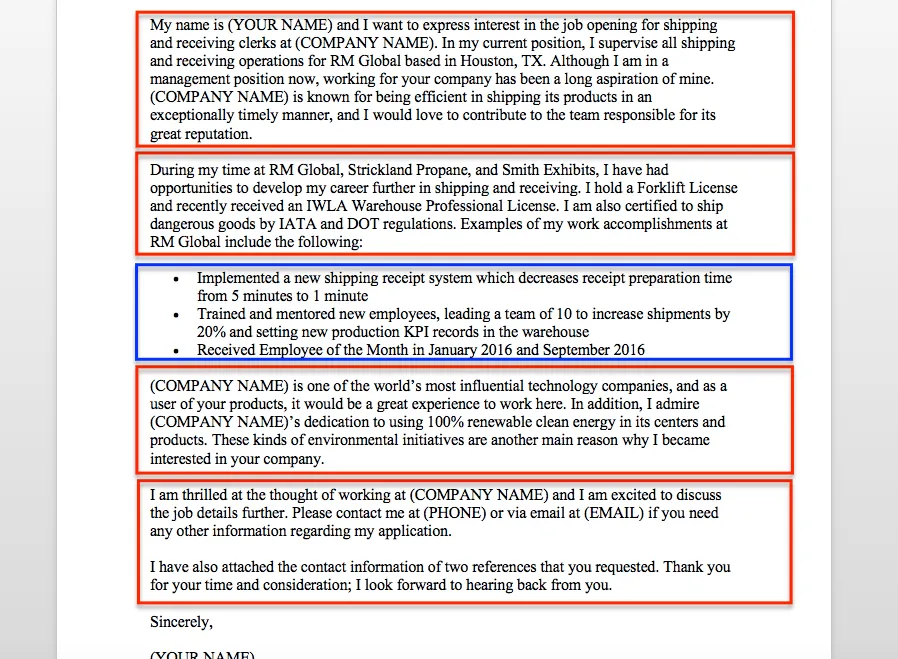
Your opening paragraph should immediately capture the reader’s attention. State the position you are applying for and where you found the job listing. Briefly mention your key qualifications and express your enthusiasm for the role and the company. This introduction should be concise and compelling, setting the tone for the rest of your letter. The objective is to make a strong first impression, showing that you’re not just another applicant, but a candidate who is genuinely interested and well-suited for the job. Your opening paragraph sets the foundation for your application and indicates to the reader if they should continue reading.
Body Paragraphs
The body paragraphs should expand on your qualifications and experiences, providing specific examples of how you meet the job requirements. Use the STAR method (Situation, Task, Action, Result) to describe your accomplishments. For each skill or experience, provide context (Situation), explain the task (Task), detail the actions you took (Action), and highlight the results you achieved (Result). The goal is to demonstrate your skills. You should tailor each body paragraph to match the specific job description, emphasizing the skills and experiences most relevant to the position. This allows you to highlight your value and show the reader that you possess the qualifications needed to succeed. (Image skills-for-cover-letter.webp)
Closing Paragraph

In your closing paragraph, summarize your interest in the position and the company. Reiterate your enthusiasm and state your availability for an interview. Thank the hiring manager for their time and consideration. End with a professional closing, such as ‘Sincerely’ or ‘Best regards,’ followed by your name. A strong closing paragraph reinforces your key message and leaves a positive final impression. It should be a clear statement, reaffirming your interest in the job. This conclusion should be polite and professional.
Top 5 Shipping & Receiving Cover Letter Examples
Here are five examples tailored to different roles and skill levels, providing a practical guide for creating your own compelling cover letter. These examples will help you understand how to structure your letter effectively and highlight your skills and experience. Adapt these examples to fit your specific background and the requirements of the job you are applying for. By using these templates, you can create a standout cover letter. Each example addresses different roles and showcases how to adapt for various scenarios.
Example 1 Basic Shipping Clerk
This example is suitable for entry-level candidates. It focuses on basic shipping and receiving tasks. It highlights strong organizational skills, attention to detail, and experience with order processing. It demonstrates the candidate’s ability to follow procedures and work in a fast-paced environment. The tone is enthusiastic and demonstrates willingness to learn. It is simple and provides the basics. (Image shipping-clerk-example.webp)
Example 2 Experience Warehouse

This example is for those with warehouse experience. The cover letter highlights experience with inventory management, warehouse equipment, and safety protocols. It emphasizes the candidate’s ability to handle various responsibilities, including loading, unloading, and organizing shipments. The letter indicates familiarity with different shipping software and strong physical capabilities. Experience letters like this show an individual is dependable and shows their experience through their duties.
Example 3 Supervisor Level
This example is tailored for a shipping supervisor position. The cover letter emphasizes leadership skills, team management, and process improvement experience. It demonstrates the ability to oversee shipping and receiving operations, manage a team, and improve efficiency. The letter will also touch on experience with conflict resolution and ensuring all procedures are followed. A supervisory letter will illustrate experience within a management role.
Example 4 Entry Level
This cover letter sample is ideal for candidates with minimal experience in shipping and receiving roles. It aims to highlight transferrable skills and a strong work ethic. It showcases the candidate’s willingness to learn and adapt. The letter emphasizes skills such as strong communication, attention to detail, and a proactive approach to tasks. It will focus on any related experience or relevant coursework, demonstrating the candidate’s potential. An entry-level cover letter demonstrates their willingness to work.
Example 5 Skills Focused

This example is designed for candidates wanting to focus on their key skills. The cover letter emphasizes specific abilities relevant to the job. It highlights proficiency in shipping software, inventory management, and warehouse equipment operation. The cover letter provides specific examples of how those skills have been used and the results they produced. The letter helps to showcase your areas of expertise. It will demonstrate expertise in their related duties.
Tips for Customizing Your Cover Letter
Customizing your cover letter is essential for increasing your chances of success. Tailoring your letter to each job application demonstrates that you have taken the time to understand the specific requirements of the role and the needs of the company. This level of personalization will help your application stand out. Focusing on the job description and the keywords, and formatting will help your letter stand out.
Tailoring to the Job Description
Carefully read the job description and identify the key requirements and desired skills. Highlight your relevant experiences and skills by using the same keywords and phrases from the job description. Customize your cover letter to address the specific needs of the role. This will show the hiring manager that you have carefully considered the position. A letter made to meet the company’s requirements will illustrate your ability to perform the job. (Image tailoring-cover-letter.webp)
Proofreading and Formatting

Proofread your cover letter carefully for any grammatical errors, typos, or formatting inconsistencies. Use a professional font, such as Times New Roman or Arial, and ensure that your cover letter is easy to read. Check your letter’s tone to maintain a professional style. Consider having a friend or family member review the letter as well to ensure accuracy. This is crucial for making a great first impression. Proofreading is essential to show your ability to pay attention to detail.
Including Keywords
Incorporate keywords from the job description throughout your cover letter. This will help your application get past applicant tracking systems (ATS) and highlight your relevance to the hiring manager. Use these keywords naturally, not forcing them into your writing. Keywords are essential for ensuring your application is properly assessed. By including the relevant keywords from the job description, you make it easy for the hiring manager. Be natural and do not stuff keywords as it will be obvious to the reader.
Common Mistakes to Avoid
Avoid common pitfalls that can undermine your cover letter and reduce your chances of success. Errors in your cover letter could prevent you from getting the job. By avoiding these errors, you can present yourself professionally. This will enhance your qualifications and significantly improve your chances of landing an interview. Paying attention to detail can improve your cover letter.
Generic Language
Avoid using generic language and clichés. These are often overused and don’t communicate your unique value. Instead, use specific examples of your skills and accomplishments. Tailor your language to match the tone and style of the company. This helps your cover letter to be memorable. Focusing on the specific experience and tailoring it to the role and company will make your letter a lot better. The goal is to showcase the best version of yourself.
Typos and Grammatical Errors
Typos and grammatical errors can damage your credibility and create a negative impression. Always proofread your cover letter carefully and have someone else review it for any mistakes. Pay attention to grammar, spelling, and punctuation to ensure your cover letter is polished and professional. Errors can make you appear as someone that does not pay attention to detail. Ensuring accuracy with your cover letter improves your chances to gain a second look at your application. (Image cover-letter-mistakes.webp)
Too Much or Too Little Information
Provide the right amount of information. Your cover letter should be long enough to showcase your value, but not so long that it becomes tedious. It should be concise and to the point, with the information that is directly relevant to the job. Avoid including unnecessary details or irrelevant information. Make sure it is easy to read and understand. Your cover letter is to showcase the best version of yourself.
Conclusion
By understanding the key components, reviewing the examples, and avoiding common mistakes, you can create a cover letter that sets you apart and increases your chances of securing an interview. Tailor your letter to the job requirements and highlight your relevant skills and experiences. A well-crafted cover letter is a valuable asset in your job search, so take the time to create one. Your time and effort in creating the perfect cover letter will assist you in the job search process.