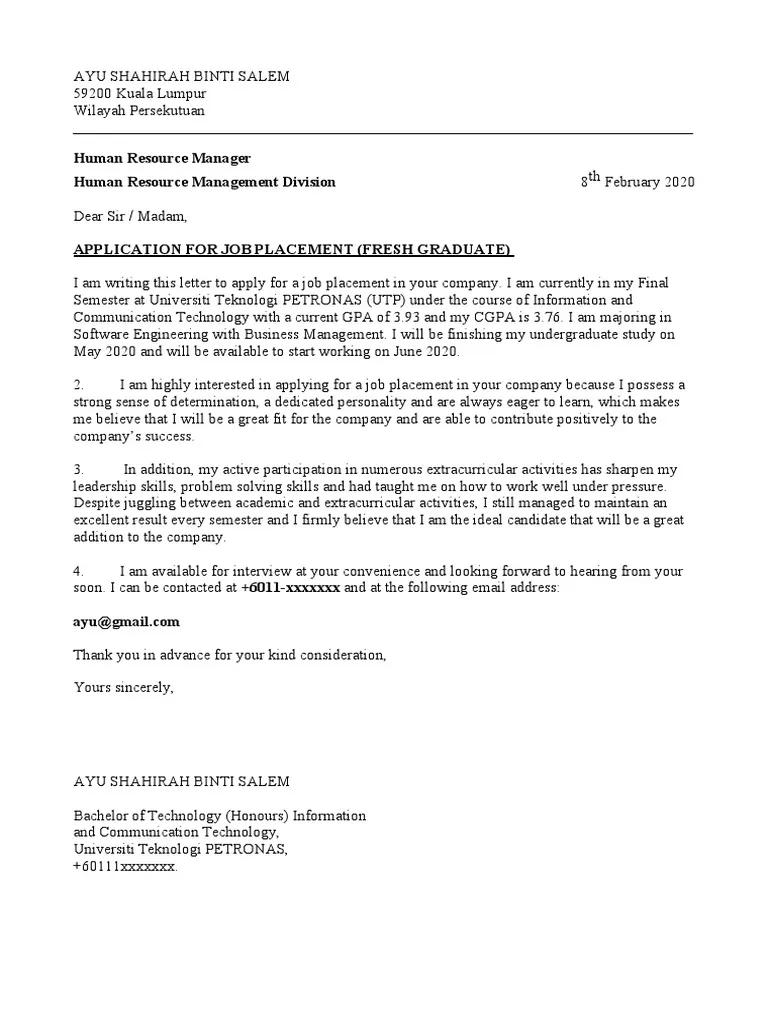
Crafting a Compelling New Grad Cover Letter
As a new graduate, your cover letter is your opportunity to make a strong first impression and stand out from the competition. It’s more than just a formality; it’s a crucial tool in your job search arsenal. A well-crafted cover letter demonstrates your communication skills, enthusiasm, and suitability for the role. It allows you to tell your story, highlighting your relevant skills and experiences in a way that your resume alone cannot. This guide will help you understand the key components and best practices for writing a successful cover letter that will increase your chances of landing an interview and starting your career journey. Remember that each cover letter should be tailored to the specific job you are applying for, demonstrating a genuine interest in the company and the position.
Understanding the Purpose of Your Cover Letter
The primary purpose of a cover letter is to introduce yourself to a potential employer and provide context to your resume. It’s your chance to explain why you are interested in the specific role and the company, and to showcase how your skills and experiences align with their needs. Unlike your resume, which is a factual document, your cover letter allows you to express your personality, enthusiasm, and career goals. It should demonstrate your understanding of the company’s mission, values, and the specific requirements of the job. A well-written cover letter will capture the hiring manager’s attention and encourage them to read your resume with interest, leading to a higher probability of getting a call for an interview. Think of it as a marketing document that sells you as the best candidate.
Highlighting Your Value Proposition

Your value proposition is the unique combination of skills, experiences, and qualities that you bring to the table. In your cover letter, you need to clearly articulate what value you can offer to the employer. Focus on the key skills and experiences that are most relevant to the job description. Think about what makes you stand out from other candidates and what you can contribute to the company’s success. If you have relevant coursework, projects, internships, or volunteer experiences, highlight them and explain how they have prepared you for the role. Quantify your achievements whenever possible. Instead of simply stating that you were a team member, explain what you achieved within the team, using numbers and metrics to showcase your impact and contributions to the project.
Essential Components of a New Grad Cover Letter
Contact Information and Date
Begin your cover letter with your contact information, including your name, address, phone number, and email address. Include the date below your contact information. This ensures that the hiring manager can easily reach you. Make sure the contact information is accurate and professional. Always double-check your email address for any typos. Also, make sure your voicemail greeting is professional and reflects well on you. This might seem minor, but providing accurate and accessible contact information from the beginning will show that you pay attention to detail and are serious about the job opportunity.
Addressing the Hiring Manager

Whenever possible, address your cover letter to a specific person. Research the hiring manager’s name and title on the company website or LinkedIn. This shows that you have taken the time to learn about the company and the hiring process. If you are unable to find a specific name, use a general greeting like “Dear Hiring Manager” or “Dear [Department] Team.” Avoid generic greetings like “To Whom It May Concern,” as this can make your letter seem impersonal. Addressing your letter to a specific person also increases the likelihood of it being read by someone who is directly involved in the hiring decision. If you’re not sure, try to connect with someone in the company.
Opening Paragraph Making a Strong First Impression
Your opening paragraph is your chance to grab the reader’s attention. Clearly state the position you are applying for and where you found the job posting. Briefly explain why you are interested in the role and the company. Show enthusiasm and highlight a key skill or experience that aligns with the job description. Make it compelling and memorable. Instead of a generic opening, try to personalize it by mentioning something specific that attracted you to the company or the role. For example, you might mention a recent project or achievement of the company that you admire. This demonstrates that you have done your research and are genuinely interested in the opportunity. Remember, a strong opening sets the tone for the entire letter.
Showcasing Your Skills and Experiences
The main body of your cover letter is where you showcase your skills and experiences. Focus on the skills and experiences that are most relevant to the job description. Use specific examples to illustrate your abilities. Provide a brief overview of your education, internships, projects, and any other relevant experiences. Explain how your skills and experiences align with the job requirements. Avoid simply restating your resume. Instead, provide more detail and context. Explain what you did, how you did it, and what the results were. Tailor your cover letter to each job application by highlighting the skills and experiences that are most relevant to the specific role and the company. Don’t be afraid to mention any transferable skills as well.
Quantifying Your Achievements

Whenever possible, quantify your achievements. Use numbers, percentages, and metrics to demonstrate the impact of your contributions. For example, instead of saying “I improved customer service,” you could say “I improved customer service scores by 15% through implementing a new feedback system.” This shows the hiring manager that you have a proven track record of success and can deliver tangible results. Providing concrete evidence of your accomplishments strengthens your value proposition and makes you a more compelling candidate. Quantifying your achievements also demonstrates your ability to measure and analyze results, which is a valuable skill in many roles. Always use numbers if possible, but ensure they are accurate.
Tailoring Your Letter to the Job
Customize your cover letter for each job you apply for. Review the job description carefully and highlight the skills and experiences that are most relevant to the specific role. Research the company and its values. This will help you tailor your letter to show that you are a good fit for the organization. Avoid using a generic cover letter that you send to every employer. Take the time to personalize each letter, demonstrating that you have a genuine interest in the company and the position. This will increase your chances of getting noticed and standing out from the competition. Customization also shows that you understand the specific requirements of the role and are willing to go the extra mile.
Expressing Enthusiasm and Interest
Throughout your cover letter, express your enthusiasm for the role and the company. Demonstrate your genuine interest in the opportunity. Explain what attracts you to the company and what you hope to achieve in the role. Show that you have done your research and understand the company’s mission, values, and goals. Express your excitement about the prospect of joining the team and contributing to its success. Your enthusiasm should be evident in your tone and language. Avoid sounding generic or indifferent. Hiring managers want to see that you are genuinely interested in the opportunity and are excited about the prospect of joining their team.
Closing Paragraph Call to Action

In your closing paragraph, reiterate your interest in the role and thank the hiring manager for their time and consideration. Include a call to action, such as stating that you are eager to discuss your qualifications further in an interview. Provide your contact information again, and express your availability for an interview. End with a professional closing, such as “Sincerely” or “Best regards,” followed by your name. The closing paragraph is your final chance to leave a positive impression. Make it clear that you are enthusiastic about the opportunity and ready to take the next step in the hiring process. Make sure to thank the person for taking the time to review your cover letter.
Formatting and Presentation
The formatting and presentation of your cover letter are essential. A well-formatted letter is easy to read and visually appealing. Use a professional font, such as Times New Roman, Arial, or Calibri, with a font size of 11 or 12 points. Choose a font that is easy to read and does not distract from the content. Use standard margins (1 inch on all sides) and single-space the body of the letter. Use headings and subheadings to break up the text and make it easier to read. Keep the letter concise, typically no more than one page. Use bullet points or lists to highlight key information. Proofread your letter carefully for any grammatical errors or typos. The overall appearance of your cover letter should be clean, professional, and easy to read.
Choosing the Right Font and Style
The font and style of your cover letter should be professional and easy to read. Avoid using overly decorative or unusual fonts that could distract the reader. Stick to standard fonts, such as Times New Roman, Arial, or Calibri. These fonts are widely recognized and easy on the eyes. Use a font size of 11 or 12 points for the body of the letter. Use bolding for headings and subheadings to make them stand out. Ensure the font size is consistent throughout the document. Use a clear and consistent style throughout your cover letter. Maintain a professional tone and avoid using slang or informal language. Ensure that your formatting is consistent and that the overall appearance of your letter is neat and well-organized.
Proofreading and Editing

Proofreading and editing are critical steps in the cover letter writing process. Carefully proofread your letter for any grammatical errors, spelling mistakes, or typos. Even a small mistake can make a negative impression. Take the time to read your letter aloud to catch any errors that you might miss when reading silently. Consider having a friend, career counselor, or family member review your letter for you. A second pair of eyes can often catch errors that you might have overlooked. Check for clarity, conciseness, and accuracy. Ensure that your letter flows logically and that your message is clear and easy to understand. Remember that the quality of your cover letter reflects on your attention to detail.
Common Mistakes to Avoid
Avoid common mistakes that can undermine your cover letter. These mistakes can significantly reduce your chances of getting an interview. Familiarize yourself with these and ensure you avoid them. By avoiding these common errors, you will improve your chances of creating an impactful cover letter that effectively highlights your skills and secures your job opportunity.
Generic Cover Letters
Avoid using a generic cover letter that you send to every employer. Generic letters lack personalization and show that you haven’t taken the time to tailor your application to the specific role or company. Take the time to customize your letter for each job you apply for. Tailor the language, the skills, and the experiences you highlight to align with the job description. Research the company and mention specific details that demonstrate your interest. This will make your letter more compelling and show that you are genuinely interested in the opportunity. Show that you’re not just sending out a generic application.
Focusing Too Much on Yourself

While your cover letter is about you, avoid focusing too much on yourself. Instead, focus on how your skills and experiences align with the needs of the employer. Highlight what you can offer the company and how you can contribute to their success. Show that you understand the company’s goals and that you are a good fit for their culture. Talk about how your skills will benefit the company and what specific contributions you can make. Keep the focus on how you can help the company achieve its objectives. Framing your experiences in terms of their relevance to the employer will help you stand out.
Ignoring the Job Description
One of the biggest mistakes is ignoring the job description. The job description is a roadmap to what the employer is looking for in a candidate. Carefully review the job description and identify the key skills, experiences, and qualifications that the employer is seeking. Tailor your cover letter to address these requirements, highlighting the skills and experiences that are most relevant to the role. Use keywords from the job description in your cover letter to demonstrate that you meet the requirements. Show the employer that you understand their needs and that you are a strong match for the position. Failing to address the job description is a missed opportunity to demonstrate your suitability for the role.
Resources and Further Learning
There are many resources available to help you write a successful cover letter. Utilize these resources to improve your cover letter and increase your chances of landing an interview. By using the various resources and by following these tips, you will be well on your way to creating a compelling cover letter that secures your job opportunities.
Cover Letter Templates and Examples
Utilize cover letter templates and examples to guide your writing. Many online resources offer free templates and examples that you can adapt to your own needs. These templates can provide a framework for your letter and help you organize your thoughts. However, be sure to personalize the template to make it your own. Tailor the language and content to fit your unique experiences and the specific job you are applying for. Look for examples of successful cover letters in your field. Study how other new graduates have presented their skills and experiences. Adapt these examples to your own situation, focusing on your unique value proposition.