Crafting the Perfect Sales Cover Letter
A well-crafted sales cover letter is your initial opportunity to impress a potential employer and secure an interview. It’s more than just a formality; it’s a powerful tool that can significantly impact your chances of landing your dream sales job. Your cover letter is your voice, showcasing your personality, skills, and enthusiasm for the role. It serves as your introduction and provides context to your resume, allowing you to highlight relevant experience and demonstrate your understanding of the company and the specific sales position. A strong cover letter goes beyond simply restating your resume; it tells a compelling story about your sales abilities, accomplishments, and how you can contribute to the company’s success.
Understanding the Purpose of a Sales Cover Letter
The primary purpose of a sales cover letter is to convince the hiring manager that you are the ideal candidate for the job. Unlike a resume, which provides a factual overview of your work history, a cover letter allows you to elaborate on your qualifications, express your passion for sales, and demonstrate your understanding of the company’s needs. It is your chance to explain why you want the job and how your skills align with the company’s goals. Furthermore, it provides an opportunity to showcase your communication skills, your ability to connect with the reader, and your understanding of the sales process itself. A well-written cover letter also demonstrates your attention to detail, your professionalism, and your genuine interest in the position.
Highlighting Your Sales Achievements

Instead of simply listing your job responsibilities, focus on your accomplishments. Sales is a results-driven field, so employers want to see tangible evidence of your success. This means quantifying your achievements whenever possible. Did you exceed sales targets? Increase revenue? Acquire new clients? Reduce costs? These are the types of achievements that will grab the hiring manager’s attention. Your cover letter should highlight your most significant accomplishments and demonstrate your ability to deliver results. Providing specific examples of your successes will make your cover letter more compelling and show the hiring manager that you are a high-performing sales professional.
Quantifying Your Sales Success
Numbers speak louder than words in sales. Whenever possible, quantify your achievements using specific metrics. For example, instead of saying “Increased sales,” say “Increased sales by 25% within one year.” Similarly, instead of saying “Acquired new clients,” say “Acquired 50 new clients in six months.” Quantifying your achievements demonstrates your ability to generate results and gives the hiring manager a clear understanding of your value. Include percentages, dollar amounts, and any other relevant metrics that showcase your impact. Quantifiable achievements make your cover letter more credible and help you stand out from other applicants.
Using Action Verbs to Showcase Your Skills
Use strong action verbs to describe your sales experience and achievements. Action verbs make your cover letter more dynamic and engaging, drawing the reader’s attention and highlighting your skills. Start each bullet point or sentence with a powerful action verb to illustrate what you did and the results you achieved. Examples of effective action verbs include “achieved,” “exceeded,” “generated,” “negotiated,” “closed,” “developed,” “managed,” and “persuaded.” Action verbs create a sense of urgency and show that you are a proactive and results-oriented sales professional. By using strong action verbs, you can make your cover letter more impactful and demonstrate your ability to take initiative and drive sales growth.
Tailoring Your Cover Letter to the Job

Avoid using a generic cover letter for every job application. Instead, customize your cover letter to each specific sales position you’re applying for. Carefully review the job description and identify the key skills, qualifications, and requirements. Then, tailor your cover letter to demonstrate how your experience and skills align with those specific needs. Highlight relevant achievements and tailor your language to reflect the company’s culture and values. Tailoring your cover letter shows the hiring manager that you’ve taken the time to understand the role and the company, demonstrating your genuine interest and increasing your chances of getting an interview.
Researching the Company and the Hiring Manager
Before writing your cover letter, research the company and the hiring manager. Visit the company’s website, read industry news, and explore their social media presence. This will give you a better understanding of the company’s mission, values, and current challenges. If possible, try to find the hiring manager’s name and learn about their background and experience. Addressing the hiring manager by name and demonstrating your knowledge of the company will make your cover letter more personal and show that you’ve done your homework. Demonstrating your understanding of the company will show that you are serious about the opportunity and have taken the time to prepare your application.
Demonstrating Your Value Proposition
Clearly articulate your value proposition in your cover letter. This means summarizing what you bring to the table and how you can benefit the company. Think about your unique selling points – what sets you apart from other candidates? What specific skills or experiences do you possess that align with the job requirements? Explain how your skills and experiences will contribute to the company’s success. Highlight your understanding of the target market, your ability to build relationships with clients, and your proven track record of exceeding sales targets. Be sure to show the hiring manager how your skills, experience, and personality will help them achieve their goals.
Structuring Your Sales Cover Letter

A well-structured cover letter is easy to read and understand. It should follow a clear and logical format. A good structure includes an introduction, body paragraphs, and a conclusion. Each section has a specific purpose and contributes to the overall message. The introduction should grab the reader’s attention, the body paragraphs should showcase your skills and experience, and the conclusion should reiterate your interest in the position and include a call to action. Proper structuring ensures that your cover letter conveys your message effectively, showcasing your skills and highlighting your qualifications to potential employers.
The Opening Paragraph: Grabbing Attention
The opening paragraph is your first opportunity to make a strong impression. Your opening should immediately grab the reader’s attention and make them want to continue reading. Start with a compelling statement, a brief summary of your relevant experience, or a reference to a specific accomplishment. State the specific sales role you are applying for and where you found the job posting. Avoid generic opening lines. Instead, personalize your opening by referencing the company or the hiring manager. Make a memorable first impression to stand out from the competition.
The Body Paragraphs: Showcasing Your Skills and Experience
The body paragraphs are where you showcase your skills and experience. Use this section to elaborate on your qualifications and provide specific examples of your achievements. Connect your skills to the job requirements by highlighting relevant accomplishments and using keywords from the job description. Discuss your ability to generate leads, close deals, and build strong customer relationships. Be concise, clear, and focused on demonstrating how your skills and experience align with the company’s needs. Use action verbs to describe your achievements and quantify your successes whenever possible. Provide concrete examples to illustrate your sales abilities and make your cover letter more compelling.
The Closing Paragraph: Call to Action

Your closing paragraph should reiterate your interest in the position and include a clear call to action. Thank the hiring manager for their time and consideration. Express your enthusiasm for the opportunity and emphasize your desire to discuss your qualifications further. Include a call to action by stating that you are available for an interview and provide your contact information. A strong closing paragraph summarizes your key qualifications and leaves the hiring manager with a positive impression. It encourages the employer to contact you and take the next step in the hiring process.
Formatting Your Sales Cover Letter
Proper formatting is essential for creating a professional and readable cover letter. Use a standard business letter format, including your contact information, the date, the hiring manager’s name (if known), and the company’s address. Maintain consistent formatting throughout your cover letter. Use a clear and easy-to-read font and a professional layout. Avoid distracting formatting elements, such as excessive use of bolding or underlining. A well-formatted cover letter demonstrates your attention to detail and professionalism, making a positive impression on the hiring manager.
Choosing the Right Font and Layout
Choose a professional and easy-to-read font, such as Times New Roman, Arial, or Calibri. Maintain a consistent font size (11 or 12 points) throughout the document. Use appropriate margins (1 inch on all sides) and line spacing (1.15 or 1.5). Use headings and subheadings to break up the text and make it easier to read. Use bullet points to highlight key skills and accomplishments. Ensure your cover letter has a clean and uncluttered layout. Proper font selection and formatting are crucial for a polished and professional appearance.
Proofreading and Editing Your Cover Letter

Proofread your cover letter carefully before submitting it. Errors in grammar, spelling, and punctuation can undermine your credibility. Use a spell checker and grammar checker to identify potential mistakes. Read your cover letter aloud to catch any awkward phrasing or sentence structure issues. Have a friend or colleague review your cover letter for clarity and accuracy. Multiple rounds of proofreading ensure your cover letter is polished, error-free, and ready to impress the hiring manager. Always ensure to check for any formatting issues, and that your cover letter looks professional.
Common Mistakes to Avoid
Avoid common mistakes that can damage your chances of getting an interview. Don’t simply restate your resume; use your cover letter to provide additional context and showcase your personality. Do not use generic cover letters; tailor each one to the specific job and company. Avoid typos and grammatical errors at all costs. Don’t be overly formal or use jargon. Do not focus on what you want, rather focus on what you can offer the company. Avoid negative language or complaining about previous employers. By avoiding these common mistakes, you can create a cover letter that stands out and increases your chances of landing an interview.
Sending Your Cover Letter
Follow the instructions provided in the job posting for submitting your cover letter and resume. If the job posting doesn’t specify a format, save your cover letter as a PDF file. This will preserve the formatting and ensure that your document looks the same on all devices. Include your cover letter and resume in the same document, or submit them as separate attachments, as instructed. Always double-check that you’re sending the correct documents. Ensure your email subject line is clear and professional. Before sending, review your application materials one last time.
Following Up on Your Application
After submitting your application, follow up with the hiring manager to express your continued interest. Send a brief email or make a phone call a week or two after the application deadline. Reiterate your interest in the position and highlight any additional skills or experiences that might be relevant. This demonstrates your enthusiasm and initiative. If you have a connection at the company, reach out to them to learn more about the role and hiring process. Following up shows you are proactive and invested in the opportunity, which can set you apart from other applicants.
Cover Letter Examples for Different Sales Roles
Different sales roles require different skills and experiences. Tailor your cover letter to the specific sales position you’re applying for. Highlight the skills and experiences most relevant to the role. You can find many cover letter examples online to help you. Customize your cover letter based on the specific requirements of the job. Customize your language and tone to reflect the company culture.
Sales Representative Cover Letter Example
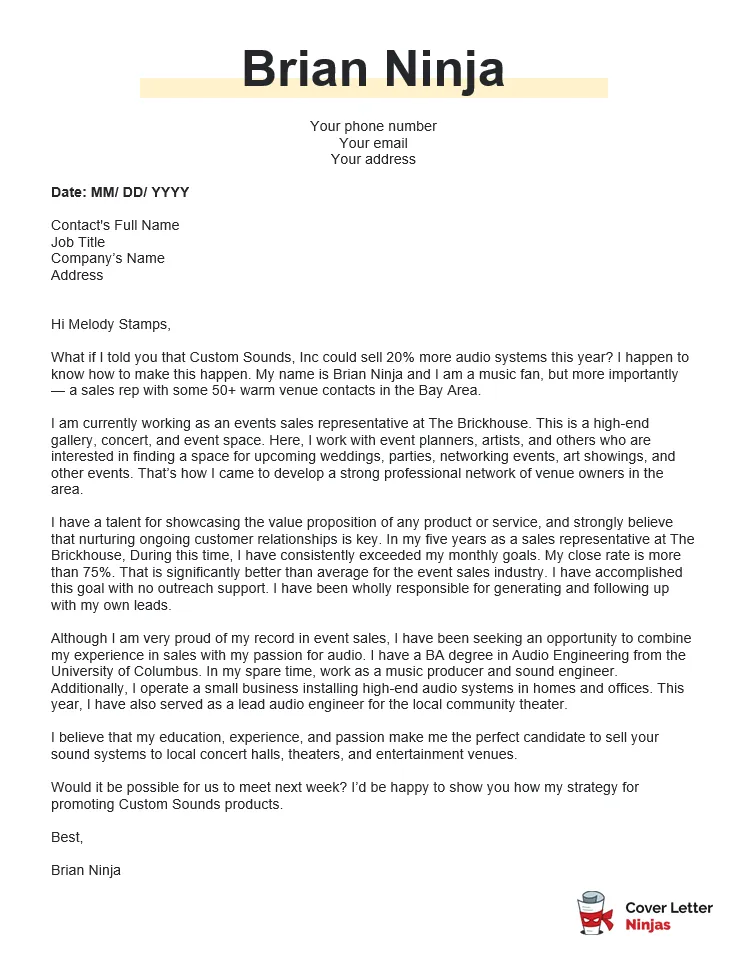
A Sales Representative cover letter should emphasize your ability to build relationships, close deals, and meet sales targets. Highlight your experience in prospecting, lead generation, and customer relationship management. Showcase your knowledge of sales techniques, such as cold calling, networking, and presentations. Quantify your achievements, such as exceeding sales quotas or increasing market share. Example:
Sales Manager Cover Letter Example
A Sales Manager cover letter should highlight your leadership skills, experience in managing and training sales teams, and ability to drive sales growth. Showcase your experience in developing sales strategies, setting sales targets, and motivating sales teams. Quantify your achievements, such as increasing sales revenue, improving sales team performance, and reducing turnover. Provide specific examples of your leadership skills. Example:
Inside Sales Cover Letter Example
An Inside Sales cover letter should emphasize your communication skills, ability to build rapport with clients over the phone, and experience in closing deals remotely. Highlight your experience in using CRM software, conducting online demos, and managing sales pipelines. Quantify your achievements, such as exceeding sales targets or increasing lead conversion rates. Showcase your understanding of inside sales techniques, such as lead qualification, follow-up calls, and virtual presentations. Example:
Tips for Writing a Cover Letter That Stands Out
To make your cover letter stand out, personalize it by researching the company and the hiring manager. Highlight your unique skills and experiences. Show enthusiasm and passion for the sales role. Use strong action verbs and quantify your achievements. Tailor your cover letter to the specific job and company. Proofread carefully for any errors. By implementing these tips, you can create a cover letter that makes a lasting impression and increases your chances of getting hired.
Including a Strong Sales Pitch
Incorporate a concise sales pitch into your cover letter. Think of yourself as the product and the company as the customer. Summarize your key skills, achievements, and value proposition in a compelling way. Explain why you’re the best candidate for the role and how you can benefit the company. Communicate your understanding of the company’s needs. Make your sales pitch concise, focused, and results-oriented to capture the hiring manager’s attention.
Showcasing Your Personality
Let your personality shine through in your cover letter. While maintaining professionalism, express your enthusiasm for sales and the company. Demonstrate your communication skills and your ability to connect with people. Show your passion for sales and your genuine interest in the role. Express your personality to differentiate yourself from other candidates. A cover letter that reflects your personality will make you more memorable.
Using Keywords Effectively
Use keywords from the job description throughout your cover letter. This helps the hiring manager quickly identify your qualifications. Tailor your language to reflect the company’s terminology and industry jargon. Don’t overdo it; using too many keywords can make your cover letter sound unnatural. Focus on incorporating relevant keywords naturally while maintaining readability. This will improve your chances of being selected.
Sales Cover Letter Best Practices
Follow these best practices to write a successful sales cover letter. Tailor your cover letter to each job. Highlight relevant achievements using quantifiable data. Research the company and the hiring manager. Use strong action verbs. Proofread carefully. Follow up after submitting your application. Implement these best practices to make your application successful.