Why a Retail Cover Letter is Crucial
In the competitive world of retail, securing your dream job requires more than just a resume. A well-crafted retail cover letter serves as your first impression, a crucial tool that provides an opportunity to showcase your personality, skills, and enthusiasm for the role. It’s a chance to go beyond the bullet points of your resume and tell your story, explaining why you’re the perfect fit for the position and the company. A strong cover letter can significantly increase your chances of landing an interview, allowing you to stand out from other applicants and demonstrate your genuine interest in the opportunity. Ignoring this step could mean missing out on a chance to make a lasting impression and ultimately, the job. The cover letter is a marketing tool, and you are the product – make it shine!
Essential Sections of a Retail Cover Letter
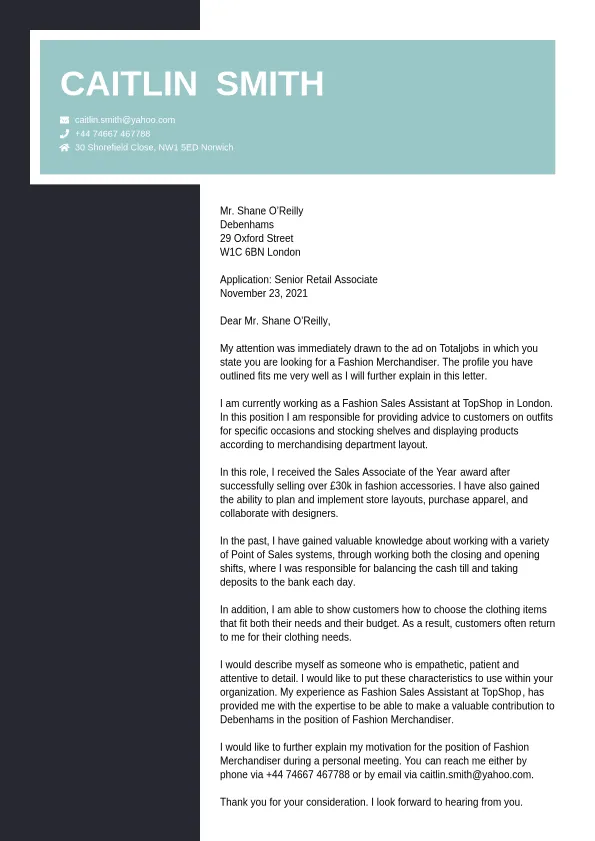
A successful retail cover letter is structured to effectively communicate your qualifications and passion. It should include specific sections that guide the reader through your key strengths and demonstrate your suitability for the role. Each section plays a vital part in building a compelling narrative that captures the attention of the hiring manager. By including the correct sections, you are building your cover letter to be more effective and increase the likelihood of the reader continuing to read it to the end. By understanding the standard sections and tailoring them to your experience and the specific job, you’ll be well on your way to creating a cover letter that gets results.
Contact Information and Date

At the very top of your cover letter, provide your contact information. This section typically includes your full name, phone number, email address, and sometimes your LinkedIn profile URL. Following your contact information, add the date on which you’re writing the cover letter. This information provides the hiring manager with a quick way to reach you and also shows the date of your application. Make sure this information is accurate and up-to-date to ensure the hiring manager can easily contact you.
The Greeting
Start your cover letter with a professional greeting. If possible, address the hiring manager by name. Research the company and the specific role to find the name of the person in charge of hiring; this shows you’ve taken the time to learn about the opportunity. If you can’t find a specific name, a general greeting like “Dear Hiring Manager” or “Dear [Company Name] Hiring Team” is perfectly acceptable. Avoid overly casual greetings, which might make you appear unprofessional. Your choice of greeting sets the tone for the entire letter, so aim for professionalism and respect.
Crafting a Compelling Opening Paragraph
Your opening paragraph is your chance to grab the reader’s attention. Clearly state the position you’re applying for and briefly explain how you learned about the opportunity. Use this space to express your enthusiasm for the role and the company. Consider mentioning a key skill or experience that makes you a strong candidate. The goal is to immediately capture the hiring manager’s interest and encourage them to continue reading. Your opening is crucial; it sets the stage for the rest of your cover letter.
Highlighting Relevant Retail Experience

In this section, detail your previous retail experience. Focus on roles and responsibilities that align with the job you’re applying for. Mention specific tasks, such as customer service, sales, inventory management, or cash handling. Use action verbs to describe your accomplishments and the impact you had in those roles. Provide concise examples that showcase your proficiency in key areas like problem-solving, teamwork, and communication. Quantify your contributions whenever possible to emphasize your value. Tailor this section to the requirements outlined in the job description, ensuring you highlight the experiences that make you the most suitable candidate.
Showcasing Skills and Abilities
This is where you showcase your relevant skills, both hard and soft. Hard skills might include proficiency with POS systems, inventory management software, or visual merchandising techniques. Soft skills are equally important; these include communication, teamwork, problem-solving, and time management. Provide examples of how you’ve used these skills in previous roles. Demonstrate how you’ve handled difficult customer interactions, resolved conflicts, or worked as part of a team to achieve sales targets. Relate your skills back to the job requirements to prove you are a well-rounded candidate.
Quantifying Achievements for Impact
Don’t just list your responsibilities; quantify your achievements to make a lasting impression. Use numbers, percentages, and specific metrics to showcase your accomplishments. For example, if you increased sales, mention the percentage increase. If you improved customer satisfaction, provide the percentage of positive feedback. Quantifying your achievements allows the hiring manager to see the tangible value you brought to your previous roles. This makes it easier to demonstrate the direct impact you can make on the new company. This section is extremely effective to making you stand out.
Expressing Enthusiasm and Company Knowledge

Show the hiring manager that you’re genuinely interested in the company by expressing your enthusiasm. Share what attracts you to their brand, values, or products. Mention any research you’ve done on the company, such as their recent achievements or community involvement. Connecting your skills and experience with the company’s specific needs demonstrates that you’re not just looking for any job but are specifically interested in working for them. Show that you’ve taken the time to understand the organization and are excited about the opportunity to contribute.
Closing the Cover Letter Effectively
Conclude your cover letter with a professional closing statement. Reiterate your interest in the position and thank the hiring manager for their time and consideration. Express your eagerness to discuss your qualifications in an interview. Use a formal closing such as “Sincerely” or “Best regards,” followed by your typed name. Avoid informal closings that could undermine the professional tone of your letter. Reviewing your cover letter before you send it is critical; make sure it’s error-free and presents you in a positive light.
Call to Action and Next Steps
Finish your cover letter with a clear call to action, indicating your next steps. State your availability for an interview and express your willingness to provide any additional information the hiring manager may need. Include your contact information again, just in case the reader wants to reach you immediately. By including a call to action, you make it easy for the hiring manager to move forward with your application. This could be one of the most important steps. Make sure that the process is made clear.