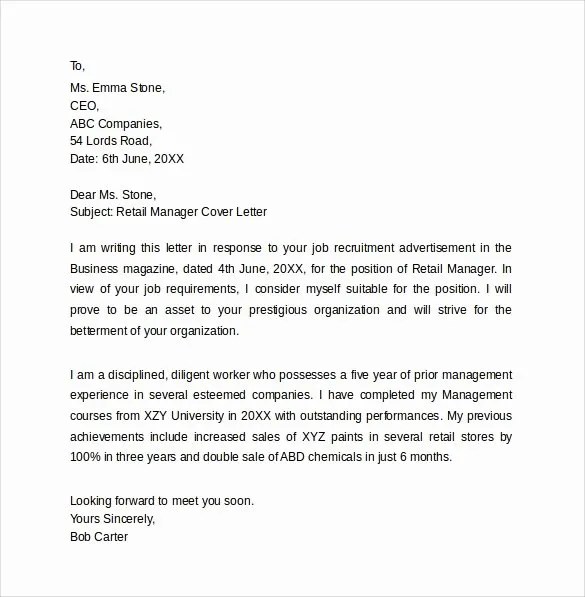
What is a Retail Cover Letter
A retail cover letter is a crucial document that accompanies your resume when applying for a retail position. It serves as your introduction to a potential employer, providing an opportunity to showcase your personality, skills, and enthusiasm for the role. Unlike a resume, which provides a factual overview of your experience, a cover letter allows you to explain why you are a good fit for the specific job and the company. It’s your chance to make a strong first impression and convince the hiring manager that you are worth interviewing. A well-crafted cover letter can significantly increase your chances of getting noticed and securing a job in the competitive retail industry. It demonstrates your communication skills, attention to detail, and genuine interest in the opportunity.
The Importance of a Retail Cover Letter
The importance of a retail cover letter cannot be overstated. In a field where customer service and interpersonal skills are paramount, a cover letter provides a platform to demonstrate these qualities. It allows you to highlight your relevant experience, explain any gaps in your employment history, and express your passion for retail. A strong cover letter shows that you have taken the time to research the company and understand the job requirements, which indicates your genuine interest and initiative. It differentiates you from other applicants who might only submit a resume, showcasing your commitment to the application process. Furthermore, a cover letter gives you the opportunity to address specific job requirements and explain how your skills and experiences align with the employer’s needs. It also provides a glimpse into your communication style, allowing the hiring manager to assess your ability to interact with customers and colleagues.
Key Elements of a Retail Cover Letter

A well-structured retail cover letter includes several key elements that work together to make a compelling case for your candidacy. These elements, when combined, create a comprehensive and persuasive narrative that highlights your suitability for the role. Each section plays a specific role in conveying your qualifications and enthusiasm to the hiring manager. The following sections are important to follow when writing your cover letter.
Contact Information
Begin with your contact information at the top of the letter. This includes your full name, address, phone number, and email address. Ensure your contact details are up-to-date and professional. This section allows the employer to easily reach out to you for further communication, such as scheduling an interview or requesting additional information. The presentation should be neat and easy to read, making it simple for the hiring manager to find your contact information quickly. Double-check for any typos or errors in your contact details to avoid missing out on potential opportunities.
Date
Include the date on which you are submitting the cover letter. This is usually placed directly below your contact information or the employer’s address. The date helps the employer keep track of when you applied and can be useful for administrative purposes. It also demonstrates that you are organized and pay attention to detail. Ensure that the date is formatted correctly and consistent with other documents you submit, maintaining a professional appearance throughout your application.
Employer’s Information

Address the letter to the hiring manager or the specific person mentioned in the job posting. If a name is not provided, research the company to find the appropriate contact person. This demonstrates your initiative and attention to detail. Include the company name, the hiring manager’s title (if known), and the company’s address. Proper formatting of this information showcases your respect for the company and your desire to make a professional impression. Ensure the accuracy of the information to avoid any misunderstandings or delays in the application process.
Salutation
Use a professional salutation, such as “Dear Mr./Ms./Mx. [Last Name]” or “Dear Hiring Manager,” depending on the information available. Avoid generic greetings like “To Whom It May Concern.” A personalized salutation shows that you have researched the company and demonstrates respect for the recipient. Make sure you spell the name correctly and use the appropriate title. This small detail can make a big difference in how the hiring manager perceives your attention to detail and professionalism.
Body Paragraphs
The body of your cover letter is where you highlight your qualifications and make a compelling case for why you are the right fit for the job. It should consist of a few well-crafted paragraphs that address key aspects of your skills and experience. A well-written body is crucial for showcasing your personality, passion, and alignment with the company’s needs and values. Tailor your content to the specific requirements outlined in the job description, ensuring each paragraph contributes to a clear and concise narrative. The following are important to consider.
First Paragraph Hook the Reader

Start with a captivating opening that grabs the hiring manager’s attention. Mention the specific position you are applying for and how you found the job posting. Briefly state your key qualifications or a unique selling point that makes you stand out. This could be a compelling achievement, your passion for retail, or a specific skill that matches the job requirements. The goal is to make the hiring manager want to read further. Clearly state your intent to apply for the position and express your enthusiasm for the opportunity. Show your excitement about the company or the role and express your desire to contribute to their team. Mentioning a key skill or a relevant experience can also create a positive first impression, setting the tone for the rest of the cover letter.
Second Paragraph Showcase Your Skills
In the second paragraph, highlight your relevant skills and experience. Describe how your qualifications align with the job requirements outlined in the job description. Use specific examples to showcase your abilities, such as your experience in customer service, sales, or handling transactions. Quantify your achievements whenever possible, using metrics like sales figures, customer satisfaction ratings, or any other relevant data. This helps the hiring manager understand the tangible value you can bring to the role. Showcasing your skills will demonstrate your competence and make you a more competitive candidate. Explain how your skills make you a strong contender for the position and emphasize your ability to perform the required tasks effectively.
Third Paragraph Highlight Your Passion
In the third paragraph, demonstrate your passion for retail and your interest in the company. Explain what attracts you to the retail industry and why you are specifically interested in this particular company. Mention any research you have done on the company, its values, and its products or services. This shows your genuine interest and commitment to the role. Tailor your letter to the specific company, showing that you understand their brand and culture. This could include a mention of their mission, values, or recent accomplishments. This demonstrates that you are not just looking for any job but are genuinely interested in being a part of their team and contributing to their success.
Call to Action

Conclude with a clear call to action. Express your interest in an interview and provide your contact information again. Make it easy for the hiring manager to move forward with your application. Thank the hiring manager for their time and consideration. This shows professionalism and respect. Reiterate your enthusiasm for the opportunity and your readiness to discuss your qualifications further. Offer your availability for an interview and mention any additional materials you might be including, such as a portfolio or references. Providing a clear call to action helps the hiring manager understand the next steps in the hiring process, ensuring a smooth and efficient decision-making process.
Closing
Use a professional closing, such as “Sincerely” or “Best regards.” Sign your name if you are submitting a printed letter, or type your full name at the end of the letter if you are sending it electronically. This ensures that your cover letter is properly formatted and conveys a sense of professionalism. The closing reinforces your overall professionalism and creates a polished final impression. A well-chosen closing can leave a lasting positive impact on the reader.
Common Mistakes to Avoid
Avoiding common mistakes in your retail cover letter can significantly increase your chances of getting noticed by hiring managers. These mistakes can range from poor formatting to a lack of personalization. By addressing these issues, you can make a strong impression and show that you’ve taken the time to create a polished and professional application.
- Typos and grammatical errors make you appear unprofessional. Always proofread your letter carefully.
- Generic cover letters are easily recognizable. Tailor each letter to the specific job and company.
- Exceeding one page is generally unnecessary. Keep your letter concise and focused.
- Focusing solely on what you want, instead of what you can offer the employer, will make the letter seem self-centered.
- Lying or exaggerating about your skills and experience will backfire when you are asked about them in an interview.
Formatting and Design Tips

Effective formatting and design can make your retail cover letter visually appealing and easy to read. This ensures that your qualifications are easily understood and that the hiring manager has a positive impression. Using these design tips can help your cover letter stand out and make a great first impression.
- Use a professional and readable font, such as Times New Roman, Arial, or Calibri, in size 11 or 12.
- Use standard margins (1 inch on all sides) and single-space the body of the letter.
- Use clear headings and spacing to separate different sections of the letter.
- Keep paragraphs concise and to the point.
- Proofread your letter for any formatting inconsistencies or errors.
Tailoring Your Cover Letter
Tailoring your cover letter to each job application is crucial for showing that you are a great fit for the specific role and company. Generic cover letters that do not address the specific needs of the job are often disregarded. Adapting your cover letter demonstrates your interest, attention to detail, and commitment to the application process. Tailoring ensures that your skills and experiences are presented in the most relevant and compelling way, increasing your chances of getting an interview. You must customize your cover letter to increase your chances of success.
- Carefully read the job description and identify the key requirements and qualifications.
- Highlight the skills and experiences that directly match the job requirements.
- Use keywords from the job description throughout your cover letter.
- Research the company and mention their mission, values, or recent accomplishments.
- Show how your goals align with the company’s objectives and express your genuine interest in the role.
Highlighting Relevant Experience
Highlighting relevant experience is vital in your retail cover letter. The goal is to showcase the skills and achievements that align with the requirements of the job and help you stand out from other candidates. Providing concrete examples that illustrate your capabilities is one of the most effective ways to showcase your value and increase your chances of getting hired. Highlighting your past work experience will help the hiring manager understand your qualifications.
- Focus on experiences directly related to retail, such as customer service, sales, or inventory management.
- Provide specific examples of your accomplishments, such as exceeding sales targets or improving customer satisfaction ratings.
- Quantify your achievements whenever possible, using numbers or percentages to demonstrate your impact.
- Use action verbs to describe your responsibilities and achievements. Include skills, experiences and accomplishments.
- Highlight any awards, recognition, or positive feedback you have received.
Showcasing Soft Skills

In retail, soft skills are just as important as technical skills. Demonstrating your interpersonal abilities and character traits in your cover letter can significantly improve your chances of getting hired. By highlighting your soft skills, you are showcasing your ability to succeed in a customer-focused and collaborative environment. These skills often involve how you interact with others. These skills can greatly affect your chances of being selected for a role.
- Customer service skills are essential in retail. Mention your experience in assisting customers, resolving issues, and providing excellent service.
- Communication skills are crucial for interacting with customers and colleagues. Highlight your ability to communicate clearly, both verbally and in writing.
- Teamwork and collaboration are important in a retail environment. Provide examples of your ability to work effectively with others.
- Adaptability and problem-solving are valuable skills. Describe situations where you had to adjust to changing circumstances or resolve customer issues.
- Show your enthusiasm and positive attitude towards working with others.
Proofreading and Editing
Proofreading and editing your retail cover letter is a critical step that should never be overlooked. A well-written cover letter shows that you are detail-oriented, organized, and committed to your job application. Errors can create a negative first impression and undermine your credibility, potentially leading to your application being overlooked. Take the time to thoroughly review your cover letter to ensure it is polished, professional, and error-free.
- Carefully review your cover letter for any typos, grammatical errors, or spelling mistakes.
- Check for sentence structure, clarity, and flow. Is your writing easy to understand?
- Read your cover letter aloud to catch any awkward phrasing or inconsistencies.
- Ask a friend, family member, or career counselor to review your cover letter for feedback.
- Ensure that your contact information and company details are accurate.