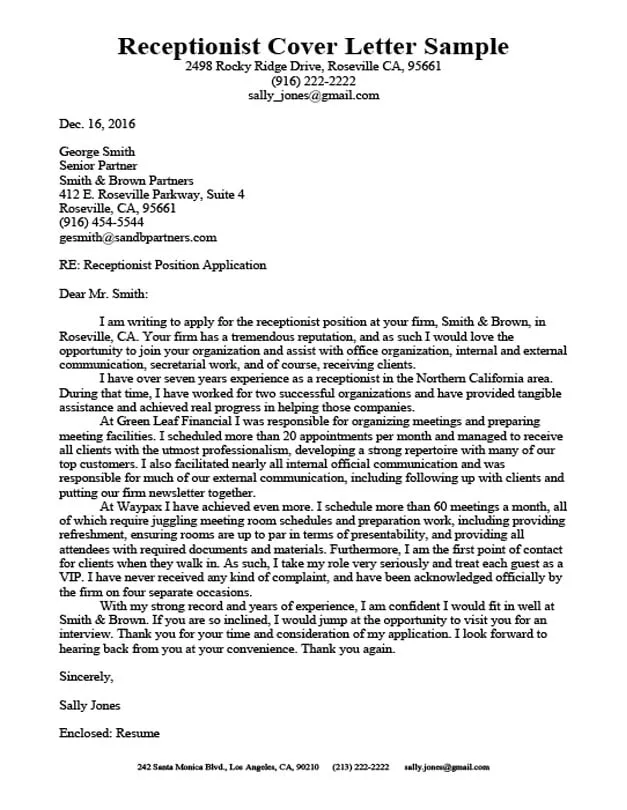
Crafting a Receptionist Cover Letter
A well-crafted receptionist cover letter is your first opportunity to make a positive impression on a potential employer. It provides a concise overview of your qualifications and demonstrates your enthusiasm for the position. Unlike a resume, which is a factual summary of your experience, a cover letter allows you to showcase your personality, communication skills, and specific reasons why you are the ideal candidate. It’s not just about listing your skills; it’s about telling a story that connects your abilities to the needs of the employer. This guide will provide you with the essential elements and strategies to create a compelling cover letter that captures the hiring manager’s attention and increases your chances of landing an interview.
Essential Cover Letter Sections
Structuring your cover letter correctly is crucial for clarity and impact. A well-organized cover letter is easier to read and helps the hiring manager quickly grasp your key qualifications. The following sections are fundamental to an effective receptionist cover letter, ensuring that you present a complete and professional profile. Each section serves a specific purpose in highlighting your suitability for the role. By addressing each of these key sections, you create a document that is both comprehensive and tailored to the specific job requirements.
Contact Information

At the top of your cover letter, include your full name, phone number, email address, and optionally, your LinkedIn profile URL. This makes it easy for the employer to contact you. Ensure your email address is professional and use a clear, easy-to-read font for all contact details. Verify that your phone number is accurate and that your voicemail greeting is professional. Your contact information is the first thing the hiring manager sees, so accuracy and professionalism are paramount. Avoid using nicknames or unprofessional email addresses.
Professional Greeting
Address your cover letter to the hiring manager by name whenever possible. Research the company to find out the name of the person who will be reviewing applications. A personalized greeting shows that you have taken the initiative to learn about the company and the hiring process. If you can’t find the hiring manager’s name, use a professional greeting such as “Dear Hiring Manager” or “Dear [Company Name] Hiring Team.” Avoid generic greetings like “To Whom It May Concern,” as they can make your application seem impersonal.
Highlighting Relevant Skills
The core of your cover letter should focus on the skills most relevant to the receptionist role. Receptionists are expected to handle a wide range of tasks and responsibilities, so your cover letter should emphasize those abilities. These are not only customer service skills, but also organizational and multitasking skills. Customize this section to directly reflect the requirements listed in the job description. Demonstrate how your past experiences have prepared you for the specific responsibilities of the role.
Communication Skills

Receptionists need excellent communication skills, both verbal and written. Highlight your ability to communicate clearly, professionally, and empathetically with clients, visitors, and colleagues. Mention your experience in handling phone calls, emails, and face-to-face interactions. Give examples of how you have effectively resolved conflicts, managed difficult customers, and conveyed information accurately. Use action verbs to describe your communication accomplishments, such as “responded to inquiries,” “resolved issues,” or “managed communications.”
Organizational Skills
Receptionist roles demand strong organizational skills to manage schedules, appointments, and office tasks efficiently. Emphasize your ability to prioritize tasks, manage multiple responsibilities simultaneously, and maintain accurate records. Provide examples of how you’ve used organizational tools, such as scheduling software, filing systems, or databases. Mention your experience in managing calendars, coordinating meetings, and organizing office supplies. Showcasing your organizational proficiency demonstrates your ability to keep the office running smoothly.
Customer Service Experience
Customer service is central to the receptionist role. Highlight your experience in providing excellent customer service, including greeting visitors, answering questions, and resolving issues. Share specific examples of how you have gone above and beyond to assist customers, such as providing helpful information, resolving complaints, or exceeding expectations. Mention any training or certifications in customer service that you have completed. Emphasize your ability to create a positive and welcoming experience for all visitors and clients.
Showcasing Achievements

Instead of simply listing your job duties, focus on your achievements. These are specific accomplishments that demonstrate your capabilities and impact. Quantifiable results give your claims credibility and make you a more compelling candidate. Use these accomplishments to create a narrative that shows your value to potential employers.
Quantifiable Results
Whenever possible, quantify your achievements with numbers and metrics. For example, instead of saying, “Improved customer service,” say, “Improved customer satisfaction scores by 15% by implementing a new customer feedback system.” Quantifiable results provide concrete evidence of your success and demonstrate the positive impact you’ve made in previous roles. This data helps the hiring manager understand the tangible benefits you can bring to their organization. Consider examples of how you’ve increased efficiency, reduced costs, or improved customer satisfaction.
Tailoring to the Job Description
Customize your cover letter to the specific job requirements outlined in the job description. Carefully read the job posting and identify the key skills, qualifications, and experiences the employer is seeking. Then, tailor your cover letter to highlight your relevant experience and explain how your skills align with the requirements of the position. By directly addressing the employer’s needs, you demonstrate that you understand the role and are a good fit for the company.
Researching the Company

Before writing your cover letter, research the company to gain a deeper understanding of its mission, values, and culture. This research will help you personalize your cover letter and demonstrate your genuine interest in the role and the company. Visit the company website, review their social media profiles, and read news articles or press releases. This information will allow you to highlight how your skills and experiences align with the company’s goals and values, making your cover letter more effective.
Matching Skills to Requirements
Carefully review the job description and identify the keywords and phrases used to describe the required skills and qualifications. Use these keywords throughout your cover letter to demonstrate that you possess the necessary attributes. Describe your experience with those specific skills, providing concrete examples of how you have successfully applied them in previous roles. By mirroring the language used in the job description, you show that you understand the employer’s needs and that you are a good fit for the position.
Call to Action
Conclude your cover letter with a clear call to action, expressing your interest in the position and your availability for an interview. This helps the hiring manager understand your enthusiasm and next steps. A strong call to action encourages the reader to take the next step in the hiring process.
Expressing Interest

Clearly state your interest in the receptionist position and reiterate your enthusiasm for the opportunity. Explain why you are excited about the role and the company. Mention anything specific that attracts you to the position or the organization. Your interest will make a strong impression and increase the likelihood of an interview.
Thanking the Reader
End your cover letter by thanking the hiring manager for their time and consideration. This is a polite and professional way to show your appreciation. Restate your contact information and indicate that you are available for an interview at their earliest convenience. Ensure your closing is professional and appropriate, reinforcing a positive impression of your candidacy.
Cover Letter Formatting and Design
The formatting and design of your cover letter are just as important as its content. A well-formatted cover letter is easy to read and makes a professional impression. Pay close attention to font choices, layout, and overall appearance to ensure that your cover letter looks polished and professional.
Font and Layout Choices

Choose a professional and readable font, such as Times New Roman, Arial, or Calibri. Use a font size of 10-12 points. Maintain a consistent layout throughout your cover letter, with clear margins and spacing. Use bullet points and short paragraphs to make your cover letter easier to read. Ensure your formatting is consistent and professional, helping your document look clean and organized. Avoid using overly elaborate fonts or designs that might distract from the content of your cover letter.
Proofreading and Editing
Thoroughly proofread and edit your cover letter before submitting it. Typos, grammatical errors, and formatting inconsistencies can create a negative impression and undermine your credibility. Check for spelling and grammar mistakes, and also ensure your sentences flow logically. Consider having a friend or family member review your cover letter for accuracy and clarity. Proofreading is a crucial step in ensuring that your cover letter is polished and professional.
Common Mistakes to Avoid
Avoid common mistakes that can diminish the effectiveness of your cover letter. These errors can make you look unprofessional and decrease your chances of landing an interview. Being aware of these pitfalls can help you make a stronger first impression.
Generic Content
Avoid using a generic cover letter template that isn’t tailored to the specific job or company. Employers can tell when you haven’t taken the time to customize your application. Showcasing your specific experiences and skills, as well as tailoring your letter to the needs of the company, significantly improves your chances of success. Ensure your cover letter reflects your unique qualifications.
Typos and Grammatical Errors
Carelessly written cover letters filled with typos and grammatical errors signal a lack of attention to detail and a lack of professionalism. Always carefully proofread and edit your cover letter before sending it, and consider using spell-check tools. A polished cover letter demonstrates your commitment to excellence and creates a favorable impression.
Closing Remarks
Writing a compelling receptionist cover letter takes time and effort, but the investment is well worth it. A well-crafted cover letter that effectively highlights your skills, experiences, and achievements will significantly increase your chances of securing an interview and landing the job. By following these guidelines and taking the time to customize your letter for each position, you can make a strong first impression and show potential employers that you are the ideal candidate.