What is a Real Estate Cover Letter
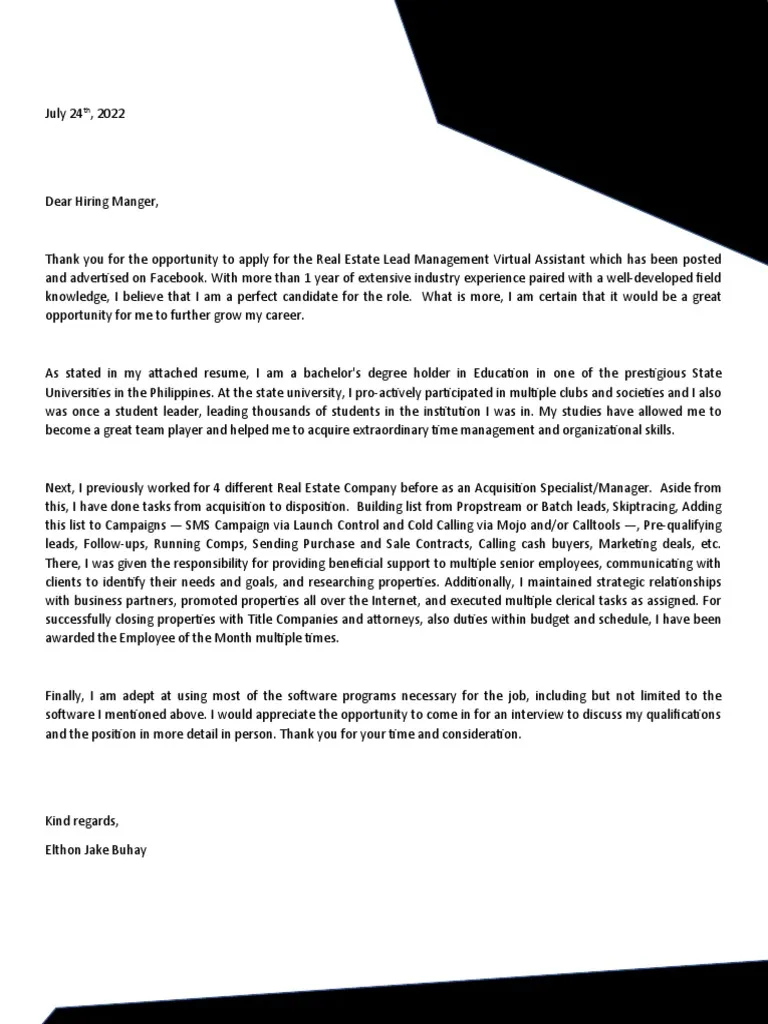
A real estate cover letter is a crucial document that accompanies your resume when applying for a job in the real estate industry. It serves as your first introduction to a potential employer, allowing you to highlight your skills, experience, and qualifications while expressing your enthusiasm for the position. Unlike a resume, which provides a factual overview of your career, a cover letter gives you the opportunity to showcase your personality, explain your motivations, and demonstrate how your specific talents align with the needs of the company. It’s your chance to make a strong first impression and convince the hiring manager that you’re the perfect fit.
Why You Need a Real Estate Cover Letter
In the competitive world of real estate, a well-crafted cover letter can make the difference between landing an interview and being overlooked. It allows you to personalize your application, going beyond the basic information in your resume to demonstrate your genuine interest in the specific company and role. A cover letter gives you the opportunity to address any potential gaps in your resume, such as career changes or periods of unemployment, and to explain how your skills and experience translate to the requirements of the job. Furthermore, it provides a platform to showcase your communication skills and your understanding of the real estate market.
Essential Components of a Real Estate Cover Letter

A compelling real estate cover letter includes several key components that work together to present a professional and persuasive case for your candidacy. These elements, when combined effectively, help you stand out from the competition and demonstrate your suitability for the position.
Contact Information
Begin with your contact information at the top of the letter. Include your full name, phone number, email address, and optionally, your LinkedIn profile URL. This ensures that the hiring manager can easily reach you for further communication. Ensure that the contact information is accurate and up-to-date.
Professional Greeting
Address the hiring manager by name if possible. Research the company to find out the name of the person in charge of hiring. If you can’t find a specific name, use a professional greeting like “Dear Hiring Manager.” Avoid generic greetings such as “To Whom It May Concern.” Personalizing your greeting demonstrates that you’ve taken the time to research the company and that you are attentive to details.
The Opening Paragraph

The opening paragraph should immediately capture the reader’s attention. State the specific position you’re applying for and how you learned about the opportunity. Briefly express your interest in the role and the company. Highlight your most relevant qualification or a key accomplishment that aligns with the job requirements. This will make your cover letter more compelling.
Highlight Your Skills and Experience
In the body of your letter, provide specific examples that showcase your skills and experience. Focus on the skills that are most relevant to the job description. Mention your experience in areas such as sales, negotiation, client relationship management, and market analysis. Use quantifiable achievements whenever possible to demonstrate your impact, such as the number of properties sold, the percentage increase in sales, or the amount of revenue generated.
Showcase Your Knowledge of the Real Estate Market
Demonstrate your understanding of the local real estate market. Mention any knowledge you have of specific neighborhoods, market trends, or property types. Highlight your ability to analyze market data, identify opportunities, and provide valuable insights to clients. You can also show your ability to stay on top of changes to real estate regulations.
Address the Company’s Needs

Demonstrate how your skills and experience align with the company’s needs. Research the company to understand its values, goals, and recent achievements. Tailor your cover letter to show how you can contribute to its success. Focus on how your skills can help the company achieve its goals and address its challenges.
Quantify Your Achievements
Whenever possible, quantify your achievements to demonstrate your impact. Instead of saying “I increased sales,” say “I increased sales by 20% in one year.” Use numbers and data to illustrate your accomplishments and demonstrate the value you bring to the table. This adds credibility and makes your application more compelling.
Express Enthusiasm and Confidence
Throughout your cover letter, express your enthusiasm for the role and the company. Show that you are excited about the opportunity to contribute to their success. Maintain a confident tone without being arrogant or overly assertive. Confidence combined with enthusiasm will leave a positive and memorable impression.
The Closing Paragraph

Summarize your key qualifications and reiterate your interest in the position. Express your appreciation for the hiring manager’s time and consideration. Use a strong and professional closing, such as “Sincerely” or “Best regards.” Ensure that the closing paragraph reinforces your interest in the company and the opportunity.
Call to Action
End your cover letter with a clear call to action. State your willingness to discuss your qualifications further and express your interest in scheduling an interview. Provide your contact information again, making it easy for the hiring manager to reach you. A well-defined call to action shows that you’re serious about the position and eager to take the next step.
Formatting Your Real Estate Cover Letter
The format of your real estate cover letter is as important as its content. A well-formatted letter demonstrates professionalism and attention to detail, making it easy for the hiring manager to read and understand your qualifications. Poor formatting, on the other hand, can create a negative impression and distract from your message. Always follow a standard business letter format to maintain consistency and enhance readability.
Choosing the Right Font and Font Size
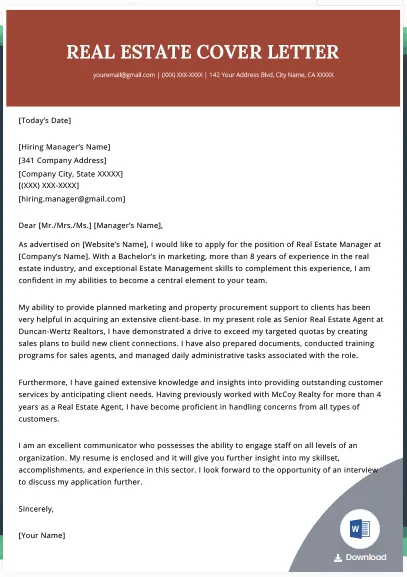
Select a professional and easy-to-read font such as Times New Roman, Arial, or Calibri. Stick to a font size between 10 and 12 points. Ensure that the font is consistent throughout the letter. Avoid using unusual or overly decorative fonts, as they can make your cover letter appear unprofessional. The goal is to make your letter easy on the eyes.
Proofreading and Editing Your Cover Letter
Proofreading and editing are critical steps in the cover letter writing process. Always proofread your cover letter multiple times to check for any typos, grammatical errors, or inconsistencies. Read the letter aloud to catch any awkward phrasing or sentences that don’t flow smoothly. Consider asking a friend or colleague to review your letter for a fresh perspective. A polished, error-free cover letter reflects your professionalism and attention to detail.
Examples of Effective Real Estate Cover Letters
Reviewing examples of effective real estate cover letters can help you understand how to structure your own. These examples, tailored for different experience levels and roles, provide insights into how to highlight your skills and experience and tailor your application to each job.
Example 1 New Real Estate Agent

For a new real estate agent, focus on your education, skills, and any relevant experience, such as customer service or sales. Emphasize your enthusiasm for the real estate industry and your eagerness to learn and grow. Highlight any relevant coursework or certifications you’ve obtained. Showcase your understanding of the local market and your commitment to providing excellent service to clients.
Example 2 Experienced Real Estate Agent
An experienced agent should highlight their accomplishments, such as the number of properties sold, total sales volume, or client satisfaction ratings. Showcase your expertise in specific areas, such as luxury homes, commercial properties, or investment properties. Demonstrate your ability to generate leads, negotiate deals, and build strong client relationships. You might highlight experience in leading a real estate team.
Example 3 Real Estate Broker
If you are applying for a broker position, emphasize your leadership skills, management experience, and knowledge of real estate regulations. Highlight your ability to recruit, train, and mentor agents. Showcase your experience in managing a successful brokerage, including your track record of profitability and market share growth. Include mention of your licenses and any professional affiliations.
Tips for Writing a Strong Real Estate Cover Letter
Writing a strong real estate cover letter requires careful attention to detail, personalization, and a clear focus on the employer’s needs. By following these tips, you can create a cover letter that stands out from the competition and increases your chances of landing an interview.
Tailor Your Cover Letter to Each Job
Customize your cover letter for each job application. Avoid using a generic cover letter that you send to multiple employers. Read the job description carefully and tailor your letter to match the specific requirements and qualifications. Mention the company’s name and address the hiring manager by name. Demonstrate your understanding of the company and its needs, and explain how your skills and experience align with the role.
Research the Company and the Role
Before you start writing, thoroughly research the company and the role. Visit the company’s website, read its mission statement, and learn about its values and culture. Review the job description carefully and identify the key skills and qualifications that the employer is seeking. This research will help you tailor your cover letter to the company’s specific needs and demonstrate your genuine interest in the role.
Use Keywords from the Job Description
Incorporate relevant keywords from the job description into your cover letter. This will help your application get noticed by applicant tracking systems (ATS) and demonstrate that you meet the employer’s requirements. Identify the key skills, qualifications, and experience mentioned in the job description and use these terms throughout your letter. Use these keywords in a natural and seamless way, without keyword stuffing.
Keep it Concise and Focused
Keep your cover letter concise and focused. Aim for a one-page letter that highlights your most relevant skills and experience. Avoid including unnecessary details or irrelevant information. Be direct and to the point, and use clear and concise language. Focus on what you can offer the company and how you can contribute to its success. Make every word count and demonstrate your ability to communicate effectively.
Proofread Carefully
Proofread your cover letter carefully for any errors in grammar, spelling, and punctuation. Mistakes can create a negative impression and undermine your credibility. Use a grammar checker and ask a friend or colleague to review your letter for a fresh perspective. A polished, error-free cover letter demonstrates your attention to detail and your commitment to excellence.
Mistakes to Avoid in Your Real Estate Cover Letter
Avoiding common mistakes can significantly improve the effectiveness of your real estate cover letter. These mistakes can undermine your application and reduce your chances of getting an interview. Being aware of these pitfalls can help you avoid them and create a compelling cover letter.
Generic Cover Letters
Avoid using generic cover letters that are not tailored to the specific job or company. A generic cover letter shows a lack of interest and effort. Customize your letter for each job application, highlighting the skills and experience that align with the specific requirements and demonstrating your genuine interest in the company.
Typos and Grammatical Errors
Typos and grammatical errors can create a negative impression and make you appear unprofessional. Always proofread your cover letter carefully for any errors in grammar, spelling, and punctuation. Ask a friend or colleague to review your letter for a fresh perspective. A polished, error-free cover letter demonstrates your attention to detail and commitment to excellence.
Focusing on Yourself Too Much
While it’s important to highlight your skills and experience, avoid focusing solely on yourself. Instead, emphasize how your skills and experience align with the company’s needs and how you can contribute to its success. Demonstrate your understanding of the company and its goals, and explain how you can add value to the team. Show the employer what’s in it for them.
Failing to Customize Your Letter
Failing to customize your letter for each job application can make it appear generic and impersonal. Always tailor your cover letter to match the specific requirements and qualifications outlined in the job description. Research the company and demonstrate your understanding of its values, goals, and recent achievements. Show the employer that you’re genuinely interested in the role and the company.
The Importance of Following Up
After submitting your cover letter and resume, it’s important to follow up with the hiring manager. Send a brief email or make a phone call a week or two after submitting your application to reiterate your interest in the position and inquire about the status of your application. Following up demonstrates your enthusiasm and commitment to the opportunity.