Why a Quality Engineer Cover Letter Matters
In the competitive landscape of job applications, a well-crafted quality engineer cover letter is your first opportunity to make a lasting impression. It’s not just a formality; it’s a critical tool that demonstrates your personality, enthusiasm, and genuine interest in the position and the company. Unlike your resume, which provides a factual overview of your skills and experience, the cover letter allows you to tell a story, connecting your qualifications to the specific needs of the employer. A compelling cover letter can significantly increase your chances of landing an interview by showcasing your unique value proposition and highlighting what sets you apart from other candidates. This is your chance to go beyond the bullet points and provide context, elaborating on your achievements and demonstrating how your skills align with the company’s goals and culture, especially in the field of quality assurance. A strong quality engineer cover letter is therefore more than a formality, it is the difference between a resume that gets noticed and one that is overlooked.
Key Components of a Quality Engineer Cover Letter
To effectively capture the attention of hiring managers, your quality engineer cover letter must include several key components. Each section serves a distinct purpose in presenting you as the ideal candidate. Starting with the basics and proceeding to the most compelling aspects of your qualifications, each element is an important contribution to the overall effectiveness of the letter. From contact information to a compelling call to action, following these guidelines will show the professionalism needed for this industry.
Contact Information

Begin your cover letter with your full name, address, phone number, and professional email address. Ensure that your contact information is accurate and up-to-date, as this is how recruiters will reach you. Consider using a professional email address that includes your name to maintain a polished and credible appearance. This section should be clearly presented at the top of the document, typically aligned to the left or right. The goal is to make it easy for the hiring manager to find and contact you quickly. Accuracy and professionalism are paramount; this small detail reflects your attention to detail, a crucial skill for a quality engineer.
Greeting and Addressing the Hiring Manager
Always address your cover letter to a specific person, if possible. Research the hiring manager’s name and title, and use a formal greeting, such as “Dear Mr./Ms./Mx. [Last Name].” If you cannot find a specific name, use a professional alternative like “Dear Hiring Manager.” Avoid generic greetings like “To Whom It May Concern,” as they suggest a lack of effort and personalization. Addressing the letter directly shows that you’ve taken the initiative to learn about the company and the position, making a positive first impression. This small step shows dedication and attention to detail, two important qualities that are relevant for a quality engineer.
Highlighting Your Skills and Experience
This is the heart of your cover letter. Clearly articulate your relevant skills and experience, directly aligning them with the job requirements. Refer to the job description and highlight the key skills and qualifications the employer seeks. Provide specific examples of how you’ve used these skills in previous roles and the positive outcomes achieved. Quantify your achievements whenever possible, using data to demonstrate the impact of your work. Focus on the most relevant experiences that showcase your abilities as a quality engineer, such as your knowledge of quality control processes, experience with relevant software, and problem-solving capabilities. Your cover letter must establish a clear connection between your expertise and the job’s demands, thereby increasing your value to the hiring team.
Quantifiable Achievements

Use numbers and data to demonstrate the impact of your work. Instead of stating you improved efficiency, say, “Improved production efficiency by 15%.” Quantifiable achievements provide concrete evidence of your capabilities and make a more persuasive case for your candidacy. Use metrics to showcase the success of your previous projects. Quantifying your achievements proves your value, making a stronger impression on the hiring manager. Examples of quantifiable achievements could include the number of audits conducted, the percentage reduction in defects, or the cost savings achieved through process improvements.
Technical Skills
List your technical skills that are directly relevant to the quality engineer role. This might include proficiency in statistical analysis software, experience with quality management systems (QMS), knowledge of industry standards (ISO 9001, etc.), and experience with inspection and testing equipment. Emphasize skills that are mentioned in the job description and match them with your experience. Mention specific software, tools, and methodologies you’ve used in past roles, and briefly explain how you applied them. For instance, if the job requires experience with Six Sigma, highlight your certifications and projects where you’ve applied this methodology. Focus on those skills that set you apart from the other candidates.
Soft Skills
While technical skills are important, soft skills are equally crucial for a quality engineer. Highlight your communication, problem-solving, analytical, and teamwork abilities. Provide examples that demonstrate your ability to work collaboratively with others, analyze complex data, and communicate findings effectively. These skills often set candidates apart in the hiring process, demonstrating your potential to fit in and succeed in the team environment. Employers want to see how you’ve utilized these skills to enhance your previous work.
Tailoring Your Cover Letter

Customize your cover letter for each job application. Don’t use a generic template; instead, review the job description thoroughly and align your skills, experience, and accomplishments with the specific requirements of the role. This will require time and effort, but it demonstrates your genuine interest in the position and increases your chances of getting noticed. Show how your experience aligns with the company’s needs and explain why you are a good fit for the company’s culture. Customization is key to making your cover letter stand out, making the job application more appealing to the hiring manager.
Researching the Company
Before writing your cover letter, research the company. Understand their mission, values, products or services, and recent achievements. Incorporate this knowledge into your letter to demonstrate your understanding of the company and your interest in joining their team. Show the hiring manager that you’ve invested the time to get to know the company. Researching the company shows your enthusiasm and gives you an edge. Knowing the company’s goals helps you tailor your cover letter to their needs, highlighting how your skills can help them achieve those goals.
Matching Skills to Job Requirements
Carefully compare your skills and experience to the requirements listed in the job description. Identify the key skills and qualifications the employer is seeking. Highlight your relevant experiences and provide specific examples to illustrate how you’ve used these skills in the past. Make sure to use the same keywords and phrases from the job description in your cover letter to signal to the hiring manager that you are a perfect match. This is about proving that you understand what the job requires and that you are ready to tackle it. By directly addressing the requirements, you increase the likelihood of your cover letter capturing the hiring manager’s attention.
Formatting and Structure

A well-formatted cover letter is easy to read and professional. Use a clean font, such as Times New Roman, Arial, or Calibri, and maintain a consistent font size. Keep the letter to one page, using clear headings, concise paragraphs, and appropriate white space. Use bullet points to highlight key achievements and skills. A well-structured cover letter shows that you value professionalism and attention to detail. Use a simple, easy-to-read format to make it easy for the hiring manager to scan the document and quickly understand your qualifications. Formatting greatly enhances your professional appeal.
Writing a Strong Body Paragraph
The body paragraph is where you elaborate on your skills and experience. Focus on the most relevant qualifications, and provide specific examples of how you’ve used these skills to achieve positive results. Use the STAR method (Situation, Task, Action, Result) to structure your examples, providing a clear and concise narrative of your accomplishments. In this section, you provide the core of your message and make it engaging, making a case for why the company should hire you. This is your chance to shine.
First Paragraph: Grab Their Attention
The first paragraph should immediately grab the reader’s attention. Start with a strong opening statement that expresses your enthusiasm for the position and the company. Mention how you learned about the job and briefly highlight a key skill or experience that makes you a strong candidate. Immediately create a connection with the hiring manager. The first paragraph is your hook; it needs to be captivating and set the tone for the rest of your cover letter. It must be concise, interesting, and get the reader to want to learn more about you.
Second Paragraph: Showcase Your Value

The second paragraph should showcase your value to the company. Describe your key skills and experiences, and provide specific examples of your accomplishments. Use quantifiable results to demonstrate your impact in previous roles. Explain how your skills align with the job requirements and how you can contribute to the company’s goals. This is where you dive deeper, proving why you are the best candidate. This section is all about demonstrating your value and making a compelling case for your candidacy.
Third Paragraph: Address Concerns
Address any potential concerns the employer might have about your candidacy, such as gaps in your employment history or a lack of specific experience. Frame these issues positively, and explain how you are working to overcome them. Show that you are proactive and address any potential weaknesses. This paragraph can demonstrate self-awareness and reassure the hiring manager about your suitability for the job. It will show your ability to be honest and transparent while still proving your value.
Closing and Call to Action
In your closing paragraph, reiterate your interest in the position and express your enthusiasm for the opportunity. Include a clear call to action, such as requesting an interview or suggesting a follow-up. Thank the hiring manager for their time and consideration. A strong closing leaves a lasting impression and encourages the hiring manager to take the next step. Make it clear that you are ready and eager to move forward in the hiring process. A well-crafted call to action can significantly increase your chances of getting an interview.
Proofreading and Editing

Always proofread your cover letter before submitting it. Check for any grammatical errors, typos, or formatting issues. Have a friend or family member review your letter for clarity and accuracy. A polished cover letter reflects your attention to detail and professionalism. Poor grammar and spelling errors can damage your chances of getting hired. Taking the time to proofread your cover letter demonstrates your professionalism and commitment to quality, reflecting the qualities required for a quality engineer role.
Common Mistakes to Avoid
Several common mistakes can undermine your cover letter and decrease your chances of getting hired. It is important to know what these are and avoid them. By paying attention to these common pitfalls, you can dramatically improve the quality of your application and set yourself apart from the competition.
Generic Language
Avoid using generic, cliché phrases that could apply to any job. Instead, use specific language that reflects your unique skills, experience, and the requirements of the position. Generic language can make your cover letter sound impersonal and uninspired. Tailor your language to the company and the job requirements to showcase your understanding and enthusiasm. Customization is key to making your cover letter stand out and showcase your value.
Typos and Grammatical Errors
Typos and grammatical errors can make your cover letter appear unprofessional and reflect poorly on your attention to detail. Always proofread your cover letter carefully, and consider having someone else review it. Errors can undermine your credibility and signal a lack of attention to detail. Take the time to review your work to ensure that it’s polished and error-free. Proofreading is a crucial step in the job application process; it helps you present a professional image.
Failing to Customize
Submitting a generic cover letter without customizing it to the specific job and company is a major mistake. Tailor your cover letter to each job application, highlighting the skills, experiences, and accomplishments that are most relevant to the role. Failing to customize your cover letter suggests a lack of interest in the specific position and the company. Take the time to research the company, understand their needs, and tailor your cover letter to show how you can contribute to their success. This customization shows that you are genuinely interested and willing to invest the extra effort to win the job.
Cover Letter Examples for Quality Engineers
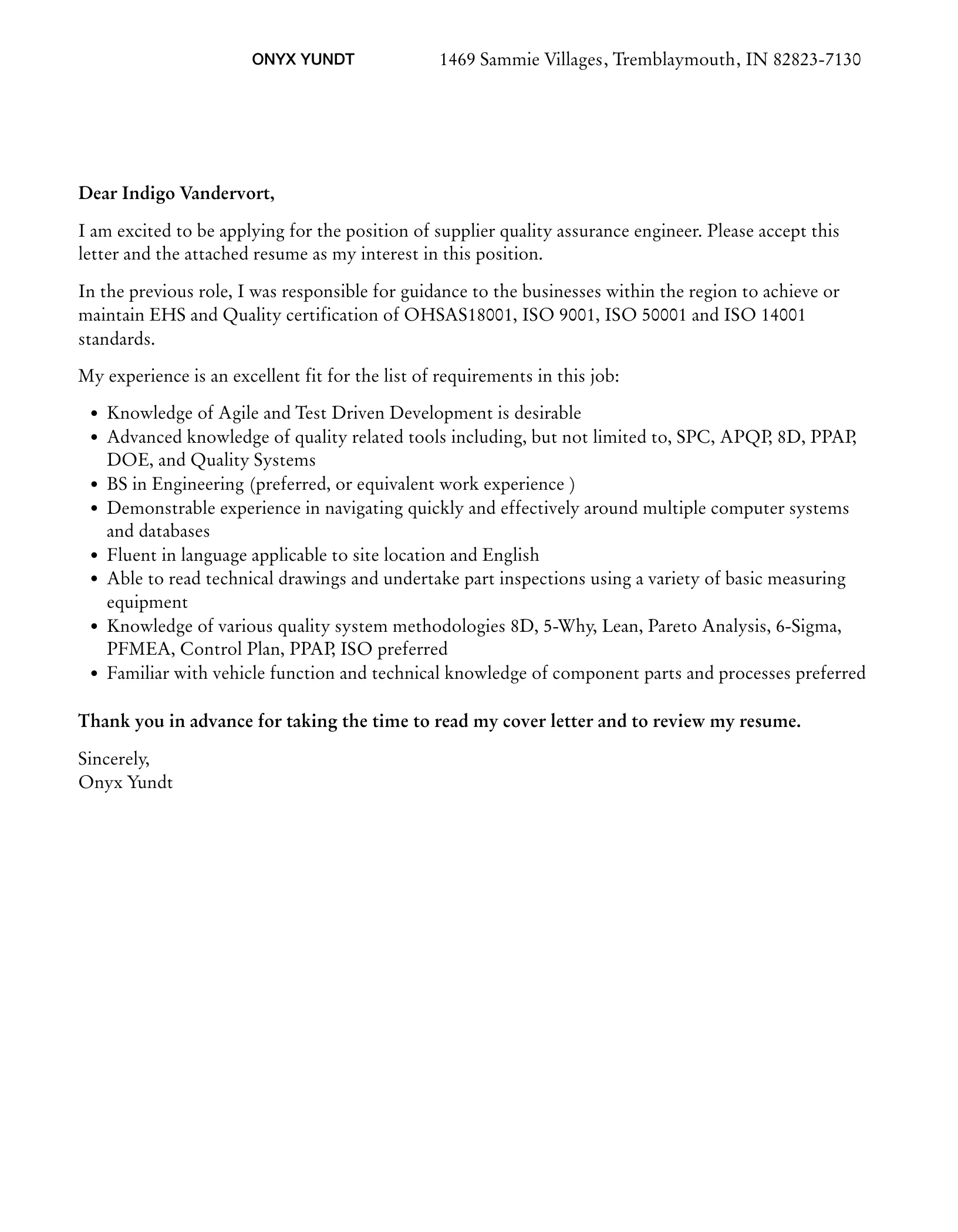
Reviewing examples of successful cover letters can give you valuable insights into how to structure your own. Several online resources offer templates and examples tailored to quality engineers. These examples provide valuable guidance for structuring your cover letter, highlighting skills and accomplishments, and adapting it to various situations. Studying these examples can also help you identify best practices and avoid common mistakes. Use these examples as a starting point to create a cover letter that highlights your unique strengths and experience.
Entry-Level Quality Engineer Cover Letter Example
Entry-level cover letters should emphasize relevant coursework, internships, projects, and any technical skills you’ve gained. Focus on your eagerness to learn and your ability to apply your knowledge. Highlight any experience with quality assurance tools or methodologies, even if it was gained in an academic setting. Showing a strong understanding of the fundamentals and a willingness to develop are valuable for any entry-level position. Ensure your letter emphasizes your willingness to learn and grow within the role.
Experienced Quality Engineer Cover Letter Example
For experienced quality engineers, your cover letter should focus on quantifiable achievements, such as process improvements, cost savings, and defect reduction. Highlight your leadership skills, experience with quality management systems (QMS), and expertise in industry standards. Use the STAR method to illustrate how you’ve used your skills to achieve positive results. In your letter, be sure to emphasize experience with quality assurance processes, leadership, and the ability to achieve improvements, demonstrating why you are a leader in your field. Demonstrate your achievements by using numbers and providing data.
Tips for Submitting Your Cover Letter
When submitting your cover letter, always follow the instructions provided in the job posting. Use the correct file format (usually PDF) and name your file properly, including your name and the job title. Submit your cover letter and resume as a single PDF document if possible. If the job posting mentions a specific way to submit your application, be sure to comply. Following these instructions shows your attention to detail and professionalism, increasing your chances of getting noticed and getting the job.