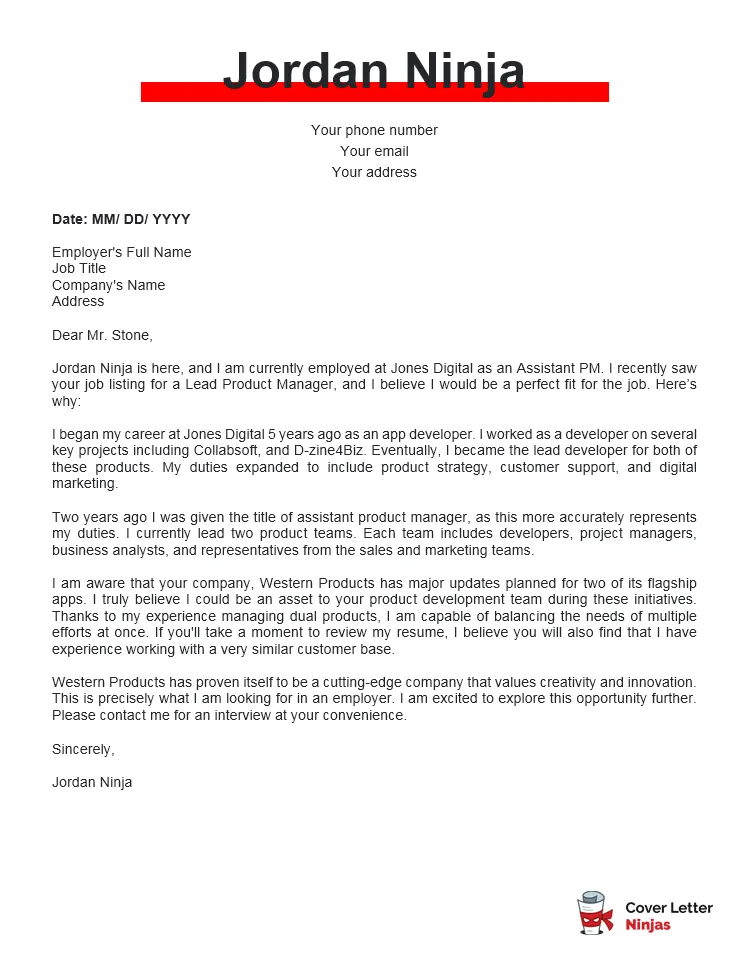
What is a Product Manager Cover Letter?
A Product Manager cover letter is a crucial document that accompanies your resume when applying for product management positions. It serves as an introduction, allowing you to showcase your relevant skills, experience, and passion for the role. Unlike a resume, which provides a concise overview of your qualifications, a cover letter allows you to elaborate on your accomplishments and explain why you are the ideal candidate for a specific job. It’s an opportunity to make a strong first impression and persuade the hiring manager to invite you for an interview. Think of it as your personal sales pitch, highlighting what makes you stand out from other applicants. A well-crafted cover letter can significantly increase your chances of landing an interview, making it a vital part of your job application strategy.
Key Components of a Product Manager Cover Letter
A compelling cover letter includes several key components that work together to present a cohesive and persuasive argument for your candidacy. These components ensure your cover letter is professional, easy to read, and effectively conveys your qualifications. From the header to the closing, each section plays a specific role in convincing the hiring manager that you are the right fit. Proper organization and formatting are just as important as the content itself. Let’s break down the essential elements of a well-structured product manager cover letter.
Header Section

The header sets the tone for the rest of the cover letter and provides essential contact information. It ensures the hiring manager can easily reach you and establishes a professional presentation. This is the first thing a recruiter sees, so making it clean and clear is paramount.
Applicant Contact Information
Start with your full name, phone number, email address, and optionally, your LinkedIn profile URL. Ensure your email address is professional. Consider including a link to a personal website or portfolio if you have one, providing easy access to your work.
Date
Include the date you are submitting the cover letter. This is a standard practice and helps with record-keeping.
Hiring Manager Contact Information

If possible, address the hiring manager by name. Research the company and find out who will be reviewing the applications. Using the hiring manager’s name shows that you have taken the time to personalize your application, which makes a good impression.
Salutation
Start with a professional salutation. Use “Dear [Hiring Manager’s Name],” if you know the name. Otherwise, use a general salutation such as “Dear Hiring Manager,” or “Dear [Company Name] Hiring Team.”
Body Section
The body of your cover letter is where you showcase your skills, experience, and passion for the role. This is the heart of your cover letter and it’s where you make your case for why you are the best candidate. Use a clear, concise writing style and structure your paragraphs logically to highlight your relevant qualifications.
First Paragraph: Grab Attention

Start with a strong opening. Briefly state the position you’re applying for and where you saw the job posting. Consider mentioning something that sparked your interest in the company or the role. This is your chance to make a great first impression, so make sure it’s memorable and professional. State your key reason for applying and why you’re excited about the opportunity.
Highlight Relevant Skills & Experience
In the following paragraphs, highlight the skills and experience most relevant to the product manager role. Refer to the job description and tailor your letter to match the required skills. Discuss your achievements and how they align with the company’s needs. Mention your product development process, user research, and market analysis skills. Use the STAR method (Situation, Task, Action, Result) to describe your accomplishments.
Quantify Accomplishments with Numbers
Whenever possible, use numbers to quantify your achievements. Instead of saying “Improved product performance,” say “Increased product conversion rates by 15%.” Providing specific data and metrics demonstrates the impact of your work and showcases your results-oriented approach. This makes it easier for the hiring manager to understand the value you bring to the table. Numbers show how you have positively impacted previous companies.
Showcase Passion and Enthusiasm

Express your genuine enthusiasm for the product management role and the company. Explain why you are excited about the opportunity. Discuss the company’s mission, values, or products that resonate with you. Demonstrating passion makes you a more compelling candidate and shows that you’re not just looking for any job but are specifically interested in this one. This also tells the hiring manager that you have done your research.
Tailor to the Specific Job Description
Customize your cover letter for each job application. Review the job description carefully and highlight the skills and experiences that align with the requirements. Don’t just send a generic cover letter; show that you understand the specific needs of the role and the company. Adaptability shows that you are willing to go the extra mile.
Address the Company’s Needs
Focus on how you can solve the company’s problems and help them achieve their goals. Research the company’s challenges and discuss how your skills and experience can address those issues. Frame your accomplishments in terms of benefits to the company. This demonstrates your understanding of business needs and your ability to contribute to their success.
Closing Section

The closing section of your cover letter should leave a positive impression and encourage the hiring manager to contact you. It reinforces your interest in the position and provides a clear call to action.
Formal Closing and Signature
End with a professional closing such as “Sincerely,” “Best regards,” or “Thank you.” Include your typed name and a digital signature if you have one. This reinforces professionalism and provides a clear closing.
Formatting and Design Tips
Effective formatting and design can greatly enhance the readability and impact of your cover letter. A well-formatted cover letter is easier to read and makes a better impression on the hiring manager. Ensure your cover letter is visually appealing and easy to navigate, reflecting your attention to detail and professionalism.
Proofread and Edit Carefully
Proofread your cover letter multiple times to catch any typos, grammatical errors, or formatting inconsistencies. Errors can undermine your credibility, so take the time to review your work carefully. Use a spell-checker and grammar-checker, and ideally, have a friend or mentor review your cover letter for clarity and accuracy. Make sure your sentences flow well and are easy to understand.
Use a Professional Font and Layout
Choose a professional font such as Times New Roman, Arial, or Calibri in a readable size (11 or 12 points). Use a clean and easy-to-read layout with consistent margins and spacing. Keep your letter concise, aiming for one page. The goal is to make your cover letter visually appealing, easy to read, and professional. This is a simple step that can improve your odds.
Keywords Optimization
Incorporate relevant keywords from the job description into your cover letter. This can help your application get noticed by applicant tracking systems (ATS). However, ensure you use keywords naturally and avoid keyword stuffing. The focus should be on your qualifications and accomplishments, with keywords supporting your narrative.
Avoid Common Mistakes
Avoid these common mistakes to ensure your cover letter stands out for the right reasons. Mistakes can damage your credibility and decrease your chances of getting an interview. Be attentive to detail and proofread carefully to ensure that your cover letter is as strong as possible. Pay attention to detail. Proofread, proofread, proofread!
Generic Cover Letter
Do not use a generic cover letter. Always customize your cover letter for each job application. Tailoring your cover letter demonstrates that you understand the specific requirements of the role and are genuinely interested in the company. This demonstrates that you are serious about the position and have put in the effort to do your research. Generic cover letters are usually rejected.
Ignoring the Job Description
Failing to align your skills and experience with the job description is a critical mistake. Review the job description carefully and highlight the relevant qualifications. Use the language and keywords from the job description to show that you understand the requirements and are a good fit. Do your research to make sure you are a match.
Typos and Grammatical Errors
Typos and grammatical errors make your cover letter appear unprofessional. Proofread your cover letter carefully, and use spell-check and grammar-check tools. It’s also a good idea to have a friend or career counselor review your letter for clarity and accuracy. Errors show a lack of attention to detail. Avoid these at all costs.
Submitting Without Customization
Sending a cover letter without customization can make your application seem impersonal. Research the company and the role, and tailor your cover letter to demonstrate your interest and understanding of the specific opportunity. This demonstrates that you’ve taken the time to learn about the company and the position.
Cover Letter Examples and Templates
Utilizing examples and templates can be a great starting point for writing your cover letter. They provide a framework for structuring your letter and offer inspiration for content and formatting. However, remember to customize the template to reflect your unique skills, experience, and the specific job you are applying for. Customize the template, do not submit as is. Using samples, ensures you do not miss anything.
Where to Find Templates and Examples
Many online resources offer cover letter templates and examples. Websites such as Indeed, LinkedIn, and Resume.io provide a variety of templates for product managers and other roles. You can also search for cover letter examples specific to your industry or job function. Just make sure the template is updated and relevant.
Product Manager Cover Letter Checklist
Use a checklist to ensure you’ve covered all the essential elements of a product manager cover letter. This will help you avoid omissions and ensure that your letter is thorough and compelling. Review this checklist before submitting your application to ensure that you have included everything. Using a checklist can improve your chances.
- Header includes contact information
- Addressed to the hiring manager by name
- Clear statement of the position applied for
- Highlights relevant skills and experience
- Quantifies accomplishments with numbers
- Shows passion and enthusiasm
- Tailored to the specific job description
- Addresses the company’s needs
- Professional closing and signature
- Proofread for errors
Final Thoughts on Product Manager Cover Letters
A well-crafted product manager cover letter is a powerful tool for showcasing your qualifications and securing an interview. By following these guidelines and tailoring your letter to each job application, you can significantly increase your chances of landing your dream job. Remember to highlight your skills, quantify your accomplishments, and express your enthusiasm for the role and the company. The cover letter is your chance to provide an extra reason for hiring you.