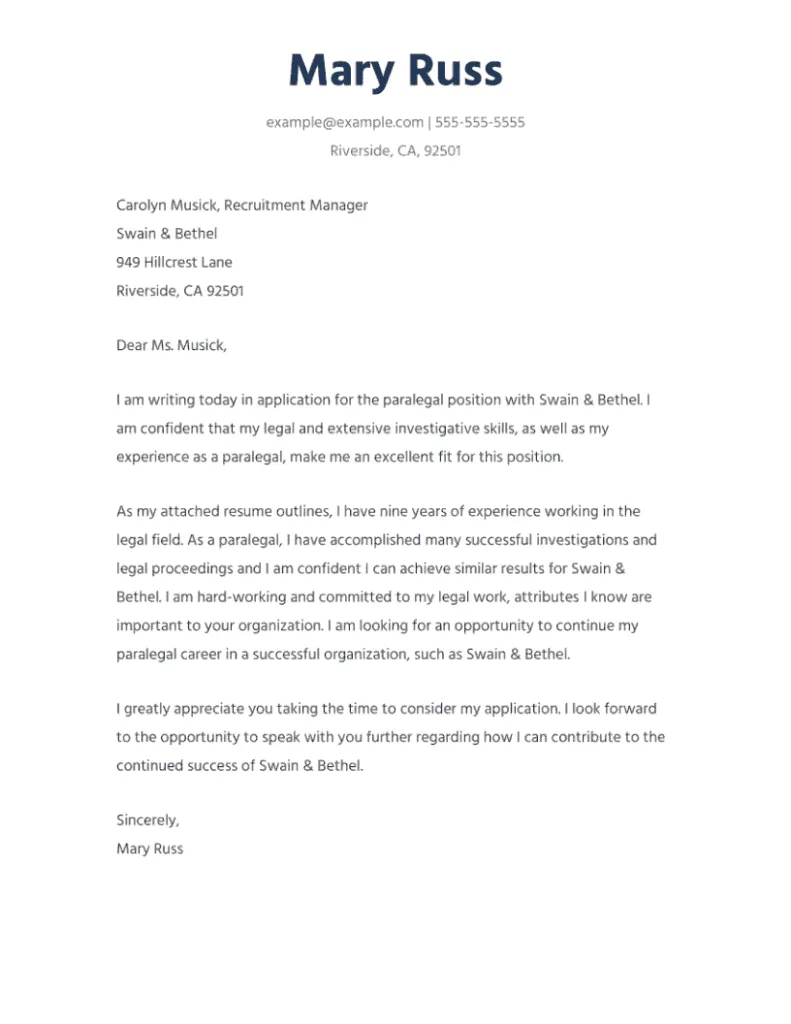
Key Components of a Strong Paralegal Cover Letter
A well-crafted cover letter is your first impression on a potential employer, making it crucial for paralegals seeking employment. It should highlight your skills, experience, and enthusiasm for the role. This guide provides top tips to help you create a compelling cover letter that stands out. Remember, your cover letter isn’t just a formality; it’s your opportunity to showcase why you’re the perfect fit for the position. A strong cover letter complements your resume by providing a narrative that emphasizes your relevant qualifications and career goals. It’s about selling yourself and demonstrating your value to the law firm or legal department.
Contact Information and Salutation
Begin your cover letter with your contact information, ensuring it’s accurate and professional. This section sets the stage for your communication and provides the employer with easy access to reach you. Following your contact details, the salutation is equally important as it sets the tone for your letter and shows you’ve paid attention to the details. Using a formal and respectful salutation indicates professionalism and respect for the recipient.
Formatting Your Contact Details

Your contact information should be at the top of the letter, typically left-aligned. Include your full name, address, phone number, and professional email address. Ensure your email address is appropriate; avoid using nicknames or unprofessional email handles. Make sure all your information is up-to-date and easily readable. Consistency is key, ensuring that your contact details match the information on your resume for a cohesive presentation of your professional identity.
Choosing the Right Salutation
The salutation should be formal and addressed to a specific person, if possible. Use “Dear Mr./Ms./Mx. [Last Name]” when you know the hiring manager’s name. If the name is unavailable, “Dear Hiring Manager” is acceptable. Avoid generic greetings like “To Whom It May Concern,” as they show a lack of effort. Always double-check the correct spelling of the recipient’s name and ensure the salutation is appropriate for the firm’s culture. If the firm is more informal, you might use “Dear [First Name]”.
Highlighting Relevant Skills and Experience
This is the heart of your cover letter, where you demonstrate your value to the employer. Focus on the skills and experience most relevant to the paralegal position you’re applying for. Don’t just list your duties; showcase how you’ve applied your skills to achieve results. Use action verbs and provide specific examples to illustrate your capabilities and accomplishments. This section should be tailored to align with the job description to emphasize that you meet the employer’s needs.
Showcasing Legal Knowledge

Highlight your knowledge of legal procedures, terminology, and relevant areas of law. Mention any specialized training, certifications, or areas of expertise, such as litigation support, real estate law, or corporate law. Demonstrate your understanding of legal research, document preparation, and case management. Provide examples of how you have successfully applied your legal knowledge in previous roles to solve problems or contribute to positive outcomes. Mention any software and technology used in the field.
Demonstrating Communication Skills
Paralegals must communicate effectively, both orally and in writing. Highlight your ability to draft legal documents, communicate with clients, and work collaboratively with attorneys and other team members. Provide examples of successful communication, such as clear and concise writing in legal briefs, persuasive presentations, or effective client interactions. Emphasize your active listening skills and your ability to convey complex information in an understandable way. The ability to be understood can set you apart.
Emphasizing Relevant Experience
Focus on your experience that directly aligns with the job requirements. Use specific examples from your previous roles to demonstrate how you’ve handled similar tasks or projects. Briefly describe the law firms or legal departments you’ve worked for and the type of legal work you’ve been involved in. Quantify your accomplishments whenever possible, such as the number of cases you’ve managed, the volume of documents you’ve processed, or the efficiency gains you’ve achieved. This section can be more effective if you tailor your experience to the specific firm, showcasing your understanding of their practice areas.
Tailoring Your Cover Letter to the Job Description

Customizing your cover letter for each job application is essential. This shows the employer that you’ve invested time and effort into understanding their specific needs. By addressing the job description’s requirements, you demonstrate your attention to detail and your ability to meet the employer’s criteria. This personalization significantly increases the chances of your application being noticed and considered.
Analyzing the Job Requirements
Carefully review the job description and identify the key requirements, skills, and qualifications the employer is seeking. Make a list of the essential and preferred qualities mentioned in the job posting. Understand the specific tasks, responsibilities, and expectations of the role. Analyzing the requirements allows you to target your cover letter to the specific needs of the employer. This ensures your cover letter is directly relevant and resonates with the hiring manager.
Matching Your Skills to the Job Needs
Use the job description as a guide to highlight your skills and experiences that align with the employer’s needs. Structure your cover letter to address the key requirements listed in the job posting. Use the same keywords and phrases used in the job description to showcase your understanding of the role. Provide concrete examples of how you have successfully utilized those skills in the past. This demonstrates that you can immediately contribute to the team.
Quantifying Your Accomplishments

Whenever possible, quantify your accomplishments to provide concrete evidence of your capabilities and impact. Use numbers, percentages, or specific metrics to demonstrate your achievements. This makes your cover letter more compelling and helps the employer quickly understand the value you can bring to their organization. Quantifiable achievements are much more persuasive than vague descriptions of responsibilities.
Using Numbers to Demonstrate Impact
Include numerical data that illustrates your achievements. For instance, mention the number of cases you have managed, the percentage of successful outcomes you have contributed to, or the amount of time you saved on a particular project. Numbers provide a clear and concise way to demonstrate your effectiveness and productivity. Make sure the metrics are relevant to the role and highlight your key contributions.
Providing Specific Examples
Instead of just stating your skills, provide specific examples of how you’ve applied them. Describe a particular project or task where you successfully used your skills, highlighting the challenges you faced and the results you achieved. These examples provide context and depth, making your cover letter more engaging and memorable. They help the employer visualize how you would perform in the role and showcase your abilities in action. Details are key.
Professional Tone and Language

Maintain a professional and polished tone throughout your cover letter. Use formal language and avoid slang, jargon, or overly casual expressions. Ensure your writing style is clear, concise, and easy to understand. Proofread your letter carefully for any grammatical errors or typos. The goal is to communicate your qualifications in a manner that reflects your attention to detail and professionalism.
Avoiding Common Mistakes
Be aware of common pitfalls that can diminish your chances of getting an interview. Avoid typos, grammatical errors, and inconsistencies in formatting. Do not use generic cover letters; always tailor the letter to each job application. Avoid overly long or complex sentences and keep your language simple and direct. Never provide misleading information or exaggerate your skills or experience. Ensure your cover letter aligns with the professionalism expected in the legal field.
Proofreading and Editing
Proofreading and editing your cover letter is essential to ensure it’s error-free and presents you in the best possible light. Carefully review your letter for any typos, grammatical errors, and inconsistencies in language or formatting. Read your letter aloud to catch any awkward phrasing or sentence structures. Ask a trusted friend or colleague to review your letter for a second opinion. A polished and well-written cover letter will leave a positive impression on the hiring manager. This is also your chance to catch any mistakes you may have missed.
Closing and Call to Action

The closing of your cover letter should leave a lasting impression. Express your enthusiasm for the position and your gratitude for the employer’s time and consideration. Include a clear call to action that encourages the employer to take the next step, such as inviting you for an interview. This approach ensures your cover letter achieves its purpose and encourages the employer to engage further.
Expressing Enthusiasm and Gratitude
Conclude your cover letter by expressing your genuine enthusiasm for the paralegal position and the opportunity to join the firm or legal department. Thank the hiring manager for their time and consideration, acknowledging their busy schedule. This shows your appreciation and leaves a positive impression. A sincere closing enhances your overall application and demonstrates your strong interest in the role.
Including a Call to Action
End your cover letter with a clear call to action. Invite the hiring manager to contact you to schedule an interview or discuss your qualifications further. Provide your contact information again, such as your phone number and email address, making it easy for them to reach you. A strong call to action encourages the employer to take the next step and move your application forward. Make it simple for the employer to take action.