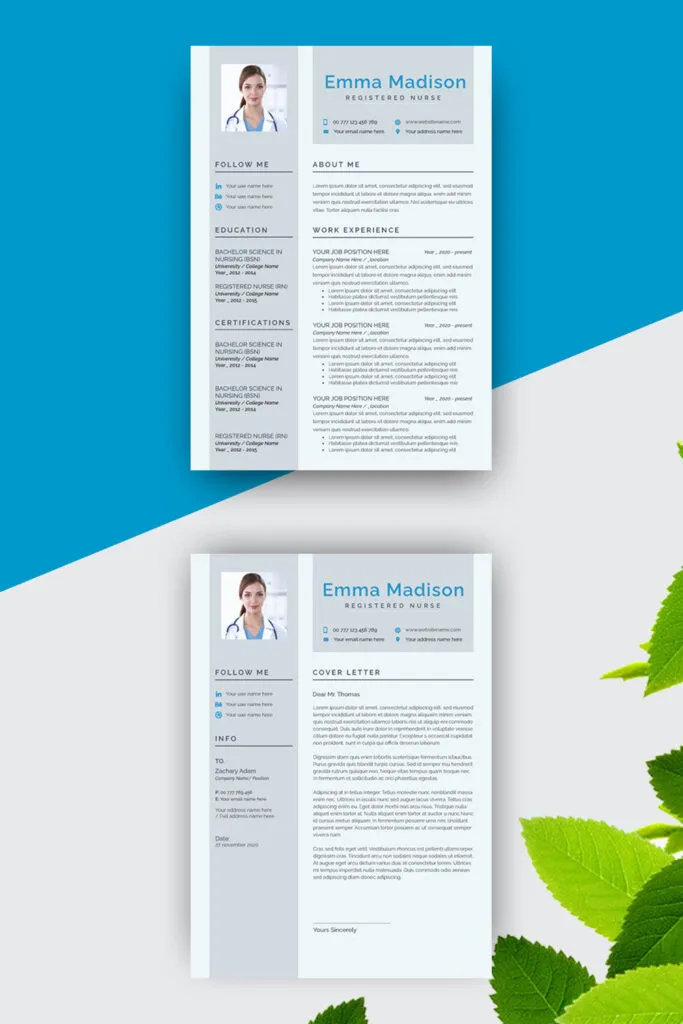
What Is a Nurses Resume Cover Letter?
A nurses resume cover letter is a vital document accompanying your resume when applying for nursing positions. It serves as your formal introduction to potential employers. The cover letter offers an opportunity to showcase your personality, skills, and qualifications in a more personalized way than your resume allows. The purpose is to highlight your suitability for the specific role, demonstrating your sincere interest in the position and the healthcare facility. Unlike the resume, which gives a factual overview of your experience and education, the cover letter allows you to articulate your career aspirations, explain any gaps in your employment history, and express your enthusiasm for the opportunity. It’s your chance to shine, making a compelling case for why you are the ideal candidate. A well-crafted cover letter is a strategic tool that can increase your chances of being hired.
Why is a Nurses Resume Cover Letter Important?
A nurses resume cover letter is important in the job application process for several reasons. It provides context and personalization to your application. In nursing, a generic resume might not be enough. A cover letter allows you to tailor your qualifications to the job’s specific requirements and express your enthusiasm for the opportunity. It offers an opportunity to demonstrate your communication skills. Clear, concise, and professional writing is essential in nursing, and your cover letter serves as a sample of your abilities. It can highlight your attention to detail, organizational skills, and your ability to articulate your thoughts effectively. Finally, it lets you explain any potential weaknesses in your application, such as gaps in employment or career changes, providing a narrative that can mitigate any concerns the employer may have. A well-written nurses resume cover letter can set you apart from other applicants.
Key Elements of a Nurses Resume Cover Letter

A strong nurses resume cover letter has several key elements that present you as a qualified and enthusiastic candidate. These elements include a professional header, a personalized greeting, a compelling body, a strong call to action, and a polite closing. Each section plays a crucial role in conveying your qualifications and interest in the position. The header should contain your contact information, the date, and the employer’s contact information. The greeting should address the hiring manager by name whenever possible, demonstrating that you have researched the position and the facility. The body should highlight your relevant skills, experience, and achievements, tailoring them to the job description. The call to action should express your eagerness for an interview, and the closing should reiterate your appreciation for their time and consideration. By including these components, you increase your chances of getting noticed and making a favorable impression.
Header Information
The header of your nurses resume cover letter is the first thing the hiring manager will see, making it crucial to present a professional and organized appearance. Begin with your full name, address, phone number, and email address. This ensures that the employer can easily contact you if they are interested in proceeding. Following your information, include the date the cover letter is written. Next, provide the employer’s contact information, which should include the hiring manager’s name, title, the name of the healthcare facility, and the facility’s address. If you do not know the hiring manager’s name, research the facility’s website or LinkedIn to find the correct contact person. Using a specific name demonstrates your attention to detail and initiative. The header sets the tone for your entire cover letter, so it should be clean, well-formatted, and easy to read. Properly formatted header demonstrates your professionalism and organizational skills from the start.
Greeting the Hiring Manager
The greeting in your nurses resume cover letter sets the tone and reflects your attention to detail. Always address the hiring manager by name if possible. This shows that you have taken the time to research the hiring process and the specific role you are applying for. Using a personalized greeting demonstrates respect and professionalism. If you are unable to find the hiring manager’s name, use a professional greeting such as “Dear Hiring Committee” or “Dear [Department Name] Hiring Manager.” Avoid generic greetings such as “To Whom It May Concern,” which can make your cover letter appear impersonal and less engaging. After the greeting, use a comma or colon before starting the body of the letter. The way you address the hiring manager can make a significant impact on the hiring manager’s first impression of your application. A well-crafted greeting reflects your interpersonal skills and your commitment to the position.
Body of the Cover Letter

The body of your nurses resume cover letter is where you sell yourself and demonstrate your suitability for the position. Start with a strong opening paragraph that grabs the hiring manager’s attention. State the position you are applying for and briefly mention where you found the job posting. Then, delve into the second and third paragraphs, highlighting your relevant skills, experiences, and achievements. Tailor your content to match the job description, focusing on the qualities and qualifications the employer is seeking. Use specific examples and quantifiable results to demonstrate your value. For example, instead of stating “I provided excellent patient care,” you could say “I consistently maintained a patient satisfaction rating of 95% by implementing effective communication strategies and personalized care plans.” Conclude the body with a paragraph that reiterates your enthusiasm for the role and the healthcare facility, summarizing why you are an excellent fit. This section should be well-organized, concise, and persuasive to effectively convey your qualifications and interest.
Highlighting Skills and Experience
When highlighting your skills and experience in your nurses resume cover letter, focus on what makes you a strong candidate for the specific role. Start by reviewing the job description carefully and identifying the key skills and qualifications the employer is seeking. Then, showcase your abilities by providing specific examples that demonstrate your proficiency in those areas. For example, if the job description emphasizes experience with electronic health records, mention your specific experience using those systems. You can also detail any specialized training you have received or certifications you hold that are relevant to the position. In addition to technical skills, highlight your soft skills, such as communication, teamwork, and problem-solving abilities. Provide concrete examples of how you have used these skills to achieve positive outcomes in previous roles. Be sure to quantify your achievements whenever possible, using numbers and data to show the impact you have made. Highlighting your skills and experience effectively can make you stand out from the other candidates and demonstrate your value to the healthcare facility.
Quantifying Achievements
Quantifying your achievements in a nurses resume cover letter is a powerful way to demonstrate your impact and value to potential employers. Instead of simply listing your responsibilities, focus on providing specific examples and measurable results that show what you have accomplished in previous roles. Use numbers, statistics, and percentages to quantify your achievements. For example, instead of stating “Improved patient outcomes,” you could write “Reduced patient readmission rates by 15% within six months by implementing a new discharge planning protocol.” Quantifying your achievements provides tangible evidence of your skills and abilities, and it allows the hiring manager to understand the specific value you would bring to their healthcare facility. When quantifying your achievements, use action verbs to describe what you did, and then include the specific results you achieved. This makes your cover letter more compelling and shows the hiring manager how you can make a difference in their organization.
Tailoring Your Cover Letter

Tailoring your nurses resume cover letter is essential for demonstrating your genuine interest in the specific position and the healthcare facility. Avoid sending generic cover letters, as they often fail to make a strong impression on the hiring manager. To tailor your cover letter, begin by carefully reviewing the job description and identifying the key requirements and qualifications. Then, customize your letter to address those specific needs and demonstrate how your skills and experience align with what the employer is seeking. Research the healthcare facility’s mission, values, and recent achievements to gain a better understanding of the organization’s culture and goals. Then, incorporate information about the facility into your cover letter to demonstrate your genuine interest in working there. Mention specific aspects of the facility that appeal to you or explain how your skills and experience can contribute to its success. Tailoring your cover letter shows that you have taken the time to understand the role and facility and that you are truly interested in becoming a part of the team.
Call to Action
The call to action in your nurses resume cover letter is a crucial element that encourages the hiring manager to take the next step in the hiring process. Clearly state your interest in the position and express your desire to learn more about the opportunity. In your call to action, indicate your availability for an interview and how the hiring manager can contact you. For example, you can write, “I am eager to discuss how my skills and experience can contribute to [Healthcare Facility Name] and I am available for an interview at your earliest convenience. You can reach me by phone at [Your Phone Number] or by email at [Your Email Address].” Keep your call to action concise and to the point, making it easy for the hiring manager to take the next step. End your letter with an enthusiastic and professional tone that reflects your genuine interest in the position. A strong call to action can increase your chances of getting an interview, which is the ultimate goal of your cover letter.
Closing the Cover Letter
The closing of your nurses resume cover letter should be professional and concise, leaving a positive final impression on the hiring manager. Begin by expressing your gratitude for the hiring manager’s time and consideration. Thank them for taking the time to review your application and for considering you for the position. Reiterate your enthusiasm for the opportunity and briefly mention your qualifications again. Then, use a professional closing such as “Sincerely,” “Respectfully,” or “Thank you for your consideration.” Avoid informal closings, such as “Best regards,” or “Cheers.” Following the closing, leave space for your signature, and type your full name. Make sure your name is easy to read and matches your resume. The closing is your last opportunity to make a positive impact, so ensure it is professional and reflects your commitment to the position and the healthcare facility. A well-crafted closing can leave a lasting impression and increase your chances of moving forward in the application process.
Proofreading and Formatting

Proofreading and formatting are critical steps in ensuring your nurses resume cover letter is professional and error-free. Before submitting your cover letter, carefully proofread it for any grammatical errors, spelling mistakes, or typos. Pay close attention to sentence structure, punctuation, and word choice. Use a grammar and spell-checking tool to help catch any errors you may have missed, but do not rely on them entirely. Read your cover letter aloud to catch any awkward phrasing or inconsistencies. Consider having a friend or colleague review your cover letter for a second opinion. Formatting also plays an essential role in presenting your cover letter in a clear and organized manner. Use a professional font, such as Times New Roman, Arial, or Calibri, and maintain a consistent font size throughout the document. Use clear and concise formatting to make your cover letter easy to read. Properly formatted and proofread cover letter demonstrates your attention to detail and professionalism, increasing your chances of making a positive impression on the hiring manager.
Tips for Writing a Winning Nurses Resume Cover Letter
Writing a winning nurses resume cover letter requires attention to detail and a strategic approach. To maximize your chances of success, follow these tips: Start by researching the facility and position to understand the requirements. Use action verbs to describe your accomplishments and quantify your achievements. Keep your cover letter concise, focusing on the most relevant information. Proofread your cover letter carefully for any errors. Avoid common mistakes, such as using generic cover letters, making typos or grammatical errors, and lacking enthusiasm. Tailor your cover letter to each specific job, highlighting your skills, experience, and achievements. By following these tips, you can create a nurses resume cover letter that will impress potential employers and help you stand out from other candidates.
Research the Facility and Position
Thoroughly researching the healthcare facility and the specific nursing position is essential for crafting a compelling cover letter that resonates with the hiring manager. Begin by exploring the facility’s website to learn about its mission, values, patient care philosophy, and recent achievements. Gain a deeper understanding of the facility’s culture and the types of patients it serves. Next, carefully review the job description and identify the key skills, qualifications, and responsibilities required for the position. Take note of the specific terminology and keywords used in the job description and incorporate them into your cover letter to demonstrate your understanding and relevance. By demonstrating that you have researched the facility and the position, you show your genuine interest in the role and your commitment to the organization. Use this information to tailor your cover letter, highlighting your relevant skills and experiences and explaining how you can contribute to the facility’s mission and goals.
Use Action Verbs

Using action verbs in your nurses resume cover letter is a powerful way to make your accomplishments and skills more impactful and compelling. Action verbs demonstrate your proactive and results-oriented approach and make your cover letter more engaging. Start each sentence describing your responsibilities or achievements with a strong action verb, such as “Managed,” “Implemented,” “Developed,” “Coordinated,” or “Improved.” For example, instead of writing “Responsible for providing patient care,” write “Provided compassionate patient care by assessing patient needs and administering medications.” Use action verbs to highlight your skills and experiences and to quantify your achievements. Action verbs provide specific and measurable results, making your cover letter more persuasive. When selecting action verbs, choose those that are most relevant to the job description and that accurately describe your skills and accomplishments. Your cover letter will stand out from others by using strong action verbs, demonstrating your capabilities and making a lasting impression on the hiring manager.
Keep It Concise
Keeping your nurses resume cover letter concise is essential for capturing the hiring manager’s attention and ensuring that your key qualifications and achievements are highlighted effectively. Aim for a cover letter that is no more than one page long. In today’s fast-paced hiring environment, hiring managers often have limited time to review each application, so it’s important to make your points clearly and concisely. Focus on the most relevant skills, experiences, and achievements and avoid unnecessary details or lengthy explanations. Use concise language, strong action verbs, and clear sentences to convey your message efficiently. Organize your cover letter logically, with each paragraph addressing a specific aspect of your qualifications. Make sure your cover letter is easy to read and visually appealing by using a professional font, ample white space, and clear formatting. A concise cover letter demonstrates your ability to communicate effectively and your respect for the hiring manager’s time, increasing your chances of making a positive impression.
Proofread Carefully
Proofreading your nurses resume cover letter carefully is an essential step in ensuring that your application reflects your professionalism and attention to detail. Errors in grammar, spelling, or punctuation can create a negative impression and undermine your credibility. Before submitting your cover letter, take the time to proofread it thoroughly. Read it aloud to catch any awkward phrasing or inconsistencies. Use a grammar and spell-checking tool to help identify errors, but do not rely on them entirely. These tools may not catch every mistake. Ask a friend, colleague, or career advisor to review your cover letter for a second opinion. Having a fresh pair of eyes can often catch errors that you may have missed. Proofreading and correcting your cover letter shows that you are meticulous and that you pay attention to detail. Taking the time to ensure your cover letter is free of errors can make a significant difference in your application process.
Common Mistakes to Avoid

Avoiding common mistakes is crucial for creating a nurses resume cover letter that effectively showcases your qualifications and increases your chances of getting hired. Some of the most frequent errors include using generic cover letters, which fail to demonstrate your specific interest in the position and the healthcare facility. Avoid the temptation to send the same cover letter for every job. Instead, tailor each letter to the specific job description. Make sure that your cover letter is free of typos and grammatical errors. Errors can create a negative impression and make your cover letter appear unprofessional. Carefully proofread your cover letter before submitting it. Do not be afraid to seek help from a friend, colleague, or career advisor. Show enthusiasm, which will show your interest in the position. By avoiding these common mistakes, you can create a cover letter that is both compelling and effective.
Generic Cover Letters
Using a generic cover letter is a common mistake that can significantly reduce your chances of getting hired. A generic cover letter is a one-size-fits-all document that is not tailored to the specific job or healthcare facility. It lacks the personal touch and demonstrates a lack of genuine interest in the position. When you use a generic cover letter, you miss the opportunity to highlight your specific skills, experiences, and qualifications in relation to the requirements of the job. Hiring managers can quickly identify generic cover letters and may assume that you are not genuinely interested in the role. To avoid this mistake, always tailor your cover letter to each job you apply for. Research the healthcare facility and the specific nursing position and incorporate that information into your cover letter. By tailoring your cover letter, you show that you have taken the time to understand the role and are genuinely interested in becoming a part of the team. A well-tailored cover letter can significantly increase your chances of making a positive impression on the hiring manager.
Typos and Grammatical Errors
Typos and grammatical errors in your nurses resume cover letter can undermine your professionalism and credibility, potentially harming your chances of getting hired. Even minor errors can create a negative impression, suggesting a lack of attention to detail or a lack of writing proficiency. Before submitting your cover letter, proofread it carefully for any spelling mistakes, grammatical errors, or typos. Use a grammar and spell-checking tool to help identify errors, but do not rely on them entirely. These tools may not catch every mistake. Read your cover letter aloud to catch any awkward phrasing or inconsistencies. Consider asking a friend, colleague, or career advisor to review your cover letter for a second opinion. Having a fresh pair of eyes can often identify errors that you might have missed. Proofreading and correcting your cover letter shows that you are meticulous and that you pay attention to detail. Taking the time to ensure your cover letter is free of errors can make a significant difference in your application process.
Lack of Enthusiasm
A lack of enthusiasm in your nurses resume cover letter can make your application appear uninspired and less compelling. Enthusiasm is a crucial element that conveys your genuine interest in the position and the healthcare facility. Without it, your cover letter may come across as impersonal and unmotivated. When writing your cover letter, convey your passion for nursing and your excitement about the opportunity to work in the healthcare facility. Express your enthusiasm for the facility’s mission, values, and patient care philosophy. Explain why you are excited about the specific role and the challenges it presents. Use positive language, action verbs, and specific examples to illustrate your interest in the role. Showing that you are enthusiastic can demonstrate your commitment to your profession and your desire to contribute to the success of the healthcare facility. A cover letter expressing enthusiasm will show you are a strong candidate.
Examples of Nurses Resume Cover Letters
Reviewing examples of nurses resume cover letters can provide valuable insights into how to structure your own letter and highlight your qualifications effectively. There are two main types of examples, including those for experienced nurses and for new graduates. For experienced nurses, examples typically showcase years of experience, specialized skills, and quantifiable achievements. These examples often emphasize leadership roles, certifications, and any involvement in quality improvement initiatives. For new graduate nurses, examples often highlight relevant coursework, clinical rotations, and any volunteer or extracurricular activities related to nursing. They also emphasize their eagerness to learn and contribute to a team. When reviewing examples, pay attention to the structure, formatting, language, and the way skills and experience are presented. Use these examples as a guide to help you create your cover letter, customizing it to reflect your own experiences and the specific requirements of the job.
Example 1 Nurse with Experience
Here’s an example of a nurses resume cover letter for an experienced nurse:
[Your Name] [Your Address] [Your Phone Number] [Your Email Address]
[Date]
[Hiring Manager Name] [Hiring Manager Title] [Healthcare Facility Name] [Healthcare Facility Address]
Dear [Hiring Manager Name],
I am writing to express my enthusiastic interest in the Registered Nurse position at [Healthcare Facility Name], as advertised on [Platform where you saw the job posting]. With 10 years of experience in medical-surgical nursing, coupled with a strong track record of patient care and leadership, I am confident that my skills and experience align perfectly with the requirements of this role.
Throughout my career at [Previous Healthcare Facility Name], I consistently demonstrated my ability to provide high-quality patient care. I have expertise in developing and implementing patient care plans, administering medications, and educating patients and their families. Notably, I reduced patient readmission rates by 15% in the last year by implementing a new discharge planning protocol.
Furthermore, I possess strong leadership skills, which I honed during my time as a charge nurse. I mentored new nurses, provided guidance and support, and actively participated in team-building activities. I am also certified in BLS and ACLS, and I am proficient in using electronic health records (EHR) systems such as Epic and Cerner. I am particularly drawn to [Healthcare Facility Name] because of its commitment to [Mention something specific about the facility that interests you].
I am eager to learn more about this opportunity and discuss how my skills and experiences can contribute to [Healthcare Facility Name]. Thank you for your time and consideration. I look forward to hearing from you soon.
Sincerely, [Your Name]
Example 2 New Graduate Nurse
Here’s an example of a nurses resume cover letter for a new graduate nurse:
[Your Name] [Your Address] [Your Phone Number] [Your Email Address]
[Date]
[Hiring Manager Name] [Hiring Manager Title] [Healthcare Facility Name] [Healthcare Facility Address]
Dear [Hiring Manager Name],
I am writing to express my strong interest in the Registered Nurse position at [Healthcare Facility Name], as advertised on [Platform where you saw the job posting]. As a recent graduate of [Nursing School Name], with a solid foundation in nursing principles and hands-on clinical experience, I am eager to begin my nursing career with your esteemed healthcare facility.
During my clinical rotations at [Hospital Name], I gained invaluable experience in medical-surgical, critical care, and emergency nursing. I demonstrated proficiency in patient assessment, medication administration, and care plan development. I was also recognized for my strong communication skills and ability to work effectively within a multidisciplinary team. Furthermore, I have taken BLS and ACLS certification courses, showing that I have the skills to save lives.
I am particularly drawn to [Healthcare Facility Name] because of its commitment to [Mention something specific about the facility that interests you]. I am eager to learn and grow as a nurse, and I believe [Healthcare Facility Name] provides an environment where I can thrive and make a positive difference in patients’ lives.
I am excited about the opportunity to contribute to [Healthcare Facility Name] and am available for an interview at your earliest convenience. Thank you for your time and consideration.
Sincerely, [Your Name]
Tools and Resources
Several tools and resources are available to help you write a winning nurses resume cover letter. These include resume builders, cover letter templates, and other career resources. Resume builders can assist you in creating a professional-looking resume quickly. They provide templates and guides to help you organize your information and highlight your skills and experience effectively. Cover letter templates offer a structure for your cover letter. They offer pre-written content that you can customize to match your skills and the job description. In addition to resume builders and cover letter templates, several online resources and career services provide career advice, job search tips, and resume and cover letter reviews. Taking advantage of these tools and resources will help you create a nurses resume cover letter that stands out and increases your chances of landing your dream job. Be sure to proofread and make sure to customize the templates.
Resume Builders
Resume builders are online tools that can help you create a professional-looking resume quickly and easily. These tools typically provide templates, formatting options, and guides to help you organize your information, highlight your skills, and tailor your resume to the specific job you are applying for. Many resume builders also offer features such as spell-checking, grammar checks, and keyword optimization, which can help improve the quality of your resume. Some popular resume builders include Resume.com, Canva, and Zety. When choosing a resume builder, consider the features, templates, and pricing, and select one that suits your needs. By using a resume builder, you can save time and effort in creating your resume and make sure that it is both visually appealing and informative. Make sure your information is up-to-date and accurate before submitting your resume. A resume builder can improve your chances of getting noticed by employers.
Cover Letter Templates
Cover letter templates provide a structure and a starting point for writing your nurses resume cover letter. These templates typically include pre-written content, formatting, and placeholders that you can customize to match your specific skills, experience, and the requirements of the job. Cover letter templates can save you time and effort, especially if you are unsure of how to structure your letter or what information to include. When using a cover letter template, make sure to personalize it by adding your contact information, the hiring manager’s name (if known), and details about your experience and the job you are applying for. Customize the template to highlight your most relevant qualifications and achievements. Make sure that you proofread and edit the template to ensure that it is free of errors and reflects your unique qualifications. Some websites offer free cover letter templates, while others offer premium templates for a fee. Cover letter templates can make the writing process easier.
Conclusion
In conclusion, a nurses resume cover letter is a critical tool in the job application process, offering a valuable opportunity to showcase your skills, experience, and enthusiasm for the specific role. By following the tips and strategies outlined in this guide, you can create a compelling cover letter that sets you apart from other candidates and significantly increases your chances of getting hired. Remember to tailor your cover letter to each job application, highlight your relevant skills and achievements, and express your genuine interest in the healthcare facility. Take advantage of the tools and resources available, such as resume builders and cover letter templates, to help you create a polished and professional cover letter. By investing time and effort in crafting a winning cover letter, you are taking a crucial step toward launching or advancing your nursing career. Embrace the opportunity to make a strong first impression, and you’ll be well on your way to securing your dream job.