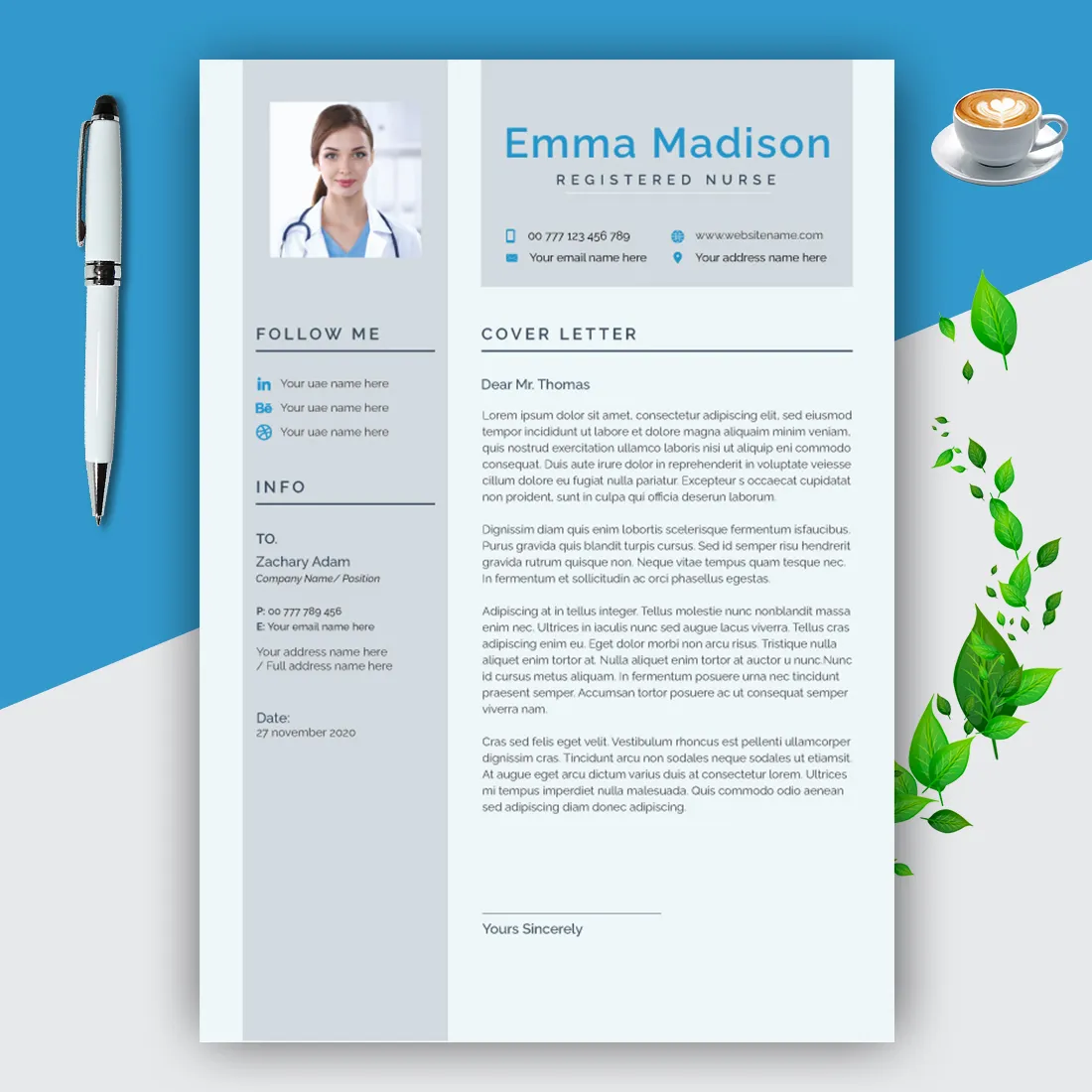
Why Nurse Cover Letters Are Essential
In the competitive world of nursing, a well-crafted cover letter is your opportunity to shine and make a lasting impression on potential employers. A compelling cover letter acts as your personal introduction, going beyond the facts and figures presented in your resume to showcase your personality, skills, and passion for nursing. It allows you to tailor your application to a specific job, highlighting the experiences and qualifications that align with the employer’s needs and demonstrating your genuine interest in the role and the healthcare facility. By thoughtfully articulating your career goals and enthusiasm for nursing, you can significantly increase your chances of securing an interview and ultimately, landing your dream job.
The Purpose of a Nurse Cover Letter
The primary purpose of a nurse cover letter is to introduce you to the hiring manager and provide a concise overview of your qualifications and career aspirations. It serves as a bridge between your resume, which offers a factual account of your experience, and the personal connection an interview can create. The cover letter enables you to communicate your unique value proposition as a nurse, highlighting what sets you apart from other applicants. This is your chance to articulate why you are the best fit for the specific position and to demonstrate how your skills and experience align with the healthcare organization’s mission, values, and needs. By effectively communicating your enthusiasm and qualifications, the cover letter aims to persuade the hiring manager to invite you for an interview.
Key Components of a Strong Nurse Cover Letter

A well-structured nurse cover letter comprises several key components that work together to create a compelling narrative. These elements ensure that your letter is professional, informative, and engaging, capturing the reader’s attention and highlighting your key qualifications. Each section plays a crucial role in conveying your suitability for the position and demonstrating your passion for nursing. By paying close attention to these components, you can create a cover letter that not only showcases your skills and experience but also reflects your dedication to the nursing profession and increases your chances of making a positive impression.
Contact Information
Start with your contact information at the top of the letter, including your full name, address, phone number, and professional email address. Make sure your email address is professional and appropriate. This information should be easily accessible to the hiring manager so they can contact you if they want to schedule an interview. Ensure that the contact details are accurate and up-to-date to avoid any potential communication problems. Also, if you have a LinkedIn profile, consider including a link to it here to offer the recruiter additional information.
Professional Greeting
Address the hiring manager by name, if possible. Research the hiring manager’s name, and if you can’t find it, use a professional greeting like ‘Dear Hiring Manager.’ Avoid generic greetings like ‘To Whom It May Concern,’ as they show a lack of effort. Using the hiring manager’s name demonstrates that you have taken the time to research the role and the organization. This personal touch helps to establish a connection and make a positive impression.
Opening Paragraph

Begin with a strong opening statement that immediately captures the reader’s attention. State the position you are applying for and how you learned about it. Briefly mention your key qualifications or skills, and express your enthusiasm for the opportunity. This is your chance to make a great first impression, so clearly and concisely state your intention and showcase why you are a good fit. The opening paragraph should be engaging and designed to encourage the hiring manager to keep reading. For instance, you might mention a particular achievement or skill directly relevant to the job.
Body Paragraphs
The body paragraphs are where you provide more detail about your qualifications, experience, and skills. Use these paragraphs to elaborate on the experiences and qualifications that align with the job requirements. Provide specific examples of your achievements, using the STAR method (Situation, Task, Action, Result) to highlight your accomplishments. Quantify your achievements whenever possible, such as the number of patients you cared for or improvements in patient outcomes you contributed to. Tailor your content to match the job description, focusing on the most relevant aspects of your background, and demonstrating how your skills and experience make you a valuable asset to their team.
Closing Paragraph
In your closing paragraph, reiterate your interest in the position and express your enthusiasm for the opportunity. Thank the hiring manager for their time and consideration. Include a call to action, such as stating that you are available for an interview and are eager to discuss how your skills and experience align with the role. This is the last opportunity to make a strong impression, so end on a positive note, emphasizing your commitment and availability. Proofread your entire letter to ensure it is free of any grammatical errors or typos, reflecting your professionalism and attention to detail.
Formatting Your Nurse Cover Letter

Formatting is essential for a nurse cover letter. Use a professional font like Times New Roman, Arial, or Calibri. Keep the font size between 10 and 12 points. Use single-spaced lines and one-inch margins. Use a clear and easy-to-read layout with appropriate spacing between paragraphs. Break up large blocks of text to improve readability. Ensure consistent formatting throughout the document. Check alignment and spacing to create a visually appealing and organized letter. Make sure your cover letter is clear, concise, and easy to read and understand, creating a positive impression on the hiring manager.
Top 5 Nurse Resume Cover Letter Samples
Sample 1 Registered Nurse (RN) Cover Letter
This sample highlights experience in a specific clinical setting (e.g., critical care, emergency room) and quantifiable achievements, such as improved patient outcomes or successful implementation of new protocols. It effectively demonstrates how your skills align with the job description. The letter also includes your nursing credentials (RN, BSN) and any relevant certifications. The tone is professional and confident, highlighting your expertise and achievements. The sample should emphasize your experience, clinical skills, and your ability to work collaboratively with other medical staff, to increase your chances of landing an interview. Furthermore, you should highlight your commitment to providing the best possible patient care and your experience in the specific nursing area for which you are applying.
Sample 2 Licensed Practical Nurse (LPN) Cover Letter

This sample focuses on experience in patient care, medication administration, and assisting with medical procedures. It highlights your experience in a variety of healthcare settings, such as hospitals, clinics, or long-term care facilities. Mention specific duties such as taking vital signs and other patient care tasks. Demonstrate your ability to work in a fast-paced environment and your commitment to patient safety and comfort. Your LPN license and any relevant certifications should be prominently displayed. The tone is warm and compassionate, showing your dedication to providing patient care and your ability to work effectively with a healthcare team, showcasing your skills and experience and emphasizing your ability to create a positive experience for patients.
Sample 3 Nurse Practitioner (NP) Cover Letter
This sample highlights your advanced practice skills, including diagnosis, treatment, and patient management. Include a summary of your educational background and your current state licensure. Mention any specialty certifications and areas of expertise. Provide details of your experience in a specific field, such as family medicine or cardiology. Emphasize your ability to provide comprehensive patient care, including conducting physical examinations, ordering and interpreting diagnostic tests, and prescribing medications. Demonstrate your leadership and your ability to mentor and train other healthcare professionals. Include references to your research and your commitment to evidence-based practice to increase your chances of landing an interview.
Sample 4 Experienced Nurse Cover Letter
This sample showcases extensive experience in multiple nursing roles and settings. Focus on significant accomplishments, such as leading a team, improving patient outcomes, or implementing new initiatives. Showcase leadership skills and management experience. Provide specific examples of situations where you have demonstrated your ability to handle challenging situations and solve complex problems. Highlight your ability to mentor and train other nurses. Include details of your participation in professional development activities, such as conferences, workshops, and certifications. Demonstrate your continued commitment to enhancing your expertise and improving patient care to improve the chances of getting hired.
Sample 5 New Graduate Nurse Cover Letter

This sample emphasizes clinical rotations, relevant coursework, and any volunteer experiences or extracurricular activities. Highlight your education background and academic achievements. Include your newly obtained nursing license. Demonstrate your eagerness to learn and grow within the organization. Mention any awards, honors, or scholarships you have received during your nursing studies. Showcase your skills and experience, and your passion for nursing. Emphasize your skills, education, and enthusiasm for the profession. Show how your skills and experiences are transferable, along with your readiness to learn and adapt, which will increase the chances of getting hired.
Tips for Writing a Compelling Nurse Cover Letter
Highlight Relevant Skills and Experience
Carefully review the job description and identify the key skills and experiences the employer is seeking. Tailor your cover letter to emphasize how your qualifications align with those requirements. Provide specific examples from your previous roles that demonstrate your abilities and achievements. Quantify your accomplishments whenever possible to show the impact you have made in previous positions. Use keywords from the job description throughout your letter to showcase how your skills and experience match the job requirements. Focus on patient care, communication, and teamwork, which are highly valued in the nursing profession, as well as your technical skills.
Tailor Your Letter to the Specific Job

Avoid using a generic cover letter. Each cover letter should be customized to the specific job you are applying for. Research the healthcare facility and understand its mission, values, and any specific needs. Address the hiring manager by name and reference the specific job title. Highlight the skills and experience that are most relevant to the position. Demonstrate your understanding of the healthcare setting and its requirements. Tailoring your cover letter shows your genuine interest in the role and increases your chances of making a positive impression on the hiring manager.
Showcase Your Passion for Nursing
Demonstrate your enthusiasm and commitment to the nursing profession throughout your cover letter. Express your passion for providing patient care and making a difference in people’s lives. Share any personal experiences that have inspired your career choice. Mention specific areas of nursing that you are particularly interested in. Showcase your dedication to continuing education and professional development. Convey your strong desire to work in the healthcare facility and your excitement about the opportunity. Showing your passion helps you stand out from other candidates and shows that you are fully invested in your role as a nurse.
Proofread and Edit Carefully
Carefully review your cover letter for any grammatical errors, typos, or formatting issues. Proofread your letter multiple times. Have a friend, family member, or career advisor read your cover letter to provide feedback. Check for clarity, conciseness, and professional tone. Make sure your contact information is accurate and up-to-date. Ensure that your cover letter is error-free and polished, as this is essential for demonstrating your professionalism and attention to detail. Errors can create a negative impression and reduce your chances of getting an interview.
Common Mistakes to Avoid in Nurse Cover Letters

Generic Language
Avoid using generic phrases and clichés that do not provide any specific information about your qualifications or experience. Use clear and concise language to convey your message effectively. Tailor your cover letter to the specific job and the healthcare facility. Highlight your unique skills, accomplishments, and experiences. Avoid phrases like ‘I am a team player’ without providing evidence. Use specific examples to illustrate your abilities, and avoid generic statements that don’t add value to your application. Generic language can make your cover letter unmemorable, decreasing the chances of getting an interview.
Focusing Solely on Job Duties
Avoid simply restating your job duties from your resume. Instead, focus on your achievements and the results you have obtained in previous roles. Use the STAR method to provide context and show how your actions led to positive outcomes. Quantify your achievements whenever possible to showcase your impact. Highlight the skills and experiences most relevant to the specific job. Focus on how you can benefit the organization and contribute to its success. Showcasing your achievements and contributions makes your cover letter more compelling.
Typos and Grammatical Errors
Proofread your cover letter carefully for any errors in grammar, spelling, or punctuation. Ensure that your writing is clear, concise, and easy to read. Use a professional font and formatting. Have someone else review your letter to provide feedback and catch any mistakes you may have missed. Typos and grammatical errors can create a negative impression and reflect a lack of attention to detail. Ensure your cover letter is polished and professional to increase your chances of a favorable review.
Closing Thoughts & Next Steps
By following these tips and examples, you can create a compelling nurse cover letter that helps you stand out from the competition and secure an interview. Remember to tailor your letter to each job, highlight your relevant skills and experience, and showcase your passion for nursing. Proofread your letter carefully to ensure that it is free of any errors. A well-crafted cover letter is a powerful tool that can make a lasting impression on potential employers. Good luck with your job search and your career in nursing. A strong cover letter provides you with the opportunity to showcase your enthusiasm for the role and to increase your chances of getting hired.