Why a Nurse Cover Letter Matters
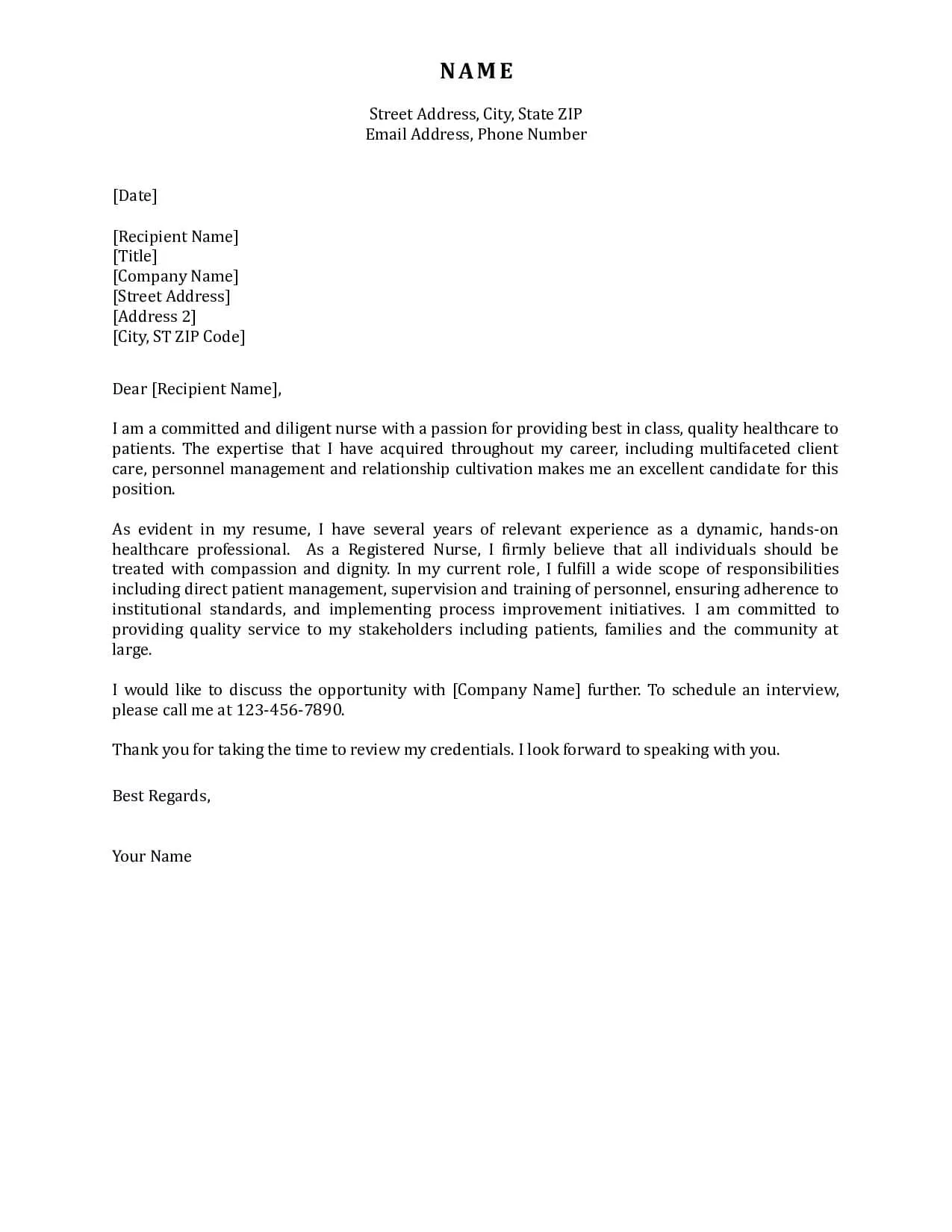
In the competitive world of nursing, a well-crafted cover letter can be the key to unlocking your dream job. It’s your first opportunity to make a strong impression, providing a glimpse into your skills, experience, and personality before an employer even reviews your resume. A compelling cover letter goes beyond simply reiterating your resume; it allows you to tell your story, showcase your passion for nursing, and demonstrate how your unique qualifications align with the specific requirements of the position. Think of it as your personal introduction, a chance to stand out from the crowd and leave a lasting positive impact on the hiring manager. Without a good cover letter, the employer might not fully understand why you are a good fit for the role, so a strong letter is very important.
Key Components of a Strong Nurse Cover Letter
A successful nurse cover letter is more than just a formality; it’s a strategic document that requires careful attention to detail. Several key components, when expertly crafted, work together to create a compelling narrative that grabs the hiring manager’s attention. From the initial header to the closing paragraph, each element plays a crucial role in highlighting your suitability for the role and demonstrating your genuine interest in the opportunity. By focusing on these essential components, you can transform your cover letter into a powerful tool that significantly increases your chances of landing an interview and ultimately securing the nursing position you desire.
Header Information

Your header sets the professional tone of your cover letter. Include your full name, address, phone number, and email address. Ensure this information is accurate and easy to read. Below your information, include the date and the hiring manager’s name, title, and the facility’s address if known. This personalized touch shows that you’ve taken the time to research the company and tailor your application. A well-organized header is not only aesthetically pleasing but also facilitates easy contact for the employer, showing your attention to detail and professionalism from the start. Place all of these details on the top left side of the page.
Professional Greeting
Begin your cover letter with a professional greeting. If possible, address the hiring manager by name; this shows that you have done your research and are taking a personal approach. Using “Dear Mr./Ms./Dr. [Last Name]” is a polite and respectful way to start. If you cannot find a specific name, a generic greeting such as “Dear Hiring Manager” is acceptable, but try to avoid overly casual greetings. The greeting sets the tone for the rest of your letter, so choosing the right one is important for making a positive first impression and demonstrating your professional etiquette. Make sure to follow up the salutation with a comma, to keep the letter clear.
Opening Paragraph Highlight Your Value
The opening paragraph is your chance to immediately grab the reader’s attention. Briefly state the position you’re applying for and how you learned about it. Then, make a concise statement about why you are an excellent fit. This is where you highlight your most relevant skills and experience, showing the employer your value proposition right away. Don’t just repeat what’s on your resume; instead, use this paragraph to showcase your enthusiasm for the role and your understanding of the facility’s needs. Be specific and focused, setting the stage for the detailed information that follows. It is all about attracting and hooking the reader into wanting to know more about you.
Showcasing Your Skills and Experience

The body of your cover letter is where you go into detail about your skills and experiences. This is your opportunity to connect your qualifications to the specific requirements of the nursing position. Instead of just listing your accomplishments, provide specific examples that demonstrate your abilities and how you’ve made a positive impact in previous roles. This section should be well-structured, concise, and easy to read, making it simple for the hiring manager to see how your skills align with the job description. Emphasize the accomplishments and experiences that are the most relevant for this role.
Clinical Skills
Detail your clinical skills, such as patient assessment, medication administration, wound care, and experience with specific medical equipment. Be specific and provide examples of how you’ve applied these skills in a practical setting. Mention any specializations or certifications you hold that are relevant to the position. The goal is to paint a clear picture of your clinical abilities, ensuring the hiring manager understands your capabilities and qualifications. Provide the employer with the skills you have and are willing to use for their company, which can show them how eager you are.
Soft Skills
Highlight your soft skills, such as communication, teamwork, empathy, and problem-solving abilities. Use examples to show how you’ve utilized these skills in previous roles to handle difficult situations, collaborate with colleagues, and provide excellent patient care. Soft skills are essential in nursing, and employers look for candidates who can work effectively in a team and demonstrate compassion and understanding. Explain your soft skills in a way that helps the employer know that you can work well with others.
Quantifiable Achievements

Whenever possible, quantify your achievements with numbers and data. For instance, you could mention how you improved patient satisfaction scores, reduced medication errors, or streamlined a particular process. Quantifiable achievements make your accomplishments more impactful and provide concrete evidence of your abilities. These metrics show your effectiveness and the value you bring to a team. This is your chance to show the employer what kind of achievements you can bring to their company and the success you have had in the past.
Tailoring Your Letter to the Job
One of the most important aspects of a strong cover letter is its ability to demonstrate that you are a great fit for the role, not just in terms of skills, but also in terms of your understanding of the specific job and facility. This means customizing each letter to match the specific requirements and expectations outlined in the job description. By aligning your skills and experience to the job’s needs and showing your research on the employer, you will impress them and have a better chance of getting the job.
Research the Employer
Before writing your cover letter, research the employer to understand their mission, values, and specific needs. Visit their website, read news articles, and check their social media pages. This knowledge will help you tailor your letter, demonstrating a genuine interest and showing that you understand the organization’s priorities. Mentioning specific projects, initiatives, or values that resonate with you demonstrates your interest. Researching the employer is a sign of respect and shows you’re serious about the position.
Match Your Skills to the Job Description

Carefully review the job description and identify the key skills and qualifications the employer is seeking. Use your cover letter to highlight how your skills align with these requirements. Provide concrete examples from your experience that support your claims. This approach assures the hiring manager that you possess the necessary skills and experience to succeed in the role. By demonstrating a clear understanding of the job’s requirements and tailoring your letter to meet these, you significantly increase your chances of getting noticed.
Using Action Verbs
Use strong action verbs to describe your skills and achievements. Action verbs make your writing more dynamic and impactful. Instead of saying “Responsible for patient care,” you could say “Managed patient care,” “coordinated patient care,” or “improved patient care.” Action verbs make your accomplishments sound more specific and memorable. Be sure to choose verbs that accurately reflect your contributions and bring your experiences to life. Strong verbs provide better context and depth to your letter.
Addressing Potential Concerns
If there are any potential issues or gaps in your resume, such as a career break or a lack of specific experience, address them directly and honestly. Frame these issues positively, emphasizing what you learned and how you’ve grown from the experience. This proactive approach can mitigate any concerns the hiring manager may have. Be upfront, but focus on the skills and knowledge you’ve gained. Addressing potential concerns is a sign of confidence and helps you build trust with the reader.
Closing the Letter

Your closing paragraph is your last chance to make a strong impression. It should be concise and leave a positive lasting image. Make sure to show your enthusiasm for the position and to include a call to action, inviting the reader to move on to the next step. Close with a professional salutation.
Expressing Enthusiasm
Reiterate your interest in the position and express enthusiasm for the opportunity. Show that you are genuinely excited about the role and the possibility of joining the organization. A genuine expression of enthusiasm demonstrates your passion for nursing and motivates the employer to select you for an interview. Let the employer know that you’re looking forward to the opportunity to work for them and that you are eager to get the job.
Call to Action
End your cover letter with a clear call to action. This could involve stating that you are available for an interview and providing your contact information. Make it easy for the hiring manager to take the next step. A well-defined call to action leaves no room for confusion and encourages the employer to contact you. This is a great way to finish the letter and show your drive to secure the role.
Formatting and Presentation

The format and presentation of your cover letter are essential for making a positive first impression. A well-formatted letter that is easy to read reflects your professionalism and attention to detail. Make sure to present the letter on a high-quality paper and use a clean font. Formatting can go a long way in creating an impression.
Font and Readability
Choose a professional font that is easy to read, such as Times New Roman, Arial, or Calibri. Use a font size between 10 and 12 points. Ensure your letter has proper spacing, with clear margins and spacing between paragraphs. Use bolding to highlight important information, but use it sparingly. The goal is to make your cover letter visually appealing and easy to scan, making it more likely that the hiring manager will read and appreciate it.
Proofreading and Editing
Before submitting your cover letter, carefully proofread it for any grammatical errors, typos, or inconsistencies. Mistakes can make your letter seem unprofessional and detract from your qualifications. Use a spell checker and ask a friend or family member to review it. If you are unsure, get help from a professional. A well-edited cover letter demonstrates attention to detail and gives your employer the impression that you care and that you pay close attention to detail.
Top 5 Nurse Cover Letter Examples
Below are examples of successful nurse cover letters, each tailored to different nursing roles. These examples serve as a guide, showing how to highlight the key components and tailor your letter to a specific role. Reviewing these examples will help you create your cover letter and give you the motivation to finish.
Example 1 Registered Nurse
A Registered Nurse (RN) cover letter should emphasize clinical skills, experience with various patient populations, and any specialized certifications or licenses. The letter should showcase the nurse’s ability to provide high-quality patient care and collaborate effectively with healthcare teams. The goal of the letter is to demonstrate how you can positively contribute to patient care and improve health outcomes.
Example 2 Nurse Practitioner
A Nurse Practitioner (NP) cover letter should highlight experience with patient assessment, diagnosis, treatment planning, and medication management. Emphasize leadership skills, the ability to work independently, and any specializations. The letter should demonstrate your ability to provide comprehensive, patient-centered care and work collaboratively with other healthcare professionals to provide care for the patients.
Example 3 Licensed Practical Nurse
A Licensed Practical Nurse (LPN) or Licensed Vocational Nurse (LVN) cover letter should showcase clinical skills, experience with patient care, and the ability to assist RNs and physicians. Highlight your experience with patient monitoring, medication administration, and other essential nursing tasks. The letter should demonstrate your skills and your desire to provide high-quality patient care under the supervision of an RN or physician.
Example 4 Recent Graduate Nurse
A cover letter for a recent nursing graduate should highlight education, clinical rotations, and any relevant volunteer or extracurricular activities. Mention any awards, scholarships, or academic achievements. The letter should emphasize your passion for nursing, eagerness to learn, and ability to adapt to new environments. This is your chance to show your employer how eager you are to work in the industry.
Example 5 Experienced Nurse Manager
A Nurse Manager cover letter should emphasize leadership skills, experience with team management, and the ability to improve patient care. Highlight your experience with staffing, budgeting, and performance evaluations. The letter should showcase your ability to create a positive work environment and manage a team of nurses. The focus should be on your experience, and show the employer the value you can bring to the team and the leadership skills that you have.
Final Thoughts on Nurse Cover Letters
Crafting a compelling nurse cover letter is a critical step in the job search process. By following these guidelines, you can create a letter that showcases your skills, experience, and passion for nursing, increasing your chances of securing an interview. Remember to always tailor your cover letter to the specific job and facility. A well-written cover letter can set you apart from the competition and help you land your dream nursing job. Use all the helpful information given to create the best cover letter possible. With these tips and examples, you will be well on your way to landing that dream job!