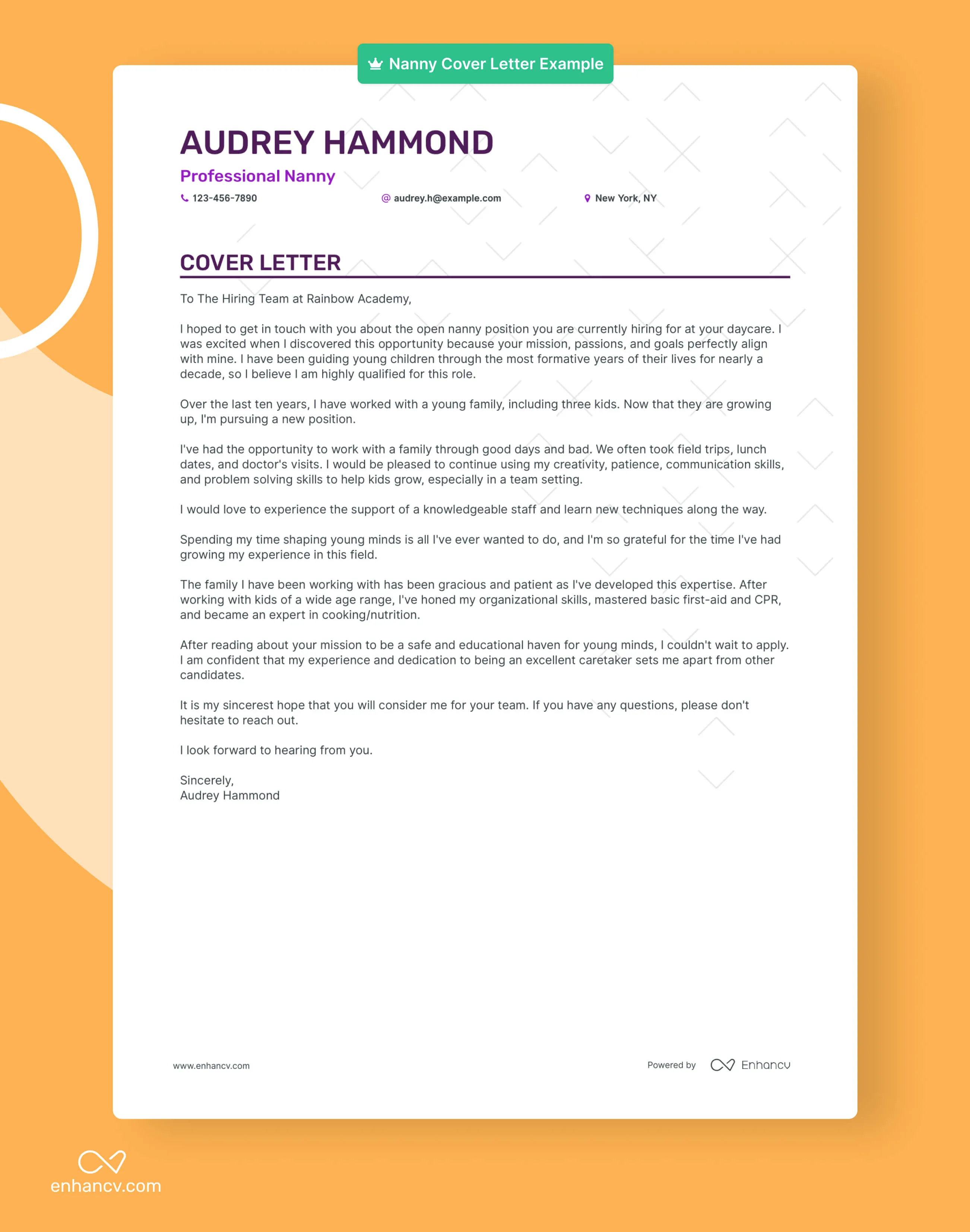
A well-crafted nanny cover letter is your key to securing a coveted position. It’s your first impression and a crucial opportunity to showcase your experience, skills, and personality. Unlike a resume that simply lists facts, a cover letter lets you connect with potential employers on a personal level, demonstrating why you are the perfect fit for their family. This article will delve into the top 5 essentials, providing practical tips and insights to help you create a compelling cover letter that stands out from the competition. Mastering these key elements will significantly increase your chances of landing an interview and ultimately, your dream nanny job. Get ready to transform your application into a winning document!
Crafting a Winning Nanny Cover Letter
The foundation of a great cover letter begins with a strong opening. It’s not just about stating your interest; it’s about captivating the reader from the start. Begin with a personalized greeting, addressing the family by name if possible. Then, immediately state your purpose – to apply for the nanny position – and briefly mention where you saw the job posting. Your opening paragraph should also include a concise statement of your most relevant qualifications. The goal is to grab their attention and make them want to read more. The structure should be clear and easy to follow, making sure each section seamlessly flows to the next. Use clear language and keep the focus on the family’s needs and how you can meet them.
Highlighting Relevant Experience
Your experience is the core of your cover letter. Instead of simply listing your past jobs, focus on the specific experiences that align with the family’s needs and preferences. Briefly describe your previous roles, emphasizing the ages of the children you cared for, the responsibilities you held (e.g., meal preparation, homework help, transportation), and the duration of your employment. Make sure to tailor your descriptions to the specific requirements mentioned in the job posting. If they’re looking for someone experienced with infants, highlight your experience with newborns. If they prioritize educational activities, emphasize your skills in that area. Your goal is to show the family that your experience directly addresses their requirements.
Quantifying Achievements

Numbers speak volumes. Whenever possible, quantify your achievements to demonstrate your impact. Instead of saying, “I helped children with their homework,” try “I helped children improve their grades by 20% in math and science.” Instead of saying “I planned activities,” try “I planned and executed over 50 age-appropriate activities each month.” Quantifiable results provide concrete evidence of your skills and abilities, making your cover letter more compelling and memorable. Use specific examples to illustrate your effectiveness. If you have received positive feedback or awards, mention them to further enhance your credibility and show you are capable and dedicated to your work.
Showcasing Childcare Skills
Childcare involves a range of skills beyond basic care. In your cover letter, highlight your proficiency in areas like: meal preparation, implementing educational activities, planning playdates, organizing arts and crafts, and administering medication. If you have experience with special needs children, mention that. If you are certified in first aid and CPR, include it prominently. Demonstrate that you understand child development, and can create a nurturing and stimulating environment. Show the family you are not just a caregiver, but a partner in their children’s growth and development. Describe how you adapt to different personalities and age groups. Showing your flexibility and versatility will be a great asset to the family.
Emphasizing Personality and Values
Families aren’t just looking for skills; they’re looking for someone they can trust and who aligns with their values. This is where you let your personality shine. Describe your approach to childcare, highlighting your patience, enthusiasm, and creativity. Mention your values – are you patient, nurturing, fun-loving, or a combination of these? Share a brief anecdote that illustrates your character and your approach to children. Let them know you understand the importance of creating a positive and supportive environment. Talk about your communication skills, your ability to build strong relationships with children, and your willingness to adapt to their family’s routines. The more relatable and genuine you are, the better the chances of making a connection.
Demonstrating Professionalism

Professionalism is essential. Your cover letter is a reflection of your work ethic. Make sure your cover letter is free of grammatical errors and typos. Use a professional tone throughout, maintaining a respectful and positive demeanor. Avoid slang or informal language. Ensure your contact information is accurate and up-to-date. Address the letter to the hiring manager or family by name. Show that you understand boundaries and are committed to treating your role as a professional position. Present a well-organized document that is easy to read. Your attention to detail will give the family confidence that you will approach the job with the same level of care and diligence.
Including a Strong Call to Action
Don’t just end your letter abruptly. Include a clear call to action. Express your interest in an interview and state your availability. Make it easy for the family to contact you. Provide your phone number and email address. If you have a resume and references, mention that they are attached. Let them know you are eager to learn more about their needs and discuss how you can contribute to their family. End the letter with a polite closing, such as “Sincerely” or “Respectfully.” A well-crafted call to action demonstrates your eagerness and professionalism. It encourages the family to take the next step, which is what you want!
Formatting and Structure
The visual presentation of your cover letter is equally important. Use a clean and easy-to-read font, like Arial or Times New Roman. Maintain consistent formatting throughout. Use a standard business letter format, with your contact information at the top and the family’s address (if known) below. Keep your letter concise – aim for a maximum of one page. Use bullet points to highlight key skills and achievements. Use headings and subheadings to break up the text and make it easier to scan. Ensure your cover letter is visually appealing and easy to navigate. Proofreading and attention to detail in formatting will make your application stand out.
Proofreading and Editing

Before sending your cover letter, proofread it meticulously. Check for any grammatical errors, spelling mistakes, or typos. Read the letter aloud to catch awkward phrasing or inconsistencies. Consider having a friend or family member review it as well. A fresh pair of eyes can often spot errors that you might miss. Ensure all the details are accurate. Proofreading is not just about catching errors; it’s about ensuring your letter presents you in the best possible light. Your attention to detail reflects your professionalism and your respect for the opportunity. Taking this extra step will dramatically improve your chances.
Tailoring Your Letter
Never send a generic cover letter. Tailor each letter to the specific family and position. Research the family and the specific requirements of the job. Highlight the skills and experiences that match their needs. Show that you understand what they are looking for in a nanny. Personalization demonstrates your genuine interest and increases the chances of getting an interview. Take the time to customize your letter. Your effort will be noticed and appreciated.
Researching the Family
Before writing your cover letter, do some research on the family. If possible, learn about their children’s ages, interests, and needs. If the family has a social media presence, review it to get a better understanding of their values and lifestyle. If the job posting includes specific details about the family’s expectations, be sure to address them. Tailor your letter to reflect this information. Showing that you’ve done your homework demonstrates your enthusiasm and initiative. The more you know, the better you can address their needs.
Matching Skills to Needs

Carefully review the job description and match your skills to the family’s needs. Highlight the experiences that are most relevant to their requirements. If they are looking for someone with experience in a specific area, like special needs or early childhood education, make sure to showcase these skills. If they are looking for someone who can help with homework or prepare nutritious meals, emphasize your capabilities in these areas. By focusing on their needs, you show the family that you are the perfect fit for the position. Demonstrate your ability to fulfill the specific requirements.
Addressing Potential Challenges
Be prepared to address potential challenges, such as gaps in employment or changes in career path. If there are any circumstances that might raise questions, address them directly and honestly in your cover letter. Reassure the family that your experiences have prepared you for the role. Explain how you have overcome any obstacles. By addressing any potential issues head-on, you demonstrate transparency and integrity. This can help build trust and increase your chances of securing an interview.
By following these top 5 essentials, you can create a compelling nanny cover letter that impresses potential employers and increases your chances of landing your dream job. Remember to highlight your experience, showcase your skills, emphasize your personality, demonstrate professionalism, and include a strong call to action. Tailor your letter to each family and be sure to proofread it carefully. Good luck with your job search!