Understanding the Importance of a Nanny Cover Letter
A well-crafted nanny cover letter is your first opportunity to make a strong impression on a potential employer or agency. It’s much more than just a formality; it’s a critical tool for showcasing your personality, experience, and suitability for the role. A compelling cover letter highlights your unique qualities and demonstrates your genuine interest in the position. It allows you to expand on your resume, providing context and depth to your qualifications. For a nanny seeking a position through an agency, the cover letter serves as an introduction, setting the stage for the agency to understand your professional background and personal attributes. Neglecting this crucial document can lead to missed opportunities and a failure to stand out in a competitive job market. This is your chance to connect with the agency on a more personal level, establishing your understanding of childcare and your approach to caring for children.
Researching the Agency and the Role
Before you even begin writing, thorough research is essential. Start by visiting the agency’s website to learn about their values, mission, and the types of families they serve. Understand what the agency values in their nannies. Identify specific keywords or phrases that resonate with the agency’s language and incorporate them into your letter. Analyze the job description carefully. What are the specific requirements and preferences? What skills and experience are they looking for? By understanding the agency and the role, you can tailor your cover letter to meet their specific needs. This demonstrates your proactive approach and genuine interest. Consider what makes the agency unique and how your skills align with their specific focus. This research will inform your writing, allowing you to create a compelling letter that resonates with the hiring managers and increases your chances of securing an interview.
Tailoring Your Cover Letter to the Agency’s Needs

Generic cover letters are easily discarded. To stand out, you must tailor your letter to each agency and position. Personalize your letter by mentioning the agency’s name and, if possible, the name of the hiring manager. Demonstrate your understanding of the agency’s services and the families they work with. Address the specific requirements and preferences listed in the job description. Highlight relevant skills and experiences, providing specific examples to showcase your abilities. If the agency emphasizes certain values, such as patience or creativity, find ways to incorporate those values into your letter. Show how your approach to childcare aligns with the agency’s philosophy. By demonstrating that you have carefully considered their needs, you position yourself as a serious and well-suited candidate. Avoid using a template and rewrite for each agency to reflect your understanding of their specific requirements.
Highlighting Your Relevant Experience and Skills
Your cover letter should serve as a showcase of your relevant experience and skills, going beyond what is listed on your resume. The goal is to demonstrate that you possess the skills and experience required to excel as a nanny. This is your chance to provide concrete examples of your childcare abilities. Quantify your achievements whenever possible; instead of saying you “helped with homework,” describe the specific tasks you performed and the positive outcomes. Use action verbs to describe your responsibilities and accomplishments. Focus on skills such as communication, problem-solving, and creativity. Explain how you have handled challenging situations and the positive results you achieved. Demonstrate a proven track record of success in childcare and a commitment to child development.
Showcasing Childcare Experience
Provide detailed information about your childcare experience. Include the names of the families you’ve worked with (with their permission, of course), the ages of the children you cared for, and the duration of your employment. Describe your responsibilities, such as preparing meals, assisting with homework, organizing activities, and providing transportation. Highlight any special needs or circumstances of the children and how you adapted your approach. Show how you built strong relationships with children and created a safe, nurturing environment. Mention any relevant training or certifications you possess, such as first aid or CPR. Use specific examples to illustrate your experience and demonstrate your competence as a nanny.
Detailing Specific Skills and Qualifications

Go beyond listing skills; demonstrate how you’ve applied those skills in practice. Highlight skills that the agency values. Provide concrete examples to demonstrate your abilities. Mention proficiency in educational activities, such as tutoring or helping with homework. Detail your experience with meal preparation, and any special dietary requirements you can accommodate. Showcase any special talents or interests that you can incorporate into childcare, such as music, art, or sports. Emphasize your ability to create a stimulating and engaging environment. Your qualifications should leave no doubt that you can provide excellent care for children.
Emphasizing Your Personality and Approach
Your personality is a crucial asset in childcare, and it’s essential to reflect it in your cover letter. Describe your approach to childcare, emphasizing the qualities that make you an ideal nanny. Share your enthusiasm for working with children. Mention your patience, empathy, and ability to create a positive environment. Highlight your values, such as promoting children’s emotional and physical well-being. Describe your communication style and your ability to build trust with both children and parents. Provide examples of how you have handled challenging situations. Let your passion for childcare shine through, showing the agency that you are someone who genuinely cares for the children you work with.
Structuring Your Nanny Cover Letter Effectively
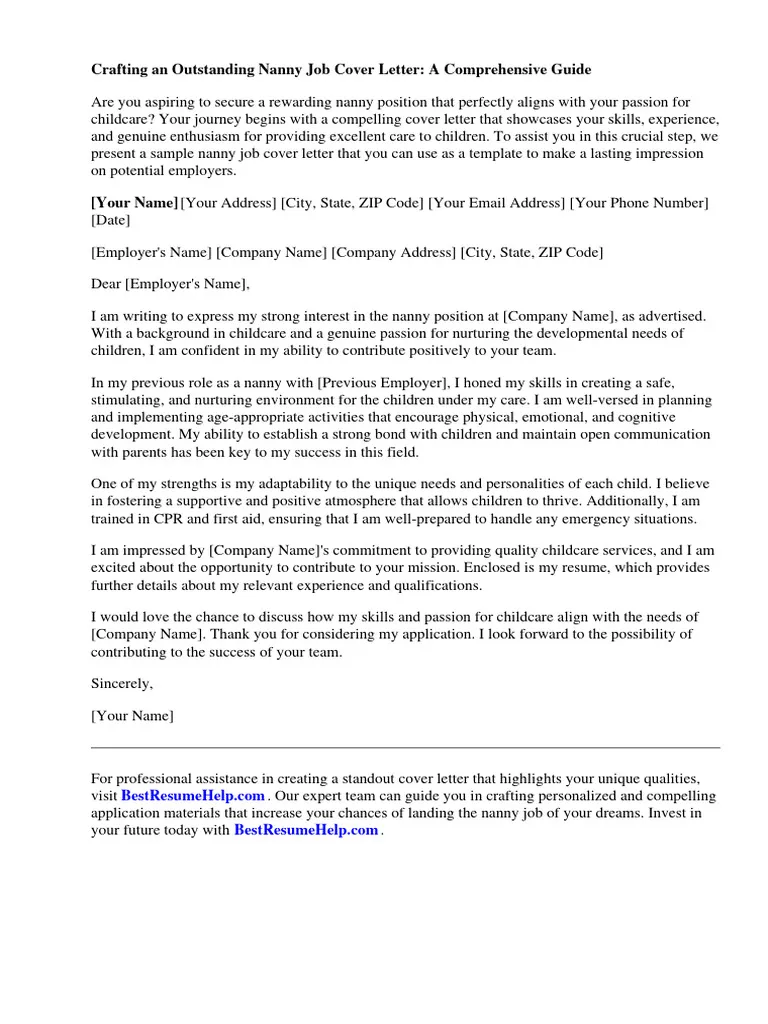
A well-structured cover letter is easy to read and effectively communicates your qualifications. The structure should be logical, well-organized, and tailored to the agency’s requirements. You want to ensure that your message is clear, concise, and impactful. Divide your letter into distinct sections, using headings and paragraphs to guide the reader. Employ a professional tone and use proper grammar, spelling, and punctuation. Choose a clear and readable font, such as Arial or Times New Roman, and use consistent formatting throughout the document. The objective is to make your cover letter as easy to read as possible, helping the hiring manager quickly assess your qualifications and interest.
The Header and Contact Information

Begin your cover letter with a professional header that includes your full name, address, phone number, and email address. If you are submitting your application online, ensure that your contact information is readily accessible. If you know the name of the hiring manager, address the letter to them directly. Use the agency’s name and address. This shows attention to detail and demonstrates your professionalism. Use a clear, easy-to-read font and a well-organized layout. Double-check all contact information to ensure that the agency can easily reach you.
The Opening Paragraph
The opening paragraph is your opportunity to grab the reader’s attention and make a strong first impression. State the specific position you are applying for, and how you learned about the opportunity. Express your enthusiasm for the role and the agency. Briefly mention your most relevant experience and skills. Customize this section to reflect the specific agency and position. Clearly express why you are interested in the role. The goal is to create an immediate sense of excitement about the opportunity. Keep it concise and compelling, leaving the reader wanting to learn more.
The Body Paragraphs
The body paragraphs should expand on your qualifications and demonstrate your suitability for the role. Each paragraph should focus on a specific aspect of your experience, skills, or personality. Use clear, concise language and provide concrete examples to support your claims. Highlight your experience in childcare, focusing on what you accomplished in each role. Emphasize your relevant skills, such as your ability to plan activities, manage children’s behavior, and provide a safe and nurturing environment. Mention any special training or certifications, such as CPR or first aid. Demonstrate how your approach to childcare aligns with the agency’s values and the needs of the families they serve. Show that you have carefully considered the agency’s requirements and are a perfect fit for the position.
The Closing Paragraph

In your closing paragraph, summarize your key qualifications and reiterate your interest in the position. Thank the hiring manager for their time and consideration. Express your availability for an interview, and mention any specific dates or times that you are available. Include a call to action, such as encouraging the hiring manager to contact you. Reiterate your passion for childcare and your enthusiasm for the opportunity. End with a professional closing, such as “Sincerely” or “Best regards”, followed by your name. Leave a positive and lasting impression.
Proofreading and Formatting Your Cover Letter
Before submitting your cover letter, it’s essential to proofread it carefully for any errors. A well-formatted and error-free cover letter demonstrates your attention to detail and professionalism. Read your cover letter multiple times, checking for grammar, spelling, and punctuation errors. Ensure that the language is clear, concise, and easy to understand. Have someone else review your cover letter to provide a fresh perspective and catch any errors you may have missed. Use a professional font and maintain consistent formatting throughout the document. Ensure your contact information is accurate and readily accessible. Use a readable font size and adequate spacing. The objective is to make your cover letter visually appealing and easy to read.
Common Mistakes to Avoid
Avoid these common mistakes to increase your chances of a successful application. Do not use generic cover letters; tailor each letter to the specific agency and position. Avoid typos, grammatical errors, and spelling mistakes. Do not use jargon or overly complex language. Refrain from making negative comments about previous employers or families. Do not include irrelevant information. Avoid lengthy paragraphs; keep your writing concise and to the point. Refrain from exaggerating your skills or experience. Ensure that your cover letter is well-organized and easy to read. Avoid clichés and overly formal language. By avoiding these pitfalls, you can present yourself as a polished and professional candidate.
Tips for Formatting and Presentation

Pay attention to the formatting and presentation of your cover letter to make a positive impression. Use a professional font, such as Arial or Times New Roman, in a size that is easy to read. Maintain consistent formatting throughout the document, including font size, spacing, and margins. Use clear and concise language. Break up large blocks of text into smaller paragraphs. Use bullet points to highlight key skills and experiences. Ensure your cover letter is visually appealing and easy to navigate. Save your cover letter as a PDF to preserve the formatting. Ensure that your cover letter aligns with your resume in terms of style and presentation. A well-formatted cover letter shows attention to detail.
Following Up After Submission
After submitting your cover letter and resume, following up is a crucial step. Follow up with the agency to reiterate your interest and inquire about the status of your application. Send a polite follow-up email or call within a week or two of submitting your application. Reference the specific position and reiterate your interest in the role. Briefly mention your key qualifications and express your availability for an interview. Show that you are proactive and interested. Be respectful of the agency’s time, and avoid being overly persistent. This demonstrates your enthusiasm and allows you to stay top-of-mind with the hiring manager. A well-timed follow-up can often make a positive impact and increase your chances of securing an interview.