Crafting the Perfect Medical Sales Cover Letter
A well-crafted medical sales cover letter is your first opportunity to impress potential employers and secure an interview. It’s more than just a formality; it’s a crucial tool to showcase your skills, experience, and passion for the field. This guide provides a comprehensive overview of how to create a compelling cover letter that stands out from the competition and helps you land your dream job in medical sales.
Understanding the Importance of a Cover Letter
In the competitive world of medical sales, a strong cover letter is often the deciding factor between getting an interview and being overlooked. While your resume provides a factual overview of your qualifications, the cover letter allows you to connect with the hiring manager on a personal level, demonstrating your enthusiasm and suitability for the role. It’s your chance to tell your story and explain why you’re the perfect fit.
Why a Cover Letter Matters

A cover letter allows you to expand on your resume, providing context and personality. It helps you highlight specific skills and experiences relevant to the job, demonstrating a clear understanding of the role and the company. A well-written cover letter showcases your communication skills and attention to detail, qualities highly valued in medical sales.
What Recruiters Look For
Recruiters in the medical sales industry are seeking candidates who not only possess the required skills and experience but also demonstrate a genuine interest in the company and its products. They look for evidence of your ability to communicate effectively, build relationships, and achieve results. Your cover letter should address these aspects, making a strong case for why you deserve an interview.
Key Components of a Winning Medical Sales Cover Letter
A successful medical sales cover letter follows a clear and concise structure, including essential elements that capture the reader’s attention and highlight your key qualifications. Each section plays a crucial role in presenting you as the ideal candidate, emphasizing your skills, experience, and passion for the medical sales field. Careful attention to these components will significantly increase your chances of securing an interview.
Header Section

The header section of your cover letter provides essential contact information and sets a professional tone. Accurate and easily accessible contact details are critical, as this is how the recruiter will reach you. The inclusion of the recruiter’s details demonstrates your attention to detail and your proactive approach to tailoring your application to the specific job posting.
Your Contact Information
Include your full name, phone number, email address, and LinkedIn profile URL. Ensure your email address is professional. Keep it easily accessible so the recruiter can quickly contact you. Double-check the accuracy of your contact details to avoid any missed opportunities.
Recruiter’s Information
If possible, address your cover letter to the hiring manager or the recruiter. This shows that you’ve done your research and are dedicated to the position. If you can’t find a specific name, use a professional greeting like ‘Dear Hiring Manager’.
Salutation

Start your cover letter with a professional salutation. ‘Dear Mr./Ms. [Last Name]’ is a good choice if you know the hiring manager’s name. If you don’t know the name, ‘Dear Hiring Manager’ or ‘Dear [Company Name] Recruiting Team’ are acceptable alternatives. Avoid generic greetings such as ‘To Whom It May Concern’.
Body Paragraph 1: Hook and Introduction
The first paragraph is your opportunity to grab the reader’s attention and make a strong first impression. Begin by stating the position you’re applying for and where you found the job posting. Briefly mention something that sparked your interest in the role or the company. You can also briefly mention your most relevant skills and experience to capture their attention immediately. Make it clear why you’re applying and what you can offer the company, setting the tone for the rest of your cover letter.
Highlighting Your Passion for Medical Sales
Showcase your enthusiasm for the medical sales field and your understanding of the industry. Mention any specific interests or experiences that have led you to pursue a career in medical sales. Express your alignment with the company’s mission, values, and any products or services that particularly resonate with you, demonstrating that you are not just looking for a job, but a career.
Body Paragraph 2: Showcasing Your Skills and Experience

This is where you highlight your skills and experience and connect them to the requirements of the job. Select 2-3 key skills or experiences from the job description and explain how your previous roles have equipped you with these skills. Use specific examples from your previous work to demonstrate how you have used these skills to achieve results. This section should convince the recruiter that you can meet the job requirements.
Quantifying Achievements
Whenever possible, quantify your achievements with numbers. Instead of saying, ‘Increased sales,’ state ‘Increased sales by 20% in one year.’ Using numbers makes your accomplishments more tangible and provides a clearer picture of your abilities. Numbers demonstrate your impact and the value you brought to previous employers, leaving a strong impression on the hiring manager.
Tailoring to the Specific Job
Customize your cover letter for each job application. Read the job description carefully and identify the key skills and qualifications the employer is seeking. Highlight the skills and experiences that align with these requirements and show how you can contribute to the company’s success in this specific role. Tailoring your letter shows that you’ve taken the time to understand the position and are genuinely interested in it.
Body Paragraph 3: Demonstrating Your Knowledge

Use this paragraph to showcase your knowledge of the medical sales industry, the company, and its products or services. Briefly mention any relevant certifications, training programs, or professional development activities. You can explain how your knowledge aligns with the company’s goals, highlighting your understanding of the current market trends and challenges.
Company Research and Alignment
Show that you’ve done your research on the company. Mention something specific about the company’s mission, values, or products that appeals to you. Express your alignment with the company’s culture and demonstrate your understanding of the company’s position in the market. Demonstrate that you understand the company’s goals and can articulate how your skills and experience can help achieve them.
Call to Action
Conclude your cover letter with a clear call to action, encouraging the hiring manager to contact you for an interview. Reiterate your interest in the position and express your eagerness to discuss your qualifications further. A strong call to action makes it easy for the hiring manager to take the next step, increasing your chances of securing an interview.
Expressing Enthusiasm and Availability

Reiterate your interest in the role and express your enthusiasm for the opportunity. State your availability for an interview and provide your contact information. Make it easy for the hiring manager to reach out to you, whether it is through phone or email. Thank the hiring manager for their time and consideration, leaving a positive final impression.
Closing and Signature
End your cover letter with a professional closing. Use ‘Sincerely,’ ‘Best regards,’ or a similar closing, followed by your typed name. If you are printing and mailing the letter, include a handwritten signature above your typed name. Make sure your closing is professional, and reflects your personality.
Formatting and Design
A well-formatted cover letter is easy to read and visually appealing, making it more likely to capture the reader’s attention. Proper formatting, along with design choices, creates a professional look and helps to showcase your professionalism. Keep the design clean, using clear formatting, and a readable font, ensuring that it looks easy to read.
Font Choices and Readability
Choose a professional and easy-to-read font, such as Times New Roman, Arial, or Calibri. Use a font size between 10 and 12 points. Ensure there is sufficient white space around your text. Use standard 1-inch margins on all sides. These simple choices increase readability and make the letter more appealing to the hiring manager.
Length and Structure
Keep your cover letter concise and focused, ideally within one page. Use a clear and logical structure with well-defined paragraphs. This helps the reader quickly grasp the most important information, allowing them to easily understand your qualifications and why you’re a good fit for the role.
Proofreading and Editing
Proofreading is a critical step in the cover letter writing process. Thoroughly proofread your cover letter to catch any grammatical errors, typos, or formatting issues. Ask someone else to review it for you, as a fresh pair of eyes can often spot mistakes you might miss. A polished, error-free cover letter demonstrates your attention to detail and professionalism, which are essential qualities in medical sales.
Common Mistakes to Avoid
Avoid common mistakes that can undermine your cover letter and reduce your chances of getting an interview. Pay close attention to these errors and review your cover letter to ensure it is free of these issues. Correcting these mistakes will significantly improve your chances of making a positive impression on the hiring manager.
Generic Templates
Avoid using generic cover letter templates that lack personalization. Tailor each cover letter to the specific job and company. Generic templates do not showcase your unique qualifications or your understanding of the role, making it difficult for you to stand out. Personalization is essential to demonstrate your genuine interest and suitability for the position.
Typos and Grammatical Errors
Always proofread your cover letter carefully for any typos or grammatical errors. Errors make you look unprofessional and can lead to your application being rejected. Check for spelling mistakes, incorrect punctuation, and grammatical errors. Consider using a grammar checker tool to help you catch any errors you may have missed.
Ignoring the Job Description
Make sure your cover letter addresses the requirements outlined in the job description. Highlighting relevant skills and experiences. Customize your letter to match the specific qualifications the employer is seeking. Demonstrate your understanding of the role and the value you can bring to the company. Failure to address the job description’s requirements may mean your application is rejected.
Medical Sales Cover Letter Examples
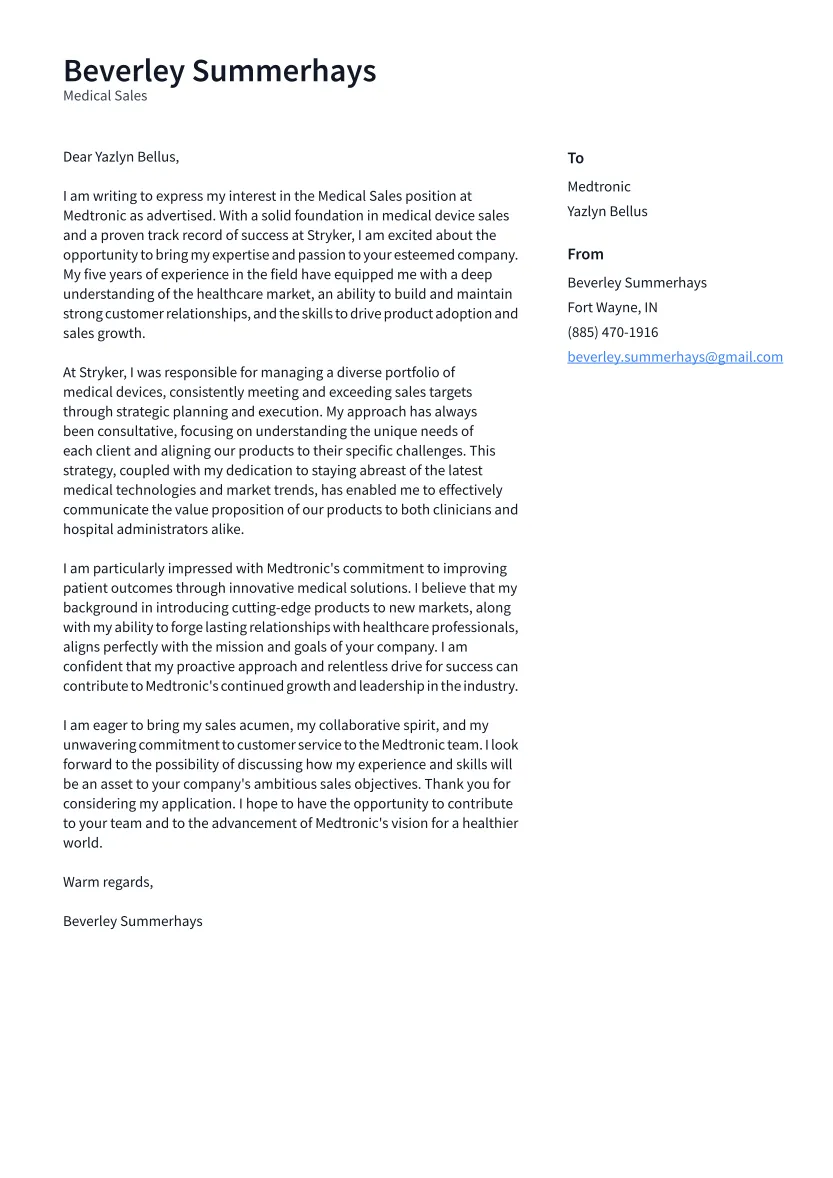
Reviewing examples of successful cover letters can provide you with valuable insights and inspiration. However, adapt each example to your unique skills and experience. Consider these examples to help you understand how to effectively structure and present your qualifications to potential employers. Use it as a guide to refine your writing style, improve your writing, and ensure your cover letter is the best it can be.
Example 1 Entry-Level Medical Sales
This example is aimed at individuals who are entering the medical sales field. It focuses on transferable skills, educational background, and a strong desire to learn and succeed. The letter demonstrates enthusiasm and a willingness to contribute to the company’s goals. Highlight relevant coursework, internships, or volunteer experiences that showcase your abilities to succeed in the field.
Example 2: Experienced Medical Sales Representative
This example is designed for experienced medical sales professionals. It highlights their achievements, sales figures, and relationship-building skills. The letter uses quantifiable data to showcase success and demonstrates an understanding of the industry’s complexities. It emphasizes sales performance, territory management skills, and any specializations such as a specific medical field or product line.
Example 3: Medical Device Sales Professional
This example is created for medical device sales professionals. It highlights experience with specific medical devices and the ability to build strong relationships with healthcare professionals. The letter showcases the ability to communicate effectively with surgeons, physicians, and other medical professionals. Provide detail on their technical expertise, understanding of medical regulations, and experience in securing contracts.
Key Takeaways
Crafting an effective medical sales cover letter is a critical step in your job search. By following the guidelines and examples provided, you can create a compelling cover letter that highlights your skills, experience, and enthusiasm for the role. Tailor your letter to each job application, proofread carefully, and showcase your unique qualifications. With a well-crafted cover letter, you’ll significantly increase your chances of landing an interview and starting a successful career in medical sales.