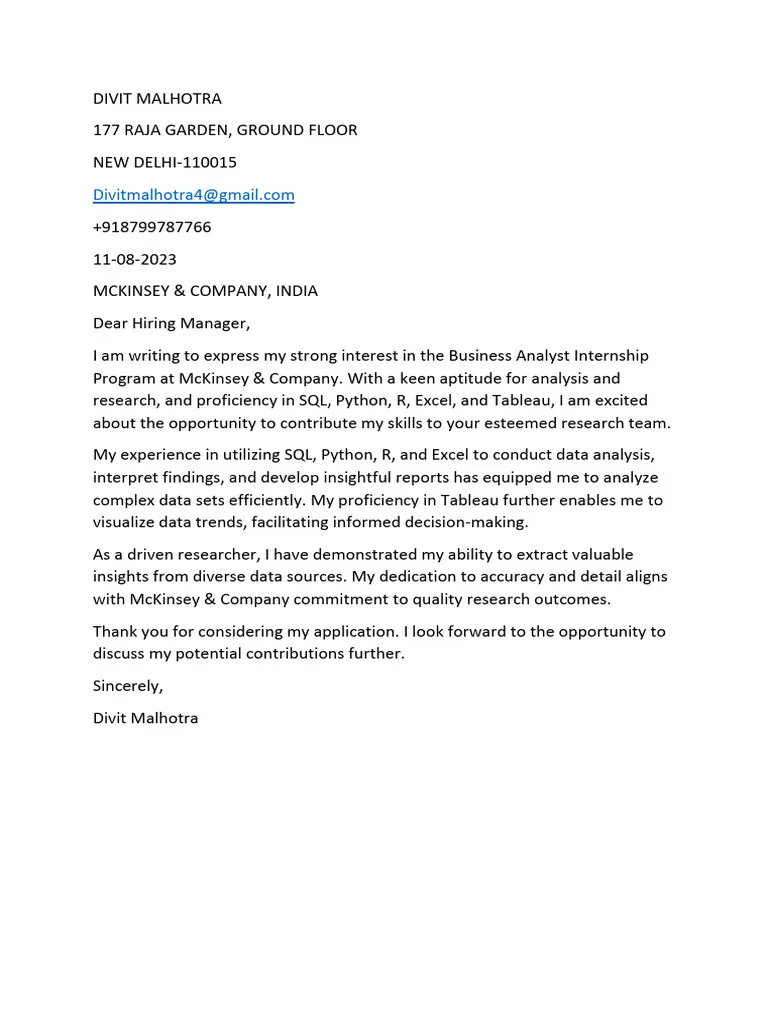
Understanding the McKinsey Cover Letter
A McKinsey cover letter is more than just a formality; it’s your initial opportunity to make a strong impression and secure an interview at one of the world’s leading consulting firms. This document allows you to showcase your unique qualifications, experiences, and motivations in a way that your resume alone cannot. Writing a compelling cover letter is critical in a highly competitive field, where standing out is essential. The letter provides you with a platform to articulate your understanding of McKinsey, your aspirations, and how your skills align with the firm’s values and needs. A well-crafted cover letter can significantly increase your chances of moving forward in the recruitment process, as it offers a personalized glimpse into your potential as a consultant.
Why is a McKinsey Cover Letter Important
The importance of a McKinsey cover letter cannot be overstated, particularly given the high caliber of applicants. It’s your chance to go beyond the basics of your resume and tell your story. McKinsey consultants seek individuals who demonstrate critical thinking, problem-solving skills, and a strong ability to communicate effectively. Your cover letter should exemplify these traits. It’s a way to show your understanding of McKinsey’s work, its values, and how you can contribute to its mission. A compelling cover letter demonstrates your genuine interest in the firm and your understanding of the consulting world. By using the cover letter to articulate your experiences, showcase your personality, and highlight your potential contributions, you can significantly improve your chances of getting noticed and securing an interview.
Key Components of a Strong McKinsey Cover Letter

Header and Salutation
Start with a professional header that includes your contact information and the date. Address the letter to the appropriate hiring manager or recruiter if possible. Researching the name of the hiring manager is a great way to show your initiative and attention to detail. The salutation should be formal, such as “Dear Mr./Ms. [Last Name],” to maintain a professional tone. Avoid generic greetings. Ensure your header is well-formatted and consistent with professional standards. Addressing the letter correctly establishes a professional tone from the start, setting a positive impression before the reader dives into the content. A properly formatted header and personalized greeting demonstrate your commitment to detail, a crucial trait for a consultant.
Opening Paragraph
The opening paragraph is your chance to grab the reader’s attention. State your purpose for writing the cover letter immediately, specifying the position you’re applying for. Express your enthusiasm for the opportunity and McKinsey. Briefly introduce yourself and highlight one or two key qualifications or experiences that make you a strong candidate. The opening should be concise, engaging, and designed to make the reader want to continue reading. Avoid generic opening lines. Instead, personalize your introduction. It shows your passion for consulting and your understanding of the role and the firm. Your aim is to create a positive first impression and set the tone for the rest of the cover letter.
Highlighting Achievements

Focus on showcasing your achievements rather than simply listing your job responsibilities. Use the STAR method (Situation, Task, Action, Result) to describe your experiences. This will help you provide context, explain what you did, and quantify your accomplishments. Choose specific examples that demonstrate your problem-solving abilities, leadership skills, and analytical thinking. Tailor your examples to the specific requirements and values of McKinsey. Highlighting your successes allows you to demonstrate your capabilities and potential contributions to the firm. Focus on the impact of your actions and use quantifiable results to showcase your achievements. This approach provides concrete evidence of your capabilities and skills, making your application much more compelling. This can be the difference between getting the job and your resume getting tossed aside.
Quantifying Your Accomplishments
Quantify your accomplishments to make your achievements more impactful. Use numbers, percentages, and data to illustrate your impact. Instead of saying “Improved sales,” say “Increased sales by 15% in six months.” This provides concrete evidence of your achievements. Use data to demonstrate your ability to achieve tangible results. This demonstrates your ability to analyze data and drive positive outcomes. Provide context when using metrics, explaining the situation, the actions you took, and the positive results. Quantification makes your achievements more credible and shows that you have a results-oriented mindset, a highly valued trait in consulting. McKinsey values candidates who can demonstrate their impact with measurable outcomes. This approach provides solid evidence of your abilities and helps your application stand out.
Demonstrating Fit for McKinsey
Showcase your understanding of McKinsey and its values. Explain why you are interested in working for the firm and how your skills and experiences align with their work. Research McKinsey’s values, recent projects, and areas of focus. Demonstrate your genuine interest in the firm. Explain why you are drawn to McKinsey’s culture, values, and mission. Highlight how your skills and experiences align with their approach to problem-solving and client work. Discuss what excites you about the opportunity and how you see yourself contributing to the firm’s success. This shows your research and genuine interest. Demonstrating your understanding of McKinsey’s work and values is essential. Show that you align with their culture and mission, which indicates that you would fit in the team. This understanding proves your commitment to the company and increases your chances of landing an interview. Remember, they are looking for someone that can fit in the McKinsey family.
Showcasing Leadership and Teamwork

McKinsey values leadership and teamwork. Provide examples of how you have demonstrated these qualities in your past experiences. Describe situations where you have led teams, resolved conflicts, or collaborated effectively to achieve a common goal. Highlight your ability to inspire others, make decisions, and take initiative. These skills are very important to get the job. Use the STAR method to describe specific instances where you demonstrated leadership or teamwork. McKinsey consultants frequently work in teams, so highlighting your ability to collaborate, motivate others, and contribute to team success is critical. Provide evidence of your ability to lead initiatives, manage projects, and inspire others. This shows your ability to work effectively within a team, a crucial skill for any McKinsey consultant. Showing those qualities will increase your chances of getting the job.
Expressing Enthusiasm and Closing
Reiterate your interest in the position and the firm. Express your enthusiasm for the opportunity and thank the reader for their time and consideration. Indicate your availability for an interview. Use a professional closing, such as “Sincerely,” or “Best regards.” A strong closing paragraph summarizes your interest and reiterates your enthusiasm. Show how you can contribute to the firm. A concise and professional closing paragraph is crucial to leave a positive impression. Expressing your appreciation shows respect for the reader’s time. Make sure to include your contact information for easy communication. The closing of your cover letter is your final opportunity to leave a lasting impression, so make it count.
Formatting and Proofreading Your Cover Letter
Formatting Guidelines

Use a professional and easy-to-read font, such as Arial or Times New Roman, with a font size of 11 or 12 points. Maintain consistent formatting throughout the document, including margins, spacing, and paragraph alignment. Keep your cover letter concise, ideally one page. Use bullet points and short paragraphs to make your letter easy to read. Ensure your letter has a clean and professional appearance. The format of your cover letter reflects your attention to detail. Follow all formatting guidelines and maintain consistency. This attention to detail is important, as consultants must present polished and professional work products. This can make or break your chances of getting an interview.
Proofreading and Editing
Proofread your cover letter multiple times for any grammatical errors, typos, or inconsistencies. Check for clarity and conciseness. Ask a friend, mentor, or career advisor to review your letter for feedback. Ensure that your writing is clear, concise, and error-free. Proofreading is essential. Your cover letter is a reflection of your attention to detail and communication skills, which are important for all consulting positions. Mistakes can undermine your credibility. Ensure that your writing is clear, concise, and error-free. It demonstrates your commitment to excellence. Reviewing your cover letter multiple times to ensure that it is polished and professional is very important. Proofreading is not optional; it is a must. It is very common for people to skip this step, and it is a big mistake. Use the tools available to ensure that your cover letter is perfect.