Understanding the Logistics Cover Letter
A well-crafted logistics cover letter is your first opportunity to make a positive impression on a potential employer. It’s more than just a formality; it’s a crucial tool that complements your resume by providing context, demonstrating your personality, and showcasing how your skills and experience align with the specific job requirements. In the competitive field of logistics, where attention to detail and effective communication are paramount, a strong cover letter can significantly increase your chances of getting an interview. The cover letter should clearly articulate your understanding of the logistics industry, highlighting relevant skills and experience. It should demonstrate your passion for the field and your ability to contribute to the company’s success.
Key Components of a Logistics Cover Letter
A compelling logistics cover letter comprises several essential elements. These components work in concert to present a professional and persuasive case for your candidacy. Each section plays a specific role in conveying your qualifications, enthusiasm, and suitability for the position. By mastering these elements, you can significantly enhance your cover letter’s impact and increase your likelihood of securing an interview. A well-structured cover letter is easy to read and quickly communicates your key qualifications to the hiring manager. Remember that it serves as your personal marketing tool and should therefore be meticulously crafted.
Contact Information

At the top of your cover letter, include your full name, address, phone number, and professional email address. Ensure this information is accurate and up-to-date. Make it easy for the employer to reach you. Using a professional-sounding email address is crucial. Avoid informal or outdated email addresses that might detract from your professionalism. This section allows for prompt communication and sets a professional tone from the outset. Double-check all contact details to prevent any potential miscommunications or delays in the hiring process. This is the first thing the hiring manager will see.
Greeting
Address the hiring manager by name if possible. Research the company website or LinkedIn to identify the correct person. If you can’t find a specific name, use a professional greeting such as “Dear Hiring Manager.” Avoid generic greetings like “To Whom It May Concern,” which can make your cover letter feel impersonal. A personalized greeting shows that you have taken the time to research the company and the role. This attention to detail can make a positive first impression. Addressing the hiring manager directly demonstrates a genuine interest in the position.
Opening Paragraph
Start with a strong opening that grabs the reader’s attention. State the position you’re applying for and briefly explain why you’re interested in the role and the company. Show enthusiasm and passion for the logistics industry. This sets the tone for the rest of your letter. Clearly stating the position ensures the hiring manager knows immediately what you are applying for. Briefly mention your key qualifications and how they align with the job requirements. This initial statement needs to immediately show the value you bring to the company.
Highlighting Relevant Skills and Experience

The core of your cover letter should focus on your relevant skills and experience. This is where you demonstrate your qualifications and show how you can contribute to the company’s success. Focus on the specific skills and experiences mentioned in the job description. Use strong action verbs to describe your accomplishments. This section needs to be tailored to each specific job you apply for. Carefully review the job description and highlight the skills and experiences that match the requirements. This will demonstrate your attention to detail and your understanding of the role.
Showcasing Logistics Experience
Provide specific examples of your logistics experience. Describe your previous roles and responsibilities. Mention any relevant experience in areas such as supply chain management, transportation, warehousing, or inventory control. Quantify your achievements whenever possible. Explain the impact you made in your previous roles. Show the hiring manager that you have a proven track record of success. Detail any specific projects you have managed, any processes you have improved, or any cost savings you have achieved. Provide concrete evidence of your ability to perform the job effectively.
Quantifying Achievements
Use numbers and data to quantify your achievements. Instead of saying “Improved efficiency,” state “Increased warehouse efficiency by 15%.” Provide specific metrics to demonstrate the impact of your work. This makes your claims more credible and allows the employer to see the value you bring. Examples include reducing shipping costs, improving on-time delivery rates, or increasing inventory accuracy. Whenever possible, include data to demonstrate the positive outcomes of your actions. These metrics provide clear evidence of your abilities and contributions.
Tailoring Your Cover Letter
Avoid sending a generic cover letter. Tailor each letter to the specific job and company. Research the company and understand its values and goals. Demonstrating that you understand the company’s needs will impress the hiring manager. Show that you have taken the time to learn about the company and its specific requirements. Tailoring your cover letter demonstrates your genuine interest and makes you stand out from other applicants. This attention to detail shows that you are serious about the opportunity.
Researching the Company
Before writing your cover letter, research the company. Visit their website, read industry news, and review their social media profiles. Understand the company’s mission, values, and recent achievements. Identify the key challenges and opportunities facing the company. This information will help you tailor your cover letter and demonstrate your understanding of the company’s needs. The more you know about the company, the better you can align your skills and experience with their requirements. This shows that you are proactive and dedicated to the application.
Matching Skills to Job Requirements
Carefully review the job description and identify the key skills and qualifications required. Highlight the skills and experiences that match the job requirements. Use the same keywords and phrases that are used in the job description. Provide specific examples of how you have used these skills in your previous roles. Show how your skills and experience make you the ideal candidate for the position. This demonstrates that you have the qualifications needed to excel in the role. Tailor your letter to the specific job description.
Formatting and Presentation

The format and presentation of your cover letter are just as important as the content. A well-formatted cover letter is easy to read and makes a positive first impression. Use a professional font, such as Times New Roman, Arial, or Calibri. Maintain consistent formatting throughout your letter. Ensure your letter is free of errors, both grammatical and spelling. A clean and well-organized cover letter shows that you pay attention to detail. The way you present your letter reflects your professionalism and attention to detail.
Professional Formatting Tips
Use a standard business letter format. Set your margins to one inch on all sides. Use single-spacing within paragraphs and double-spacing between paragraphs. Keep your letter concise and to the point, aiming for one page. Avoid long paragraphs and use bullet points to highlight key achievements. Ensure your letter is well-structured and easy to read. A well-formatted letter demonstrates your organizational skills and attention to detail. These guidelines will help make your cover letter more reader-friendly.
Proofreading and Editing
Proofread your cover letter carefully for any errors in grammar, spelling, and punctuation. Have someone else proofread it as well. Fresh eyes can often catch mistakes that you might miss. Errors can damage your credibility and detract from your message. Use grammar and spell check tools, but do not rely on them entirely. Review every word, sentence, and punctuation mark to ensure accuracy. A polished cover letter demonstrates your professionalism and attention to detail.
Writing a Strong Closing

Your closing should summarize your interest in the position and reiterate your qualifications. End with a professional and enthusiastic call to action. Thank the hiring manager for their time and consideration. Your closing paragraph is your last chance to leave a positive impression. A strong closing can encourage the hiring manager to call for an interview.
Expressing Enthusiasm
Express your enthusiasm for the position and the company. Reiterate your interest in the role. Show that you are excited about the opportunity to contribute to the company’s success. Expressing enthusiasm demonstrates your passion and drive. This will leave the hiring manager with a positive impression and increase your chances of getting an interview. Convey your excitement for the role and your potential contributions.
Call to Action
End with a clear call to action. State that you are available for an interview and provide your contact information again. Thank the hiring manager for their time and consideration. This ensures that the hiring manager knows how to contact you. Make it easy for them to take the next step. A clear call to action encourages the hiring manager to contact you. This shows that you are eager to discuss your qualifications further.
Logistics Cover Letter Samples to Review

Reviewing logistics cover letter samples can provide valuable insight into effective cover letter writing. Samples can give you a template for what to include and how to structure your letter. Use these examples as a guide to create your own unique cover letter. Tailor the sample to your own experiences and the specific job requirements. By studying examples, you can improve the quality and impact of your cover letter.
Sample 1
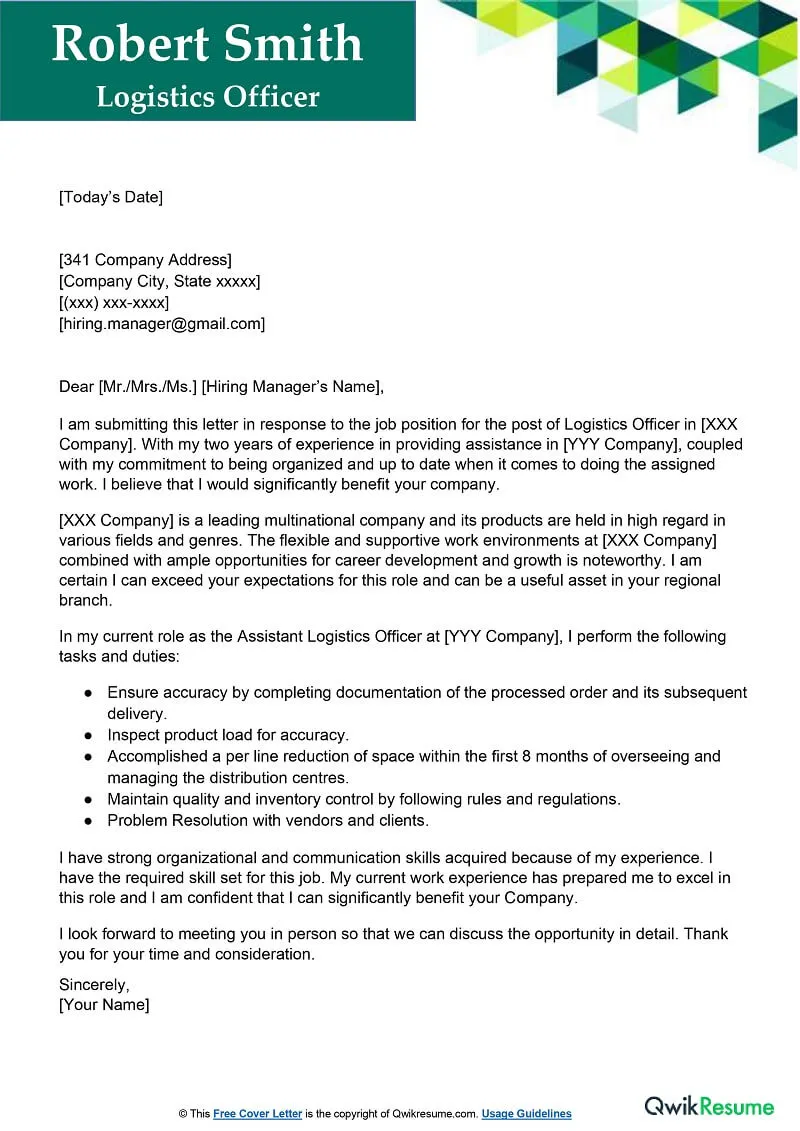
This is a hypothetical logistics cover letter sample, showcasing how to highlight relevant skills and experiences in a concise and compelling manner. The sample emphasizes quantifiable achievements. It adheres to professional formatting guidelines. Note how the applicant aligns their qualifications with the job description. The sample includes key components like an introduction, skills section, experience overview, and a strong closing. This sample shows how to tailor a cover letter to a specific role.
Sample 2
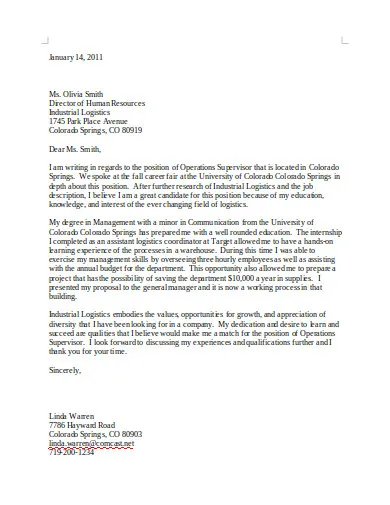
This is a second hypothetical logistics cover letter sample. It provides a different approach to showcasing qualifications. The sample focuses on the applicant’s ability to solve problems and work effectively in a team. It also emphasizes leadership and communication skills. The formatting and structure are carefully considered. The language used in this sample helps showcase the candidate’s personality.
Common Mistakes to Avoid
Several common mistakes can undermine your logistics cover letter and reduce your chances of getting an interview. Avoid these pitfalls to ensure your cover letter is effective and professional. Careful attention to detail is essential to showcase the very best of your skills and experience.
Generic Cover Letters
Avoid sending generic cover letters that are not tailored to the specific job or company. Customize each cover letter to match the specific requirements and values of the employer. A generic letter demonstrates a lack of interest and effort. Show that you have taken the time to research the company and understand their needs. Tailor your cover letter to show your interest and highlight the skills needed.
Typos and Grammatical Errors
Typos and grammatical errors can damage your credibility and make a negative impression. Proofread your cover letter carefully for any errors in grammar, spelling, and punctuation. Use grammar and spell check tools, but do not rely on them entirely. Have someone else proofread your letter as well. A well-written and error-free cover letter demonstrates your professionalism and attention to detail. Ensure all your written content is accurate.