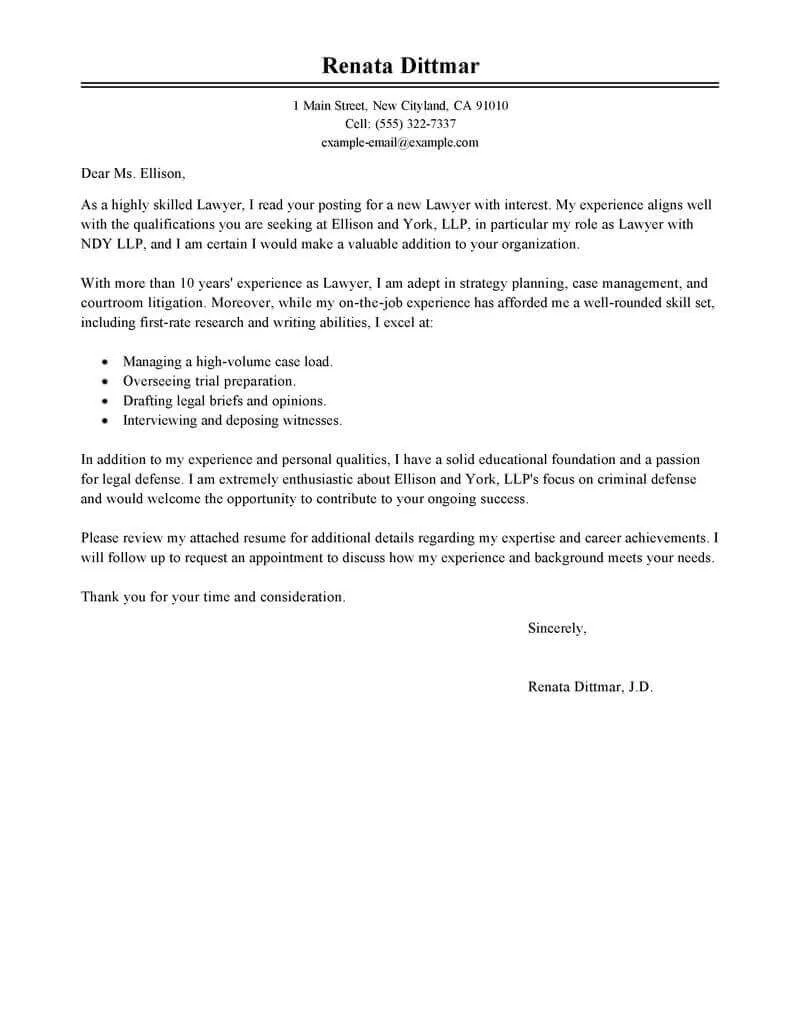
Crafting Your Legal Cover Letter
A well-crafted legal cover letter is your first introduction to a potential employer and plays a crucial role in securing a legal job. It’s your opportunity to showcase your skills, experience, and personality beyond what’s listed on your resume. A compelling cover letter grabs the reader’s attention, demonstrates your genuine interest in the position and the firm, and highlights why you are the ideal candidate. It serves as a powerful tool to make a positive impression, increasing your chances of landing an interview. Taking the time to carefully construct a cover letter tailored to each specific job application is an investment that can significantly enhance your job search efforts. Remember, it is not a rehash of your resume, but rather an expansion on it.
Understanding the Purpose of a Cover Letter
The primary purpose of a legal cover letter is to introduce yourself and demonstrate your suitability for a specific legal position. It acts as a bridge between your resume and the hiring manager, providing context and detail that a resume alone cannot offer. The cover letter allows you to personalize your application and showcase your understanding of the employer’s needs. You should state your interest in the position and the firm, and emphasize how your qualifications align with the job requirements. Furthermore, it allows you to highlight specific achievements and explain why you are a good fit. The cover letter allows you to set the tone for your application and create a positive first impression.
Highlighting Your Legal Skills

Your legal cover letter is an excellent place to showcase your relevant skills and experience. Focus on the skills that are most pertinent to the specific job description. Provide concise examples of how you’ve utilized these skills in past experiences. Think about skills like legal research, writing, advocacy, negotiation, and client communication. Quantify your achievements whenever possible. For example, instead of saying you ‘assisted with case preparation’, you might say, ‘prepared over 50 legal documents for trial, contributing to a 90% success rate’. This level of detail provides concrete evidence of your capabilities and makes your application more persuasive. Tailoring your description to the requirements of the role increases your chances of getting noticed.
Researching the Law Firm or Organization
Before writing your cover letter, thorough research of the law firm or organization is crucial. This research will help you tailor your letter and demonstrate your genuine interest. Visit the firm’s website to understand their practice areas, values, and recent news. Look at the profiles of attorneys and partners to get a sense of their backgrounds and expertise. If possible, research the hiring manager or the person to whom you’re addressing the letter. Use LinkedIn and other professional networking sites to discover common connections. Referencing specific details about the firm, like their recent successes, notable cases, or involvement in the community, shows that you’ve done your homework and are truly interested in the opportunity. This personalization helps you stand out.
Formatting Your Legal Cover Letter
Contact Information and Date

Begin your cover letter with your contact information at the top. This should include your full name, address, phone number, and email address. It’s also customary to include the date below your information and just above the recipient’s information. Ensure your email address is professional. Always use a standard font like Times New Roman, Arial, or Calibri, and keep the font size between 10 and 12 points. Ensure the format is neat and easy to read. Consider using a simple template to guide your writing process, and keep the spacing consistent throughout the document. Correct formatting conveys professionalism and attention to detail, which is especially important in the legal field.
Salutation
The salutation sets the tone for your letter. If possible, address the hiring manager or the specific person mentioned in the job posting. Addressing the letter to a specific individual demonstrates that you’ve taken the time to find out who will be reading your application. ‘Dear Mr./Ms. Last Name’ is a standard and respectful way to start. If the name isn’t available, use a professional greeting like ‘Dear Hiring Manager’. Avoid generic salutations like ‘To Whom It May Concern’, as they can make your application feel impersonal. Researching the name is a small detail but shows initiative. It suggests you’re invested in the position and not just sending out a generic application.
Body Paragraphs
First Paragraph The Hook

The first paragraph of your cover letter serves as the hook, capturing the reader’s attention and establishing your purpose. Start with a clear statement of the position you’re applying for and where you found the job posting. Consider mentioning what initially drew you to the position or the firm. Briefly highlight a key skill or achievement to show you’re a strong candidate. Demonstrate enthusiasm and express your understanding of what the job entails. Avoid generic opening lines; try to make your opening paragraph concise and directly relevant to the role. The goal is to pique the hiring manager’s interest and make them want to read more.
Second Paragraph Show Your Value
The second paragraph is where you showcase your value. This is the core of your letter, where you demonstrate how your skills and experience align with the job requirements. Review the job description and identify the key skills and qualifications the employer is seeking. Use this information to highlight your relevant experiences, providing specific examples of your achievements. Quantify your accomplishments whenever possible using metrics and data. Explain how your skills and experiences have benefited previous employers or clients. Relate your experience to the job requirements to clearly show you are a good fit for the role and the firm. Use strong action verbs to describe your responsibilities and accomplishments.
Third Paragraph Closing
In the closing paragraph, reiterate your interest in the position and the firm. Express your enthusiasm for the opportunity and your confidence in your ability to contribute to the organization. Mention your availability for an interview and how the hiring manager can contact you. Reiterate your appreciation for their time and consideration. Keep the closing paragraph brief and confident. End with a call to action, encouraging the hiring manager to take the next step. Use this paragraph to leave a positive final impression, and make it clear that you’re eager to move forward in the hiring process.
Complimentary Close and Signature

End your legal cover letter with a professional closing, such as ‘Sincerely’, ‘Respectfully’, or ‘Best regards’. Avoid overly casual or informal closings. Leave a space for your handwritten signature, followed by your typed name. If submitting an electronic application, you can scan your signature and insert it or simply type your name. Ensure your signature is clear and easy to read. This final touch conveys professionalism and attention to detail. Proper closure ensures you leave a positive and lasting impression.
Proofreading and Editing Your Legal Cover Letter
Common Mistakes to Avoid
Several common mistakes can significantly undermine your cover letter. Avoid using generic, templated language. Your cover letter should be tailored to each specific job application and firm. Do not include irrelevant information that doesn’t relate to the job requirements. Avoid lengthy paragraphs and rambling sentences. Keep your writing concise and to the point. Grammar and spelling errors can create a negative impression, so thoroughly proofread your letter. Never exaggerate or lie about your qualifications or experience. Finally, avoid simply restating your resume – use the cover letter to expand on your key skills and experiences. Paying attention to these details will increase your chances of success.
Getting Feedback

Before submitting your legal cover letter, it is essential to get feedback. Ask a trusted friend, mentor, or career counselor to review your letter. Someone with experience in the legal field can provide invaluable insights. Focus on clarity, conciseness, and the overall impact of your letter. Make sure the letter is well-structured and easy to read. Ask the reviewer to comment on the tone and the strength of your arguments. Consider the feedback carefully and make revisions as needed. Taking the time to get feedback ensures that your cover letter is polished and presents you in the best possible light. Getting a second opinion can uncover areas for improvement.