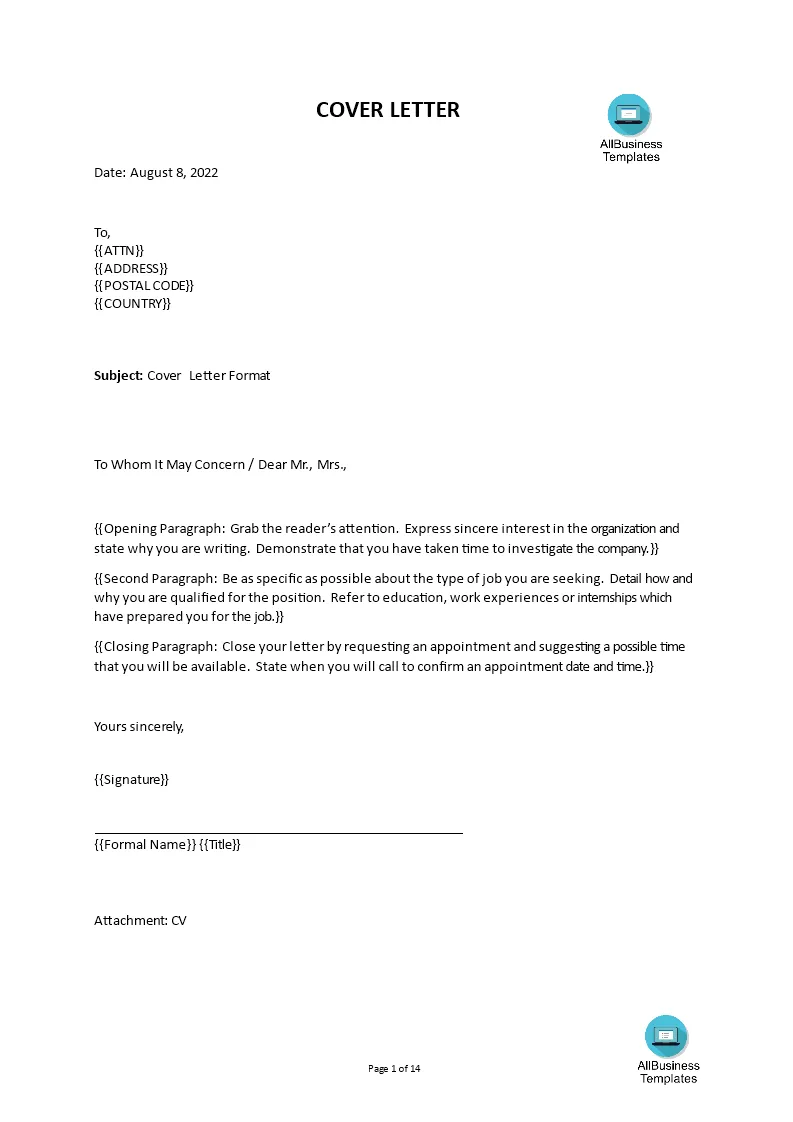
What is a Cover Letter
A cover letter is a crucial document that accompanies your resume when applying for a job. It serves as a personal introduction, allowing you to highlight your skills, experiences, and qualifications in a way that complements your resume. Unlike a resume, which provides a concise overview of your professional history, a cover letter offers an opportunity to elaborate on specific aspects of your background and explain why you are a suitable candidate for the position. It’s your chance to make a strong first impression and demonstrate your enthusiasm for the role and the company.
Why Is a Cover Letter Important
A well-crafted cover letter is essential for several reasons. Firstly, it allows you to personalize your application and show your genuine interest in the specific job and company. Secondly, it provides a platform to explain any gaps in your employment history or career transitions. Thirdly, it enables you to elaborate on your skills and achievements, showcasing how they align with the job requirements. Finally, a cover letter demonstrates your communication skills and attention to detail, which are highly valued by employers. A strong cover letter can significantly increase your chances of securing an interview.
Key Elements of a Cover Letter

A compelling cover letter should include the following key elements to effectively communicate your qualifications and enthusiasm. Each section plays a vital role in capturing the hiring manager’s attention and demonstrating your suitability for the role.
Contact Information and Salutation
Start your cover letter by including your contact information (name, phone number, email, and LinkedIn profile URL if applicable) at the top. Following this, address the hiring manager by name if possible; otherwise, use a professional greeting such as “Dear Hiring Manager.” This personal touch immediately sets a positive tone and shows that you have taken the time to research the company and the specific role.
Opening Paragraph Capture Attention
Your opening paragraph is crucial for grabbing the reader’s attention. Begin by stating the position you are applying for and where you found the job posting. Then, immediately highlight your most relevant skills or experiences and express your enthusiasm for the opportunity. Keep it concise and compelling to encourage the hiring manager to read further.
Body Paragraphs Showcase Skills and Experience

The body paragraphs are where you showcase your skills, experience, and accomplishments in detail. For each paragraph, focus on one or two key qualifications that align with the job requirements. Provide specific examples of your achievements, using the STAR method (Situation, Task, Action, Result) to effectively illustrate your contributions. This approach helps demonstrate your capabilities and the value you can bring to the company.
Tailoring Your Cover Letter
Adapt your cover letter to match each job application. Customize the letter by highlighting the skills and experiences most relevant to the specific position and company. Avoid sending generic cover letters; instead, research the company, understand their values, and demonstrate how your qualifications align with their needs. This level of personalization significantly increases the impact of your application.
Researching the Company and Role
Before writing your cover letter, thoroughly research the company and the specific role you are applying for. Visit their website, read articles about them, and review their social media profiles. Understand their mission, values, and recent projects. This knowledge will help you tailor your cover letter and demonstrate your genuine interest in the company and the position.
Using Keywords From Job Description

Carefully review the job description and identify the keywords and phrases used to describe the required skills and qualifications. Incorporate these keywords naturally throughout your cover letter to ensure that your application is easily identified by applicant tracking systems (ATS) and aligns with the hiring manager’s expectations. This helps to emphasize your relevant experience and skills.
Highlighting Relevant Achievements
Focus on your achievements rather than simply listing your responsibilities. Whenever possible, use the STAR method to provide context, explain the task you undertook, describe the actions you took, and quantify the results you achieved. This approach effectively demonstrates your capabilities and showcases your value to potential employers. Highlight accomplishments that directly relate to the job requirements.
Quantifying Your Accomplishments
Whenever possible, quantify your achievements by providing specific numbers or data to support your claims. For example, instead of saying “Improved customer satisfaction,” say “Increased customer satisfaction by 15% within six months.” Numbers and data provide concrete evidence of your skills and the impact you have made in previous roles, making your cover letter more compelling.
Closing Paragraph and Call to Action

In your closing paragraph, reiterate your interest in the position and the company. Summarize your key qualifications and express your enthusiasm for the opportunity. Include a clear call to action, such as inviting the hiring manager to contact you for an interview or to discuss your qualifications further. End with a professional closing, such as “Sincerely” or “Best regards,” followed by your name.
Proofreading and Formatting
Proofread your cover letter meticulously for any spelling, grammar, and punctuation errors. Ensure your cover letter is well-formatted with a clear and readable layout, including appropriate font size, consistent margins, and ample white space. A polished and error-free cover letter demonstrates your attention to detail and professionalism, making a positive impression on the hiring manager.
Best Cover Letter Template
When selecting a cover letter template, choose a format that is professional, clean, and easy to read. A standard cover letter template typically includes your contact information, the date, the hiring manager’s name and title, a salutation, an opening paragraph, body paragraphs, a closing paragraph, and a professional closing. You can find various cover letter templates online, such as those available on Microsoft Word or Google Docs, to assist you in structuring your letter effectively. Make sure to tailor the template to suit your personal style and the specific requirements of the job.
Cover Letter Template for Freshers

For freshers or those with limited work experience, a cover letter should focus on highlighting relevant skills, academic achievements, internships, volunteer work, and any projects that demonstrate your abilities. Emphasize your enthusiasm, eagerness to learn, and willingness to contribute to the company. Customize your cover letter to the specific job description and focus on skills and experiences that align with the role.
Cover Letter Template for Experienced Professionals
Experienced professionals should showcase their work history, accomplishments, and skills in the cover letter. Focus on quantifiable achievements, such as projects managed, results achieved, and contributions made to previous companies. Highlight your leadership skills, industry expertise, and any relevant certifications or awards. Use the STAR method to illustrate your skills with specific examples and emphasize how your experience aligns with the job requirements.
Cover Letter Template for Specific Industries
When applying for jobs in specific industries, it is vital to tailor your cover letter to the industry’s standards and expectations. For instance, in the creative industries, you can demonstrate your creativity through your writing style and layout. In technical fields, highlighting your technical skills and specific experience with relevant software or equipment is essential. In the healthcare industry, emphasizing your patient care experience and understanding of medical terminology is crucial. Always research the industry and tailor your letter to align with its unique requirements.
Common Mistakes to Avoid

Avoiding common cover letter mistakes can significantly increase your chances of a successful application. Several common pitfalls can undermine your application, including a lack of personalization, using generic language, focusing too much on yourself, and neglecting proofreading and formatting. These mistakes can negatively impact your first impression and reduce the effectiveness of your application.
Not Customizing Your Letter
One of the biggest mistakes is failing to customize your cover letter for each job application. Sending a generic cover letter without addressing the specific requirements of the role and the company shows a lack of interest and attention to detail. Always tailor your letter to showcase how your skills and experiences align with the job description and company values.
Using Generic Language
Avoid using generic phrases and clichés that lack impact. Instead, use specific examples, quantify your achievements, and use action verbs to demonstrate your skills and contributions. Generic language makes your cover letter sound impersonal and less compelling, reducing its effectiveness in capturing the hiring manager’s attention.
Focusing Only on Yourself
While it is essential to highlight your skills and experiences, avoid focusing solely on yourself. Instead, explain how your qualifications and achievements can benefit the company and contribute to its goals. Show that you understand the company’s needs and can provide solutions. Demonstrate your value by connecting your skills with the company’s needs.
Ignoring Formatting and Proofreading
Poor formatting and grammatical errors can make your cover letter appear unprofessional and damage your credibility. Always proofread your cover letter carefully for any spelling, grammar, and punctuation errors. Ensure your cover letter is well-formatted with a clean layout, readable font, and consistent margins. A polished and error-free cover letter demonstrates your attention to detail and professionalism.
Resources for Cover Letter Templates
Several resources are available to help you create an effective cover letter. These resources can provide you with templates, examples, and tips to guide you through the writing process. Utilize these resources to create a compelling and personalized cover letter that helps you stand out from the competition.
Online Cover Letter Builders
Online cover letter builders are user-friendly tools that guide you through the process of creating a professional cover letter. These tools typically provide customizable templates, prompts, and suggestions to help you organize your thoughts and structure your content effectively. Some popular cover letter builders include Resume.io, Zety, and Kickresume, all of which offer a wide range of templates and customization options.
Professional Cover Letter Services
If you need professional assistance, consider hiring a professional cover letter writing service. These services offer expert advice and can create a customized cover letter that highlights your skills and experiences effectively. Professional writers will ensure your cover letter is well-written, error-free, and tailored to your specific job applications. Popular services include TopResume, The Muse, and Resume Genius, which provide cover letter writing and review services.