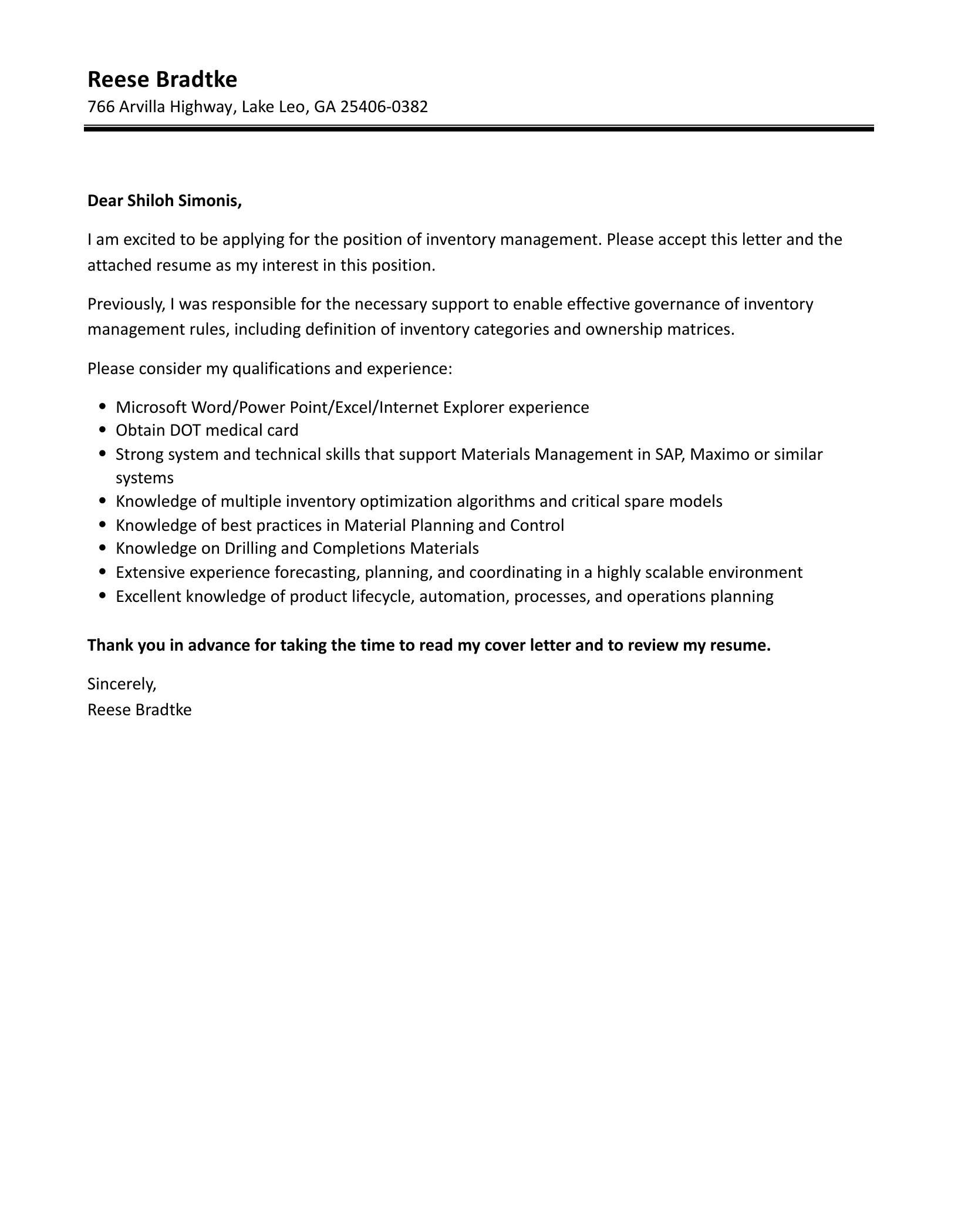
Crafting an Effective Inventory Management Cover Letter
A well-crafted inventory management cover letter is your first impression to a potential employer, serving as a crucial tool in securing a job interview. It goes beyond simply listing your skills; it’s a narrative that demonstrates how your experience and abilities align with the specific requirements of the role. This guide will explore the key elements of an effective cover letter, providing you with the insights and strategies you need to make a lasting impact and stand out from the competition. By mastering the art of crafting a compelling cover letter, you significantly increase your chances of landing your dream job in inventory management.
Understanding the Purpose of a Cover Letter
The primary purpose of a cover letter is to introduce yourself to the hiring manager and explain why you are the perfect candidate for the position. Unlike a resume, which provides a factual summary of your experience, a cover letter allows you to elaborate on your skills, highlight your achievements, and express your enthusiasm for the opportunity. It’s your chance to personalize your application, showing how your unique qualifications and personality make you a great fit for the company culture. Consider it your personal sales pitch, designed to persuade the employer to read your resume and invite you for an interview.
Highlighting Relevant Skills

Identify the skills that are most relevant to the inventory management role. This includes experience with inventory control, demand forecasting, warehouse management, and procurement. Showcase your proficiency in these areas, using action verbs to describe your accomplishments. For example, instead of saying “Responsible for inventory tracking,” you might write, “Implemented a new inventory tracking system that reduced discrepancies by 15%.” Tailor your skills to match the specific requirements listed in the job description, ensuring that you address the employer’s needs directly. This shows that you understand the demands of the position and are prepared to meet them.
Quantifying Achievements
Provide concrete evidence of your accomplishments. Use numbers and data to demonstrate the impact of your contributions. Instead of saying you improved efficiency, state that you “Reduced inventory holding costs by 10% within one year by implementing a just-in-time inventory system.” Highlighting your successes with quantifiable results makes your cover letter more persuasive and memorable. Focus on achievements that show you have a direct positive impact on a company’s bottom line, such as improved accuracy, reduced waste, or increased efficiency in the supply chain.
Tailoring Your Letter
Customize your cover letter for each job application. Read the job description carefully and use keywords from the posting. Research the company and understand its values and goals. Show that you’ve done your homework and are genuinely interested in the organization and the specific role. Avoid using a generic cover letter; personalize it to demonstrate your understanding of the company’s needs and how you can contribute to their success. Mention the company’s name, and express your enthusiasm about their work in the inventory management field, if possible.
Key Sections to Include in Your Cover Letter

Contact Information and Date
Start with your contact information at the top of the letter, including your name, address, phone number, and email address. Include the date below your contact details. If you know the hiring manager’s name, address the letter to them; otherwise, use a general greeting like “Dear Hiring Manager.” This section ensures that the employer can easily reach you and shows attention to detail.
Greeting and Introduction
Begin your letter with a professional greeting. Then, in your introduction, state the position you are applying for and how you learned about it. Briefly mention your key qualifications and express your interest in the role and the company. The introduction sets the tone for the rest of the letter and captures the reader’s attention, making them want to learn more about your skills and experience. Make your introduction compelling and to the point.
Body Paragraphs Detailing Your Skills and Experience

This is the core of your cover letter, where you highlight your relevant skills and experience. Provide specific examples of how you have applied these skills in previous roles. Use the STAR method (Situation, Task, Action, Result) to structure your responses, providing a clear and concise explanation of your accomplishments. Show how your skills align with the job requirements, and demonstrate how you can contribute to the company’s success. Focus on showcasing your achievements, not just listing your responsibilities.
Inventory Management Software Proficiency
Highlight your experience with various inventory management software packages. Specify the software you’re proficient in, such as SAP, Oracle, or custom-built systems. Describe the tasks you performed using the software, such as data entry, report generation, and analysis. Mention any certifications or training you have in using specific software platforms. Your familiarity with industry-standard software demonstrates your ability to hit the ground running and contribute to the team immediately. Don’t hesitate to list the modules you have experience with, and if you’ve implemented new features, say so.
Experience with Inventory Control Techniques
Detail your experience with inventory control techniques such as cycle counting, ABC analysis, and FIFO/LIFO methods. Provide examples of how you’ve used these techniques to improve accuracy, reduce waste, or streamline inventory processes. Showcase your understanding of the importance of inventory accuracy and the strategies you’ve employed to achieve it. Demonstrating expertise in these techniques shows that you are well-versed in best practices and can manage inventory effectively, minimizing losses and maximizing efficiency. Include any experience you have in physical inventory counts and reconciling discrepancies.
Problem-Solving and Analytical Skills

Inventory management often involves solving problems related to shortages, overstocking, and supply chain disruptions. Describe your problem-solving skills, including your ability to identify issues, analyze data, and implement effective solutions. Use examples of situations where you successfully resolved inventory-related challenges. Quantify the results of your solutions to demonstrate your impact. Also, mention analytical tools you’ve used, like Excel or data analysis software, and the insights you’ve gained to improve processes and make informed decisions.
Results and Achievements
Focus on what you’ve achieved in previous roles. Provide measurable results, such as the percentage reduction in inventory costs, the improvement in inventory turnover rates, or the decrease in stockouts. Use action verbs to describe your accomplishments, and quantify your results whenever possible. Showing a track record of success is critical. This section of your cover letter should leave a lasting impression by demonstrating your ability to contribute meaningfully to the company’s goals and objectives.
Closing and Call to Action
Conclude your letter by restating your interest in the position and the company. Thank the hiring manager for their time and consideration. Include a call to action, such as stating that you look forward to hearing from them and discussing your qualifications in more detail. Make it easy for the hiring manager to contact you and express your enthusiasm for the opportunity. Ensure your closing is professional and leaves a positive impression.
Formatting and Design Tips

Choosing the Right Font and Font Size
Select a professional font like Times New Roman, Arial, or Calibri, as these are easy to read. Use a font size between 10 and 12 points to ensure readability. Avoid using overly decorative fonts, as they can distract from the content. Consistency in font choices throughout your cover letter enhances professionalism. These formatting choices contribute to a polished and professional appearance that makes a positive impression.
Using Proper Grammar and Spelling
Carefully proofread your cover letter for grammatical errors, typos, and spelling mistakes. These errors can undermine your credibility and suggest a lack of attention to detail. Use a grammar checker and ask a friend or colleague to review your letter. Ensure that your writing is clear, concise, and professional. The goal is to demonstrate your communication skills and attention to detail through impeccable writing.
Keeping Your Letter Concise and Focused

Keep your cover letter concise and to the point, ideally within one page. Focus on the most relevant information and avoid unnecessary details. Organize your thoughts logically, using clear and concise language. Make sure your cover letter is easy to read, and gets straight to the main points. The hiring manager is busy, so show them you value their time by keeping your letter focused and efficient.
Reviewing and Proofreading Your Cover Letter
Before submitting your cover letter, carefully review it for any errors or inconsistencies. Proofread it multiple times, ideally with a fresh perspective. Consider asking a trusted friend or mentor to review your letter. Ensure that your cover letter is free of errors, well-formatted, and presents you in the best possible light. This final step is crucial, as it ensures that your cover letter reflects your professionalism and attention to detail, increasing your chances of securing an interview.