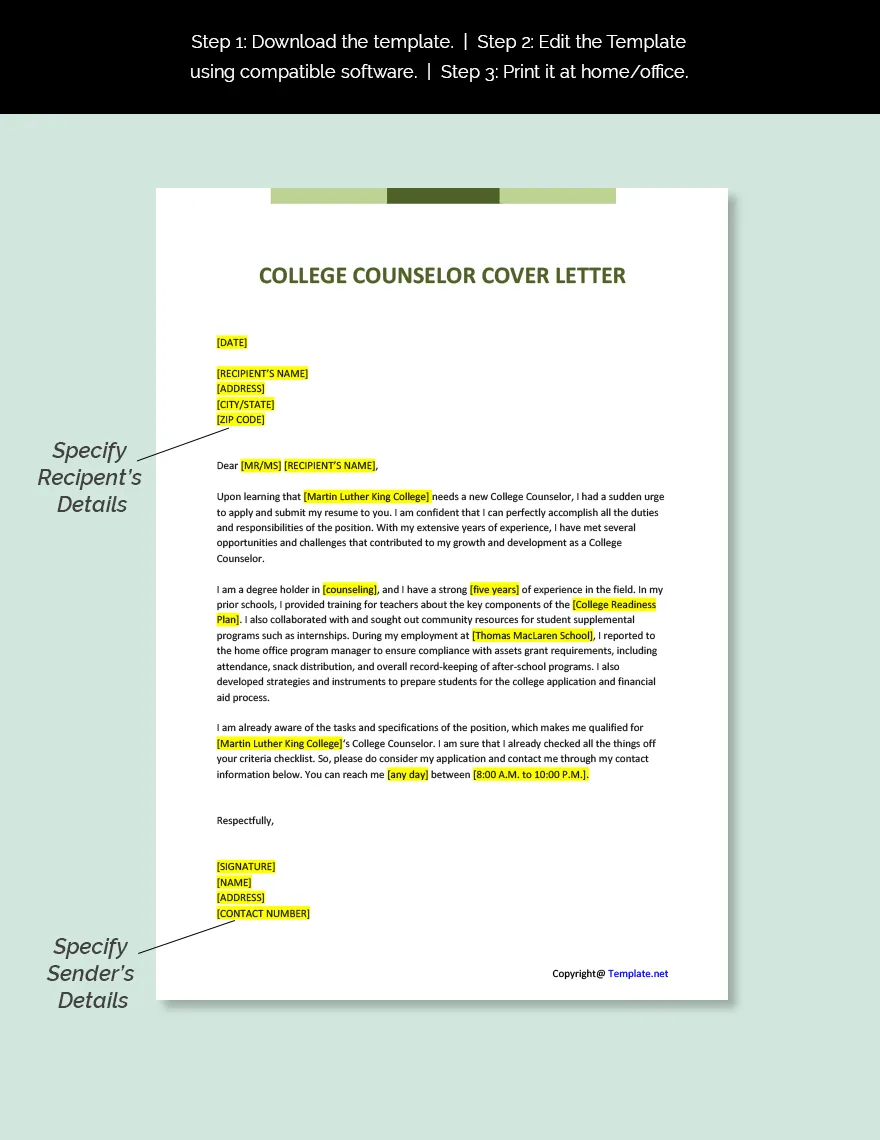
Understanding the Importance of a Cover Letter
In the competitive field of college counseling, a well-crafted cover letter can make all the difference. It’s your first opportunity to make a positive impression and showcase why you are the ideal candidate for the role. The cover letter gives you the chance to go beyond your resume by providing more context, highlighting your passion, and demonstrating your understanding of the specific school’s values and needs. It’s essentially your personal introduction and a chance to demonstrate your unique qualifications in more detail.
Why a Cover Letter Matters for College Counselors
For college counselor positions, a cover letter is even more crucial. It allows you to articulate your approach to student support and your philosophy of college counseling. It’s the perfect platform to share your experiences working with diverse student populations, your understanding of the college admissions process, and your commitment to fostering a supportive and inclusive environment. A well-written cover letter demonstrates your communication skills, an essential aspect of counseling, and emphasizes your genuine dedication to helping students succeed.
Key Components of a Strong Cover Letter

A strong cover letter is well-structured and concise. It includes a clear header with your contact information, a compelling opening that grabs the reader’s attention, a detailed section highlighting your skills and experience, a tailored section demonstrating your knowledge of the institution, a professional closing that includes a call to action, and, of course, meticulous proofreading. Each element contributes to showing your suitability for the role. Ensure your letter is easy to read, utilizes clear formatting, and maintains a professional tone.
Header and Contact Information
Your header is the first thing a hiring manager sees. Include your full name, professional title if you have one, phone number, email address, and LinkedIn profile URL. Making sure your email address sounds professional (e.g., firstname.lastname@email.com) is vital for projecting a professional image. Double-check all details before submitting.
Formatting Your Header Correctly
Keep the header simple and professional, using a standard font like Arial or Times New Roman. Left-align your contact information for a clean look. Consider adding a bit of space between each item for improved readability. Maintain a consistent format throughout the document. Your header should match the one on your resume for consistency.
The Opening Paragraph Making a Strong First Impression

Your opening paragraph is critical; it sets the tone. It needs to immediately grab the reader’s attention and demonstrate your enthusiasm for the role. Name the specific job you’re applying for and where you found the posting. Briefly state why you are interested and what you bring to the table. Make a strong first impression in this initial paragraph.
Grabbing Attention from the Start
To make your opening compelling, start with a short story, a relevant achievement, or a statement that highlights your passion for the role. Show, don’t tell. Instead of saying “I am passionate about helping students,” share a specific example. Demonstrate that you understand the school’s values or mission, showing that you have done your research.
Highlighting Your Relevant Experience
Use the body of your cover letter to elaborate on your experience and skills. Focus on the experiences most relevant to the job description. Provide specific examples to illustrate your achievements and their impact. Connect your experience with the school’s needs and how you can contribute to their goals. This part should showcase your ability to fulfill the responsibilities in the job description.
Showcasing Your Skills and Achievements

When showcasing your skills, go beyond simply listing them; provide evidence of how you’ve used these skills. For instance, instead of saying “I have good communication skills,” describe how you effectively communicated with students, parents, and admissions officers. Emphasize accomplishments using quantifiable results to show the difference you’ve made in previous roles. Consider using the STAR method (Situation, Task, Action, Result) to organize your examples.
Quantifying Your Accomplishments
Quantify your achievements whenever possible to give tangible proof of your impact. Instead of saying “Improved student outcomes,” say “Increased college acceptance rates by 15% in three years.” Use numbers, percentages, and statistics to show your effectiveness. Quantifiable results will show your value to the institution and make your letter more persuasive.
Tailoring Your Letter to the Specific Job
A tailored cover letter is critical for success. Generic cover letters are easily noticed and often discarded. Research the institution thoroughly, understanding its mission, values, and the college counseling department’s needs. Personalization demonstrates you’ve invested time and effort and are genuinely interested in the opportunity.
Researching the Institution and its Needs

Before writing, explore the institution’s website, social media, and publications. Identify their priorities, student demographics, and unique aspects of their college counseling program. Understand their challenges and how your skills and experience address them. This shows you’ve researched and is more likely to get you noticed.
Customizing Your Content for Each Application
Avoid using a template. Customize each letter to match the job description and the school’s values. Modify examples to show how your accomplishments align with their needs. Use keywords from the job description to prove you understand the role and what they are looking for. This targeted approach significantly increases your chances.
Addressing Potential Weaknesses
If there are gaps in your experience, or any weaknesses, address them. If you’re new to the field, emphasize your academic background, internships, or volunteer work. Frame weaknesses as opportunities for growth. Demonstrate your willingness to learn and adapt. Be honest and transparent in your explanation.
The Closing Paragraph Call to Action and Gratitude

Your closing should leave a lasting impression. Restate your enthusiasm and reiterate why you’re the ideal candidate. Include a clear call to action, such as inviting an interview or suggesting they contact you. End with a sincere expression of thanks for their time and consideration.
Expressing Enthusiasm and Next Steps
Reiterate your enthusiasm in the closing paragraph. Make it clear you’re excited about the opportunity. Add a call to action: “I am available for an interview at your earliest convenience.” Thank them for their time. Expressing gratitude creates a positive final impression.
Proofreading and Editing for Perfection
Proofread and edit your cover letter. Errors in grammar, spelling, and punctuation can damage your credibility. Carefully review your letter and have a colleague or friend review it. A second set of eyes can spot mistakes you might miss. Make sure your language is clear, concise, and reflects your best professional self.
Common Mistakes to Avoid

Avoid common mistakes in your cover letter. Don’t restate your resume; use the letter to add context. Avoid clichés and generic statements. Don’t be negative about past employers. Don’t go over the recommended length (one page). Proofread carefully. These mistakes can significantly hurt your chances.
Using the Correct Grammar and Tone
Pay attention to grammar and tone. Use professional language, avoiding slang. Maintain a positive, enthusiastic tone. Ensure your sentences are clear and easy to understand. Proofread for grammar and spelling errors. A polished letter shows attention to detail. Convey your personality while staying professional.
Cover Letter Examples for College Counselors
Review cover letter examples for insights and inspiration. Find examples tailored to college counselor roles to understand how others present themselves. Analyze the structure, content, and language to learn how to communicate your strengths effectively. Adapt examples to fit your background and the job’s requirements.
Example 1 Experienced Counselor

This example should highlight the achievements and experience of an experienced college counselor, focusing on measurable results and leadership experience. It should show a strong understanding of the college admissions process, student support, and mentorship. Use action verbs to emphasize responsibilities like “managed,” “developed,” and “oversaw,” and use numbers to quantify achievements. The structure focuses on specific accomplishments. It will also use a tailored approach, showing deep knowledge of the field.
Example 2 New Counselor
This is for candidates with less experience, focusing on academic background, skills, and enthusiasm. This letter must emphasize transferable skills and dedication. This example will showcase experience, such as internships, volunteer work, or academic achievements. It will demonstrate enthusiasm and adaptability. It will also show specific ways to contribute, focusing on supporting student success.
Tips to Stand Out from the Crowd
To stand out, showcase your personality and passion for the role. Highlight any unique skills that set you apart. Customize your letter to the specific institution and demonstrate your understanding of their culture. Show your enthusiasm and desire to contribute. Consider adding a creative touch if it fits, while remaining professional.
Using Action Verbs Effectively
Action verbs make your cover letter more dynamic. Instead of using passive phrases, use strong verbs to describe your accomplishments. For example, change “Responsible for student counseling” to “Provided individual and group counseling to students.” Action verbs highlight your skills and make your letter more persuasive. Use verbs that show your ability to contribute to the program’s success.
Showcasing Your Personality and Passion
Let your personality and passion shine through while remaining professional. Share stories that show your enthusiasm for college counseling and commitment to helping students. Inject your unique voice. Show the hiring committee you are qualified and a good fit for their team and school culture. A cover letter that showcases your personality is memorable.