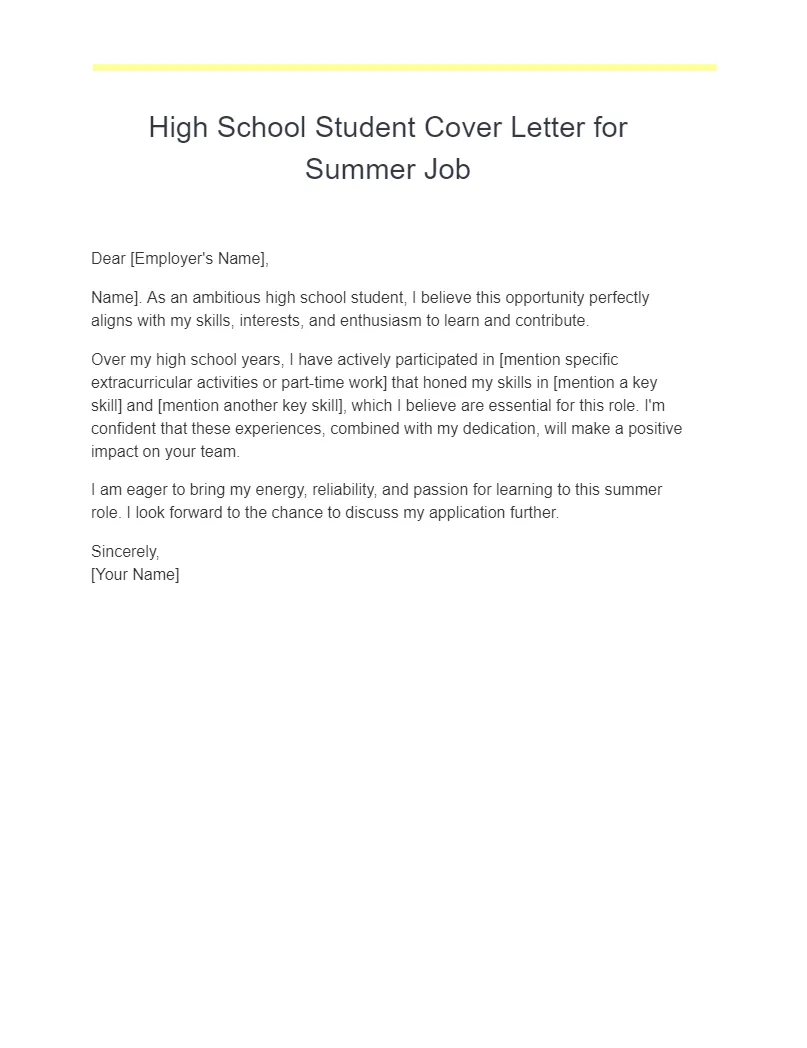
Cover Letters for High Schoolers Why They Matter
As a high school student, you might think a cover letter is unnecessary. However, it is a crucial tool in your job application arsenal. A well-crafted cover letter can significantly increase your chances of landing an interview and ultimately, the job or opportunity you are after. It provides an opportunity to showcase your personality, enthusiasm, and relevant skills. While your resume provides a snapshot of your experience and qualifications, the cover letter allows you to elaborate on your achievements, explain why you are interested in the specific role, and demonstrate your understanding of the employer’s needs. It is also an excellent way to differentiate yourself from other applicants, especially those with similar qualifications. Whether you’re applying for a part-time job, an internship, or a volunteer position, a strong cover letter can set you apart and make a positive first impression.
Understanding the Purpose of a Cover Letter
The primary purpose of a cover letter is to introduce yourself to a potential employer and express your interest in a specific position. It serves as a personal introduction, allowing you to highlight your key skills, experiences, and qualifications. A cover letter goes beyond merely listing your accomplishments; it allows you to explain why you are the best fit for the role and what you can bring to the company. It shows the employer that you are not just sending out a generic application, but that you have taken the time to learn about the company and the position. The goal is to persuade the hiring manager to read your resume and consider you for an interview. Therefore, your cover letter should be concise, engaging, and tailored to the specific job requirements.
Highlighting Skills and Experience

One of the most important parts of your cover letter is highlighting your skills and experience. High school students might feel they lack significant work experience, but this is where you showcase other skills. Think about your skills and the experience you do have, even if it’s from school projects, extracurricular activities, volunteer work, or personal projects. Identify your transferable skills such as communication, teamwork, problem-solving, leadership, and time management. These skills are valuable in any work environment. Quantify your accomplishments whenever possible. For example, instead of saying “Helped organize events,” say “Assisted in organizing school events that hosted over 200 students.” This provides concrete evidence of your abilities and makes your application more compelling.
Identifying Your Skills
Start by making a list of all your skills. These could be soft skills (like communication, teamwork, and problem-solving) or hard skills (like proficiency in a specific software or a language). Think about the skills you have developed through your academic work, extracurricular activities, volunteer experiences, and any part-time jobs or personal projects. Be honest with yourself and list everything you believe you are good at. Once you have a comprehensive list, go through the job description and identify the skills the employer is looking for. Then, match your skills to the job requirements, highlighting the most relevant ones in your cover letter.
Showcasing Relevant Experience
Even if you don’t have extensive work experience, you likely have relevant experiences that can be showcased. Think about volunteer work, internships, school projects, and extracurricular activities. Consider any leadership roles you’ve held, such as captain of a sports team or president of a club. Describe the tasks you performed, the skills you used, and the results you achieved. If you have any part-time jobs, detail your responsibilities and accomplishments. For example, if you worked as a cashier, you can highlight your customer service skills, ability to handle money, and time management abilities. The goal is to demonstrate that you have the skills and experience needed to succeed in the role, even if it’s not directly related to the job.
Tailoring Your Cover Letter

A generic cover letter is a surefire way to end up in the rejection pile. Tailoring your cover letter is crucial for making a strong impression. It shows the employer that you have taken the time to understand their needs and that you are genuinely interested in the specific opportunity. Customization involves researching the employer, understanding the job description, and highlighting the skills and experiences that are most relevant to the position. Your cover letter should not just be a summary of your resume; it should be a compelling narrative that showcases your fit for the role and the company culture. Take the time to personalize each cover letter, and you’ll significantly increase your chances of getting an interview.
Researching the Employer
Before writing your cover letter, research the employer. Visit their website, read their “About Us” section, and explore their social media profiles. Understand their mission, values, and the type of work they do. If possible, look for recent news articles or press releases about the company. This research will help you tailor your letter and demonstrate your understanding of the company’s needs and culture. It will also help you identify the specific skills and experiences the employer is looking for. Knowing their priorities will enable you to highlight the relevant skills and experiences in your cover letter, and show how you can contribute to their success.
Customizing Your Letter
Once you have researched the employer and understand the job requirements, it’s time to customize your cover letter. Start by addressing the letter to the hiring manager by name, if possible. Then, carefully read the job description and identify the key skills and qualifications the employer is seeking. Highlight your relevant skills and experiences, and provide specific examples to demonstrate your abilities. Explain why you are interested in the specific role and what you can bring to the company. Show how your skills and experiences align with their needs and how you can contribute to their goals. Tailoring your cover letter demonstrates your enthusiasm and attention to detail, making a strong impression on the hiring manager.
Cover Letter Structure and Format

A well-structured and formatted cover letter is essential for making a positive impression. A clear and professional format makes your letter easy to read and shows that you pay attention to detail. Use a standard business letter format, with a clear header, a concise body, and a professional closing. Maintain a professional tone throughout the letter and proofread it carefully for any errors. The structure of your cover letter should include a header, a greeting, an introductory paragraph, one or two body paragraphs, a closing paragraph, and a professional closing. Each section should serve a specific purpose, and the letter should flow logically from one section to the next.
Header Essentials
Your header should include your contact information, the date, and the employer’s contact information. Start with your full name, address, phone number, and email address. Ensure your email address is professional. Below your contact information, add the date. Then, include the hiring manager’s name (if known), their title, and the company’s address. Make sure all the information is accurate and easy to read. The header sets the tone for the entire letter and shows the employer that you have taken the time to provide the necessary information. A well-formatted header is a sign of professionalism and attention to detail.
Greeting Strategies
The greeting is the first thing the employer reads after the header, so make it count. If you know the hiring manager’s name, use it to address the letter. For example, “Dear Mr. Smith” or “Dear Ms. Jones.” If you don’t know the hiring manager’s name, use a professional alternative, such as “Dear Hiring Manager” or “Dear [Company Name] Team.” Avoid generic greetings such as “To Whom It May Concern,” as it shows you haven’t taken the time to find out who will be reading your letter. A personalized greeting shows that you have done your research and are making a sincere effort to connect with the employer.
Body Paragraph Breakdown

The body of your cover letter is where you showcase your skills, experiences, and qualifications. It typically consists of one or two paragraphs, each serving a specific purpose. The opening paragraph should grab the reader’s attention and state the reason for your application. The body paragraphs should elaborate on your relevant experiences and skills, and explain why you are a good fit for the role. Use clear and concise language, and provide specific examples to support your claims. Focus on the employer’s needs and explain how you can contribute to their success. The goal is to demonstrate your value and convince the hiring manager to read your resume and consider you for an interview.
The Opening Paragraph Grabbing Attention
Your opening paragraph should immediately grab the reader’s attention and clearly state the purpose of your letter. Mention the specific position you are applying for and where you found the job posting. Briefly state why you are interested in the role and the company. Make a strong statement to demonstrate your enthusiasm and interest. For example, you could start by saying, “I am writing to express my strong interest in the [Job Title] position at [Company Name], as advertised on [Platform].” or “As a highly motivated high school student with a passion for [Industry/Field], I am eager to apply for the [Job Title] position at [Company Name].” The opening paragraph sets the tone for the rest of your letter, so make sure it is concise, engaging, and relevant.
Skills and Experience Spotlight
The body paragraphs are where you provide specific examples of your skills and experiences. Focus on the most relevant skills and experiences that align with the job requirements. Provide concrete examples to demonstrate your abilities, and quantify your accomplishments whenever possible. Use the STAR method (Situation, Task, Action, Result) to structure your examples. Describe the situation, the task you were assigned, the actions you took, and the results you achieved. This method helps you provide a clear and concise explanation of your skills and experiences. Use action verbs to make your descriptions more dynamic and engaging, for example, “Managed,” “Led,” “Organized,” or “Collaborated.”
Why You’re a Great Fit

In this section, demonstrate why you are a great fit for the role and the company. Explain how your skills and experiences align with their needs and what you can bring to the team. Show that you have researched the company and understand its values and mission. Highlight the specific aspects of the role or company that appeal to you, and explain why you are excited about the opportunity. Briefly mention how you can contribute to their goals. Avoid generic statements and be specific about what makes you a unique and valuable candidate. This section allows you to showcase your genuine interest and enthusiasm for the position.
The Closing Paragraph Make a Strong Finish
Your closing paragraph should reiterate your interest in the position and thank the employer for their time and consideration. Express your enthusiasm for the opportunity and state that you look forward to hearing from them. Include a call to action, such as “I am available for an interview at your earliest convenience” or “Thank you for considering my application. I look forward to the opportunity to discuss my qualifications further.” Reiterate your contact information. End with a professional closing such as “Sincerely,” “Best regards,” or “Thank you.” The closing paragraph provides a final opportunity to make a positive impression and leave the reader with a lasting impression.
Proofreading and Editing
Proofreading and editing are essential steps in the cover letter writing process. A well-written cover letter is free of grammatical errors, spelling mistakes, and typos. Take the time to carefully review your letter for any errors. Incorrect grammar or spelling mistakes can create a negative impression and undermine your credibility. Read the letter aloud to catch any awkward phrasing or sentences. It is also a good idea to have someone else review your letter. A fresh pair of eyes can often spot errors that you might have missed. Proofreading and editing demonstrate your attention to detail and commitment to excellence.
Ensuring Error-Free Content

To ensure your cover letter is error-free, start by using a spell checker and grammar checker. However, don’t rely on these tools entirely; they may not catch all errors. Read your letter carefully, paying attention to spelling, grammar, punctuation, and sentence structure. Check for consistency in formatting and style. Make sure your contact information is accurate and up-to-date. Check to see whether the company’s name and the hiring manager’s name are correct. Proofread your letter multiple times, as errors can often be missed in the first reading. Ensure your cover letter is polished and professional before submitting it.
Seeking Feedback
Ask someone you trust to review your cover letter. Ask a teacher, guidance counselor, parent, or friend to read your letter and provide feedback. They can offer a fresh perspective and identify any areas for improvement. Ask them to check for clarity, grammar, spelling, and overall effectiveness. Ask them if your letter is easy to understand, if it highlights your skills and experiences effectively, and if it conveys your enthusiasm for the role. Consider their feedback carefully and make revisions based on their suggestions. Getting a second opinion can significantly improve the quality of your cover letter and increase your chances of success.