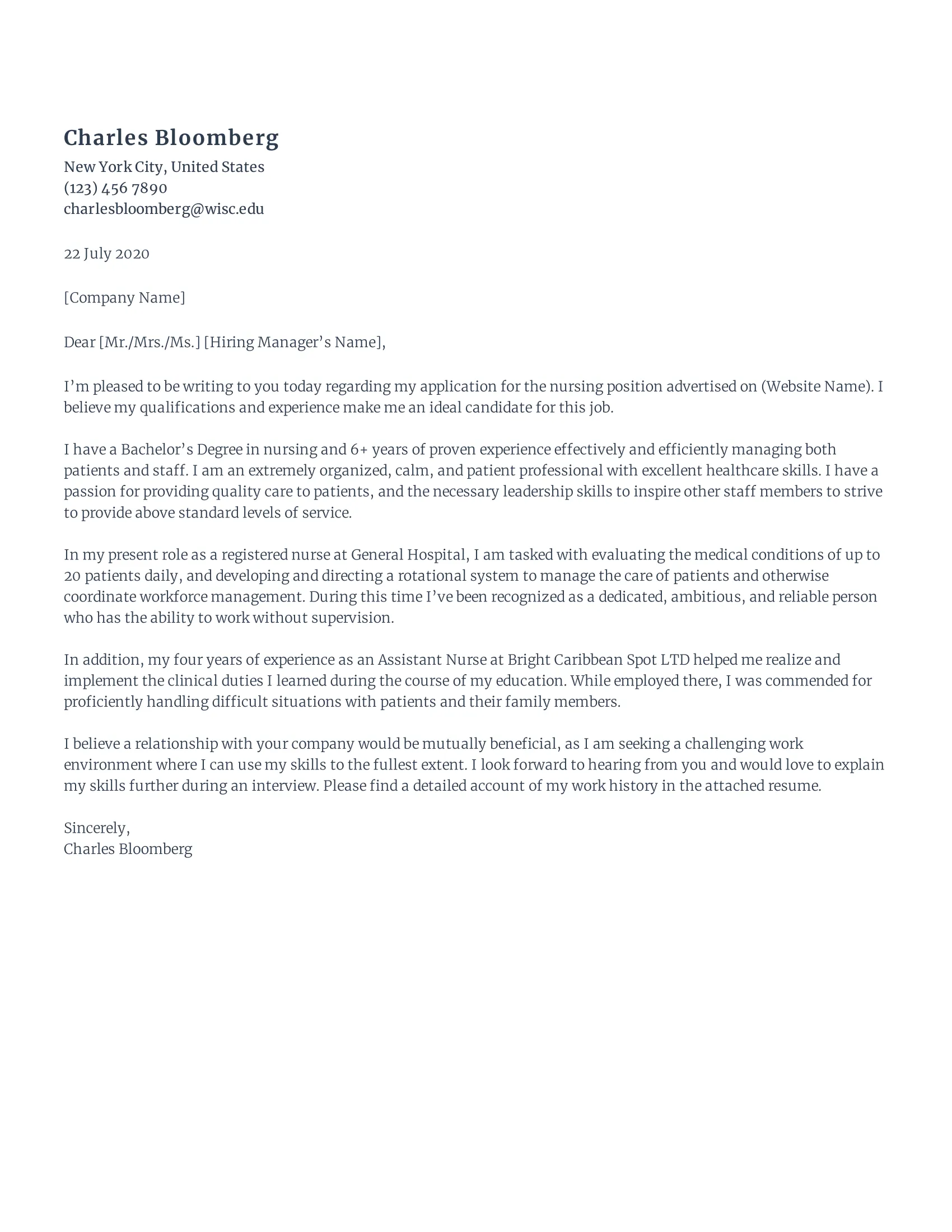
Understanding the Entry-Level Nurse Cover Letter
Embarking on a nursing career is a significant milestone, and securing that first entry-level position can feel daunting. A well-crafted cover letter is your initial opportunity to make a positive impression and distinguish yourself from other candidates. It serves as a professional introduction, allowing you to showcase your skills, qualifications, and enthusiasm for the role. A cover letter is not just a formality; it’s a crucial tool that can significantly impact your job application’s success. It allows you to personalize your application and tell your unique story beyond what a resume can convey. In this guide, we will delve into the essential elements of an effective entry-level nurse cover letter, providing you with the knowledge and tools necessary to create a compelling document that captures the attention of potential employers.
Why a Cover Letter is Crucial for Entry-Level Nurses
In the competitive field of nursing, especially at the entry-level, a cover letter plays a pivotal role in making a strong first impression. It’s your chance to go beyond the basic information presented in your resume and demonstrate your personality, passion for nursing, and how you specifically align with the job requirements. For entry-level nurses, who may have limited clinical experience, the cover letter becomes even more critical. It’s where you can highlight relevant coursework, volunteer experiences, and any shadowing opportunities that demonstrate your commitment to the profession. It provides an excellent opportunity to articulate your career goals and show hiring managers why you are the best fit for the position. By effectively communicating your skills, aspirations, and how you can contribute to the healthcare team, your cover letter can significantly increase your chances of getting an interview and landing your dream job.
Key Components of an Entry-Level Nurse Cover Letter

A well-structured cover letter is a roadmap to success. It should be concise, well-organized, and tailored to each job application. The essential components of an entry-level nurse cover letter include contact information, a professional salutation, an engaging opening paragraph, a section highlighting your relevant skills and qualifications, a closing paragraph that reiterates your interest, and a formal closing. Each element must be thoughtfully crafted to create a cohesive and persuasive narrative. By paying close attention to each component, you can create a cover letter that not only meets the requirements of the job application but also showcases your potential as a dedicated and skilled nurse. Ensuring that your cover letter is free of errors and easy to read is also essential to leave a lasting impression.
Contact Information & Date
Begin your cover letter with your contact information, which includes your full name, phone number, email address, and optionally, your LinkedIn profile URL. This allows the hiring manager to quickly and easily reach you. Include the date below your contact information, which is the date you are submitting the letter. Ensure that your contact information is up-to-date and professional.
Applicant’s Name and Contact Details
At the very top of your cover letter, clearly state your full name. Beneath this, provide your phone number, a professional-looking email address, and optionally, a link to your LinkedIn profile. This section ensures that the hiring manager can easily reach you if they decide to move forward with your application.
Hiring Manager’s Details

Directly under your contact information, include the hiring manager’s name, title, and the healthcare facility’s address. Research the hiring manager’s name by checking the job posting or the company website. Addressing your letter to a specific person makes it more personal and shows that you have taken the initiative to learn about the organization.
The Salutation
Use a formal salutation, such as “Dear Mr./Ms./Dr. [Last Name]” if you know the hiring manager’s name. If you are unsure of the name, you can use a professional alternative such as “Dear Hiring Manager” or “Dear [Department Name] Hiring Committee.” Avoid informal salutations like “To Whom It May Concern” as it can make your letter seem less personalized.
Crafting the Perfect Opening Paragraph
The opening paragraph is your first chance to capture the hiring manager’s attention. Start by stating the position you are applying for and where you saw the job posting. Briefly mention why you are interested in the position and the healthcare facility. Consider including a compelling statement about your passion for nursing or a brief highlight of a key skill or experience. The goal is to make a strong first impression and encourage the reader to continue reading.
Grabbing Attention from the Start

To grab the hiring manager’s attention, start with a concise and engaging statement. You can express your enthusiasm for the nursing profession, mention a specific achievement or skill that aligns with the job requirements, or express your admiration for the healthcare facility’s mission. For example, you can start with a statement, ‘I am writing to express my keen interest in the Entry-Level Registered Nurse position at [Hospital Name], as advertised on [Platform Name].’ Then, you should proceed to include a brief, impactful highlight of your skills and the relevance of the job application.
Highlighting Skills and Qualifications
This is the core of your cover letter. Focus on the skills and qualifications that make you a strong candidate for the entry-level nurse position. Review the job description and identify the key skills and requirements the employer is looking for. Then, provide specific examples of how you have demonstrated those skills through your education, clinical experiences, volunteer work, or any other relevant experiences. Quantify your achievements whenever possible (e.g., ‘Administered medications to over 20 patients daily’).
Showcasing Relevant Education and Certifications
Clearly state your nursing degree and the institution from which you graduated. Mention any relevant certifications, such as Basic Life Support (BLS) or Advanced Cardiac Life Support (ACLS) certifications. If you have any academic achievements or honors, such as a high GPA or Dean’s List recognition, include those as well. Make sure to align your educational background and certifications with the requirements of the job posting. For instance, focus on clinical experiences such as patient care, medical assistance, and administrative activities, and showcase these skills to impress the hiring manager.
Emphasizing Clinical Experience (if any)

While entry-level nurses may have limited clinical experience, it’s crucial to emphasize any practical experience you have gained. Describe any clinical rotations, internships, or volunteer work you have completed. Highlight your responsibilities, the types of patients you cared for, and the skills you developed. For example, did you assist with patient assessments, administer medications, or educate patients on their care? Show the employer that you have some practical experience and are prepared to apply your skills.
Demonstrating Soft Skills and Qualities
Besides technical skills, entry-level nurse cover letters should highlight soft skills that are essential for success in nursing. These include empathy, communication, teamwork, problem-solving, critical thinking, and time management. Provide examples of how you have demonstrated these skills. For example, you can write about how you resolved a conflict with a patient or worked effectively with a team to improve patient outcomes. The employer can see how your soft skills make you a good fit for their team.
Expressing Enthusiasm and Interest
Throughout your cover letter, express your enthusiasm for the nursing profession and your interest in the specific position and healthcare facility. Show that you have researched the facility and understand its mission and values. Explain why you are interested in working there and how your goals align with the organization’s goals. Your enthusiasm will make you stand out from other applicants. You should show that you are eager to contribute to the team and provide excellent patient care.
Matching the Job Description

Carefully review the job description and tailor your cover letter to match the requirements and expectations of the role. Identify the key skills, qualifications, and responsibilities the employer is looking for. Then, highlight the relevant experiences and skills you possess, and use the same keywords and phrases from the job description. This shows the employer that you have taken the time to understand the role and that you are a great fit for the position. You must align your skills and experiences to increase your chances of being called for an interview.
Tailoring the Letter to the Specific Role
Each cover letter should be customized to the specific role you are applying for. Avoid using a generic cover letter that you send to every employer. Instead, customize your letter to the specific job description and healthcare facility. This is how you can show your interest in that specific role. Research the healthcare facility’s mission, values, and culture and incorporate that information into your cover letter. Highlight the specific aspects of the job that interest you and how your skills and experience align with the role’s requirements.
Using Keywords Effectively
Use keywords from the job description throughout your cover letter. Keywords are terms and phrases that the employer uses to describe the job requirements and desired skills. By including these keywords in your cover letter, you can help your application pass through applicant tracking systems (ATS). Use these keywords strategically in your opening paragraph, skill descriptions, and closing paragraph. Avoid keyword stuffing, which can make your letter sound unnatural. The aim is to seamlessly incorporate the keywords while maintaining a professional and compelling tone.
Writing a Strong Closing Paragraph

The closing paragraph of your cover letter is a critical opportunity to summarize your interest in the position and make a final impression. Thank the hiring manager for their time and consideration. Reiterate your enthusiasm for the role and the healthcare facility. State your availability for an interview and how you can be contacted. Keep the tone professional and confident, and express your hope to discuss your qualifications further. Make sure to restate your interest and express your gratitude for being considered.
Reiterating Interest and Offering Availability
In your closing paragraph, reiterate your strong interest in the entry-level nurse position and the opportunity to contribute to the healthcare facility’s mission. Clearly state your availability for an interview, including your preferred method of contact (phone or email) and your availability for interviews. By making it easy for the hiring manager to contact you and expressing your readiness to move forward, you demonstrate your eagerness and make the next step in the hiring process easier.
The Formal Closing and Signature
Conclude your cover letter with a professional closing, such as “Sincerely,” “Respectfully,” or “Best regards.” Leave space for your handwritten signature if you plan to print and mail the letter. If you are submitting your cover letter electronically, type your full name below the closing. Ensure that your closing reflects your professional demeanor and leaves a positive impression on the hiring manager.
Formatting and Proofreading
Formatting and proofreading are essential for making a professional and polished cover letter. Proper formatting makes your letter easy to read and demonstrates attention to detail. Proofreading ensures that your letter is free of errors and presents you as a competent and professional candidate. The formatting and proofreading steps show that you have taken the time and care to create a high-quality application, which can make a significant difference in the hiring process.
Font and Layout Guidelines
Choose a professional and easy-to-read font, such as Times New Roman, Arial, or Calibri. Use a font size between 10 and 12 points. Maintain consistent formatting throughout the document, including the font, font size, line spacing, and margins. Use standard one-inch margins on all sides. Align your text to the left and avoid justifying the text. Organize your content with clear headings, subheadings, and bullet points to make your letter easy to navigate. Ensure that your cover letter is not overly long; ideally, it should be one page long.
Proofreading for Errors
Proofread your cover letter carefully for any spelling, grammar, or punctuation errors. Errors can undermine your credibility and make you appear less professional. Use a spell checker and grammar checker, but don’t rely on them entirely. Read your cover letter out loud to catch any awkward phrasing or inconsistencies. Have a friend, family member, or career advisor review your letter to provide a fresh perspective and catch any errors you may have missed. Reviewing your cover letter for errors demonstrates a high level of professionalism and attention to detail, so take time to do so.
Reviewing and Refining Your Cover Letter
Before submitting your cover letter, take the time to review and refine it. Ensure that your cover letter is tailored to each job and that it includes all the required elements. Assess if your letter showcases your skills, qualifications, and enthusiasm. If not, revise it as needed. Read your cover letter multiple times, and ask for feedback from trusted sources. Refine your cover letter for clarity, conciseness, and professionalism. Take the time to review and refine your cover letter to ensure that you are putting your best foot forward and maximizing your chances of success.