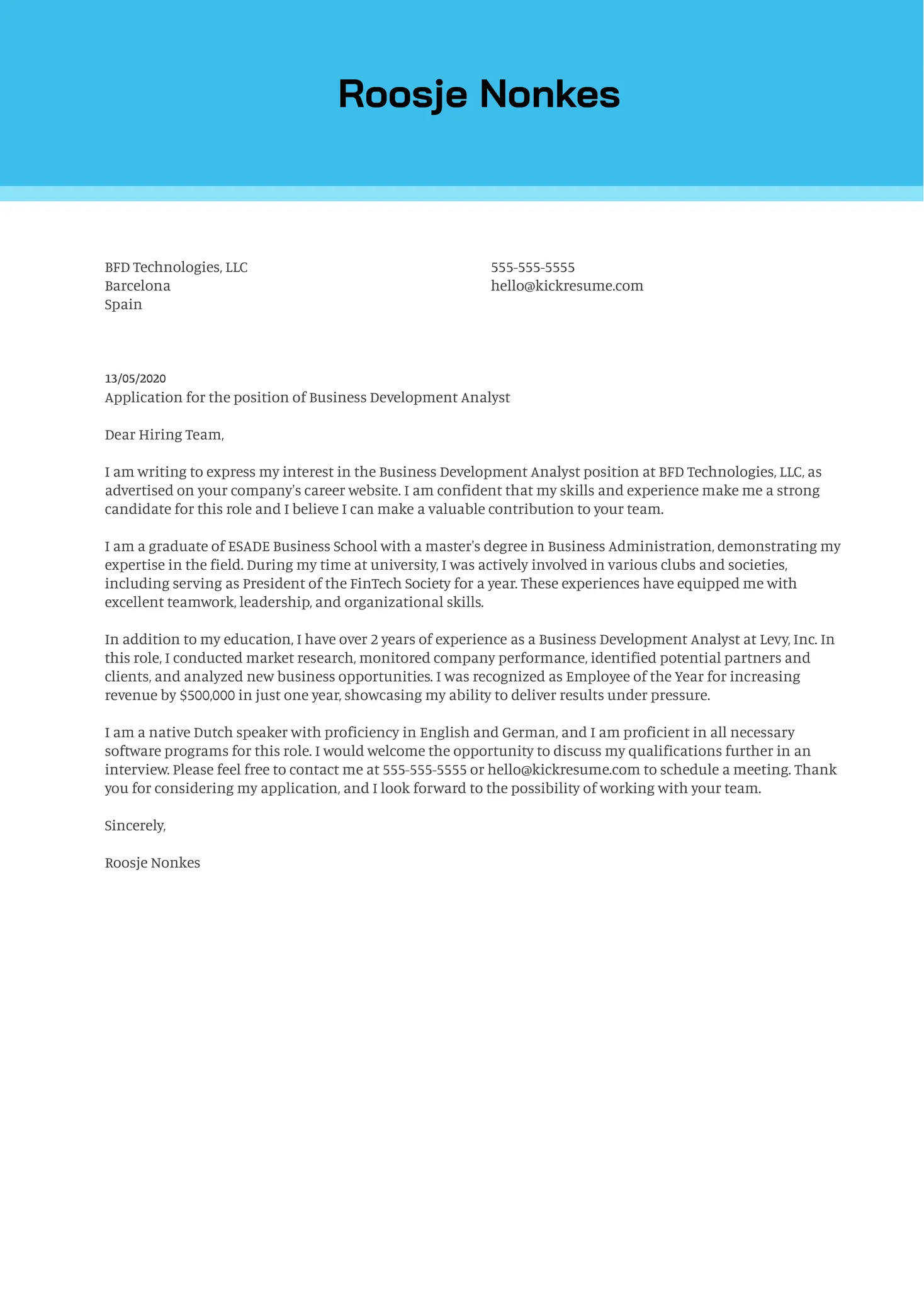
Understanding the Importance of a Business Development Cover Letter
In the competitive landscape of business development, a well-crafted cover letter can be the key to unlocking your dream job. Often overlooked, a cover letter serves as your initial introduction to a potential employer, offering a crucial opportunity to showcase your personality, passion, and the unique value you bring to the table. It complements your resume, providing context and depth to your qualifications. This article provides a complete guide on creating a powerful and persuasive business development cover letter that grabs the attention of hiring managers and sets you apart from other candidates. Let’s explore the essential elements that will empower you to write a cover letter that not only highlights your professional expertise but also makes a lasting impression.
What is a Business Development Cover Letter
A business development cover letter is a formal document that accompanies your resume when applying for a business development position. It is a concise, persuasive document that allows you to introduce yourself, highlight your key skills and experience, and express your interest in the specific role and company. Unlike a resume, which provides a factual overview of your career history, a cover letter allows you to elaborate on your qualifications, explain your motivations, and demonstrate your understanding of the company’s needs and the job requirements. It gives you an opportunity to showcase your communication skills and your ability to articulate your value proposition effectively.
Why is a Cover Letter Essential

In business development, where building relationships and demonstrating a deep understanding of business needs are paramount, a cover letter is essential. It gives you a chance to show your personality, communication skills, and enthusiasm for the role. It allows you to connect the dots between your experience and the specific requirements of the job and the company. Many hiring managers consider the cover letter as an indicator of a candidate’s attention to detail, writing skills, and overall suitability for the position. A well-written cover letter is a testament to your professionalism, demonstrating your preparedness and genuine interest in the opportunity. If you are searching for a job in business development, it is important to create a cover letter to give you an edge.
Key Components of a Powerful Cover Letter
Contact Information and Date
At the top of your cover letter, include your full name, address, phone number, and email address. Be sure to use a professional-sounding email address. Directly beneath your contact information, include the date you are sending the cover letter. This is a standard format and ensures the recipient knows when the document was created.
Professional Greeting

Always start your cover letter with a professional greeting. If possible, address the hiring manager by name. Research the company and the hiring manager, and use their correct title. If you are unable to find the hiring manager’s name, a generic greeting like “Dear Hiring Manager” is acceptable, but avoid generic greetings such as “To Whom It May Concern.”
Opening Paragraph
Your opening paragraph is your chance to grab the reader’s attention. State the position you are applying for and briefly explain where you saw the job posting. Then, immediately capture the reader’s interest by highlighting your most relevant skills or experience. Express your enthusiasm for the role and the company. This paragraph sets the tone for the entire letter, so make it compelling and concise. For example, you can start by stating your interest in a business development role, then highlight a key accomplishment, and conclude by indicating your enthusiasm.
Highlighting Relevant Skills and Experience
This is where you connect your experience to the job requirements. Select 2-3 of the most important skills or experiences listed in the job description, and provide specific examples of how you’ve demonstrated those skills in previous roles. This is your chance to show, not just tell, the hiring manager what you can do. Use the STAR method (Situation, Task, Action, Result) to structure your examples. This will make your examples more compelling and easy to understand. Tailor each example to the specific requirements of the job you are applying for. Use keywords from the job description to show the hiring manager that you meet their needs.
Quantifiable Achievements

Whenever possible, use numbers to quantify your achievements. Instead of saying “Increased sales,” say “Increased sales by 20% in one year.” Quantifiable results are far more impactful and demonstrate your impact. Show the impact you have on the business by providing specific examples of your achievements. Including hard data and metrics will provide more credibility to your cover letter. This gives the employer a clear picture of your accomplishments. It will also help your cover letter stand out from the rest of the applicants.
Tailoring Your Cover Letter to the Job
Customize your cover letter for each job application. Avoid using a generic cover letter. Review the job description carefully and identify the key skills and experiences the employer is seeking. Then, in your cover letter, highlight the relevant skills and experiences you possess. Make sure your cover letter directly addresses the job requirements and showcases your value proposition for that specific role. The more tailored the letter is, the better your chances of getting an interview. This level of personalization shows the employer that you’ve taken the time to understand the company and the position, which will impress the hiring manager.
Demonstrating Enthusiasm and Company Research
Show your enthusiasm for the company and the specific role. Research the company and express your understanding of their mission, values, and recent accomplishments. Mention something specific that attracted you to the company or the role. This shows the hiring manager that you are genuinely interested in the opportunity. The more you know about the company, the more you can demonstrate your ability to align your skills and experience with their objectives. Expressing your knowledge demonstrates that you’ve taken the time to understand the organization and are enthusiastic about contributing to its success, which will give you an edge over other candidates.
Closing Paragraph
In the closing paragraph, reiterate your interest in the role and thank the hiring manager for their time and consideration. Briefly summarize your key qualifications and express your confidence in your ability to contribute to the company’s success. Keep it concise and professional. Your goal is to leave a lasting positive impression and reinforce your suitability for the position. Conclude with a strong statement that leaves the reader with a positive impression. Then end your cover letter with a strong call to action.
Call to Action and Sign-off
Conclude your cover letter with a call to action, such as inviting the hiring manager to contact you for an interview or expressing your eagerness to discuss your qualifications further. Include your contact information once again, so it’s easy for the reader to reach you. Use a professional sign-off, such as “Sincerely” or “Best regards,” followed by your full name. By using a professional tone and having a call to action, you make the hiring manager more likely to consider your application. Be confident and eager for the next steps.
Formatting and Design Best Practices
Font Selection and Readability

Choose a professional and readable font, such as Times New Roman, Arial, or Calibri. Use a font size between 10 and 12 points. Ensure that the font is easy to read. The goal is to create a visually appealing document. Keep the formatting consistent throughout your cover letter. Choose a font style that is not too flashy or distracting. Your goal is to present a clear and professional image to the hiring manager. It is important to show your attention to detail from the start.
Effective Use of White Space
Use white space to make your cover letter easy to read. Use margins of 1 inch on all sides. Space paragraphs and sections to improve readability. Avoid large blocks of text. Break up your text with bullet points, short paragraphs, and subheadings. White space helps the reader navigate the document and quickly find important information. Properly formatted white space creates a clean and professional look. A well-formatted cover letter will be visually appealing and easy to scan.
Proofreading and Editing
Proofread your cover letter carefully for any errors in grammar, spelling, and punctuation. Use a grammar checker tool, but also read the letter multiple times. Ensure the language is concise and clear. Proofread your cover letter several times. Ask a friend or family member to proofread it for you. It is essential that your cover letter is free of any errors. Any mistakes can be a sign that you are careless and do not pay attention to detail. A well-proofread cover letter demonstrates your attention to detail and commitment to quality.
Common Mistakes to Avoid

Generic Cover Letters
Avoid sending the same cover letter to multiple companies. Generic cover letters do not address the specific requirements of the job and the company. They make it clear that you have not taken the time to customize your application. Always tailor your cover letter to the specific job and company you are applying for. The hiring manager can tell when you have not put in the work to personalize your cover letter. Generic letters typically get discarded. Instead, spend the time to make the cover letter unique.
Typos and Grammatical Errors
Typos and grammatical errors can damage your credibility and make you appear unprofessional. Always proofread your cover letter carefully before sending it. Use a grammar checker tool to catch any mistakes you may have missed. Typos can demonstrate carelessness. Always proofread your cover letter multiple times. Ask someone else to proofread your cover letter. A clean cover letter shows that you pay attention to detail.
Exceeding the Recommended Length

Keep your cover letter concise and to the point. Aim for one page in length. Hiring managers are busy and may not have time to read a long cover letter. Focus on the most relevant information and avoid unnecessary details. Get to the point quickly. Keep your paragraphs brief, and use white space effectively. By keeping your cover letter short, you will show the hiring manager that you can be concise and respectful of their time.
Cover Letter Examples and Templates
Where to Find Cover Letter Examples
There are many resources available online where you can find cover letter examples. Websites like Indeed, Resume.com, and others offer examples tailored to specific job roles and industries. Use these examples as inspiration, but always customize them to fit your situation. Look for examples that align with your field and experience. Use these templates to help get you started. While they’re helpful, remember to always customize any template to reflect your specific skills and accomplishments. You can also find good examples in books, online tutorials and articles.
Using Templates Effectively
While cover letter templates can be helpful, use them as a starting point, not a finished product. Customize the template to reflect your own unique skills, experiences, and the specific requirements of the job. Don’t just fill in the blanks. Tailor the content to the company and the position. Make sure the tone and style of the template match your personality and the company culture. Always proofread the template carefully to ensure that it is free of any errors. Consider these templates as a guide to help you get started. Use them as a tool to assist you in the writing process. Remember to highlight the most important parts of your background.
In conclusion, writing a powerful business development cover letter requires a strategic approach. By understanding its significance, incorporating key components, following formatting best practices, and avoiding common mistakes, you can create a document that effectively showcases your qualifications and captures the attention of potential employers. Remember to tailor your cover letter to each job application and demonstrate your genuine interest in the company. Armed with these insights, you are well-equipped to craft a cover letter that positions you as a top candidate and propels your career in business development forward.