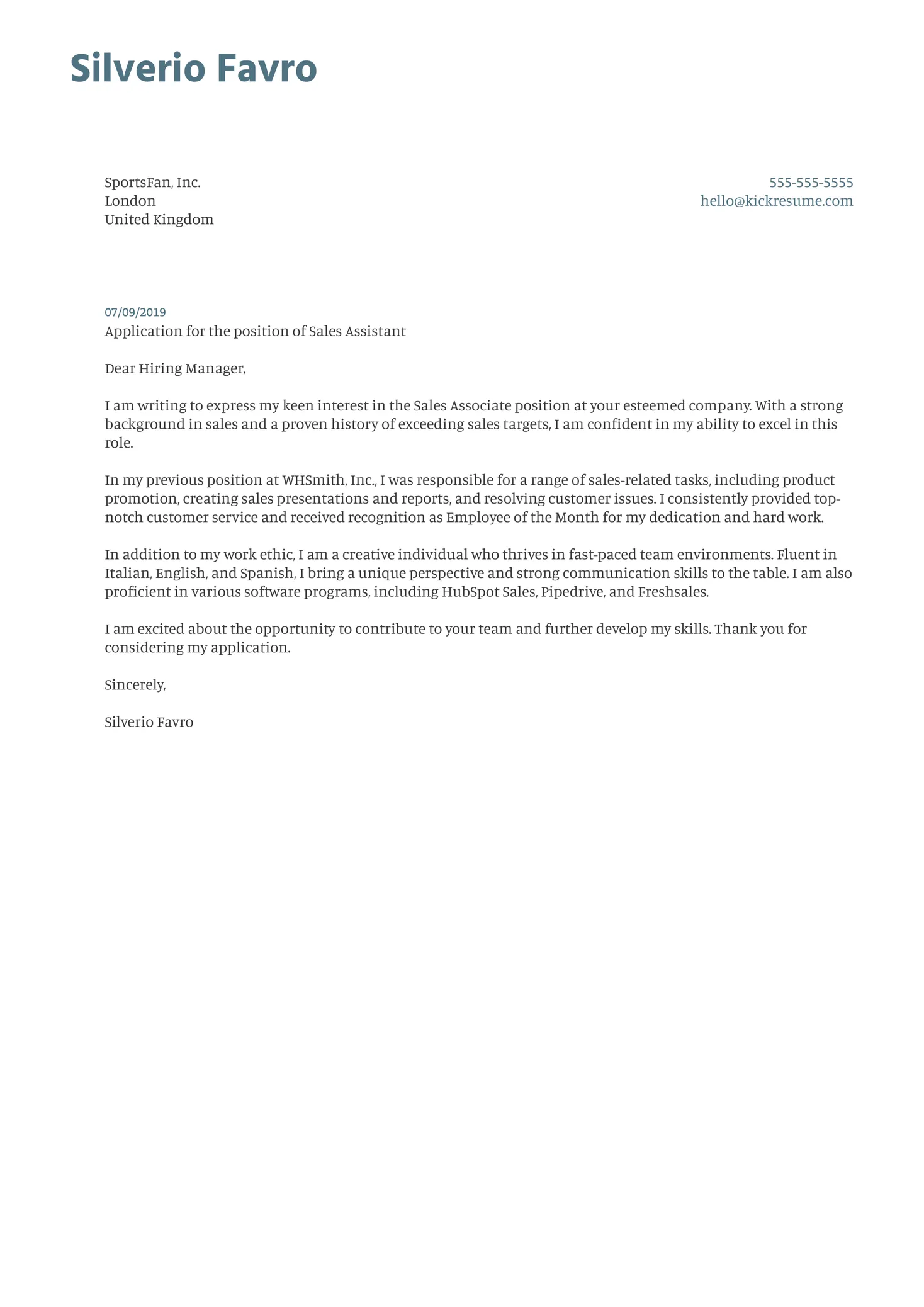
Understand the Importance of a Sales Cover Letter
In the competitive world of sales, a well-crafted cover letter can be your golden ticket to landing an interview. While your resume provides a snapshot of your experience and skills, a cover letter offers the opportunity to tell your story, express your personality, and demonstrate your genuine interest in the specific sales role and company. It’s your chance to stand out from the crowd and make a lasting first impression. A cover letter isn’t merely a formality; it’s a powerful tool to showcase your communication skills, explain why you’re the perfect fit, and ultimately, convince the hiring manager to invite you for an interview. In an increasingly digital job market, a personalized cover letter is a tangible display of your commitment to the opportunity and your attention to detail. Neglecting this crucial step can mean missing out on potential opportunities, so consider the time and effort invested as the first step in the sales journey.
The primary goal of your sales cover letter is to capture the hiring manager’s attention and secure an interview. Your resume can often get lost among other candidates, but a cover letter gives you the platform to personally connect with the reader. It should highlight your achievements, your skills, and your passion for the industry, emphasizing the value you bring to the role. A strong cover letter demonstrates your understanding of the company’s mission, its products or services, and the target market, all of which can set you apart from less prepared applicants. Showing your genuine interest in the opportunity helps build a connection with the hiring manager, and, ultimately, increases your chances of getting hired. Without this crucial step, you might be overlooked by the most qualified recruiters. This is how you can truly show them you’re the best candidate.
Key Components of a Winning Sales Cover Letter
A winning sales cover letter is a well-structured document that includes all the essential elements to capture the attention of the hiring manager. You will need to ensure each section serves a specific purpose, and contribute to a persuasive narrative that highlights your value proposition. It is important that the letter is concise, compelling, and tailored to the specific role you are applying for. A generic cover letter is unlikely to impress a hiring manager, therefore it’s important to do your homework before you even get started. The following sections break down the essential components and the correct way to approach them, so that you can ensure your letter does everything it should.
Your Contact Information and Date

Start your cover letter by including your contact information at the top. This should include your full name, phone number, email address, and LinkedIn profile URL (if you have one). Include the date of the cover letter directly below your contact information. This ensures the hiring manager can easily reach you if they wish to follow up on your application. It is crucial to use a professional email address and make sure your contact information is correct. A single typo can mean losing a potential opportunity, so triple-check all details before sending your cover letter. Make sure that you look professional, so they are encouraged to continue reading.
The Hiring Manager’s Information
Address your cover letter to the hiring manager by name whenever possible. Research the company to find the name of the hiring manager or the person responsible for reviewing applications. If you cannot find a specific name, use a professional greeting like “Dear Hiring Manager.” Personalizing your cover letter demonstrates your interest in the position and shows that you have taken the time to research the company. Address the person by name. A cover letter addressed to a person is much more impactful than one that isn’t, as it shows you care. If you are unsure of a person, then you can find the name of the hiring manager on LinkedIn, or the company’s website.
Crafting a Compelling Opening
The opening of your cover letter is your first chance to grab the reader’s attention. Start with a strong, concise statement that immediately highlights your interest in the position and the company. You can mention where you saw the job posting or refer to a specific company achievement that resonated with you. Avoid generic openings like “I am writing to express my interest.” Instead, try something more engaging, such as “I am excited to apply for the Sales Manager position at [Company Name], as I have been consistently impressed by your company’s innovative approach to [Industry].” Your opening needs to immediately set the tone for your application and leave the reader wanting more. Be specific, enthusiastic, and show them that you are a perfect match.
Highlighting Your Sales Achievements

The body of your cover letter should focus on highlighting your most relevant sales achievements. Briefly describe your successes in previous roles, emphasizing the results you achieved. This is where you show the hiring manager that you can deliver. Provide specific examples of how you exceeded sales targets, increased revenue, or improved customer satisfaction. Back up your claims with data and figures. For example, you can say, “In my previous role at [Previous Company], I increased sales by 30% within the first year by implementing a new customer acquisition strategy.” Tailor your achievements to match the requirements of the job description, demonstrating that you have the skills and experience the employer is looking for.
Quantify Your Accomplishments
Whenever possible, quantify your accomplishments to provide tangible proof of your success. Use numbers and percentages to demonstrate the impact you made in your previous roles. Instead of saying “Increased sales,” say “Increased sales by 20% in six months.” Use data to showcase your achievements and to show that you can back up what you say. If you received any awards, you should include those in this section, to show that your success is verified. This kind of information is always valuable. Quantifiable achievements give the hiring manager a clear understanding of your value and make your application more compelling.
Showcase Your Sales Skills
Besides highlighting your achievements, showcase the skills that make you a successful sales professional. Identify the key skills required for the role and provide specific examples of how you have demonstrated those skills in the past. These might include communication, negotiation, closing deals, building relationships, and using CRM software. Describe how you have used these skills to overcome challenges, close deals, and exceed expectations. Your cover letter needs to paint a picture of you being perfect for the role. This is what you’re trying to achieve. By showcasing your relevant skills, you show the hiring manager that you have the capabilities to excel in the position.
Demonstrate Your Company Knowledge

Research the company and demonstrate your knowledge of their products, services, and values. Explain why you are interested in the company, and how your skills and experience align with their mission and goals. Mention specific products, services, or campaigns that have impressed you. Show the hiring manager that you understand their business and that you have taken the time to learn about their organization. This could make the difference between you and another applicant. Be specific when referencing the company and show that you understand the company’s values. Doing so makes you a stronger candidate and will help the recruiter notice you.
Express Your Enthusiasm and Fit
Let your enthusiasm shine through in your cover letter. Express your genuine interest in the role and the company. Highlight how your personality and work style align with their culture. Explain why you are a good fit for the team and the company, and how you can contribute to their success. You need to show them that you aren’t only capable of doing the job but that you’d also enjoy it. This is especially important in sales, where personality and attitude play a significant role. Let your passion for sales and your excitement about the opportunity come through.
Writing a Strong Closing and Call to Action
Conclude your cover letter with a strong closing that reinforces your interest and includes a call to action. Thank the hiring manager for their time and consideration, and reiterate your enthusiasm for the opportunity. End with a clear call to action, such as “I am eager to discuss how my skills and experience can contribute to [Company Name]’s sales goals. I am available for an interview at your earliest convenience.” This kind of closing gives the reader a clear next step and encourages them to contact you. Don’t leave them guessing what you want them to do. By including a call to action, you’ll leave a lasting impression and increase your chances of getting an interview.
Proofreading and Formatting Tips

Before sending your cover letter, carefully proofread it for any spelling or grammatical errors. Ensure your cover letter is well-formatted, with clear and concise paragraphs, and easy to read. Pay attention to the font, spacing, and margins to make your letter look professional. Have a friend or family member review your cover letter for a fresh perspective. This will make the entire document perfect and error-free. A well-formatted and error-free cover letter demonstrates your attention to detail and your commitment to the application process. Make sure your letter is perfect, and that it’s the best possible version it can be.
Conclusion
Writing a killer sales cover letter is a crucial step in your job search. By following these tips, you can create a compelling cover letter that grabs the hiring manager’s attention, highlights your achievements, and showcases your sales skills. Remember to tailor your letter to each specific role and company, and always proofread carefully. With a well-crafted cover letter, you’ll be well on your way to landing your dream sales job. Remember, the effort you invest in your cover letter is a direct reflection of your interest and value as a potential employee. Make it count and give yourself the best chance of success.