What is a Cover Letter and Why is it Important?
A cover letter is a crucial document in your job application package, serving as your introduction to a potential employer. It’s more than just a formality; it’s your opportunity to showcase your personality, skills, and enthusiasm for the position. Think of it as your personal sales pitch, designed to persuade the hiring manager to read your resume and, ultimately, invite you for an interview. Unlike a resume, which is a factual summary of your work history, a cover letter allows you to tell a story, explain your motivations, and demonstrate how your qualifications align with the specific needs of the role and the company. A well-written cover letter significantly increases your chances of landing an interview, setting you apart from other applicants who may only submit a resume. It provides a space to express your unique value proposition and explain why you are the perfect fit for the job.
Key Components of a Professional Cover Letter
A compelling cover letter includes several key components, each serving a specific purpose in effectively communicating your qualifications and interest. From the header with your contact information to the closing paragraph, every element contributes to your overall presentation. Understanding these key parts is essential for crafting a cover letter that captures the reader’s attention and encourages them to learn more about you and your capabilities. Properly structuring these elements ensures your message is clear, concise, and tailored to the specific job application. These components, when assembled thoughtfully, create a cohesive narrative that can significantly improve your chances of securing an interview. By paying close attention to these fundamental parts, you can boost your application’s impact and gain an advantage over other candidates.
Your Contact Information & Date

At the top of your cover letter, include your full name, address, phone number, and professional email address. This ensures the hiring manager can easily contact you. Below your contact information, include the date you are sending the letter. Use a professional and consistent format for this, such as the month, day, and year (e.g., March 8, 2024).
The Hiring Manager’s Information
Whenever possible, address your cover letter to a specific person, the hiring manager or recruiter. Research the company to find the correct name and title. Addressing the letter to a specific person shows you’ve taken the time to learn about the company and demonstrates a level of engagement. If you cannot find a name, use a general salutation like ‘Dear Hiring Manager.’
The Salutation
Use a professional salutation, such as ‘Dear Mr./Ms. [Last Name]’ or ‘Dear Hiring Manager.’ Avoid generic greetings like ‘To Whom It May Concern.’ If you’re unsure of the gender, ‘Dear [First Name] [Last Name]’ is a safe bet. Ensure your salutation matches the tone of the company culture; if it is formal, keep your salutation formal.
Body Paragraph 1: Hook the Reader
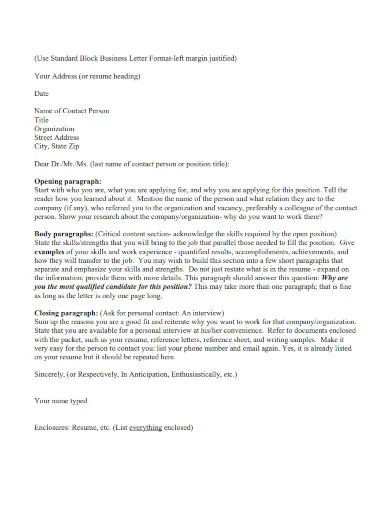
Start with a compelling opening that grabs the reader’s attention. Briefly state the position you’re applying for and where you found the job posting. Immediately highlight your key skill or achievement that aligns with the job requirements. Show your enthusiasm for the role and the company. This introductory paragraph sets the tone and motivates the reader to continue reading your letter. A strong opening paragraph indicates your understanding of the job requirements, and can spark the hiring manager’s interest in reviewing your application.
Body Paragraph 2: Highlight Your Skills
This is where you showcase your relevant skills and experience. Analyze the job description and identify the key requirements. Provide specific examples of how your past experiences have equipped you with these skills. Use action verbs to describe your accomplishments and quantify them whenever possible (e.g., ‘Increased sales by 15%’). Demonstrate a clear connection between your skills and the needs of the employer. Support your claims with solid evidence from your previous roles, proving the value you would bring to the organization. Tailoring this section to the specific role ensures your qualifications resonate with the hiring manager.
Body Paragraph 3: Showcase Your Accomplishments
Expand on your successes by providing more details about your significant achievements. Quantify your accomplishments whenever possible. Illustrate how you have solved problems, improved processes, or exceeded expectations in previous roles. This demonstrates your capabilities and impact. Include metrics to showcase the measurable results of your efforts. These examples will reinforce the claims made about your skills and leave a lasting impression. Providing a clear picture of your accomplishments will increase your credibility, and shows the hiring manager that you have the ability to add value to their team.
The Closing Paragraph & Call to Action

In the closing paragraph, reiterate your interest in the position and the company. Express your excitement about the opportunity and thank the hiring manager for their time and consideration. Include a clear call to action, such as, ‘I look forward to the opportunity to discuss my qualifications further in an interview.’ This encourages the hiring manager to take the next step. Keep the closing professional and concise. A well-crafted closing paragraph that reinforces your interest is essential. Use a formal closing, such as ‘Sincerely’ or ‘Best regards’, followed by your typed name. Proofread this section, as a professional close is important to leave a positive impression.
Formatting & Design
The layout and design of your cover letter are crucial for making a good first impression. A clean, professional layout makes your letter easy to read and highlights your most important points. Formatting choices, such as font selection, margin size, and paragraph structure, all contribute to the overall impact. A well-formatted cover letter demonstrates your attention to detail and professionalism, while a poorly formatted one can distract from your message. These choices can significantly affect readability and create a favorable impression on hiring managers. Good formatting is often the first visual impression the reader receives, influencing their decision to fully engage with your letter.
Font Choices and Readability
Choose a professional and easy-to-read font, such as Times New Roman, Arial, Calibri, or Helvetica. Keep the font size between 10 and 12 points. Use a clear and consistent font throughout the document. Make sure your font is legible, as this is a must when it comes to a professional cover letter. Readability is a critical component. The font should be clean and consistent, supporting the overall presentation of your letter. Avoid ornate or overly stylized fonts that can distract the reader.
Length and Structure

Keep your cover letter concise; aim for one page. Use single spacing and add a space between each paragraph. Use clear and concise language. Avoid long blocks of text. Use bullet points if necessary to highlight key accomplishments or skills. A well-structured letter shows respect for the reader’s time and focuses on the most relevant information. Break up your content with headings and subheadings where necessary. A well-structured cover letter enables the reader to easily scan your document for important information. The structure makes it simpler to digest, therefore increasing the likelihood of a positive impression.
Proofreading and Editing
Before submitting your cover letter, meticulously proofread it for any errors in grammar, spelling, and punctuation. Check for clarity and flow. Ensure your message is concise and compelling. Ask a friend or colleague to review your letter for a fresh perspective. A polished cover letter demonstrates attention to detail and professionalism. Even minor errors can detract from your credibility and affect your chances of getting an interview. Proofreading can help to identify any areas for improvement and ensure your document is of the highest possible quality.
Mistakes to Avoid
Avoiding common mistakes is vital for making a positive impression on potential employers. Many mistakes can detract from the strength of your application, from generic content to grammatical errors, hindering your chances of getting an interview. Being aware of these pitfalls and taking steps to avoid them is essential for presenting a professional and compelling cover letter. These mistakes can undermine your application, highlighting the need for careful and thoughtful preparation.
Generic Content

Avoid using a generic cover letter that is not tailored to the specific job or company. Generic content shows a lack of effort and interest. Always customize your cover letter to the job requirements. Research the company and highlight how your skills and experience align with their values and needs. A personalized approach demonstrates your genuine interest and increases your chances of getting noticed. If your letter is generic, the hiring manager might assume a lack of genuine interest and disregard your application.
Typos and Grammatical Errors
Typos and grammatical errors can undermine your professionalism and credibility. Always proofread your cover letter multiple times. Use spell-check and grammar-check tools, but do not rely on them completely. Ask someone else to review your cover letter for a fresh perspective. The presence of errors will demonstrate a lack of attention to detail and indicate a lower level of care. Proofreading and ensuring your cover letter is free of errors is a basic requirement for any professional application.
Ignoring the Job Description
Failing to address the requirements outlined in the job description is a significant mistake. Carefully review the job posting and identify the key skills and experiences the employer is seeking. Tailor your cover letter to highlight how you meet those requirements. This ensures that you’re communicating your qualifications effectively. Demonstrate your awareness of the role’s specific needs and show your understanding of the role and its expectations. This makes your application relevant and significantly increases your chances of securing an interview.
Tailoring Your Cover Letter

Customizing your cover letter for each job application is crucial. A generic cover letter that is not tailored to the specific role demonstrates a lack of interest or effort. Each job requires you to adjust the content to meet the particular requirements. Tailoring ensures that you showcase your value in a way that specifically addresses the employer’s needs and expectations. It allows you to highlight the skills and experiences that are most relevant to the position and shows you are capable of adapting your presentation to fit the opportunity at hand.
Researching the Company
Before writing your cover letter, research the company to understand its mission, values, and culture. This will help you tailor your letter to their specific needs and demonstrate your genuine interest. Visit their website, read news articles, and check their social media pages. Use this information to tailor your letter. When you demonstrate that you know about the company, it showcases a genuine interest in the role. Including this knowledge will significantly boost your application, and also indicates to the recruiter that you have taken the time and effort to research them.
Using Keywords
Incorporate keywords from the job description into your cover letter. Review the job posting and identify key skills, qualifications, and phrases the employer is looking for. Use these keywords naturally throughout your letter to demonstrate your relevance to the position. This will help your application pass through applicant tracking systems (ATS) and catch the hiring manager’s attention. Highlighting the right keywords ensures your application gets through to the right people, and also demonstrates that you possess the requirements to get the job.
Cover Letter Examples
Review cover letter examples to gain inspiration and guidance. Look for examples tailored to your industry and the type of job you are applying for. Study the structure, tone, and content. You can find numerous examples online and in career resources. These examples serve as a valuable reference to learn how to write your own compelling cover letter. However, customize each letter to fit your personal experiences and to be a good fit for each particular job. Always personalize your letter to showcase your unique qualifications and the value you can add to the team.