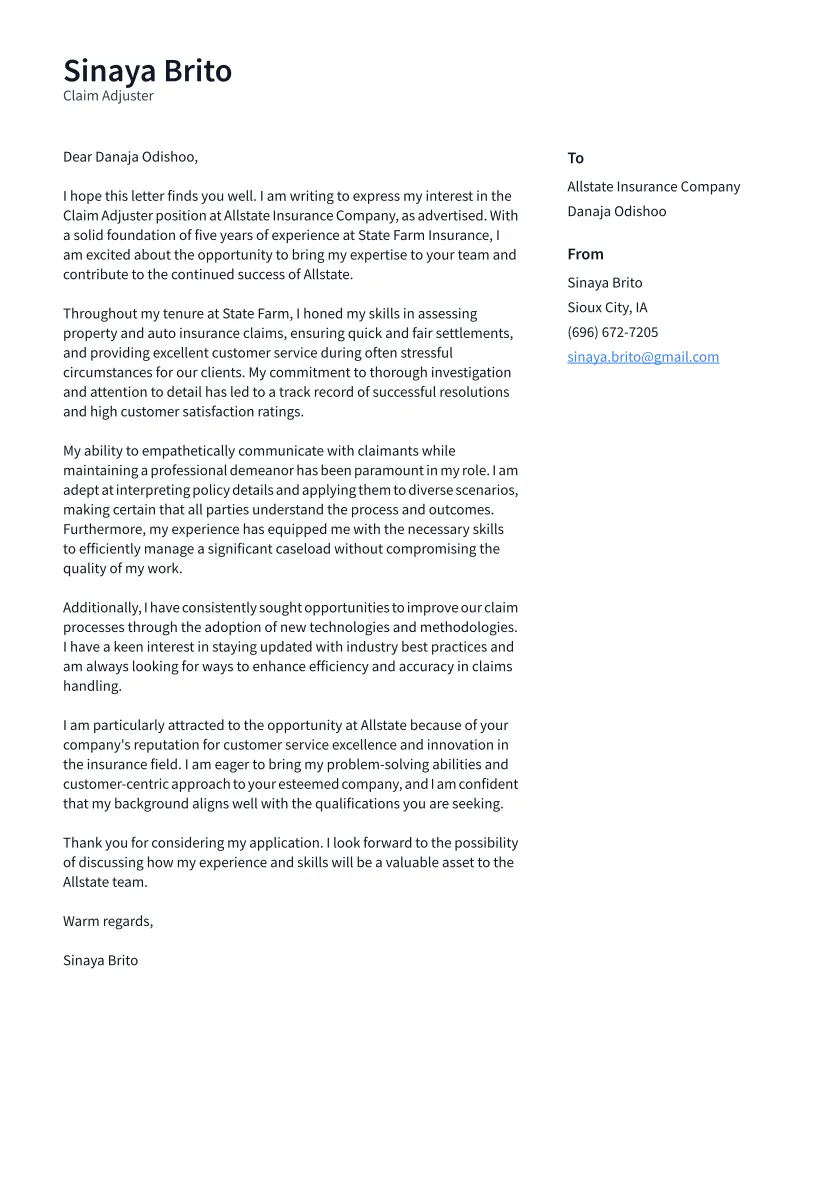
Breaking into the insurance industry as an adjuster can be a rewarding career path, even if you’re starting with no direct experience. The key is to demonstrate your potential and transferable skills through a compelling cover letter. This guide provides a quick overview of how to write an effective cover letter that will grab the attention of hiring managers and increase your chances of landing an interview. We’ll cover everything from understanding the role of an insurance adjuster to highlighting your value and avoiding common mistakes.
Understanding the Role of an Insurance Adjuster
Before you begin writing your cover letter, it’s essential to understand the responsibilities of an insurance adjuster. This will help you tailor your letter to the specific requirements of the job and show that you’ve done your research.
Key Responsibilities of an Insurance Adjuster
Insurance adjusters are responsible for investigating insurance claims, assessing damages, and determining the extent of the insurance company’s liability. They interview claimants, witnesses, and other involved parties. They analyze records, and inspect damaged property to assess the damage. They also prepare reports, negotiate settlements, and provide recommendations to insurance companies.
- Investigating insurance claims
- Assessing damages
- Interviewing claimants and witnesses
- Analyzing records and inspecting property
- Preparing reports and negotiating settlements
- Providing recommendations to insurance companies
Skills Required for Adjuster Positions

While direct experience is often preferred, many skills are transferable from other fields. Employers look for candidates with strong analytical, communication, and problem-solving abilities. Attention to detail, organizational skills, and the ability to work under pressure are also important. Familiarity with insurance policies and regulations is a plus but can be learned on the job. Showcasing these skills in your cover letter will make you a more attractive candidate.
- Analytical skills
- Communication skills
- Problem-solving abilities
- Attention to detail
- Organizational skills
- Ability to work under pressure
Crafting Your Cover Letter for Adjuster Roles
Your cover letter is your first opportunity to make a positive impression on a potential employer. It should be well-written, tailored to the specific job, and highlight your most relevant skills and experiences. Here’s a breakdown of the key elements to include in your cover letter.
Header of Your Cover Letter
Your header should include your contact information and the date, as well as the recipient’s information. This provides the hiring manager with a quick reference to your identity and how to reach you.
Your Contact Information

Include your full name, phone number, email address, and optionally, your LinkedIn profile URL. Ensure your email address is professional.
Date
Include the date you are sending the cover letter.
Recipient’s Information
If possible, address the letter to a specific person, such as the hiring manager. Include their title, the company name, and the company’s address. Researching the hiring manager’s name shows initiative.
Professional Salutation

Begin your cover letter with a professional salutation, such as “Dear Mr./Ms./Mx. [Last Name]”. If you don’t know the hiring manager’s name, use “Dear Hiring Manager” or “Dear [Company Name] Hiring Team”.
Body Paragraphs: Highlighting Your Value
The body of your cover letter is where you showcase your skills and experience. Even without direct adjuster experience, you can highlight transferable skills and demonstrate your enthusiasm for the role. Tailor each paragraph to the specific requirements of the job description.
First Paragraph: Stating Your Intent and Enthusiasm
Start by clearly stating the position you are applying for and where you saw the job posting. Express your enthusiasm for the opportunity and the company. Briefly mention why you are interested in the role and what attracts you to the company. Showing genuine interest can make a significant impact.
Second Paragraph: Showcasing Transferable Skills

This paragraph is crucial for candidates with no prior experience. Focus on transferable skills that align with the adjuster role. Skills in areas like customer service, problem-solving, communication, and attention to detail are highly valuable. Provide examples from previous experiences where you’ve demonstrated these skills. Frame your experience in a way that shows it is relevant to the job requirements.
Highlighting relevant skills and experiences
Provide concrete examples of how you’ve used these skills in past roles or situations. For instance, if you have experience in customer service, describe a time when you successfully resolved a complex customer issue. If you’ve managed projects, mention the scope and your role. If you worked on a team, describe how you contributed to the team effort and its outcomes.
Quantifying achievements
Whenever possible, quantify your achievements. Instead of saying “Improved customer satisfaction,” say “Improved customer satisfaction by 15% by implementing a new communication protocol.” Quantifiable results make your accomplishments more impactful. Use data and metrics to highlight your impact.
Third Paragraph: Expressing Your Understanding of the Company

Show that you’ve researched the company and understand their mission and values. Explain why you are a good fit for their culture and how you can contribute to their success. Mention any specific initiatives or projects that resonate with you. This demonstrates genuine interest and initiative.
Closing Your Cover Letter
Your closing should be professional and reiterate your interest in the position. It should also include a call to action.
Formal Closing and Signature
Use a formal closing, such as “Sincerely,” “Best regards,” or “Thank you for your consideration.” Leave space for your signature if submitting a printed copy. If submitting electronically, type your full name below the closing.
Reiterate your enthusiasm and thank the hiring manager for their time and consideration. Include a call to action, such as “I look forward to hearing from you soon.” or “I am available for an interview at your earliest convenience.”
Proofreading and Editing Your Cover Letter

Before submitting your cover letter, proofread it carefully. Check for any grammatical errors, typos, or inconsistencies. A polished cover letter demonstrates your attention to detail and professionalism. Ask a friend or family member to review your letter as a second set of eyes can often catch errors that you might miss.
Use of a grammar and spell-check tool is also recommended. Ensure the formatting is consistent and easy to read. Avoid overly long sentences or paragraphs. Keep the tone professional and enthusiastic.
Common Mistakes to Avoid in Cover Letters
Avoiding common mistakes can significantly improve your chances of success. Be mindful of these pitfalls when crafting your cover letter.
Generic language and lack of personalization
Avoid using generic language that could apply to any job. Tailor your letter to the specific role and company. Research the company and address specific aspects of their work that interest you. Personalization shows initiative and genuine interest in the position.
Typos and grammatical errors

Typos and grammatical errors can create a negative impression. Always proofread your cover letter carefully. Use grammar and spell-check tools, and consider having someone else review your letter before submitting it. These errors undermine your credibility and attention to detail.
Length of the Cover Letter
Keep your cover letter concise and to the point. Aim for one page. Hiring managers are busy, and they are more likely to read a shorter, well-crafted letter than a long, rambling one. Focus on the most relevant information.
Writing a cover letter for an insurance adjuster position with no experience may seem daunting, but by understanding the role, highlighting your transferable skills, and tailoring your letter to the specific job requirements, you can significantly increase your chances of landing an interview. Remember to be professional, enthusiastic, and demonstrate your value to the company. Good luck with your application!