Why a Cover Letter Matters
In today’s competitive job market, a well-crafted cover letter can be your secret weapon. While a resume provides a snapshot of your experience and qualifications, a cover letter allows you to tell your story, showcasing your personality and demonstrating why you’re the perfect fit for the role. It’s your opportunity to connect with the hiring manager on a more personal level, highlighting your enthusiasm and making a compelling case for why they should choose you. A strong cover letter can significantly increase your chances of landing an interview and ultimately, securing the job. A good cover letter will complement your resume and give hiring managers a comprehensive view of your abilities. It’s not just a formality; it’s a critical tool in your job search arsenal.
Essential Elements of a Cover Letter
Creating a compelling cover letter involves several key elements. Each section plays a vital role in conveying your qualifications and interest. Missing even one component can diminish the effectiveness of your letter. Understanding these components is crucial for creating a document that captures attention and leaves a lasting impression. The following sections are crucial for a cover letter that gets noticed by recruiters and potential employers.
Contact Information

At the top of your cover letter, include your contact information. This typically includes your full name, phone number, email address, and LinkedIn profile URL (if you have one). Ensure this information is accurate and up-to-date. This section allows the hiring manager to easily reach out to you. Formatting your contact information consistently across your resume and cover letter creates a professional impression. Double-check all the details to avoid any errors that could hinder communication. A well-presented contact section is a sign of professionalism and attention to detail.
The Recipient’s Information
Address your cover letter to the hiring manager or the specific person mentioned in the job posting. If you can’t find a name, research the company or use a general title like “Hiring Manager.” Researching the hiring manager can often give you an edge, as it shows you’ve done your homework. Include the company’s name, the hiring manager’s title, and the company’s address. Personalizing your cover letter demonstrates that you’ve put in the effort to tailor it to the specific opportunity. It’s a sign of respect and interest in the role and the company. Always double-check the spelling of the recipient’s name and the company details to make a positive first impression.
Professional Greeting
Start your cover letter with a professional greeting. The best practice is to use “Dear [Mr./Ms./Mx. Last Name],” when you know the hiring manager’s name. If you don’t know the name, use a general greeting such as “Dear Hiring Manager” or “Dear [Department Name] Team.” Avoid outdated greetings like “To Whom It May Concern.” The greeting sets the tone for the rest of your letter, so choose one that is both respectful and appropriate for the company culture. A professional greeting shows that you understand workplace etiquette and sets a positive tone from the start.
Opening Paragraph Grab Attention

The opening paragraph is your chance to grab the reader’s attention. Immediately state the position you’re applying for and where you found the job posting. Then, briefly mention why you’re interested in the role and the company. This section should be concise and compelling, providing a quick snapshot of your enthusiasm. A strong opening paragraph captures the reader’s interest and sets the stage for the rest of your letter. Think of it as your elevator pitch – a brief summary of why you’re the right candidate. Be clear, enthusiastic, and direct in this initial introduction.
Highlighting Your Skills and Experience
This is where you showcase your relevant skills and experience. Carefully review the job description and identify the key requirements. Provide specific examples of how your skills and experience align with these requirements. Use action verbs to describe your accomplishments and quantify your results whenever possible. For each point, provide a brief, impactful explanation of how you achieved the outcome. This section should be the meat of your cover letter, providing clear evidence of your capabilities. Demonstrating how your skills match the job’s requirements ensures that you meet the employer’s needs.
Tailoring Your Letter
Never send a generic cover letter. Tailor each letter to the specific job and company you’re applying to. Research the company’s values, mission, and culture. Then, highlight how your skills and experience align with these aspects. Customizing your letter shows that you’ve taken the time to understand the role and the organization. It shows your genuine interest and demonstrates your attention to detail. Tailoring your cover letter ensures that your application stands out from the generic ones. This effort significantly boosts your chances of being noticed by recruiters.
Showcasing Achievements and Quantifying Results

Instead of just listing your responsibilities, focus on your achievements. Use the STAR method (Situation, Task, Action, Result) to structure your examples. Whenever possible, quantify your results with numbers or data. For example, instead of saying “Improved customer satisfaction,” say “Improved customer satisfaction by 15% through proactive problem-solving.” Quantifiable achievements provide concrete evidence of your abilities and impact. This approach gives the hiring manager a clear understanding of your value. Highlighting your achievements with figures gives a more impactful and compelling cover letter.
Expressing Enthusiasm and Fit
Convey your enthusiasm for the role and the company. Explain why you’re excited about the opportunity and how your values align with the company’s mission. Show genuine interest in the role and the organization. This can be done by mentioning the company’s recent projects, culture, or values. Research the company and identify aspects that resonate with you. Expressing your enthusiasm helps you make a personal connection with the hiring manager. Your enthusiasm will make you memorable and increase the likelihood of an interview. This enthusiasm is often a significant factor in landing an interview.
Call to Action Closing
End your cover letter with a clear call to action. Reiterate your interest in the position and express your eagerness to discuss your qualifications further in an interview. Include a specific request, such as, “I am available for an interview at your earliest convenience.” This makes it easy for the hiring manager to take the next step. A clear call to action demonstrates your proactive approach and your desire for the job. A well-defined call to action reinforces your enthusiasm and prompts the hiring manager to take the next step.
Thank You and Next Steps

Thank the hiring manager for their time and consideration. Briefly mention how you will follow up (e.g., “I will follow up within a week to see if there is any news.”). Then, use a professional closing, such as “Sincerely,” or “Best regards.” This shows your respect for their time and your proactive approach. Expressing gratitude and outlining the next steps reinforces your interest and professionalism. Following up demonstrates your commitment to the application process.
Formatting Your Cover Letter
Proper formatting is essential for readability and professionalism. A well-formatted cover letter is easy to read and visually appealing. It reflects your attention to detail and enhances your overall presentation. Formatting plays a vital role in making a strong first impression. Proper formatting makes it easy for the recruiter to understand your points. A poorly formatted cover letter can distract the reader and make it difficult for them to assess your qualifications.
Choosing the Right Font and Size
Choose a professional and easy-to-read font, such as Times New Roman, Arial, or Calibri. Use a font size between 10 and 12 points. The font should be consistent throughout the entire letter. Avoid using overly decorative or unusual fonts, which can be difficult to read. A consistent font and a readable size enhance readability. Ensure that the font is suitable for both print and digital formats. Using a standard, easy-to-read font increases your chances of being understood by a recruiter.
Cover Letter Templates and Free Resources

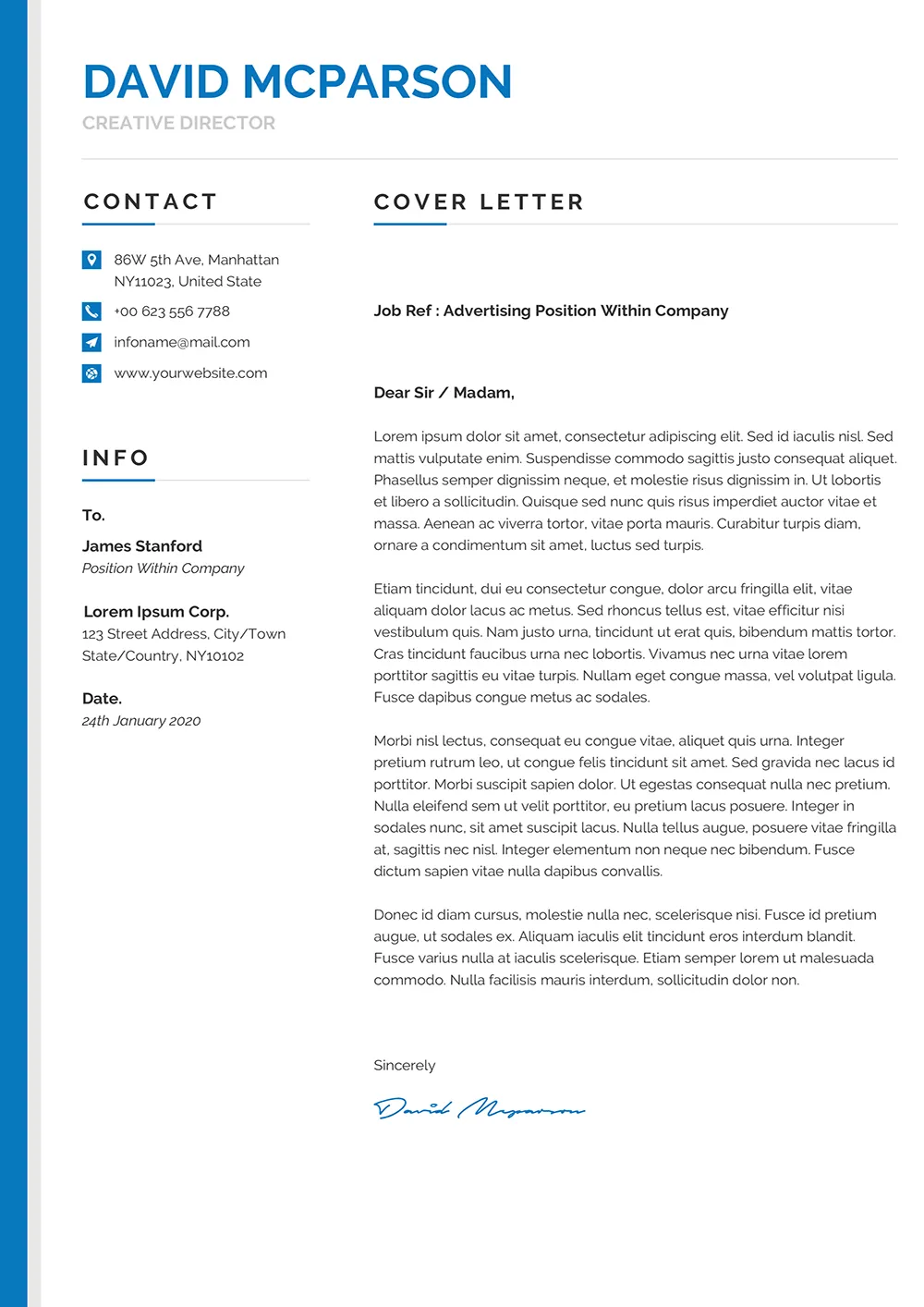
If you’re unsure where to start, consider using a cover letter template. Many free resources provide professionally designed templates that can save you time and effort. These templates offer a solid structure and can guide you through the process. They help you organize your thoughts and present your information effectively. Utilizing templates can also help you discover design ideas you hadn’t considered. Free cover letter templates are an excellent way to create a professional document without any costs.
Where to Find Free Templates
Numerous websites offer free cover letter templates. Popular platforms include Microsoft Word, Google Docs, and specialized career websites. Research different options to find a template that suits your needs. Many career websites offer templates that are designed to meet industry standards. Microsoft Word and Google Docs provide a wide range of pre-designed templates to meet your needs. Explore several options to find one that fits your style and preferences. Downloading a template can be the first step in your job search.
Utilizing Online Cover Letter Builders
Online cover letter builders are another excellent free resource. These tools guide you through the process step by step, providing prompts and suggestions. They make it easy to create a polished cover letter, even if you’re a beginner. These builders often offer personalized recommendations based on your resume and the job description. They can also provide you with real-time feedback on your writing style and content. Using online cover letter builders is a simple and effective way to create a strong cover letter.
Tips for Different Job Applications

Your cover letter should be tailored to the specific job and industry. Different types of positions require slightly different approaches. Tailoring your cover letter increases your chances of standing out. Customize your content for each job to demonstrate your interest. Consider the varying requirements for entry-level positions and career changes.
Cover Letters for Entry-Level Positions
If you are applying for an entry-level position, highlight your academic achievements, internships, and any relevant volunteer experience. Focus on transferable skills and your enthusiasm for learning and growing. Demonstrate your willingness to take on new challenges and your eagerness to contribute to the company. For entry-level positions, emphasize your willingness to learn and your potential. Highlight your soft skills and academic achievements to show your value.
Cover Letters for Career Changes
When changing careers, emphasize the transferable skills you have from your previous roles. Explain why you’re making the career change and why you’re interested in the new field. Focus on your adaptability and your willingness to learn new things. Demonstrate how your existing skills can be applied in the new role. Show enthusiasm for this change. Highlight your desire to learn and adapt to the new environment. Showcase how your existing skill set can benefit the hiring manager.
Cover Letters for Remote Positions

For remote positions, highlight your ability to work independently, manage your time effectively, and communicate clearly. Mention any experience with remote work tools and technologies. Emphasize your reliability and your ability to stay organized while working remotely. Highlight your technical skills and any experience with communication tools. Demonstrate your capacity to work independently and manage your time effectively. Show your understanding of remote work requirements and your suitability for them.
Proofreading and Editing Your Cover Letter
Proofreading is a crucial step in creating a professional cover letter. Even minor errors can undermine your credibility. Proofreading ensures that your writing is clear, concise, and free of mistakes. Proofreading can help you catch any typos or grammar errors that might detract from your message. It is vital to give a professional appearance to your application.
Common Mistakes to Avoid
Avoid common mistakes such as typos, grammatical errors, and generic language. Don’t simply rehash your resume in the cover letter. Ensure the letter is tailored to the specific job and company. Avoid using jargon or overly complex language. Proofread carefully to eliminate these errors. Poorly worded sentences, jargon, and generic statements detract from your message. Proofread to ensure a professional, polished document.
Proofreading Checklist
Use a proofreading checklist to ensure that you catch all errors. Check for spelling errors, grammatical mistakes, punctuation errors, and formatting inconsistencies. Read your cover letter aloud to catch awkward phrasing. Ask a friend or family member to review your letter. A checklist helps you systematically review your cover letter for errors. Consider using a spellchecker and grammar checker. Having a second pair of eyes can identify errors you might have missed.
Finalizing and Submitting Your Cover Letter
Before submitting your cover letter, double-check all the details. Ensure that you have addressed the letter to the correct person. Review the job posting to confirm that you’ve included all required information. Save your cover letter as a PDF file to preserve the formatting. Once you are completely satisfied, submit your cover letter with confidence. This final step confirms your professionalism. This step ensures the recruiter can view your document as intended. Your attention to detail indicates that you take your career seriously.