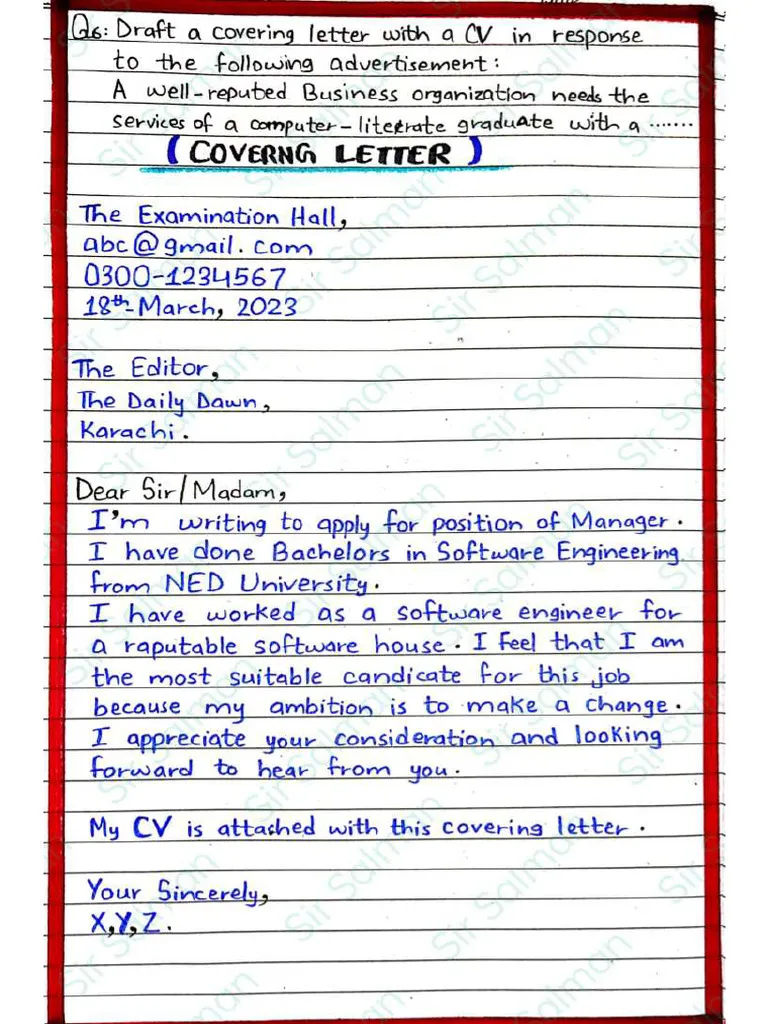
Understanding the Importance of a Cover Letter
In the competitive world of job applications, a well-crafted cover letter can be your secret weapon. It serves as your first introduction to a potential employer, offering you the chance to make a strong first impression. Unlike a resume, which simply lists your skills and experience, a cover letter allows you to tell a story about your qualifications, demonstrating your personality, passion, and suitability for the role. Many job seekers underestimate the value of a cover letter, assuming that their resume alone is enough. However, a compelling cover letter can significantly increase your chances of landing an interview. It’s your opportunity to stand out from the crowd and persuade the hiring manager that you’re the perfect fit.
Why a Cover Letter Matters
A cover letter allows you to elaborate on the information presented in your resume, providing context and depth. It allows you to highlight your key skills and experience, tailoring them to the specific requirements of the job. This is your chance to demonstrate your understanding of the role and the company, showcasing your genuine interest and enthusiasm. A well-written cover letter showcases your communication skills, including writing proficiency and articulation, which are essential in many professions. It offers you the opportunity to explain any gaps in your employment history or career changes, providing a complete and honest picture of your professional background. By demonstrating these aspects, you increase the likelihood of getting noticed by the recruiter and getting an interview.
Highlighting Your Key Skills and Experience

When highlighting your key skills and experience in your cover letter, the focus must be on showcasing your value to the employer. Don’t simply list your accomplishments; instead, describe how your skills have translated into tangible results in previous roles. Use action verbs to illustrate what you accomplished, quantifying your achievements whenever possible. For example, instead of saying “Managed social media accounts”, write “Increased social media engagement by 30% through strategic content planning”. Align your skills with the job description, demonstrating how your experience directly addresses the requirements outlined by the employer. Mention specific projects or responsibilities that showcase your abilities and give the hiring manager concrete examples of your capabilities, creating a clear picture of what you can bring to the company.
Crafting a Cover Letter that Grabs Attention
Your cover letter is competing with many others, so it must capture the reader’s attention quickly. Start strong with a compelling opening that immediately grabs the hiring manager’s interest. This could be a brief story, a surprising fact, or a specific accomplishment that directly relates to the job. Avoid generic greetings. Personalize your letter by addressing the hiring manager by name, if possible, and tailoring your content to the specific job and company. Showing that you’ve done your research and understand their needs is a great way to impress. Maintain a professional tone, while also allowing your personality to shine through. Your passion for the role and your enthusiasm for the company should be apparent in every sentence, making the reader eager to learn more about you.
Personalizing Your Cover Letter
Personalization is one of the most critical components of a successful cover letter. Generic, cookie-cutter letters are easily spotted and often discarded. To personalize your letter, start by researching the company’s values, mission, and recent news. Tailor your content to show how your skills and experience align with their specific goals and challenges. Mention specific projects, initiatives, or products that resonate with you, demonstrating your genuine interest. If possible, find the name of the hiring manager or recruiter and address the letter to them directly. Use the job description as a guide and incorporate keywords and phrases that match their requirements. Show how you can contribute to their company, highlighting your passion for the position and your enthusiasm for the company’s work.
Researching the Company and the Role

Before you even start writing, invest time in researching the company and the specific role. Visit the company’s website, read about their mission, values, and recent projects. Explore their social media profiles to understand their culture and messaging. Search for news articles or press releases to learn about recent developments and initiatives. For the role itself, carefully review the job description, noting the essential skills, qualifications, and responsibilities. Tailor your cover letter to address these specific requirements, showcasing how your experience aligns with their needs. Demonstrate that you understand the company’s challenges and goals, and explain how your skills can help them achieve success. Researching the company shows initiative and genuine interest and greatly increases your chances of making a positive impression.
Structuring Your Cover Letter
A well-structured cover letter makes a great impression. It is not only about what you say but also how you present it. Structure your letter with a clear introduction, body paragraphs, and a conclusion. Each section should have a specific purpose and contribute to the overall goal of demonstrating your suitability for the job. Keep your letter concise and easy to read. Use clear, concise language, avoiding jargon or overly complex sentences. Break up large blocks of text with paragraphs and bullet points to enhance readability and draw attention to important information. A clean, well-organized cover letter reflects professionalism, and this creates a positive impression.
The Introduction: Making a Strong First Impression
The introduction is your chance to make a strong first impression. Start by stating the position you are applying for and how you found the job. Then, immediately grab the reader’s attention with a brief statement that highlights your interest in the role and the company. Consider using a hook, such as a notable accomplishment or a relevant skill that aligns with the job requirements. Clearly state your value proposition – what you can bring to the company – in a concise and compelling manner. For example, “I am a highly motivated marketing professional with five years of experience driving successful campaigns.” Make sure your introduction is specific and demonstrates your enthusiasm for the position. It is the most crucial part and will determine whether the hiring manager continues reading.
Body Paragraphs: Showcasing Your Qualifications

The body paragraphs of your cover letter are where you showcase your qualifications and connect them to the job requirements. Develop two or three paragraphs that highlight your relevant skills, experience, and accomplishments. Provide specific examples that demonstrate your abilities and quantify your achievements whenever possible. Use the STAR method (Situation, Task, Action, Result) to structure your responses. This method allows you to provide clear, concise examples of your successes. Tailor each paragraph to the specific needs of the job description, addressing the key requirements and demonstrating how your skills align with them. Use keywords and phrases from the job description to show that you understand what the employer is looking for. Keep your paragraphs focused, engaging, and easy to read, ensuring that your key qualifications are front and center.
The Conclusion: Expressing Enthusiasm and Call to Action
Your conclusion should express your enthusiasm for the opportunity and include a call to action. Reiterate your interest in the position and the company, summarizing why you believe you are a good fit. Thank the hiring manager for their time and consideration. End with a clear call to action, such as requesting an interview or expressing your eagerness to discuss your qualifications further. Make sure to provide your contact information and express your availability for an interview. The conclusion should leave a lasting positive impression, making the hiring manager want to learn more about you. Always maintain a professional and polite tone in your conclusion, showing your eagerness for the opportunity.
Formatting and Proofreading Your Cover Letter
The formatting and proofreading of your cover letter are as crucial as the content itself. A polished, well-formatted letter reflects professionalism and attention to detail. This increases your chances of standing out from other candidates. Proper formatting makes your letter easy to read. Ensure your letter is error-free to reflect your attention to detail and your writing skills. Taking the time to do this will prevent mistakes, omissions and show that you care.
Choosing the Right Font and Layout

Choose a professional, readable font for your cover letter. Common and safe choices include Times New Roman, Arial, Calibri, and Helvetica. Ensure the font size is easy to read, usually between 10 and 12 points. Use a clear layout with appropriate margins (1 inch on all sides is standard). Use paragraphs, bullet points, and white space to break up the text, improving readability. Keep the overall design clean and uncluttered. Consider using a professional template to ensure consistency in the formatting. Your goal is to make the letter easy to scan and read quickly. Using clear fonts and layouts ensures that the hiring manager can quickly see your information.
Proofreading for Errors
Proofreading your cover letter is non-negotiable. Errors, no matter how small, can undermine your credibility and leave a negative impression. After you finish writing, take the time to proofread the letter carefully, checking for spelling, grammar, punctuation, and syntax errors. It can be helpful to take a break between writing and proofreading to ensure you have a fresh perspective. Read your letter aloud to catch awkward phrasing or sentences that don’t flow smoothly. Ask someone else to proofread your cover letter, as another pair of eyes can often spot errors that you might miss. Proofreading is a crucial step in ensuring your professionalism and attention to detail. It ensures that your qualifications and skills are highlighted in a clear and professional manner.
Tailoring Your Cover Letter for Different Jobs
One of the biggest mistakes job seekers make is sending the same cover letter to every job application. Tailoring your cover letter for each specific job is essential. This demonstrates that you have taken the time to understand the role and the company. Start by carefully reviewing the job description, highlighting the key skills, qualifications, and responsibilities. Then, tailor your cover letter to address these specific requirements. Provide examples of how your previous experience aligns with the needs of the role. If necessary, adjust the tone and style of your letter to match the company culture, but always maintain a professional and enthusiastic tone. By tailoring your letter, you show that you are genuinely interested in the position and that you have the skills and experience the employer is looking for.
Adapting Your Cover Letter for Various Industries

Different industries have different norms and expectations for cover letters. Adapt your cover letter to suit the specific requirements of the industry you are applying to. Research the industry’s communication style and tone, and adjust your language accordingly. For example, a cover letter for a creative industry may have a more informal tone, while a cover letter for a legal or financial firm should maintain a professional and formal approach. Research the company’s preferred communication style by looking at their website or social media, matching this in your cover letter. Be sure to highlight the relevant skills and experiences that are most valued in that industry. Show how your unique background and experience align with the industry’s culture, which will make you stand out from other candidates. Always adapt the format to align with the specific company.
Addressing Specific Requirements in the Job Description
Job descriptions are very important and contain a roadmap to what the company expects. Always address the specific requirements listed in the job description. Make sure to carefully review the job description, identifying the essential skills, qualifications, and responsibilities. Then, in your cover letter, provide clear examples of how your skills and experience meet each of these requirements. Use the same keywords and phrases from the job description to demonstrate that you understand the role. If the job description emphasizes teamwork, provide an example of a successful team project you were involved in. If the job description requires specific software skills, list your proficiency levels. When addressing the requirements, be specific and provide concrete examples of how you have demonstrated these skills in the past.
In conclusion, crafting a winning cover letter is about much more than just listing your qualifications. It’s about telling your story, showcasing your value, and demonstrating your passion for the role and the company. By following these guidelines and tailoring your cover letter to each job application, you can significantly increase your chances of landing an interview and achieving your career goals. Take the time to do your research, personalize your approach, and proofread your work, and you’ll be well on your way to crafting a cover letter that gets you noticed.