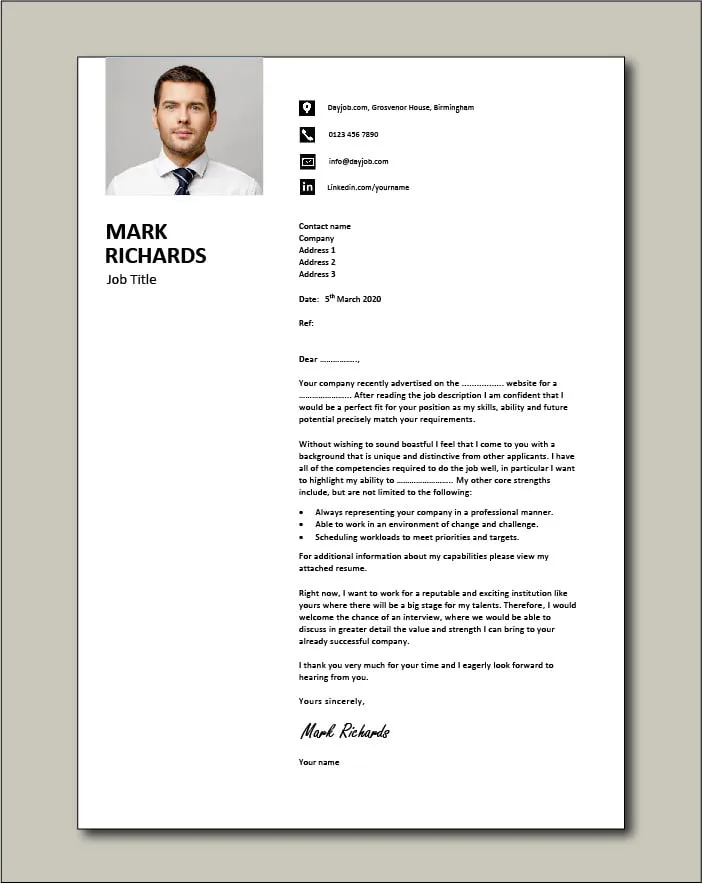
Understanding the Importance of a Cover Letter
In the competitive job market, a well-crafted cover letter can be your golden ticket to landing an interview. It’s more than just a formality; it’s a crucial tool that allows you to introduce yourself professionally and persuasively. Think of it as your first handshake with a potential employer, providing a vital opportunity to make a strong first impression. A cover letter gives you the chance to showcase your personality, enthusiasm, and genuine interest in the role and the company. It’s a space where you can go beyond your resume, which often only presents facts and figures, and weave a narrative that highlights your skills, experiences, and aspirations in a way that resonates with the hiring manager. Without a well-written cover letter, your application might easily get lost in the pile, failing to capture the attention it deserves.
Why Cover Letters Are Still Crucial
While the digital age has changed how we apply for jobs, the importance of cover letters hasn’t diminished. They continue to be a critical component of a successful job application, primarily because they enable you to provide context to your resume. Resumes are often packed with qualifications, but cover letters allow you to connect these qualifications to the specific requirements of the job, showing how your skills directly address the needs of the employer. Moreover, cover letters demonstrate your communication skills, attention to detail, and your ability to clearly articulate your thoughts and ambitions. A well-written cover letter shows that you’ve taken the time to understand the job and the company, showcasing a level of dedication and initiative that can set you apart from other candidates. Ultimately, a compelling cover letter increases your chances of being noticed and remembered, which is especially valuable in a crowded job market.
Key Elements of a Strong Cover Letter

To write a compelling cover letter, certain elements are non-negotiable. First and foremost, the letter should be tailored to the specific job you’re applying for. This means reviewing the job description meticulously and highlighting the skills and experiences that align with the requirements. Start with a strong opening paragraph that grabs the reader’s attention. You need to clearly state the position you’re applying for and how you found out about it. In the body of your letter, provide concise examples of your accomplishments, using quantifiable results whenever possible. Focus on what you’ve achieved and the impact you’ve made in previous roles. Keep the letter concise, typically no more than one page. Proofread carefully for any grammatical errors or typos. Always end your letter with a call to action, such as requesting an interview. A well-structured and thoughtfully written cover letter demonstrates that you’re serious about the job and eager to learn more.
Tailoring Your Cover Letter for Specific Jobs
One size does not fit all when it comes to cover letters. A generic cover letter often fails to make a significant impact. Tailoring your letter to each job is essential for demonstrating your genuine interest and suitability for the role. Begin by carefully analyzing the job description, identifying the key skills and qualifications the employer seeks. Then, review your own experiences and achievements, selecting the most relevant ones to highlight in your cover letter. Use the language and keywords from the job description, as this helps your application get noticed by applicant tracking systems (ATS) and hiring managers alike. When writing, clearly explain how your skills and experience align with the job requirements, providing specific examples to illustrate your capabilities. Customizing your cover letter not only shows your attention to detail but also your proactive approach to meeting the employer’s specific needs.
Researching the Company and Role
Before you start writing, take some time to research the company and the specific role you are applying for. Understanding the company’s mission, values, and culture will help you tailor your cover letter to fit their specific needs and demonstrate your enthusiasm. Visit the company’s website, read recent news articles, and explore their social media profiles to learn more about their activities, projects, and recent achievements. This information will provide valuable insights that you can incorporate into your cover letter, making your application more personalized and relevant. Similarly, thoroughly analyze the job description. Understand the key responsibilities, required skills, and desired qualifications. This research will enable you to highlight the most relevant aspects of your experience and show how you are a perfect fit for the role. Showing that you’ve done your homework sets you apart and demonstrates a genuine interest in the opportunity.
Highlighting Relevant Skills and Experience

Your cover letter is your chance to spotlight the skills and experiences that make you the ideal candidate. Focus on the qualifications that align directly with the job requirements, as outlined in the job description. Begin by identifying the key skills and experiences the employer is seeking. Then, choose specific examples from your work history or other experiences to demonstrate these skills in action. Use the STAR method (Situation, Task, Action, Result) to structure your examples, providing context, describing your role, detailing the actions you took, and quantifying your achievements whenever possible. For instance, instead of simply stating that you improved sales, you could say, “Implemented a new sales strategy that increased sales by 15% within six months.” By quantifying your achievements, you make a more persuasive case and show the tangible value you can bring to the company. Always ensure your examples are relevant to the specific job to show how you’ve contributed to past successes.
Formatting Your Cover Letter for Success
A well-formatted cover letter is as important as its content. It ensures that your letter is easy to read and visually appealing, making a positive impression on the hiring manager. Begin by selecting a professional and clean font, such as Times New Roman, Arial, or Calibri, and maintain a consistent font size throughout the document. Use single-spacing and add a blank line between paragraphs to improve readability. Align your text to the left, and avoid using justification, as it can sometimes create uneven spacing. Always include your contact information at the top of the letter, including your name, phone number, email address, and LinkedIn profile URL. Use clear headings and subheadings to break up the text and make it easier for the reader to scan. Finally, keep your letter concise, typically no more than one page. A well-formatted cover letter shows professionalism and respect for the reader’s time, increasing your chances of success.
Choosing the Right Font and Layout
The choice of font and layout greatly influences how your cover letter is perceived. Aim for readability and professionalism when selecting a font. Standard fonts like Times New Roman, Arial, Calibri, or Georgia are excellent choices. Ensure the font size is between 10 and 12 points, making it easy for the reader to review. The layout should be clean and uncluttered. Use left alignment for your text, with a consistent margin of about 1 inch on all sides. Include your contact information at the top, followed by the date, the hiring manager’s name (if known), and the company’s address. Break up long blocks of text by using paragraphs and blank lines to improve readability. Consider using bullet points to highlight key accomplishments or skills, but don’t overuse them. A well-chosen font and a well-organized layout suggest attention to detail and a commitment to presenting yourself professionally. These decisions significantly increase the impact of your cover letter.
Using Proper Grammar and Proofreading

Grammar and proofreading are essential steps in crafting a compelling cover letter. Errors in grammar, punctuation, or spelling can undermine your credibility and make you appear unprofessional. Always proofread your cover letter multiple times, checking for any mistakes. Use a spell-checker and grammar-checker, but don’t rely on them entirely. They can sometimes miss subtle errors or context-related mistakes. Read your cover letter aloud, as this can help you catch errors that you might otherwise miss. Consider having a friend or family member review your cover letter for a fresh perspective. A second pair of eyes can often identify mistakes that you may overlook. Ensure that your sentences are clear, concise, and easy to understand. Avoid using jargon or overly complex language that might confuse the reader. Demonstrating strong language skills is a reflection of your abilities and attention to detail, which will help your application stand out.
Free Cover Letter Examples for Different Industries
Different industries often have different expectations for cover letters. Using examples tailored to your industry can help you demonstrate your understanding of industry-specific requirements and conventions. Explore examples for various fields, such as marketing, IT, healthcare, and creative design, and tailor your cover letter accordingly. For example, a cover letter for a marketing position might emphasize your experience in social media, SEO, and content creation, whereas a cover letter for an IT role might focus on your technical skills and experience with specific software or systems. If you’re applying for a creative role, your cover letter might be more visually oriented, showcasing your design skills or using a more creative tone. When looking at examples, pay close attention to the tone, language, and format used in each industry. This will help you tailor your cover letter to resonate with the hiring managers in your target field.
Examples for Marketing and Sales Roles
Cover letters for marketing and sales positions should be results-oriented and highlight your ability to drive revenue and achieve marketing goals. Examples for these roles often start with a strong statement that outlines your accomplishments and how you’ve contributed to past successes. They emphasize quantifiable results, such as increased leads, improved conversion rates, and successful campaigns. Key skills to showcase include communication, digital marketing, content creation, and customer relationship management (CRM). Tailor your cover letter to the specific marketing or sales strategy being used by the company. For example, if the company is focused on inbound marketing, highlight your experience with SEO, content marketing, and lead generation. Include metrics, such as the percentage increase in sales or the number of new customers acquired. Be sure to mention any relevant software or tools you’ve used, such as Google Analytics, HubSpot, or Salesforce, to highlight your skills and experiences relevant to the industry.
Examples for IT and Technical Roles

Cover letters for IT and technical roles must demonstrate your expertise and understanding of the technical landscape. Examples for these positions should focus on your technical skills, certifications, and experience with specific technologies, tools, or software. Highlight your experience with relevant programming languages, such as Python, Java, or C++, as well as your experience with cloud platforms, databases, and cybersecurity practices. Include specific projects or accomplishments that demonstrate your skills, such as developing a new software application or managing a complex network infrastructure. Mention any relevant certifications, such as CompTIA A+, Cisco CCNA, or AWS certifications. Show your ability to solve technical problems and explain complex concepts in simple terms. Since technical positions often require problem-solving skills and innovation, demonstrating these abilities in your cover letter can make you stand out.
Examples for Creative and Design Roles
Creative and design roles require cover letters that showcase your aesthetic sensibilities and demonstrate your ability to bring ideas to life. Examples for these positions should be visually appealing and creatively written. Include a portfolio link or a link to your online portfolio to highlight your best work. Emphasize your design skills, such as graphic design, web design, or user interface (UI) design. Highlight your experience with design software and tools, such as Adobe Creative Suite, Sketch, or Figma. Show your creativity and attention to detail by incorporating your design skills into your cover letter. Tailor the tone and style of your cover letter to reflect the company’s brand and the creative field you’re applying for. Demonstrate your communication skills and your ability to articulate your creative ideas. Mention any relevant awards or recognition you’ve received. A creative cover letter can set you apart from the competition by visually demonstrating your passion and talent for design.
Examples for Healthcare Roles
Cover letters for healthcare roles should demonstrate your compassion, empathy, and commitment to patient care. Examples for these positions need to highlight your clinical skills, experience, and your understanding of healthcare regulations and ethics. Emphasize your experience with patient care, medical procedures, and medical terminology. Highlight your qualifications, such as your medical licenses, certifications, and relevant training. Mention any experience with electronic health records (EHR) systems and your understanding of healthcare policies and procedures. Show your ability to communicate effectively with patients, families, and colleagues. If you have experience in a specific area of healthcare, such as nursing, surgery, or therapy, highlight it to match the job’s requirements. Show your understanding of the company’s mission and values to indicate your dedication to the healthcare industry.
Writing a Compelling Closing

The closing of your cover letter is your last chance to make a strong impression, leaving a lasting positive impression on the hiring manager. Your conclusion should be concise, enthusiastic, and professional. Express your strong interest in the position and reiterate why you are the perfect fit. Summarize the key skills and experiences that make you a compelling candidate, reinforcing your value proposition. Avoid simply repeating what you’ve already said in the body of your letter. The closing should offer a brief recap of your interest and qualifications. This ensures that you leave a positive and memorable impression, encouraging the reader to take the next step. Conclude with a clear call to action, inviting the hiring manager to contact you for an interview and expressing your gratitude for their time and consideration. This will increase your chances of landing that coveted interview.
Expressing Enthusiasm and Interest
Expressing genuine enthusiasm and interest in the role and the company is crucial for a compelling closing. Show your passion for the opportunity and the company’s mission and values. Use enthusiastic language, such as “I am extremely excited about this opportunity” or “I am eager to contribute to your team.” Mention what specifically interests you about the role or the company. Avoid generic statements; instead, tailor your closing to reflect your individual interest in the position. Refer to specific aspects of the job or the company’s values to demonstrate that you have researched and are genuinely interested in being a part of their team. This authenticity makes you stand out and shows the hiring manager that you’re invested in the position and ready to contribute to the company’s success.
Including a Call to Action
A call to action (CTA) encourages the hiring manager to take the next step in the hiring process. Make it easy for the hiring manager to contact you for an interview. In your closing, clearly state your availability and willingness to discuss your qualifications further. A simple CTA might include, “I am available for an interview at your earliest convenience, and I look forward to hearing from you.” Consider suggesting a specific action, such as a phone call or video conference. Providing your contact information again, like your phone number or email address, ensures that the hiring manager can easily reach you. A well-crafted CTA demonstrates confidence, initiative, and a strong desire to be considered for the role. This proactive approach can increase your chances of moving forward in the hiring process.
Tips for Optimizing Your Cover Letter

Optimizing your cover letter can significantly enhance your chances of success. Start by using keywords that match the job description to ensure that your application is seen by applicant tracking systems (ATS). ATS are software programs used by many companies to scan and filter resumes and cover letters. Researching the company and the role will enable you to incorporate industry-specific terminology and demonstrate your knowledge. Quantify your achievements whenever possible, providing concrete examples of your accomplishments using numbers and data. This can include the percentage of sales growth or the number of projects completed. Keep the tone professional and positive, and tailor the letter to each job application. Remember to proofread carefully and always have a fresh pair of eyes review your cover letter for errors. A well-optimized cover letter showcases your professionalism and increases the likelihood of your application getting noticed.
Using Keywords Effectively
Using keywords effectively in your cover letter is a key factor in getting noticed. Carefully review the job description and identify the essential keywords and phrases related to the skills, qualifications, and experience the employer seeks. Then, incorporate these keywords naturally into your cover letter. Avoid stuffing your cover letter with keywords; instead, integrate them seamlessly into your sentences. Use keywords in your opening, in the body of your letter, and in your closing to ensure that your application matches the job requirements. By using relevant keywords, you increase the chances that your cover letter will be recognized by ATS and hiring managers. Focus on demonstrating how your skills and experience match the job description, and use keywords to underscore those connections. A well-written cover letter with strategically placed keywords enhances your application’s visibility.
Quantifying Your Achievements
Quantifying your achievements is vital in showing the value you can bring to the company. Rather than simply stating you “increased sales,” use numbers and data to illustrate your accomplishments. For example, state, “Increased sales by 15% in one quarter.” Use metrics to showcase your achievements, such as the percentage of new customers acquired, the number of projects completed, or the amount of money saved. When describing your role in previous positions, use figures to give a clear and concise idea of your contributions. Avoid vague statements, and use numbers and data to support your claims. Provide specific examples of your accomplishments that prove your skills and impact. Quantifying your achievements builds credibility and provides tangible evidence of your abilities and potential. These quantifiable results are often more persuasive than a general description.
Avoiding Common Mistakes

Avoiding common mistakes can significantly improve the effectiveness of your cover letter. Some common errors include grammatical errors, typos, and a lack of customization. Always proofread carefully for mistakes. Ensure your cover letter is tailored to the specific job you’re applying for and the company. Using a generic cover letter, which lacks specificity, is another common mistake. Address the letter to the right person and state the position clearly. Avoid using overly formal language or jargon, and maintain a professional tone. Keep the cover letter concise and to the point, generally no more than one page. Avoid repeating information from your resume; use the cover letter to provide context and highlight the most relevant information. Demonstrating that you’ve avoided these common mistakes increases your chances of making a positive impression.
Proofreading and Editing Checklist
Creating a proofreading and editing checklist will help you catch any errors. Begin by checking for spelling errors and grammatical mistakes using a spell-checker and grammar-checker. Verify your contact information, and confirm that the date and salutation are correct. Confirm that the job title and company name are accurate. Check for consistent formatting, including font size, margins, and spacing. Review the tone and language, making sure they are professional and appropriate for the role. Ensure that your accomplishments are quantified and that keywords are included effectively. Check for clarity and conciseness, making sure your sentences are easy to read and understand. Have a friend or colleague review your cover letter to get a second opinion. A careful review using a checklist significantly improves the final quality of your cover letter.
Where to Find Additional Free Cover Letter Resources
Accessing free cover letter resources can offer valuable guidance and inspiration. Several websites provide free cover letter examples and templates for various industries and job titles. Many career websites offer templates and advice, which can help you get started with the writing process. Look for resources that provide specific examples of how to structure and format your cover letter. Many career advice websites also provide advice on tailoring your cover letter. Online tools may offer customizable templates that are easy to adapt to your needs. Utilizing these free resources offers a great way to create a professional, tailored, and impactful cover letter that will help you stand out from the competition and get hired fast.