Why You Need a Stellar Entry-Level Security Analyst Cover Letter
In the competitive realm of cybersecurity, an entry-level security analyst cover letter is your first impression. It’s your opportunity to distinguish yourself from the multitude of applicants vying for the same position. A well-crafted cover letter doesn’t just reiterate your resume; it tells a compelling story, showcasing your passion, skills, and potential. It’s a crucial tool that can significantly boost your chances of securing an interview and ultimately, landing your dream job. A strong cover letter demonstrates your genuine interest in the role and the company, making you a memorable candidate.
Understanding the Entry-Level Security Analyst Role
Before crafting your cover letter, understanding the role of an entry-level security analyst is paramount. These professionals are the front-line defenders of an organization’s digital assets. Their responsibilities typically include monitoring security systems, identifying and responding to threats, analyzing security breaches, and implementing security measures. They work to protect computer systems, networks, and data from unauthorized access, use, disclosure, disruption, modification, or destruction. Demonstrating awareness of these responsibilities in your cover letter shows that you’ve done your homework and have a clear understanding of what the job entails.
Key Skills to Highlight in Your Cover Letter

When writing your cover letter, it’s essential to emphasize the skills that align with the job description. The best way to do this is by reviewing the job description and then providing concrete examples of how you possess these skills. Highlighting your skills is crucial. Tailor your letter to showcase the abilities that the hiring manager is looking for. You can use the STAR method (Situation, Task, Action, Result) to effectively present your skills. This method helps you structure your stories to demonstrate the impact of your skills.
Technical Skills
Technical skills are fundamental for any security analyst. These include knowledge of security tools (SIEM, IDS/IPS, firewalls), operating systems (Windows, Linux), networking protocols, and common security vulnerabilities (SQL injection, cross-site scripting). If you have any experience with these tools, describe it in your cover letter. Mention any certifications like CompTIA Security+, or training courses you’ve completed. Even if you are entry level and have no work experience, you can highlight your knowledge by mentioning that you are studying these technologies and have a good grasp of these concepts. For example, ‘I have hands-on experience with penetration testing tools…’ or ‘I am familiar with the principles of…’.
Analytical Skills
Cybersecurity is a field that demands strong analytical skills. Security analysts must be able to analyze data, identify threats, and make informed decisions. In your cover letter, provide examples of situations where you’ve used your analytical skills. This can be anything from analyzing network traffic to reviewing security logs. Did you participate in any cybersecurity challenges or capture the flag (CTF) events? Describe how you approached the problems, the tools you used, and the outcomes you achieved. If you have any experience in identifying suspicious patterns or anomalies, make sure to mention it.
Communication and Teamwork Skills

Security analysts frequently work as part of a team and must communicate complex information clearly to both technical and non-technical audiences. Include examples of your ability to communicate, whether it’s through written reports, presentations, or verbal discussions. Provide instances where you have collaborated with a team to solve a problem. Emphasize your ability to effectively communicate risks, findings, and recommendations to stakeholders. This can include reporting to management, training end-users, and educating teams on security best practices. Good communication skills are essential for conveying complex technical information simply.
Essential Elements of an Entry-Level Security Analyst Cover Letter
A strong cover letter has several key components. Each of these elements should contribute to a cohesive and compelling narrative that presents you as a strong candidate. From the salutation to the closing, every part plays a significant role in creating the right impression and getting you closer to an interview. Remember to customize each of these parts to suit the specific job and company you are applying to. Tailoring your cover letter to the specific job description is essential. This shows the hiring manager that you’ve taken the time to understand their needs and requirements.
Contact Information and Salutation
Start your cover letter with your contact information (name, phone number, email, and optionally, your LinkedIn profile URL). Then, address the hiring manager by name if possible. Research the company’s website or use LinkedIn to find the name of the hiring manager or the person to whom you should address your letter. If you cannot find a specific name, use a professional salutation like ‘Dear Hiring Manager’.
Opening Paragraph Grabbing Attention

The opening paragraph is your chance to grab the reader’s attention. Express your enthusiasm for the position and the company. Briefly state why you are applying and what excites you about the opportunity. Clearly state the position you are applying for. Keep it concise and impactful. For example: ‘I am writing to express my keen interest in the Entry-Level Security Analyst position at [Company Name], as advertised on [Platform].’ This shows you are focused and prepared. The opening should immediately communicate your interest.
Highlighting Your Relevant Skills and Experience
In the body of your cover letter, elaborate on your skills and experience. Provide specific examples that showcase your abilities and accomplishments. This is where you highlight your technical expertise, analytical skills, and soft skills. Use the keywords from the job description. By using keywords from the job description, you will make sure that the hiring manager quickly sees that you are qualified for the position. Describe specific projects or coursework that demonstrate your ability to succeed in the role. If you have worked on any relevant projects, describe them and highlight your contributions.
Quantifying Your Achievements (If Possible)
Whenever possible, quantify your achievements. Use numbers, percentages, or other metrics to demonstrate the impact of your work. For instance, instead of saying ‘Improved security measures’, you could say ‘Implemented new security protocols that reduced the number of successful phishing attempts by 30%’. Providing concrete numbers shows the results of your efforts and makes your accomplishments more convincing. Quantifying your achievements adds weight to your claims and makes them more memorable.
Expressing Your Enthusiasm for the Position

Throughout your cover letter, express your genuine enthusiasm for the position and the company. Show that you have researched the company and understand its mission, values, and goals. Describe what specifically attracts you to the role and what contributions you hope to make. This demonstrates your interest and increases your chances of standing out from other applicants. Mention any specific aspects of the company’s work that resonate with you. This shows you’ve gone beyond just applying for a job.
Closing Paragraph Call to Action
In your closing paragraph, reiterate your interest in the position and express your eagerness to discuss your qualifications further. Thank the hiring manager for their time and consideration. Include a call to action, such as ‘I am eager to learn more about this opportunity and discuss how my skills and experience align with your team’s needs.’ This action shows that you are proactive and interested in the next steps in the hiring process.
Formatting Your Cover Letter for Success
The format of your cover letter is almost as important as its content. A well-formatted letter is easy to read and makes a positive impression. Pay close attention to details like font, spacing, and layout. Poor formatting can detract from the strength of your content. Choose a professional and consistent format to ensure that your cover letter looks polished. Correct formatting will enhance readability and reflect your attention to detail.
Choosing the Right Font and Font Size

Select a professional and easy-to-read font, such as Times New Roman, Arial, or Calibri. Maintain a consistent font throughout your cover letter. Use a font size of 10-12 points. This ensures your letter is legible and not too small or too large. A consistent font helps establish a sense of professionalism. Ensure your font choice is also easily readable by any applicant tracking systems (ATS).
Proper Use of White Space and Margins
Use ample white space to enhance readability. This includes proper margins (1 inch on all sides) and spacing between paragraphs. Break up large blocks of text with headings and bullet points. This prevents your cover letter from appearing crowded and overwhelming. Well-placed white space improves the overall visual appeal and makes it easier for the hiring manager to quickly grasp your key points. Ensure there is sufficient space between sections to separate content effectively.
Proofreading and Editing Critical Steps
Thoroughly proofread and edit your cover letter before submitting it. Check for spelling errors, grammatical mistakes, and typos. Ensure that the language is clear, concise, and professional. Errors can make your cover letter look unprofessional and can harm your chances of getting an interview. Consider having someone else review your cover letter as a second pair of eyes to catch any errors you may have missed. Good grammar and spelling shows attention to detail.
Common Mistakes to Avoid in Your Cover Letter

Avoid common pitfalls to ensure your cover letter makes a strong impression. Many mistakes can easily be avoided with careful attention to detail and thoughtful consideration of the hiring manager’s perspective. Knowing the potential pitfalls will help you refine your cover letter and increase your chances of success. A well-crafted letter should demonstrate professionalism and a clear understanding of the role.
Generic and Unenthusiastic Language
Avoid using generic phrases and language that could apply to any job. Tailor your cover letter to the specific position and company you are applying to. Show enthusiasm for the specific role and the organization. Avoid sounding like you are simply going through the motions. Make sure your passion for cybersecurity shines through in every word.
Focusing Solely on Your Needs
While it’s important to highlight your skills and experience, don’t focus solely on your needs. Emphasize how you can contribute to the company and solve their problems. Show how your skills will benefit the organization, rather than just stating what you hope to gain from the job. Focus on the value you can bring to the team. Employers want to hire people who can help them achieve their goals.
Neglecting to Tailor Your Letter
Do not send a generic cover letter. Tailor each cover letter to the specific job and company you are applying to. Research the company and understand their mission, values, and goals. Customize your letter to highlight how your skills and experience align with their specific requirements. Demonstrate that you have taken the time to understand the company and are genuinely interested in the position. Tailoring shows your attention to detail and commitment.
Entry-Level Security Analyst Cover Letter Example
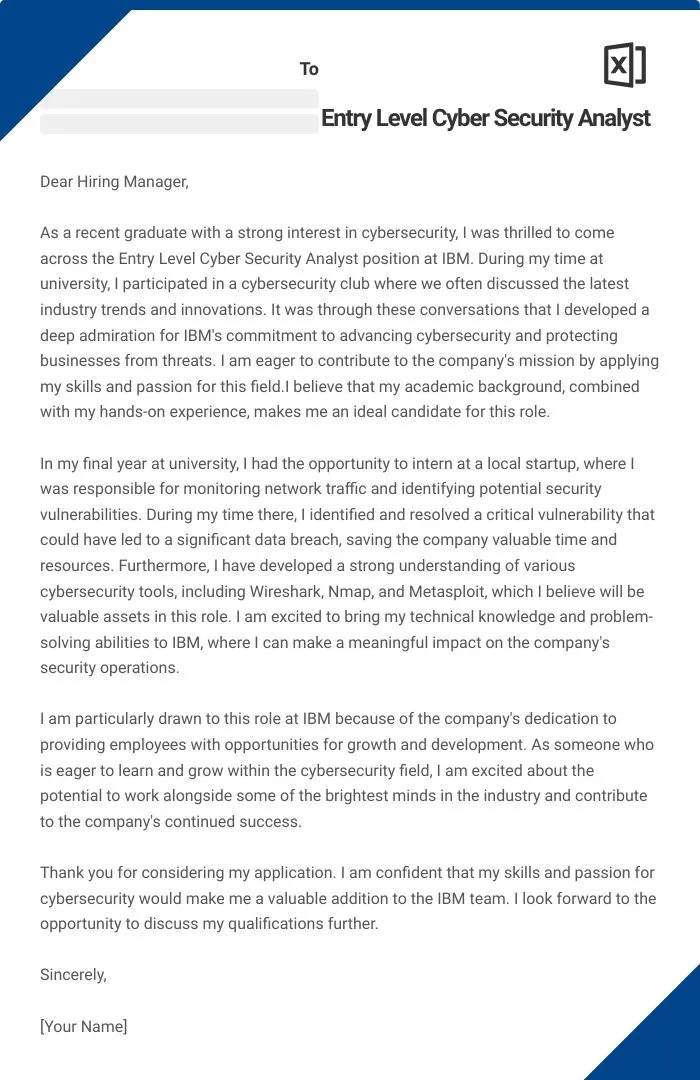
While the best cover letter is personalized, let’s consider the example below as a general guide. [Your Name] [Your Address] [Your Phone Number] [Your Email] [Date] [Hiring Manager Name (if known), or Hiring Team] [Company Name] [Company Address] Dear [Mr./Ms./Mx. Last Name or Hiring Manager], I am writing to express my enthusiastic interest in the Entry-Level Security Analyst position at [Company Name], as advertised on [Platform]. With a strong foundation in cybersecurity principles and a passion for protecting digital assets, I am confident I can significantly contribute to your team’s efforts. I have a very solid knowledge in network security, vulnerability assessments, incident response, and security frameworks. My technical skills, combined with strong analytical abilities, make me an excellent candidate for this role. During my studies at [University/Institution Name], I excelled in courses related to security, cryptography, and ethical hacking. I actively participate in cybersecurity challenges and capture-the-flag events, where I have honed my skills in identifying vulnerabilities and developing effective mitigation strategies. Furthermore, my experience with [Mention tools and technologies] has provided me with hands-on experience in [mention specific tasks and projects]. I am eager to apply my skills to protect [Company Name] from cyber threats. Thank you for your time and consideration. I look forward to the opportunity to discuss my qualifications further. Sincerely, [Your Name]
Where to Find Entry-Level Security Analyst Jobs
Knowing where to look is a key part of your job search. Here are the best places to find entry-level security analyst positions. These platforms offer a variety of job listings and are well-regarded. Many resources are available to help you on your job hunt. Ensure you are constantly searching for new opportunities.
- LinkedIn A professional networking platform where companies often post job openings. Use the job search feature.
- Indeed A large job board with a wide range of listings, including entry-level positions.
- Glassdoor Features job listings, company reviews, and salary information.
- Company Websites Many companies post job openings on their own websites. Check the careers section.
- Cybersecurity-Specific Job Boards Websites such as CyberSecJobs and Dice specialize in cybersecurity roles.
- Networking Network with professionals in the field through events, online forums, and social media. Networking can give you a huge advantage.