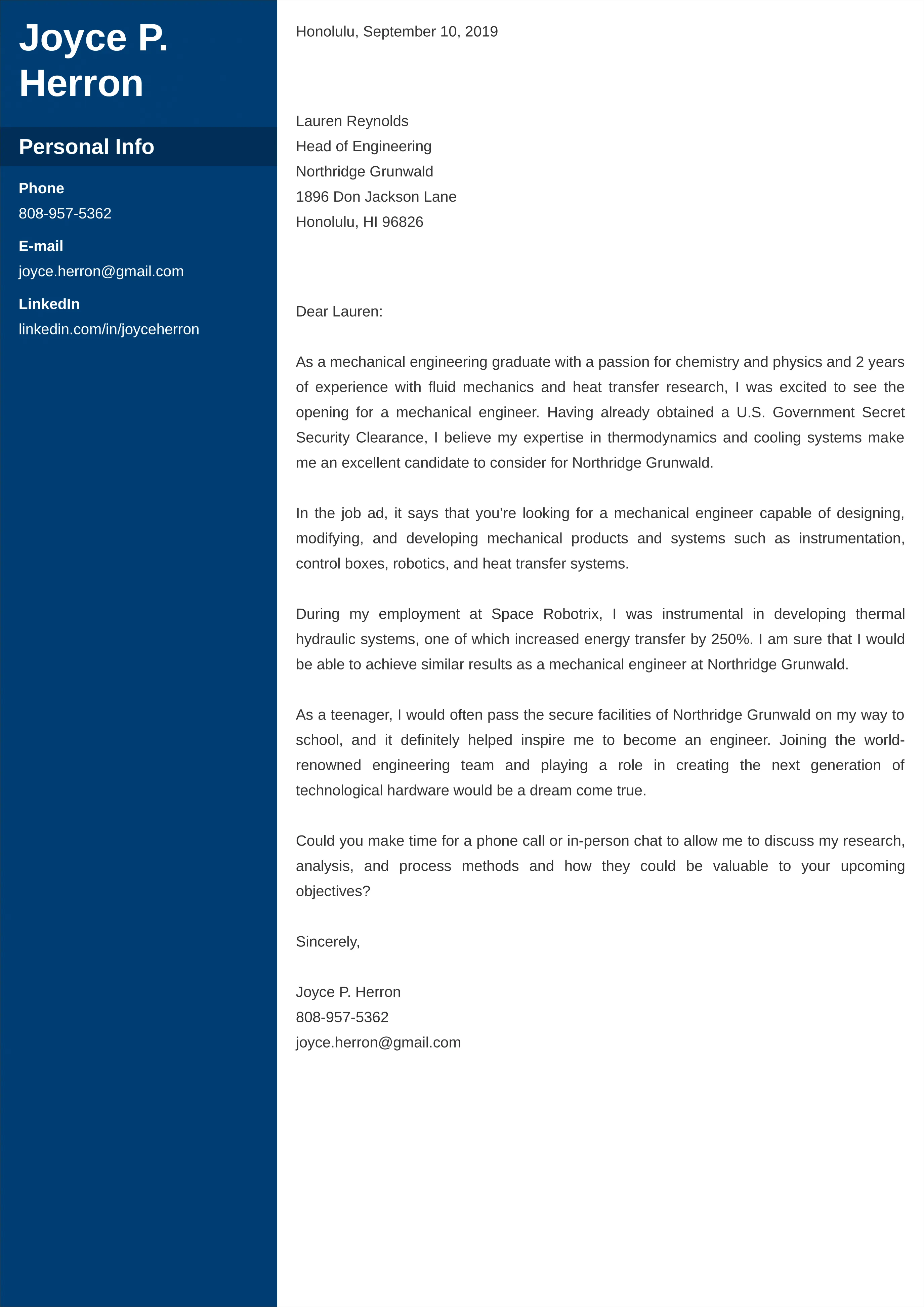
Highlight Your Engineering Skills
Your engineering cover letter is your first chance to make a strong impression, and the best way to start is by highlighting your relevant skills. This is not just a list of technical proficiencies; it’s about demonstrating how your abilities align with the job’s requirements. Begin by carefully reviewing the job description, noting the specific skills the employer is seeking. Then, in your cover letter, provide concrete examples of how you’ve used these skills to achieve results in previous projects or roles. For instance, if the job requires proficiency in CAD software, mention projects where you utilized this software, the challenges you overcame, and the positive outcomes. Highlighting your skills effectively shows the hiring manager that you possess the necessary tools to excel in the role, making your application stand out from the competition.
Emphasize Relevant Engineering Experience
While skills are important, your experience is what brings those skills to life. In your engineering cover letter, dedicate a significant portion to detailing your relevant experiences. Focus on experiences that align with the job description and the company’s needs. Use the STAR method (Situation, Task, Action, Result) to structure your examples, painting a vivid picture of your contributions. Describe the situation you faced, the task you were assigned, the actions you took, and the results you achieved. For example, if you were involved in a project that required problem-solving, explain the challenges you encountered, the solutions you devised, and the positive impact on the project’s outcome. This approach provides concrete evidence of your capabilities and demonstrates your ability to apply your skills effectively in real-world scenarios. Remember to quantify your achievements whenever possible; for example, stating that you ‘reduced project costs by 15%’ is more compelling than simply stating you ‘saved money’.
Tailor Your Engineering Cover Letter

Generic cover letters are easily spotted and often disregarded. Tailoring your cover letter to each specific job application is crucial. This means going beyond simply changing the company name; it involves researching the company, understanding its mission, values, and recent projects, and then aligning your skills and experiences with their specific needs. Mention specific projects, technologies, or challenges that resonate with the company’s work. Show the hiring manager that you understand their business and are genuinely interested in contributing to their goals. A well-tailored cover letter demonstrates that you’ve taken the time to understand the role and the company, making you a more attractive candidate. Always review the job description carefully and use the keywords and phrases mentioned to ensure your letter resonates with the hiring team. This targeted approach significantly increases your chances of getting noticed.
Research the Company
Before you start writing, take the time to thoroughly research the company. Visit their website, read news articles, and check their social media profiles. Understand their recent projects, their clients, and their overall goals. This research will provide valuable insights into the company’s culture, values, and the specific skills they prioritize. In your cover letter, use this information to demonstrate your genuine interest and to tailor your application. Mentioning a recent project or a specific technology the company uses shows that you’ve done your homework and that you’re genuinely interested in the opportunity. It also helps you identify the specific skills and experiences the company values most, allowing you to emphasize those in your letter. This level of detail shows that you’re not just sending out generic applications; you’re specifically targeting this opportunity, which significantly improves your chances of success. Understanding the company’s values also helps you align your own professional values, demonstrating a good cultural fit.
Showcase Accomplishments with Numbers
One of the most effective ways to make your cover letter stand out is by quantifying your achievements. Instead of making vague statements about your skills and experiences, use numbers to demonstrate the impact you’ve had in previous roles. This could include metrics such as project cost savings, efficiency improvements, or the number of projects completed. For example, instead of saying ‘I improved project efficiency,’ say ‘I improved project efficiency by 20% through the implementation of new workflow processes.’ This level of detail provides concrete evidence of your abilities and allows the hiring manager to easily understand the value you can bring to the company. Numbers create a clear and concise picture of your accomplishments, making your cover letter more persuasive and memorable. Always try to include quantifiable results whenever possible; this shows that you’re not just performing tasks but are also focused on achieving measurable outcomes.
Quantify Your Engineering Achievements

Quantifying your achievements is crucial for demonstrating your impact and value. Use metrics to showcase your accomplishments. For instance, mention the percentage reduction in errors, the increase in production output, or the amount of money saved on a project. These specific numbers give hiring managers a clear understanding of what you’ve achieved and how you’ve contributed to previous employers. Use data-driven examples to support your claims. For example, ‘Led a team that reduced project completion time by 15% through the implementation of Agile methodologies.’ or ‘Designed a new system that improved energy efficiency by 10%, resulting in significant cost savings.’ When quantifying your achievements, always provide context so the reader can understand the significance of your accomplishments. This helps paint a more complete and persuasive picture of your capabilities and achievements.
Use Action Verbs
Using strong action verbs is essential to make your cover letter dynamic and engaging. Action verbs describe your accomplishments and highlight your skills in a compelling way. Start each bullet point or sentence with an action verb that showcases your capabilities. Instead of using passive phrases, actively describe your contributions. Some examples of effective action verbs include ‘designed,’ ‘developed,’ ‘managed,’ ‘implemented,’ ‘analyzed,’ ’led,’ ‘improved,’ ‘optimized,’ and ‘achieved.’ For example, instead of writing ‘Responsible for project management,’ write ‘Managed cross-functional teams to deliver projects on time and within budget.’ Using action verbs allows you to create a concise and persuasive narrative of your accomplishments, making your cover letter more memorable and impactful. It shows that you are a proactive and results-oriented professional.
Proofread and Edit Your Engineering Cover Letter
Accuracy and professionalism are paramount in an engineering cover letter. Before submitting your cover letter, take the time to carefully proofread and edit it for any errors in grammar, spelling, and punctuation. Typos and grammatical errors can create a negative impression, suggesting a lack of attention to detail. Review your letter multiple times and consider having someone else read it as well. Fresh eyes can often catch mistakes that you might miss. Use a grammar and spell-checker, but don’t rely on them entirely; always read through the document yourself to ensure that the language and tone are appropriate and professional. A well-written, error-free cover letter demonstrates your commitment to quality and professionalism, qualities that are highly valued in the engineering field.
Review Your Cover Letter

Thoroughly review your cover letter to ensure it aligns with the job description. Verify that your skills and experiences match the requirements. Eliminate any irrelevant information and focus on what makes you the best fit for the position. Ensure the language is clear, concise, and professional. Confirm that all information is accurate and up-to-date. Reading your cover letter aloud can help you identify awkward phrasing and ensure a smooth flow. By meticulously reviewing your letter, you can catch and correct any mistakes before submitting your application, thus increasing your chances of success.
Get Feedback
Asking for feedback on your cover letter is a crucial step in the application process. Share your letter with trusted colleagues, mentors, or career counselors. Their feedback can provide valuable insights that you might have missed, helping you identify areas for improvement. They can assess whether your skills and experiences are clearly communicated, if the language is professional, and if the letter is engaging. Take their comments into consideration and revise your letter accordingly. Getting feedback from others allows you to refine your cover letter and make it more compelling, increasing your chances of making a positive impression on the hiring manager. Consider feedback from individuals with experience in hiring or those who work in your field.
Engineering Cover Letter Structure and Format
A well-structured and formatted cover letter is essential for creating a positive first impression. The format should be professional, clear, and easy to read. A standard business letter format is recommended. Use a clean font like Times New Roman or Arial, and maintain a consistent font size throughout the document. The cover letter should be concise, typically one page, and formatted with clear headings, concise paragraphs, and appropriate spacing. Use bullet points to highlight key achievements and skills. The format should be professional, easy to read, and should quickly convey your qualifications. Proper formatting demonstrates attention to detail, which is a critical attribute in engineering. The visual appeal of your cover letter matters; it should look organized and polished.
Header Information

The header of your cover letter should include your contact information, the date, and the recipient’s information. Your contact information should include your full name, phone number, email address, and LinkedIn profile (optional). The date should be the date you are sending the letter. The recipient’s information should include the hiring manager’s name (if available), their title, and the company’s address. Always ensure you are addressing the correct person or department. This information helps the hiring manager easily contact you if they are interested in your qualifications. Accuracy in the header demonstrates professionalism and attention to detail. If you can’t find the hiring manager’s name, address the letter to ‘Hiring Manager’ or the appropriate department.
Opening Paragraph
Your opening paragraph is your first opportunity to grab the reader’s attention. It should be concise, engaging, and clearly state the position you are applying for and how you learned about the opportunity. Mention where you saw the job posting (e.g., LinkedIn, company website). Briefly state why you are interested in the role and the company. If you have a relevant connection (e.g., a referral), mention it here. This paragraph sets the tone for the rest of your letter, so make it compelling and show enthusiasm for the position. The opening paragraph should immediately establish your interest and suitability for the role, creating a strong first impression.
Body Paragraphs
The body paragraphs are the core of your cover letter. Use these paragraphs to highlight your relevant skills, experiences, and accomplishments. Structure your paragraphs logically, using clear and concise language. Focus on the key requirements of the job and explain how your qualifications meet those requirements. Use the STAR method (Situation, Task, Action, Result) to provide concrete examples of your achievements. Quantify your achievements whenever possible using numbers and metrics. Demonstrate your understanding of the company and its needs by tailoring your examples to the specific role. This section should convince the hiring manager that you are the best candidate. Keep the paragraphs focused, each addressing a specific point, making it easy for the reader to follow and absorb the information.
Closing Paragraph

Your closing paragraph should summarize your interest in the position and reiterate your enthusiasm. Thank the hiring manager for their time and consideration. Include a call to action by stating that you look forward to the opportunity to discuss your qualifications further. Provide your contact information again and mention your availability for an interview. End with a professional closing, such as ‘Sincerely’ or ‘Best regards,’ followed by your name. The closing paragraph should be professional and leave a positive lasting impression, indicating your eagerness for the next steps in the hiring process. Reiterate your value and express your readiness to contribute to the company’s success.
Engineering Cover Letter Keywords
Incorporating relevant keywords into your engineering cover letter is crucial for getting past Applicant Tracking Systems (ATS) and catching the hiring manager’s eye. Research the job description to identify the key skills, technologies, and software mentioned. Weave these keywords naturally into your cover letter. Use industry-specific terminology and phrases to demonstrate your understanding of the field. Keywords should be integrated throughout your cover letter, not just listed at the end. Focus on the most important keywords and use them strategically within your sentences and bullet points. By doing so, you increase the chances of your cover letter being noticed and selected by recruiters and hiring managers. This targeted approach helps highlight your experience and relevance for the specific role.