Crafting the Perfect Email Cover Letter
An email cover letter is your first impression on a potential employer and a crucial element of your job application. Unlike a traditional cover letter that is sent as an attachment, an email cover letter is written directly in the body of your email. This format allows you to quickly capture the hiring manager’s attention and provide a concise summary of your qualifications and enthusiasm for the position. Mastering the art of writing an effective email cover letter is essential for standing out from the competition and increasing your chances of landing an interview and ultimately your dream job.
Understanding the Purpose of an Email Cover Letter
The primary purpose of an email cover letter is to introduce yourself, highlight your most relevant skills and experiences, and express your genuine interest in the job. It’s an opportunity to go beyond the information presented in your resume and connect with the hiring manager on a more personal level. Think of it as a brief sales pitch—you’re selling yourself and your abilities. It’s also the place to explain gaps in employment, career changes, and address any specific requirements mentioned in the job description.
Key Components of an Effective Email Cover Letter

A well-structured email cover letter typically includes several key components that work together to create a compelling narrative. Each section serves a specific purpose, contributing to your overall message and making it easy for the reader to grasp your qualifications. The key components ensure you provide all the necessary information in a clear and concise manner, leaving a positive impact and encouraging the hiring manager to read your resume and consider your application. Understanding these components is the first step toward writing a successful cover letter.
Formatting Your Email Cover Letter for Success
The way you format your email cover letter is just as important as its content. A well-formatted email is easy to read, professional, and engaging. Use clear and concise language, short paragraphs, and bullet points to enhance readability. Remember that the hiring manager is likely reviewing many applications, and you want your email to stand out for the right reasons. A clean layout will help you to convey your message effectively and leave a positive and professional impression.
Subject Line
The subject line is the first thing the hiring manager sees and should immediately grab their attention. Keep it concise, specific, and professional. Include the job title and potentially your name to make it easy for the recruiter to identify the position you are applying for. Avoid generic phrases like “Job Application” and instead opt for something like “Application for Marketing Manager Position – [Your Name]”.
Salutation

Start your email with a professional salutation. If you know the hiring manager’s name, use “Dear Mr./Ms./Mx. [Last Name].” If you don’t know the name, use “Dear Hiring Manager” or “Dear [Company Name] Hiring Team.” Avoid informal greetings such as “Hi” or “Hello” unless the company’s culture is very casual. This sets a tone of professionalism from the start and shows that you’ve taken the time to tailor your application.
Body Paragraphs
The body paragraphs are where you highlight your qualifications and express your interest in the role. Start with a compelling opening statement that grabs the reader’s attention. Then, provide a brief overview of your relevant skills and experiences, tailoring them to the specific requirements of the job. Use action verbs and quantify your achievements whenever possible. Conclude with a strong closing paragraph that reiterates your enthusiasm and includes a call to action, such as requesting an interview.
Closing and Signature
End your email with a professional closing, such as “Sincerely,” “Best regards,” or “Thank you.” Include your full name, contact information (phone number and email address), and a link to your LinkedIn profile, if applicable. This information should make it easy for the recruiter to reach out to you and learn more about your professional background. Make sure your signature is clear and consistent with the overall professional tone of your application.
Writing a Compelling Opening

Your opening paragraph should immediately grab the hiring manager’s attention and make them want to read more. Start by mentioning where you found the job posting and the specific position you are applying for. Briefly state your key qualifications and why you are a good fit for the role. Express your enthusiasm for the opportunity and the company. This initial statement sets the stage for the rest of your letter and encourages the recruiter to continue reading.
Highlighting Relevant Skills and Experience
In the body of your email cover letter, highlight the skills and experiences that are most relevant to the job requirements. Carefully review the job description and identify the key qualifications the employer is seeking. Then, provide specific examples of how you have demonstrated those skills in the past. Use action verbs to describe your accomplishments and quantify your achievements whenever possible. This provides concrete evidence of your abilities and shows the hiring manager that you are the right fit for the role. Focus on experiences that are aligned with the specific needs of the position you are applying for.
Demonstrating Your Enthusiasm for the Role
Show the hiring manager that you are genuinely interested in the position and the company. Research the company and tailor your letter to demonstrate your understanding of their mission, values, and recent projects. Explain why you are excited about this specific opportunity and how it aligns with your career goals. Showing enthusiasm and passion sets you apart from other candidates, making you appear more motivated and engaged.
Showcasing Your Achievements

Don’t just list your responsibilities; showcase your accomplishments. Use the STAR method (Situation, Task, Action, Result) to provide detailed examples of your achievements. Briefly describe the situation, the task you were assigned, the actions you took, and the positive results you achieved. Quantify your accomplishments whenever possible—for example, by stating the percentage of sales increase you generated or the number of projects you successfully managed. Highlighting achievements proves your value and demonstrates your ability to deliver results.
Writing a Strong Closing
End your email cover letter with a strong closing paragraph that reiterates your interest in the position and your qualifications. Thank the hiring manager for their time and consideration. Include a call to action, such as expressing your eagerness to discuss your qualifications further in an interview. Reiterate your contact information and make it easy for them to get in touch with you. A well-crafted closing paragraph reinforces your professionalism and leaves a lasting impression.
Proofreading and Editing Your Email Cover Letter
Before sending your email cover letter, proofread and edit it carefully. Check for any typos, grammatical errors, and formatting inconsistencies. Ensure that your message is clear, concise, and easy to understand. Consider having a friend or family member review your letter as well. A polished, error-free email cover letter demonstrates your attention to detail and professionalism. Use tools like Grammarly or other editing software to help with your proofreading process.
Common Mistakes to Avoid in Your Email Cover Letter

Avoiding common mistakes can significantly improve your chances of success. These errors can undermine your credibility and make it less likely that your application will be considered. Being mindful of these common pitfalls allows you to present yourself in the best possible light. Reviewing your cover letter carefully before sending is very crucial.
Generic Content
Avoid using a generic cover letter that could be sent to any company or position. Tailor your letter to each specific job application. Customize the content to demonstrate your understanding of the company and the role. Show that you have taken the time to research the position and that you are genuinely interested in the opportunity. Generic content makes it seem like you are not truly interested in the job.
Typos and Grammatical Errors
Typos and grammatical errors can damage your credibility and make you appear unprofessional. Proofread your cover letter carefully before sending it. Use a spell checker and grammar checker, but also read your letter aloud to catch any errors that might be missed. Having a second pair of eyes review your letter can be very helpful. A well-written and error-free cover letter shows that you pay attention to detail and that you value professionalism.
Lack of Personalization

Address your cover letter to the hiring manager by name, if possible. Research the company and the role to show that you understand what they are looking for. Mention specific aspects of the job description or the company’s mission that interest you. Demonstrating a personalized approach will make your application more engaging and demonstrate that you have taken the time to personalize your application.
Ignoring the Job Description
Failing to address the specific requirements and keywords mentioned in the job description is a major mistake. Carefully review the job description and tailor your cover letter to highlight the skills and experiences that align with the employer’s needs. Use the same language and keywords that the employer uses to show that you understand what they are looking for. Ignoring the job description shows that you haven’t put much effort into your application and can make it seem as though you haven’t considered how your skills align with the role.
Sending Without Proofreading
Always proofread your email cover letter before sending it. Check for any typos, grammatical errors, and formatting inconsistencies. Reading your cover letter aloud can help you catch errors that you might miss when you’re just reading it silently. A well-proofread cover letter shows that you are detail-oriented and that you care about making a positive impression. Neglecting to proofread is a sign of carelessness and can make you seem unprofessional.
Optimizing Your Email Cover Letter for Applicant Tracking Systems (ATS)
Many companies use Applicant Tracking Systems (ATS) to screen resumes and cover letters. Optimizing your email cover letter for ATS can increase your chances of getting past the initial screening process and having your application reviewed by a human. Following these practices can help to ensure that your application gets noticed by recruiters and hiring managers.
Keyword Optimization
Use keywords from the job description in your email cover letter. These keywords help the ATS identify your qualifications and match them to the job requirements. Incorporate these keywords naturally throughout your letter, especially in the skills and experience sections. Avoid keyword stuffing, which can make your letter seem unnatural and less readable. Focus on the key requirements of the role and reflect those keywords in your letter.
Formatting for Readability
ATS systems can have difficulty reading complex formatting. Keep your formatting simple and clean. Use a standard font, such as Arial or Times New Roman. Avoid using tables, graphics, or unusual fonts. Ensure that your email cover letter is easy to read on all devices, and keep it straightforward. Simple formatting ensures that the ATS can accurately scan your cover letter and extract the relevant information.
Tailoring Your Email Cover Letter to Different Job Types
The approach to writing an email cover letter can vary depending on the type of job you are applying for. Tailoring your letter to the specific requirements of the role and your career stage is essential. This ensures that your application resonates with the hiring manager and effectively showcases your qualifications. Below are considerations for tailoring your cover letter based on different job types.
Entry-Level Positions
When applying for entry-level positions, emphasize your education, relevant coursework, internships, volunteer experience, and any transferable skills you possess. Highlight your enthusiasm for the field and your willingness to learn. Showcase your eagerness to contribute to the company. Even if you lack extensive professional experience, you can still demonstrate your potential and passion for the job.
Experienced Professionals
For experienced professionals, focus on your proven track record and quantifiable achievements. Highlight your most significant accomplishments and how they have benefited previous employers. Tailor your letter to demonstrate your ability to meet the specific needs of the role. Provide concrete examples of your expertise and how your skills and experience can contribute to the success of the company. Emphasize the value you bring to the table.
Career Changers
If you are changing careers, address the reasons for your transition and highlight the transferable skills that make you a strong candidate for the new role. Explain how your previous experiences have prepared you for this career change. Emphasize the skills you’ve gained that are relevant to the new position, even if they were acquired in a different field. Show how your skills can be applied to this new opportunity and your commitment to this new career path.
Email Cover Letter Examples and Templates
Reviewing email cover letter examples and using templates can provide valuable guidance and inspiration when writing your own. These resources offer insight into effective formatting, language, and content. Tailor these examples and templates to your specific needs and job applications, using them as a starting point to showcase your unique qualifications. Here are some examples and templates to help you write an excellent email cover letter.
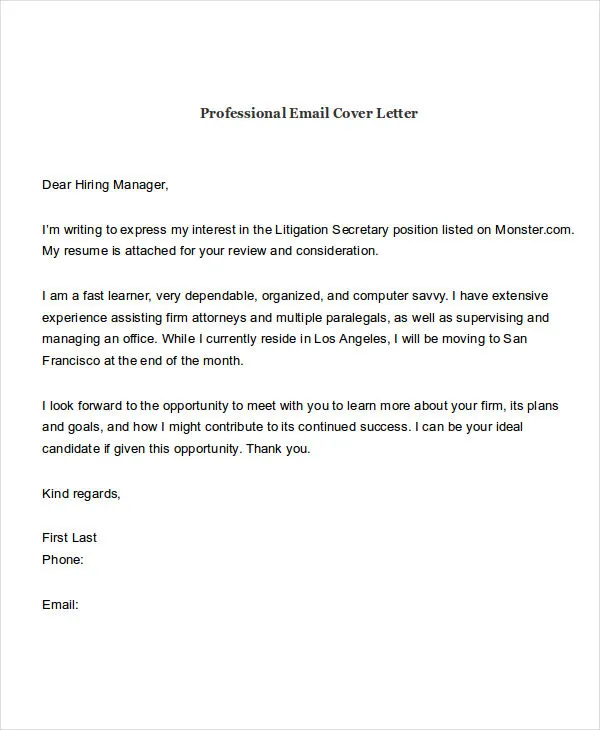
Example of a Great Email Cover Letter
Below is a sample cover letter to guide your own writing. This is a starting point. You can customize the language and content to suit your personal skills and needs.
Free Email Cover Letter Templates
Many free email cover letter templates are available online. These templates can help you structure your letter and ensure you include all the necessary information. Use these templates as a starting point and personalize them to fit your needs. Make sure to edit the templates to reflect your personal skills and needs.
Conclusion
Writing an effective email cover letter is a crucial step in landing your dream job. By following these guidelines and tailoring your letter to each job application, you can increase your chances of capturing the hiring manager’s attention and securing an interview. Remember to highlight your relevant skills and experiences, demonstrate your enthusiasm for the role, and proofread your letter carefully. With a well-crafted email cover letter, you’ll be well on your way to career success. Start writing your email cover letter today, and put these steps into practice.