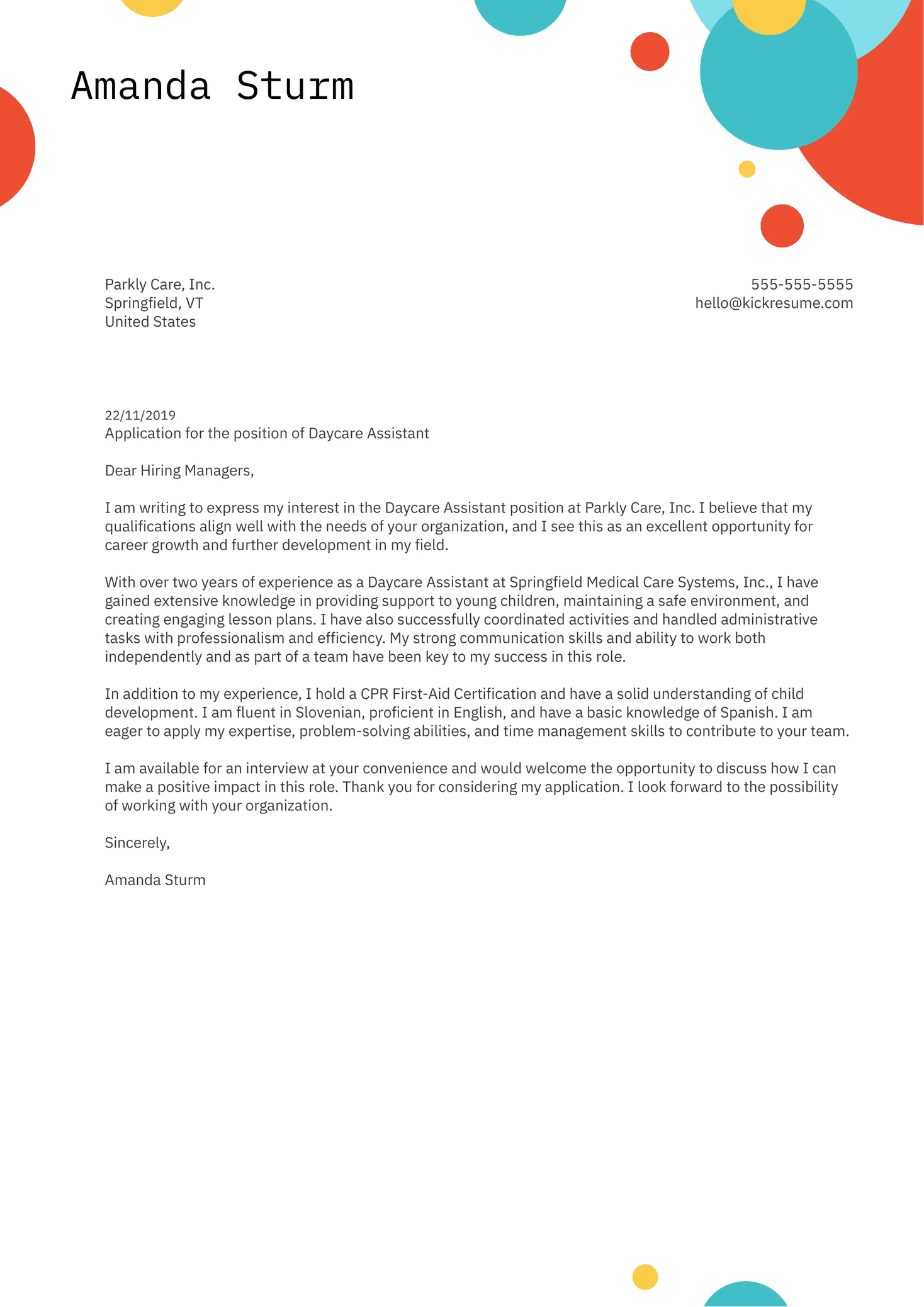
Highlighting Your Skills Daycare Teacher Cover Letter
A well-crafted cover letter is your key to landing a daycare teacher position. It’s your initial introduction to potential employers, giving you the chance to showcase your skills, experience, and passion for early childhood education. This document complements your resume, providing a more detailed narrative of your qualifications and personality. The goal is to captivate the hiring manager’s attention and convince them you’re the ideal candidate. A strong cover letter demonstrates your enthusiasm and makes you stand out from other applicants. Mastering the art of the cover letter can significantly boost your chances of securing an interview, ultimately leading to your dream job as a daycare teacher. The cover letter should not simply reiterate the information on your resume; it must elaborate, provide context, and demonstrate your unique value proposition.
Understanding the Daycare Teacher Role
Before starting your cover letter, grasp the core responsibilities of a daycare teacher. These include providing a safe, nurturing, and stimulating environment for children. You’ll plan and implement age-appropriate activities, foster social and emotional development, and communicate effectively with parents and guardians. Daycare teachers are also responsible for ensuring children’s basic needs are met, such as feeding, diapering, and naptime. Understanding these multifaceted roles helps you tailor your cover letter to resonate with potential employers. Consider the specific requirements outlined in the job description, which will guide you in emphasizing the most relevant aspects of your skills and experiences. Highlighting your ability to meet these responsibilities demonstrates your readiness and suitability for the position. This ensures your cover letter demonstrates both understanding and enthusiasm.
Key Skills to Showcase

Daycare teachers require a diverse skill set. In your cover letter, emphasize these essential skills: patience, communication, creativity, organizational abilities, and a genuine love for children. Highlight your ability to create a stimulating learning environment through age-appropriate activities, games, and interactions. Mention your proficiency in child behavior management, conflict resolution, and promoting positive social interactions among children. Detail your ability to effectively communicate with parents, providing updates on children’s progress and addressing concerns. Your skills must align with the center’s needs and values. Ensure you convey your ability to multitask, adapt to different situations, and contribute positively to a team environment. Focus on showcasing how your skills directly benefit the children and support the daycare’s objectives.
Crafting a Compelling Daycare Teacher Cover Letter
Your cover letter should be concise, professional, and tailored to the specific daycare. Begin with a strong opening paragraph, expressing your enthusiasm and stating the position you’re applying for. In the body, provide specific examples of your skills and experience, quantifying your achievements whenever possible. Use action verbs to describe your responsibilities and accomplishments. Emphasize your passion for early childhood education and explain why you’re drawn to the particular daycare. Close with a call to action, expressing your interest in an interview. Proofread carefully for grammar and spelling errors. Your cover letter is your first impression; make it count. The perfect cover letter will highlight your relevant experiences and passion in ways that create a strong connection with the reader.
Formatting Your Cover Letter
Proper formatting enhances readability and professionalism. Use a standard, easy-to-read font like Times New Roman or Arial in 11 or 12-point size. Maintain consistent spacing throughout the document. Include your contact information at the top, followed by the date and the daycare’s contact information. Structure your letter with clear paragraphs and avoid long blocks of text. Use headings and bullet points to organize information and highlight key skills. Keep the letter concise, typically no more than one page. A well-formatted cover letter shows attention to detail and professionalism. The correct layout demonstrates your respect for the potential employer’s time, and increases the chances of your application being read.
Opening and Closing Statements

Your opening statement sets the tone. Start with a strong statement expressing your enthusiasm for the position and the daycare. Mention how you learned about the job and briefly state your key qualifications. In the closing, reiterate your interest in the role and thank the hiring manager for their time and consideration. Include a call to action by requesting an interview or follow-up contact. A well-crafted opening creates immediate interest, and a strong closing reinforces your desire and enthusiasm. Always tailor these statements to the specific daycare and the job requirements outlined. Remember that the goal of the opening is to grab attention, and the closing is to secure the interview.
Writing the Body of Your Cover Letter
The body of your cover letter is where you demonstrate your qualifications and experience. Each paragraph should focus on a different aspect of your skills or experience. Start with a paragraph about your relevant skills and their practical application. Provide specific examples of your accomplishments in previous roles. Use action verbs to illustrate your responsibilities and what you achieved. In the next paragraph, highlight your experience working with children and describe your approach to creating a positive learning environment. The central part of your cover letter is the opportunity to express your personal qualities that directly align with the job description. Finally, tailor the letter to the daycare’s needs and showcase why you’re a great fit for their environment.
Tailoring Your Cover Letter for Each Application
Avoid using a generic cover letter for all applications. Tailor each letter to the specific daycare and the job requirements. Research the daycare’s mission, values, and programs. Highlight any experience or skills that align with their specific needs. Use the job description as your guide, focusing on the key qualifications and responsibilities. Mention specific activities or programs that the daycare offers and how your skills can contribute to their success. Tailoring demonstrates your genuine interest and makes your application stand out. Generic cover letters are easily identified and may be discarded without further consideration. A personalized approach shows you’ve taken the time to understand the daycare and its needs.
Researching the Daycare

Before writing your cover letter, conduct thorough research on the daycare. Visit their website, read online reviews, and check their social media pages. Understand their mission, values, and the types of programs they offer. Identify the specific needs and priorities of the daycare. This research helps you tailor your cover letter and demonstrate your genuine interest. Referencing specific details about the daycare in your letter shows you’ve done your homework. Research allows you to showcase how your skills and experience align with the daycare’s environment and goals. Being knowledgeable helps you to address specific requirements and demonstrate your suitability for the role. This research highlights your enthusiasm and commitment.
Using Keywords Effectively
Incorporate keywords from the job description into your cover letter. These keywords can highlight your skills and experience. Review the job description for key phrases and requirements. Naturally integrate these keywords into your cover letter. Avoid keyword stuffing, which can make your letter sound unnatural. Using relevant keywords helps your application get noticed by Applicant Tracking Systems (ATS). These systems scan resumes and cover letters for keywords to determine their relevance to the job. This ensures your qualifications are accurately represented. Focus on the skills and experiences that directly align with the daycare’s needs, increasing the chances of your application reaching the hiring manager.
Tips for Review and Proofreading
Review and proofread your cover letter meticulously. Check for grammar, spelling, and punctuation errors. Ensure your sentences flow smoothly and your ideas are clearly conveyed. Ask a friend, family member, or career counselor to review your letter. Fresh eyes can often catch mistakes that you may have missed. Proofreading helps you prevent errors that might undermine your professionalism. Double-check all names, dates, and contact information. Accuracy is essential to make a good impression. Carefully review your cover letter to ensure it’s error-free, and that it represents you professionally.
Ensuring Accuracy and Professionalism

Accuracy and professionalism are paramount in your cover letter. Ensure all the information is accurate and up-to-date. Use a professional tone and avoid casual language. Be polite and respectful in your communication. Ensure the letter is well-organized and easy to read. Your cover letter should reflect the level of care and attention you would provide to children. The accuracy of your letter demonstrates your attention to detail. The professionalism will ensure a favorable first impression. Proofreading ensures a flawless presentation and reflects your ability to communicate effectively with the children, their parents, and your colleagues.
Showcasing Relevant Experience
Highlight any relevant experience you have. This includes previous daycare or preschool positions, volunteer work with children, or experience in childcare settings. Provide specific examples of your responsibilities and accomplishments in these roles. Describe how you’ve planned and implemented activities, managed children’s behavior, and communicated with parents. Quantify your achievements whenever possible. For example, mention the number of children you’ve cared for, or the success of a specific activity you implemented. Demonstrating this relevant experience increases your credibility. It shows you can apply your knowledge and experiences directly to the daycare setting. Focus on the skills and experiences that are most relevant to the job requirements.
Highlighting Relevant Experience
Your cover letter should strongly emphasize the relevant skills and experiences you bring. Frame your past experiences within the context of the job requirements and the daycare’s needs. Consider the specific job description when deciding which experiences and skills to highlight. Tailor your examples to demonstrate how you can contribute to the daycare’s programs and goals. If you are changing careers, describe how your transferable skills from other roles can be applied to early childhood education. Highlighting relevant experience is essential, as it enables you to demonstrate your capabilities and provide concrete evidence of your potential to succeed. Your experience should highlight the benefits for the children and the daycare.
Quantifying Your Accomplishments

Use numbers and statistics to quantify your accomplishments. Quantifying your achievements strengthens your claims and provides concrete evidence of your capabilities. For example, instead of saying you “improved classroom behavior”, you could state that you “reduced instances of disruptive behavior by 20%”. Quantify the impact of your work whenever possible. Numbers and statistics grab the reader’s attention and demonstrate your effectiveness. Quantifying helps your application stand out, and it provides a clear measurement of success. By quantifying, you prove that you are capable of delivering results and contributing to the daycare’s goals. It reflects the direct, tangible impact you’ve had on children and the educational environment.
Emphasizing Soft Skills
Emphasize your soft skills, such as patience, communication, and creativity. Soft skills are essential in daycare settings, where building relationships and fostering a positive environment are crucial. Provide examples of how you’ve demonstrated these skills in past roles. Discuss how you resolved conflicts, communicated with parents, and created engaging activities for children. Highlighting your soft skills allows the hiring manager to see how well you will work with others. Demonstrating your soft skills helps showcase your emotional intelligence and cultural fit within the daycare. The ability to communicate, collaborate, and nurture children’s development is very important.
Demonstrating Patience and Communication Skills
Patience and communication are vital. Illustrate your ability to remain calm and composed in challenging situations. Describe how you handle conflict resolution and foster positive interactions among children. Emphasize your communication skills with children, parents, and colleagues. Highlight your experience communicating with diverse audiences, including those with special needs or language barriers. Your proficiency in communication is essential for a daycare teacher. The ability to create a safe, happy, and nurturing environment hinges on your communication skills. The most successful daycare teachers have a high level of emotional intelligence and understand how to clearly articulate their needs.
Including a Call to Action

End your cover letter with a clear call to action. Express your interest in the position and your enthusiasm for the opportunity. Request an interview or follow-up contact from the hiring manager. Make it easy for the employer to reach you. Provide your phone number and email address again. A call to action encourages the hiring manager to take the next step in the hiring process. It reinforces your eagerness and commitment to the role. Making it convenient for the employer to contact you significantly increases your chances of being considered for an interview. A strong call to action provides a clear path forward.
Encouraging Contact and Interview
In your closing, reiterate your interest in the position and thank the hiring manager for their time. Encourage them to contact you to schedule an interview. Provide your contact information again. The aim is to make it as easy as possible for the employer to reach out. A confident and direct approach enhances your chances of moving forward in the hiring process. Reinforce your enthusiasm and eagerness. Making it easy for the hiring manager to take action can influence their decision positively, potentially leading to a successful outcome and securing you an interview.
Addressing Common Cover Letter Mistakes
Avoid common mistakes that can undermine your application. Some things to avoid include grammatical errors, typos, and generic language. Refrain from overusing clichés and sounding insincere. Avoid lengthy or unfocused paragraphs. Do not mention salary expectations in your cover letter. Ensure your cover letter is error-free and professional. Avoid sharing negative information about past employers. Highlighting these common mistakes will help you make your cover letter better. Make sure the letter is easily readable, and provides all the information that the potential employer may want to know.
Avoiding Clichés and Generic Statements
Avoid using clichés and generic statements. They often sound insincere and may not capture the attention of the reader. Instead of using overused phrases, use your voice and express genuine interest and enthusiasm. Provide specific examples and detail your accomplishments. Personalize your cover letter and make it sound authentic. Generic statements often sound hollow and are less likely to resonate with the reader. Write in a way that reveals your personality and allows your passion to shine through. A personal touch will make your cover letter memorable. By avoiding clichés, you enhance your authenticity and make a stronger connection with the hiring manager.
Focusing on the Needs of the Daycare
Center your cover letter on how you can meet the daycare’s needs. Highlight your ability to support the daycare’s mission and goals. Demonstrate your understanding of early childhood education and the specific needs of the children they serve. Research the daycare’s approach to education and childcare. Tailor your language to reflect your interest in the daycare. Focus on how your skills, experience, and personality can contribute to the success of the daycare. Show you are a solution and are the ideal person to fill the position. Addressing the daycare’s needs assures the employer that you are ready for the role.
Examples of Strong Daycare Teacher Cover Letters
Review examples of strong daycare teacher cover letters online. Studying examples provides insight into how to effectively present your skills, experience, and qualifications. Pay attention to the structure, language, and tone used in these letters. Tailor your cover letter to match the best practices. Use these examples to gain inspiration and adapt the techniques to create your own winning cover letter. Analyze cover letters that are successful at highlighting key skills and the information that helps to get an interview. This will help you to draft a compelling and competitive cover letter. By studying the best examples, you can incorporate the best practices and develop an application that stands out.