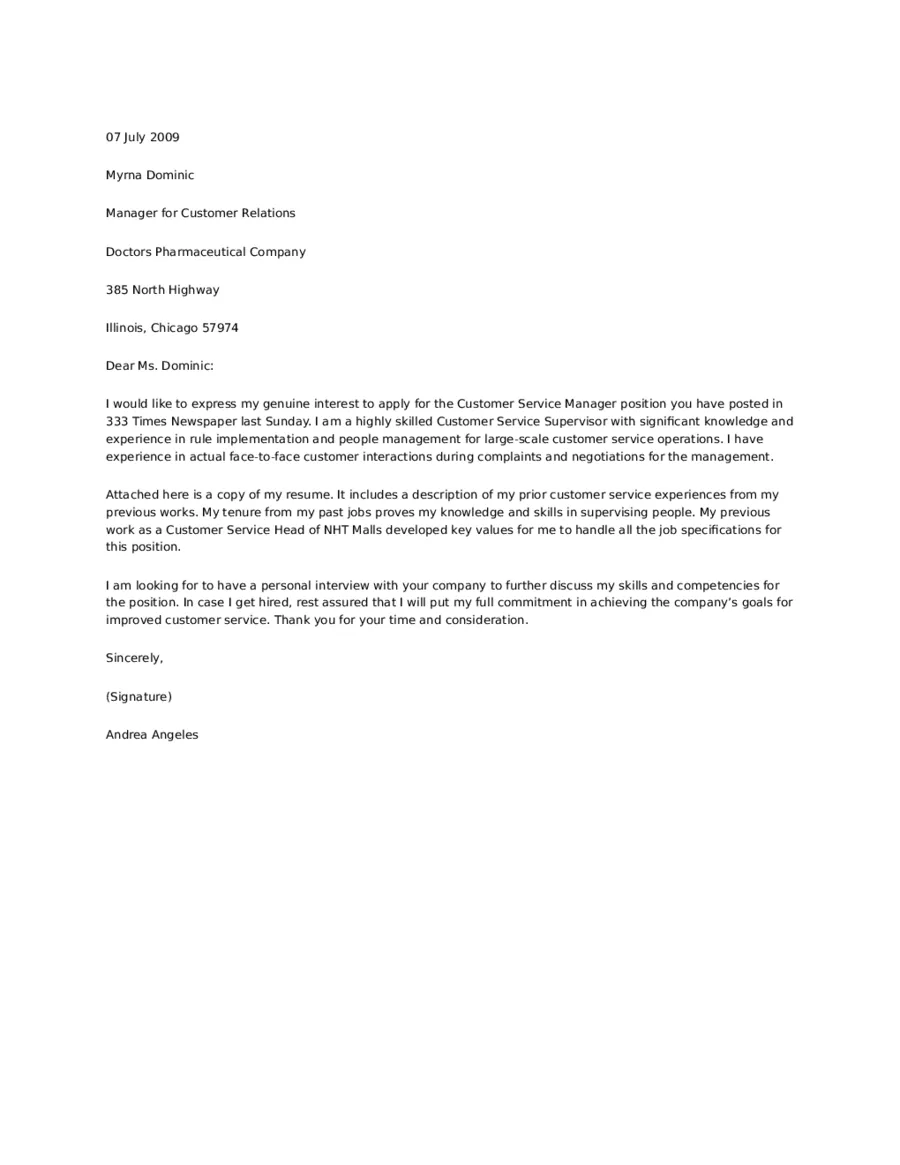
Why a Customer Service Cover Letter Matters
In the competitive job market, a well-crafted customer service cover letter can be your golden ticket to landing an interview. It’s your first opportunity to make a strong impression and showcase why you’re the ideal candidate for the role. Unlike a resume, which simply lists your experience and skills, a cover letter allows you to tell a story, highlighting your personality, enthusiasm, and the specific reasons you’re interested in the position. A compelling cover letter grabs the hiring manager’s attention and sets you apart from other applicants. It demonstrates your written communication skills, attention to detail, and genuine interest in the company, making it an essential component of any job application. By investing time in crafting a tailored cover letter, you significantly increase your chances of securing an interview and ultimately, the job.
Highlight Relevant Skills
Customer service roles demand a specific skill set, and your cover letter is the perfect place to highlight those abilities. Instead of simply listing skills, provide concrete examples of how you’ve utilized them in the past. Show, don’t just tell, by describing situations where you successfully used your skills to help customers or resolve issues. This approach adds credibility to your claims and gives the hiring manager a clear picture of your capabilities. Focus on the skills most relevant to the job description, such as communication, problem-solving, and empathy. This targeted approach demonstrates your understanding of the role’s requirements and your ability to meet its challenges. Tailor your examples to match the job’s specific demands to further enhance your candidacy.
Showcase Communication Skills

Effective communication is the cornerstone of excellent customer service. In your cover letter, emphasize your ability to communicate clearly and professionally, both verbally and in writing. Describe situations where you successfully conveyed information, resolved conflicts, or built rapport with customers. Highlight your active listening skills and your ability to understand and respond to customer needs. Provide examples of how you’ve used different communication styles to suit diverse customer personalities and situations. Mention your experience with various communication channels, such as phone, email, and chat. This demonstrates your versatility and ability to connect with customers in a variety of ways. Highlighting your communication abilities makes you a more attractive candidate.
Emphasize Problem-Solving Abilities
Customer service often involves resolving complex issues and finding solutions. Highlight your problem-solving skills by describing scenarios where you successfully identified and resolved customer issues. Explain your approach to problem-solving, including your ability to analyze situations, identify root causes, and implement effective solutions. Detail how you’ve used your critical thinking skills to handle difficult situations, such as dealing with dissatisfied customers or handling product returns. Mention any specific strategies you’ve employed to address customer concerns effectively. Emphasizing your problem-solving abilities showcases your ability to handle challenges and provide excellent customer support.
Demonstrate Empathy and Patience
Empathy and patience are crucial in customer service. Demonstrate your ability to understand and respond to customer emotions in your cover letter. Describe situations where you showed compassion and understanding, even in challenging situations. Highlight your ability to remain patient and calm while resolving customer issues. Mention any techniques you’ve used to build rapport with customers and make them feel valued. Providing examples of your empathy and patience showcases your ability to create positive customer interactions, building loyalty and trust.
Tailor to the Specific Job

A generic cover letter won’t impress hiring managers. Tailor your cover letter to each specific job you apply for. This demonstrates your interest and attention to detail. Research the company and the role to identify the key requirements and the company’s values. Show how your skills and experience align with these requirements. Referencing specific details from the job description, such as the company’s mission or the specific technologies used, shows that you’ve taken the time to understand the role and the company. This personalized approach makes your application stand out and increases your chances of getting an interview.
Research the Company
Before writing your cover letter, thoroughly research the company. Visit their website, read news articles, and check their social media profiles to understand their values, mission, and recent activities. This research will help you tailor your cover letter to show how your skills and experience align with the company’s specific needs and culture. Mention specific aspects of the company that resonate with you and explain why you’re interested in working there. This shows the hiring manager that you’re genuinely interested in the role and have taken the time to understand the company’s goals. It will set you apart.
Match Skills to Requirements
Carefully review the job description and identify the key skills and qualifications required for the role. Then, use your cover letter to demonstrate how your skills and experience match those requirements. Provide specific examples of how you’ve used those skills in previous roles. Use the same keywords and phrases that are used in the job description to highlight your qualifications. By directly addressing the employer’s needs, you make it easy for them to see how you fit the role. This targeted approach increases your chances of getting selected for an interview. Ensure that your examples directly relate to the requirements of the role.
Quantify Your Achievements

Instead of simply listing your responsibilities, quantify your achievements to show the impact you’ve made in previous roles. Use numbers and data to demonstrate your success. For example, state the percentage increase in customer satisfaction scores you achieved, the reduction in response times, or the number of customers you assisted per day. Quantifying your achievements provides concrete evidence of your skills and abilities and makes your cover letter more compelling. By using numbers, you create a clear picture of your accomplishments and the value you can bring to the company. Make your achievements measurable to make a lasting impression.
Use Action Verbs
Use strong action verbs to describe your accomplishments and skills. Start each sentence describing your achievements with verbs like “managed,” “resolved,” “implemented,” “improved,” or “increased.” Action verbs make your cover letter more dynamic and engaging, capturing the hiring manager’s attention. Avoid passive language and focus on what you accomplished and how you contributed to previous roles. This helps highlight your strengths and accomplishments. A well-chosen action verb can make a big difference in how your accomplishments are perceived.
Provide Measurable Results
Back up your claims with measurable results. For each skill or achievement you highlight, provide specific data or metrics to illustrate your success. For instance, instead of saying “improved customer satisfaction,” state “increased customer satisfaction scores by 15%.” Providing measurable results makes your accomplishments more credible and demonstrates the value you can bring to the role. Use numbers and percentages to quantify your successes and create a compelling case for your candidacy. Measurable results provide concrete evidence of your skills and capabilities.
Proofread and Edit Carefully

Before submitting your cover letter, proofread and edit it carefully for any errors in grammar, spelling, or punctuation. A polished cover letter demonstrates your attention to detail and professionalism. Errors can create a negative impression and lead to your application being overlooked. Always read your cover letter aloud to catch any awkward phrasing or mistakes. Proofreading is essential.
Check for Grammar and Spelling Errors
Grammar and spelling errors can undermine your credibility and damage your chances of landing an interview. Carefully check your cover letter for any mistakes. Use a grammar checker and spell checker. Read your cover letter aloud to catch any errors that you might have missed. Ask a friend or colleague to proofread your cover letter, too. A second pair of eyes can catch mistakes you may have missed. A flawless cover letter conveys a sense of professionalism and shows that you take pride in your work. Avoid making easily avoidable errors.
Ensure a Professional Tone
Maintain a professional tone throughout your cover letter. Use formal language, avoid slang, and keep the tone positive and enthusiastic. Ensure your writing is clear, concise, and easy to understand. Avoid using jargon or overly complex language. Your cover letter should reflect your professionalism and communication skills. Use a polite and respectful tone and maintain a positive attitude. Be professional throughout the application.