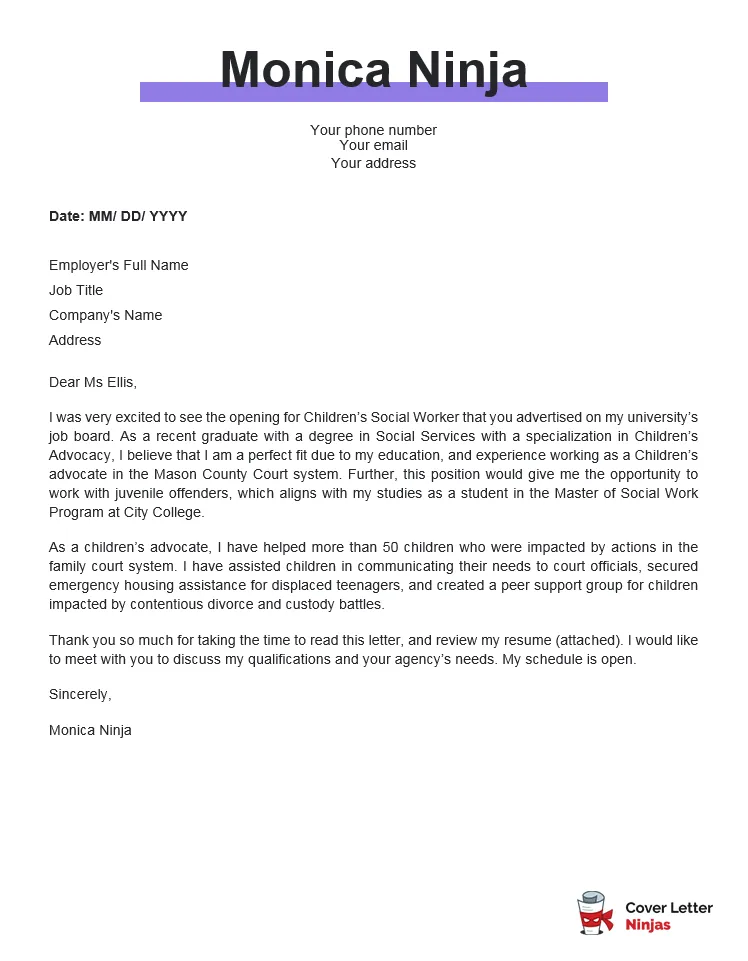
In the competitive field of social work, a compelling cover letter can be your most powerful tool. It is your first introduction to a potential employer, and the difference between getting an interview and having your application overlooked. A well-crafted cover letter highlights your qualifications, showcases your personality, and demonstrates your genuine interest in the position. This guide will equip you with the essential knowledge and strategies to create a cover letter that truly impresses and secures your next social work opportunity.
Why a Great Cover Letter Matters
A cover letter is far more than just a formality. It is your chance to personalize your application and make a lasting impression. While your resume provides a factual account of your skills and experience, the cover letter offers the opportunity to tell your story, connect with the reader, and showcase your unique value proposition. A great cover letter demonstrates your passion for social work, your understanding of the role, and your commitment to helping others. It allows you to stand out from other applicants and increases your chances of getting noticed by hiring managers.
The Importance of a Strong First Impression
Your cover letter is the first impression you make on a potential employer, and first impressions are critical. It sets the tone for the entire application. A well-written cover letter immediately captures the reader’s attention and piques their interest, making them eager to learn more about you. Conversely, a poorly written or generic cover letter can create a negative impression, causing your application to be rejected before it’s even fully considered. The opening paragraph is crucial; it should be concise, engaging, and clearly state the position you are applying for.
Highlighting Your Social Work Skills

Social work demands a specific set of skills that go beyond the typical job requirements. Your cover letter should emphasize these crucial skills, using concrete examples to illustrate your capabilities. Think about the areas in which you excel, such as empathy, active listening, critical thinking, problem-solving, and crisis intervention. When you demonstrate these skills with specific examples, it strengthens your application and makes your qualifications more tangible for the reader. Always try to tailor your skill descriptions to meet the needs listed in the job posting.
Key Skills to Showcase in Your Cover Letter
Social workers must possess a diverse set of skills to succeed in their roles. These are some essential skills to highlight: Communication, both written and verbal is very important; Empathy and compassion; Active listening; Critical thinking and problem-solving; Crisis intervention and de-escalation; Case management and documentation; Cultural sensitivity and awareness; Advocacy and collaboration; Time management and organizational skills. Providing instances of your strengths in these areas is important for a good first impression.
Emphasizing Your Relevant Experience
Your cover letter should not just list your experiences; it should show how those experiences align with the requirements of the job and the organization. Highlight your most relevant experiences, focusing on the responsibilities and achievements that showcase your skills. Use the STAR method (Situation, Task, Action, Result) to describe your experiences, providing context, your role, the actions you took, and the positive outcomes you achieved. Quantify your achievements whenever possible; for example, ‘Successfully managed a caseload of 30 clients’.
Tailoring Your Cover Letter to the Job

Generic cover letters are easily identified and often disregarded. To make a strong impression, tailor your cover letter to each job application. Carefully review the job description and identify the key requirements and desired qualifications. Then, modify your cover letter to address these specific points, demonstrating that you have the skills and experience the employer is seeking. Personalize the letter by mentioning the organization by name and referencing specific programs or initiatives that resonate with you. This level of customization shows that you have genuinely researched the role and organization.
Researching the Organization
Before you start writing, take the time to research the organization. Visit their website, read their mission statement, and learn about their values, programs, and services. Understanding the organization’s goals and culture will help you align your cover letter with their needs. Look for information about their clients, the communities they serve, and any current projects or initiatives. This research allows you to demonstrate your genuine interest and tailor your letter to highlight the aspects of your experience that are most relevant to their work.
Customizing Your Letter for Each Application
Customization involves more than just changing the organization’s name. Tailor your letter to address the specific requirements of the job description. Use keywords and phrases from the job posting to show that you have the skills and experience they are seeking. Highlight any relevant accomplishments or experiences that align with the job’s responsibilities. Briefly explain why you are a good fit for the role. By demonstrating your understanding of the job requirements and your ability to meet them, you increase your chances of getting an interview.
Structuring Your Cover Letter Effectively

A well-structured cover letter is easy to read and effectively communicates your message. Follow a standard format that includes an opening paragraph, body paragraphs, and a closing paragraph. Use clear and concise language, making sure to avoid jargon or overly complex sentences. Aim for a professional tone throughout the letter, using correct grammar and spelling. Break up large blocks of text into smaller paragraphs to improve readability. The layout should be clean and organized, with proper spacing and formatting to enhance its overall appeal.
Crafting a Compelling Opening
Your opening paragraph is your chance to grab the reader’s attention and set the tone for the rest of your letter. Start by clearly stating the position you are applying for and where you saw the job posting. Briefly introduce yourself and highlight your most relevant qualifications or experience. Make sure to express your enthusiasm for the opportunity and your knowledge of the organization. Keep it concise and engaging, and ensure that it immediately captures the reader’s interest. Make it clear why you are the ideal candidate.
Developing Strong Body Paragraphs
The body paragraphs are where you expand on your qualifications and experiences. Use these paragraphs to showcase your skills, provide specific examples, and demonstrate your value. Each paragraph should focus on a specific point or skill, supporting it with evidence from your work history. Tailor the content to match the job requirements, emphasizing the experiences and achievements that are most relevant to the position. Use action verbs to describe your responsibilities and accomplishments, and quantify your achievements whenever possible to demonstrate your impact.
Writing a Powerful Closing

Your closing paragraph should reiterate your interest in the position and express your enthusiasm for the opportunity. Thank the reader for their time and consideration. Reiterate your qualifications and why you are a great fit. End with a call to action, such as requesting an interview or expressing your eagerness to discuss your qualifications further. Provide your contact information, including your phone number and email address. The tone should be confident and professional, leaving the reader with a positive impression and a clear understanding of how to contact you.
Showcasing Your Passion and Motivation
Social work is more than just a job; it’s a calling. Your cover letter should reflect this passion. Express your genuine interest in the field and your commitment to helping others. Discuss the specific aspects of social work that inspire you and motivate you to excel. Share your career goals and how this position aligns with them. By conveying your genuine passion for social work, you will demonstrate to employers that you are not just qualified, but also deeply committed to making a positive impact on the lives of your clients and the community.
Demonstrating Your Commitment to Social Work
Highlight your commitment to the values and ethics of social work. Showcase your understanding of social justice, client empowerment, and cultural competence. Mention your experience working with diverse populations and your dedication to promoting inclusivity. You can discuss any volunteer work, internships, or other experiences that demonstrate your dedication to helping others. By emphasizing your commitment to social work, you reassure employers that you align with their mission and values, increasing your chances of being a great addition to their team.
Using Action Verbs to Impress

Action verbs make your cover letter more dynamic and engaging. Start your sentences with strong action verbs to describe your responsibilities and achievements. Examples include ‘managed’, ‘coordinated’, ‘developed’, ‘implemented’, ‘facilitated’, ‘advocated’, ‘assessed’, ‘counseled’, and ‘collaborated’. Using action verbs shows that you are proactive, results-oriented, and capable of making an impact. This makes your accomplishments more vivid and makes it easier for employers to understand your contributions.
Boosting Your Cover Letter with Powerful Words
Select words that add impact to your letter and make it more persuasive. Use words that convey your skills, such as ‘proficient’, ’experienced’, ‘skilled’, and ‘dedicated’. When describing your accomplishments, use words like ‘achieved’, ‘improved’, ’exceeded’, and ’transformed’. Use language that conveys empathy and understanding. Choose words that emphasize your commitment to the field and your ability to make a positive impact. These words make your writing more compelling and grab the reader’s attention.
Proofreading and Editing Your Cover Letter
Before you submit your cover letter, thoroughly proofread and edit it to ensure that it is free of errors. Check for spelling mistakes, grammatical errors, and typos. Read the letter aloud to catch any awkward phrasing or inconsistencies. Have someone else review your cover letter to get a fresh perspective and catch any mistakes you might have missed. A polished, error-free cover letter demonstrates attention to detail and professionalism, making a positive impression on potential employers.
Ensuring Accuracy and Professionalism

Accuracy and professionalism are essential. Double-check all the contact information, including the employer’s name, title, and address. Verify that the job title is correct and that you are addressing the letter to the appropriate person. Use a professional tone throughout your letter. Avoid slang, informal language, and overly casual phrasing. Maintain a clean and organized format, using clear fonts, consistent spacing, and proper alignment. A professional cover letter gives the impression that you take the job seriously and understand the importance of details.
Examples of Effective Cover Letter Phrases
Incorporating strong phrases can enhance your cover letter. Here are a few examples: ‘I am writing to express my keen interest’; ‘I am excited about the opportunity’; ‘My experience aligns perfectly with the requirements’; ‘I am passionate about assisting vulnerable populations’; ‘I am a highly motivated and dedicated social worker’. ‘In my previous role, I successfully…’ ‘I am confident that my skills and experience will enable me to…’ These phrases help to show the employer that you are the right candidate.
By following these guidelines, you can create a compelling cover letter that showcases your skills, highlights your experience, and demonstrates your passion for social work. A well-crafted cover letter significantly increases your chances of securing an interview and ultimately, landing your dream job. Remember to tailor each cover letter to the specific job and organization. Good luck with your job search!