Unveiling Cover Letter Secrets
A cover letter is your first chance to make a strong impression on a potential employer. For experienced professionals, a well-crafted cover letter is not just a formality; it’s a strategic tool that highlights your unique value proposition and demonstrates your understanding of the role and the company. This article unveils the secrets to writing a cover letter that not only gets you noticed but also secures you an interview. We’ll delve into five essential tips designed to help experienced professionals like you craft compelling cover letters that resonate with hiring managers. By following these guidelines, you can significantly increase your chances of landing your dream job and advancing your career. The goal is to move beyond the basics and focus on the strategies that truly set you apart from the competition.
Highlighting Your Achievements
Instead of simply listing your responsibilities, your cover letter should showcase your accomplishments. Focus on what you have achieved in previous roles, using specific examples to demonstrate your skills and abilities. This is your opportunity to stand out, to show the recruiter why they should choose you from among the many applicants. Avoid generic statements; instead, provide evidence of your success. Detail the impact of your work; for instance, did you increase sales, improve efficiency, or lead a successful project? Quantifiable achievements are especially persuasive, as they provide concrete proof of your value.
Quantifying Your Accomplishments

Quantifying your accomplishments makes your claims more credible and impactful. Use numbers, percentages, and specific metrics to illustrate your successes. For example, instead of saying ‘Improved customer satisfaction,’ say ‘Increased customer satisfaction by 15% through implementation of a new feedback system.’ This level of detail not only grabs the reader’s attention but also provides tangible evidence of your abilities. Moreover, quantifying your achievements allows the hiring manager to easily assess the value you can bring to their organization. When possible, use data to support your claims. Did your actions result in a specific measurable gain for your previous employer? Make sure to highlight them.
Tailoring to the Job Description
A generic cover letter will likely end up in the digital bin. To truly impress a hiring manager, you must tailor your cover letter to the specific job description and the company. Carefully review the job requirements and identify the key skills and experiences the employer is seeking. Then, in your cover letter, address these requirements directly, providing examples from your background that demonstrate your relevant qualifications. Personalize your message by researching the company and explaining why you are interested in their specific mission and culture. The more you show that you understand the company’s needs and values, the more likely you are to make a positive impression and secure an interview.
Keywords and Relevance
In addition to tailoring your content, use keywords from the job description throughout your cover letter. Applicant Tracking Systems (ATS) scan cover letters for relevant keywords, so incorporating these terms can significantly improve your chances of getting past the initial screening phase. However, avoid keyword stuffing, which can make your cover letter sound unnatural and diminish its impact. Instead, integrate keywords naturally and contextually. Ensure the keywords are relevant to your skills and experience and that they align with the job requirements. The goal is to demonstrate that you not only possess the necessary qualifications but also understand the role and the company’s needs.
Showcasing Your Personality

While your cover letter should highlight your professional experience and qualifications, it should also allow your personality to shine through. Hiring managers want to get a sense of who you are as a person and whether you would be a good fit for their team. Use your cover letter to express your enthusiasm for the role, demonstrate your communication skills, and showcase your unique perspective. Use an authentic voice and tone, and try to inject a bit of personality into your writing. Remember, the goal is to make a memorable impression and encourage the hiring manager to learn more about you during an interview. Let your passion for your profession and the opportunity at hand be evident.
Tone and Style
The tone and style of your cover letter should be professional yet engaging. Write in a clear, concise manner, avoiding jargon or overly complex language that could confuse the reader. Use active voice and strong verbs to make your writing more dynamic and impactful. Ensure your tone is consistent throughout the letter, reflecting your personality and the company’s culture. Tailor your style to suit the industry and the specific role you are applying for. For example, a cover letter for a creative position might allow for a more innovative style, while a cover letter for a financial role would require a more formal approach. Above all, be authentic and let your personality shine through while maintaining a professional demeanor.
Formatting for Impact
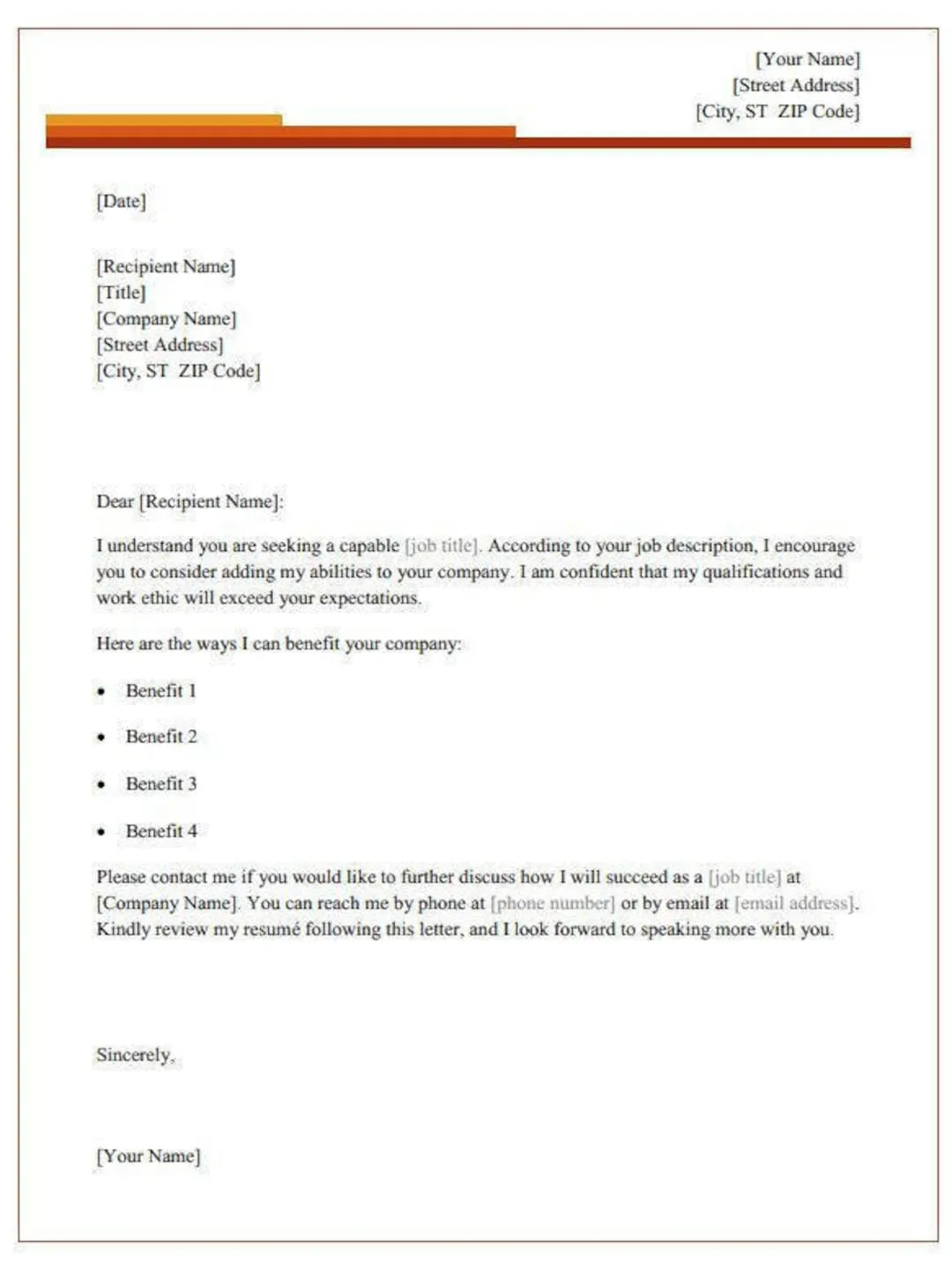
The formatting of your cover letter can significantly impact its readability and overall impression. A well-formatted cover letter is easy to read and visually appealing, which increases the likelihood that the hiring manager will read it thoroughly. Use a clean, professional font, such as Times New Roman, Arial, or Calibri, and ensure the font size is easy to read (typically 11 or 12 points). Use white space effectively to break up large blocks of text and make your cover letter more visually appealing. Pay attention to margins, line spacing, and paragraph alignment to ensure a clean, organized layout. Remember, your cover letter is a reflection of your professionalism; present it as such.
Choosing the Right Format

The format you choose for your cover letter can influence the impact it has on the reader. There are several standard formats, each with its advantages. The most common formats include the block format (left-justified with no indents), the modified block format (where paragraphs are not indented but the sender’s information, date, and closing are right-justified), and the semi-block format (which includes indented paragraphs). Choose the format that best suits your style and the specific requirements of the job application. Consider how each format aligns with the company’s style and culture, and adapt your letter accordingly. Ensuring your formatting is consistent and professional will make a significant impact on the reader, helping to make your application stand out from the crowd.
Formatting Tips
Beyond choosing a format, there are other formatting tips to consider. Keep your cover letter concise; aim for one page unless specifically instructed otherwise. Use bullet points to highlight key achievements and skills, making them easily scannable for the reader. Ensure your contact information is clearly visible and includes your phone number, email address, and LinkedIn profile URL. Use a professional-looking letterhead if you have one. Save your cover letter as a PDF file to preserve its formatting and prevent compatibility issues across different devices and operating systems. Carefully formatted letters demonstrate professionalism and attention to detail, crucial for experienced professionals.
Proofreading and Editing
Before submitting your cover letter, proofread and edit it meticulously. Errors in grammar, spelling, and punctuation can undermine your credibility and give the impression that you are careless or inattentive to detail. Take the time to review your cover letter multiple times, checking for any errors and making necessary corrections. Consider reading your cover letter aloud to catch any awkward phrasing or grammatical mistakes. Remember, your cover letter is a reflection of your written communication skills. Make sure it presents you in the best possible light. In addition, ensure the writing flows well. The information is properly arranged, with concise sentences to make your message clear and easy to understand.
Checking Grammar and Spelling

Grammatical and spelling errors can be detrimental to your application. Use a grammar and spell-checking tool to identify any obvious errors. However, don’t rely on these tools alone; they may not catch all errors. Check for common mistakes, such as subject-verb agreement issues, incorrect use of pronouns, and improper punctuation. Review for typos and misspellings. Have a friend, colleague, or career counselor review your cover letter. They can provide a fresh perspective and catch errors you may have missed. Your cover letter should be polished and error-free, demonstrating your commitment to excellence and attention to detail.
Seeking Feedback
Requesting feedback from trusted sources is a crucial step in the proofreading and editing process. Ask friends, colleagues, or career counselors to read your cover letter and provide constructive criticism. Their feedback can help you identify areas for improvement, such as unclear phrasing, awkward sentences, or missing information. Be open to suggestions and willing to make revisions based on the feedback you receive. Seeking feedback from multiple sources can provide a well-rounded perspective and help you create a stronger, more effective cover letter. The goal is to present the best possible version of your cover letter. Having multiple perspectives helps make this possible.
Call to Action
Concluding your cover letter with a clear call to action is essential. After providing a concise and compelling overview of your skills, experience, and interest in the role, explicitly state your desire for an interview. Express your enthusiasm for the opportunity and your confidence in your ability to contribute to the company’s success. Include your contact information and make it easy for the hiring manager to reach you. A well-crafted call to action increases your chances of being contacted for an interview. Remember to make your call to action specific to the job and company, and make it clear that you are eager to discuss how you can contribute.
Expressing Enthusiasm

Expressing enthusiasm for the role and the company is a powerful way to leave a lasting impression. Use your cover letter to convey your genuine interest in the opportunity and your excitement about the prospect of joining the team. Highlight the aspects of the job that excite you and demonstrate how your skills and experience align with the company’s values and goals. Expressing enthusiasm sets you apart from other candidates. Hiring managers want to hire someone who is passionate about the role and genuinely excited about the opportunity. Show them you are that person; let your genuine passion be apparent, and make it clear that you are eager to take the next steps.