Crafting a Compelling Cover Letter
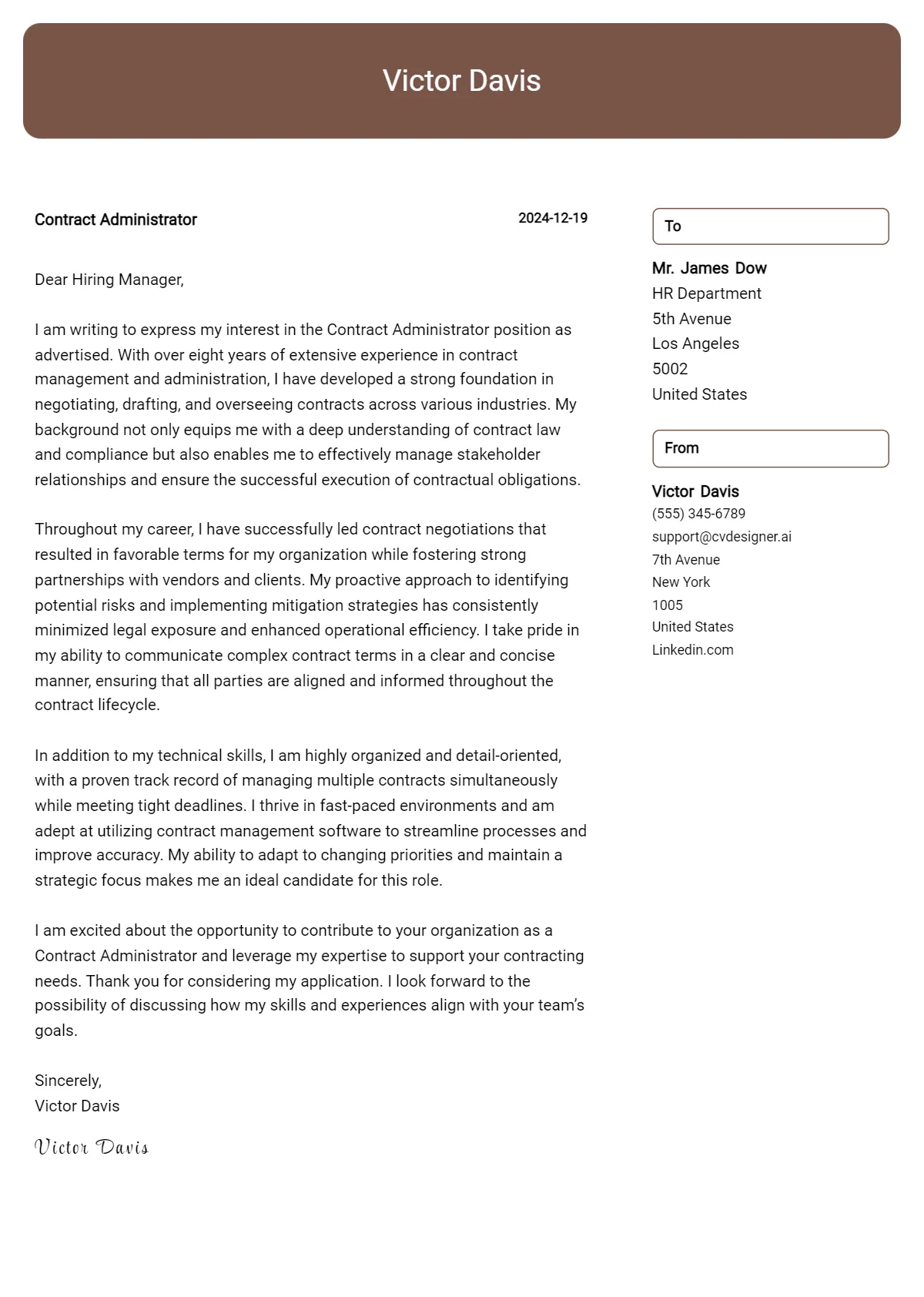
A cover letter is your first opportunity to make a strong impression on a potential employer. For a contract administrator role, it’s crucial to go beyond simply listing your qualifications; your cover letter must actively demonstrate your understanding of the role and your ability to meet the specific needs of the hiring company. This guide will help you unlock the secrets to crafting a cover letter that stands out, showcasing your skills and experience in a way that gets you noticed and, ultimately, hired. Remember, a well-crafted cover letter is not just a formality; it is a powerful marketing tool.
Understanding the Role of a Contract Administrator
Before you begin writing, it’s essential to grasp the core responsibilities and expectations of a contract administrator. This understanding informs every aspect of your cover letter, from the skills you highlight to the language you use. Contract administrators play a critical role in managing contracts throughout their lifecycle, ensuring compliance, mitigating risks, and facilitating smooth operations. Understanding this core function will allow you to tailor your letter to the specific job requirements and showcase your relevance to the position.
Key Responsibilities of a Contract Administrator

Contract administrators are typically responsible for a range of duties, including contract drafting, negotiation, and execution. They manage contract renewals, monitor compliance, and resolve disputes. They often maintain detailed records, ensuring all contractual obligations are met. They also collaborate with various stakeholders, including legal, procurement, and project management teams. Demonstrating an understanding of these responsibilities in your cover letter is paramount.
Highlighting Relevant Skills and Experience
Your cover letter is a chance to showcase the skills and experience that make you an ideal candidate. It’s not enough to simply list your qualifications; you must demonstrate how your skills align with the specific requirements of the job. This section focuses on the key skills to highlight, how to quantify your achievements, and the best ways to present your experience.
Essential Skills for Contract Administrators
Contract administrators must possess a diverse set of skills, including strong communication, negotiation, and analytical abilities. Attention to detail is critical, as is the ability to manage multiple contracts simultaneously. Proficiency in contract management software and familiarity with relevant legal frameworks are also vital. Your cover letter should clearly and concisely illustrate your command of these skills.
Quantifying Achievements in Your Cover Letter

Rather than just stating what you’ve done, quantify your accomplishments. For instance, instead of saying ‘Managed contracts,’ say ‘Managed a portfolio of 50+ contracts with a combined value of $X million, ensuring 100% compliance.’ This approach provides concrete evidence of your capabilities and impact. Use numbers and data to highlight your successes and demonstrate your value to the employer.
Structuring Your Cover Letter for Maximum Impact
The structure of your cover letter is just as important as its content. A well-organized letter is easy to read and allows the hiring manager to quickly grasp your qualifications. This section details effective formatting techniques and the key sections to include, ensuring your letter is both impactful and professional. Consider using a clean, professional font and adequate spacing to enhance readability.
Formatting Your Cover Letter
Your cover letter should be well-formatted, with clear headings, concise paragraphs, and appropriate spacing. Use a professional font like Arial or Times New Roman, and maintain consistent margins. Keep the letter to one page whenever possible, focusing on the most relevant information. Avoid using excessive bolding or italics, and ensure the overall presentation is clean and easy to read, conveying professionalism.
Key Sections to Include

Your cover letter should typically include an introduction, a body that highlights your relevant skills and experience, and a conclusion that reiterates your interest and expresses your gratitude. In the introduction, state the position you are applying for and how you learned about it. The body should focus on your qualifications and how they align with the job requirements. Finally, the conclusion should reiterate your enthusiasm and offer to provide further information.
Showcasing Your Knowledge of Contract Law
A strong understanding of contract law is essential for contract administrators. Your cover letter should subtly demonstrate this knowledge, highlighting your familiarity with relevant legal principles and your ability to interpret and apply them. Mention any relevant legal education or certifications you possess.
Demonstrating Attention to Detail
Contract administration demands meticulous attention to detail. In your cover letter, showcase your ability to identify and address potential issues. Proofread your letter carefully for grammar, spelling, and punctuation errors. Demonstrate that you can accurately interpret and apply legal and contractual terms by using precise language and avoiding ambiguity. Your cover letter itself should serve as proof of your attention to detail.
Mentioning Specific Contract Types

If the job description mentions specific types of contracts, be sure to highlight your experience with those types. For instance, if the position involves government contracts, mention your familiarity with relevant regulations and procedures. If the role involves IT contracts, mention your experience with software licensing or service agreements. Tailor your letter to align with the specific requirements of the role.
Tailoring Your Cover Letter to the Job Description
Avoid using a generic cover letter. Take the time to tailor each letter to the specific job you are applying for. This involves researching the company, understanding the job requirements, and highlighting the skills and experiences that align most closely with the role. Customization is crucial for making a strong impression.
Researching the Company and the Hiring Manager
Before you start writing, research the company and the hiring manager. Visit the company website, read news articles, and review their social media profiles. If possible, find out the name of the hiring manager and address your letter to them directly. This level of personalization demonstrates your genuine interest in the role and the company.
Matching Your Skills to the Job Requirements

Carefully review the job description and identify the key skills and qualifications the employer is seeking. Then, in your cover letter, explicitly state how your skills and experience meet those requirements. Use keywords from the job description and provide specific examples to support your claims. Focus on what the employer is looking for and demonstrate how you can fulfill those needs.
Finalizing and Proofreading Your Cover Letter
The final steps in the process are critical for ensuring your cover letter is polished and professional. Proofreading and refining your letter will enhance your chances of making a positive impression. Take the time to review your work meticulously.
Proofreading for Grammar and Spelling Errors
Proofread your cover letter multiple times to catch any errors in grammar, spelling, or punctuation. Use spell-check and grammar-check tools, but don’t rely on them entirely. Read your letter aloud to identify awkward phrasing or grammatical errors. Have a friend or colleague review your letter as well; a fresh pair of eyes can often spot mistakes you might have missed.
Ensuring a Professional Tone

Maintain a professional and respectful tone throughout your cover letter. Use formal language and avoid slang or colloquialisms. Be enthusiastic, but avoid sounding overly eager. Focus on your qualifications and how you can contribute to the company’s success. Your cover letter should project confidence, competence, and a genuine interest in the role.
By following these secrets, you can create a cover letter that impresses employers and significantly increases your chances of landing an interview for a contract administrator position. Remember to tailor your letter to each job, highlighting your relevant skills and experience. Good luck with your job search!