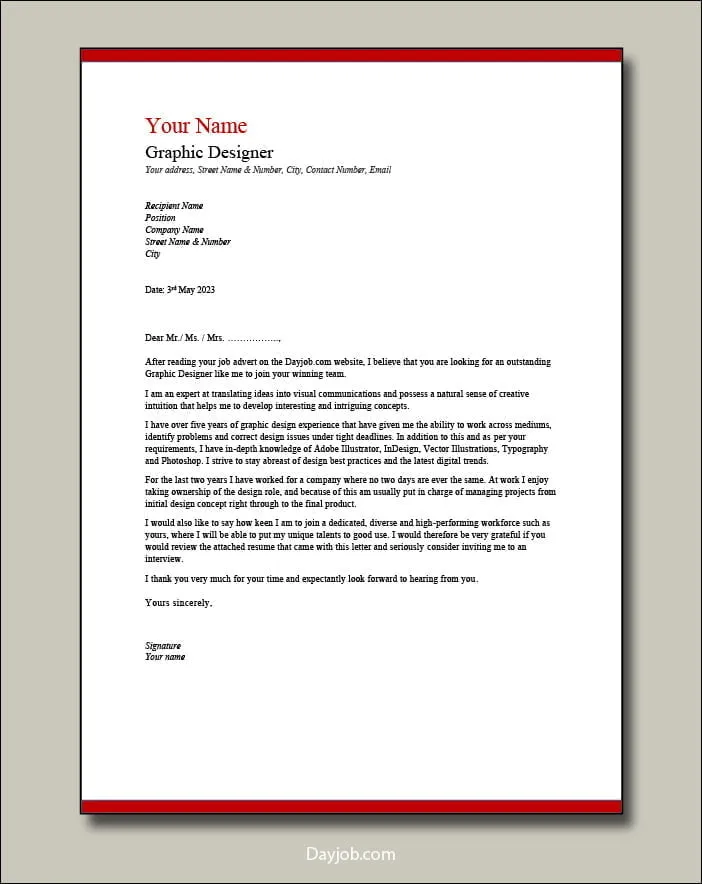
Crafting a Stellar Cover Letter
As a graphic designer, your portfolio is undoubtedly your most valuable asset. But a well-crafted cover letter can significantly elevate your application, providing context and personality to your impressive design work. It’s your chance to speak directly to the hiring manager, to highlight your specific skills, and to demonstrate your genuine interest in the role and the company. Think of it as the gateway to securing an interview, the first step in showcasing your talent in person. A strong cover letter isn’t just a formality, it’s a strategic opportunity to make a lasting impression and set yourself apart from other candidates.
Understanding the Importance of a Cover Letter
In a competitive field like graphic design, where visual skills are paramount, a cover letter offers the perfect opportunity to explain your thought process, design philosophy, and how your skills align with the specific job requirements. It adds depth to your application, allowing you to go beyond simply presenting your work. A cover letter showcases your communication skills, your ability to articulate your ideas, and your understanding of the design industry. It is your chance to demonstrate your passion and enthusiasm, which often can be the deciding factor.
Highlighting Relevant Skills

When crafting your cover letter, it’s crucial to tailor it to the specific job and company. Carefully review the job description and identify the key skills and qualifications they’re looking for. Then, highlight the skills you possess that directly align with those requirements. Instead of just listing skills like ‘proficient in Adobe Creative Suite,’ provide concrete examples of how you’ve used those skills to achieve results. For example, ‘Utilized Photoshop and Illustrator to create marketing campaigns that increased brand engagement by 20%’. This demonstrates not just skill, but also your ability to deliver tangible results.
Showcasing Your Portfolio
Your portfolio is your design resume, and your cover letter is its introduction. Mention specific projects from your portfolio that are relevant to the job you’re applying for. Briefly describe the projects, focusing on your role, the challenges you faced, and the results you achieved. For example, ‘In my work for [Client], I designed a new logo and branding package that resulted in a 15% increase in their online sales.’ Direct the hiring manager to the specific pieces in your portfolio, making it easy for them to see your work. This helps them understand the connection between your skills and the requirements of the job.
6 Cover Letter Secrets to Impress
Tailor Your Letter

Generic cover letters are easily spotted and often end up in the rejection pile. Customize each cover letter to the specific company and role you’re applying for. Research the company, understand their brand, and demonstrate that you understand their needs. Mention specific projects you admire or explain why you’re interested in working for them. This shows you’ve put in the effort and are genuinely interested in the opportunity. Demonstrate how your skills and experience align with their specific requirements.
Show, Don’t Just Tell
Instead of stating generic qualities, use concrete examples to showcase your skills and accomplishments. Instead of saying, ‘I’m a creative designer,’ describe a project where you developed a unique concept that solved a specific problem. Use action verbs and quantifiable results whenever possible. This approach makes your letter more compelling and demonstrates your ability to deliver results, setting you apart from applicants who make vague claims.
Quantify Your Achievements
Whenever possible, use numbers to demonstrate the impact of your work. Instead of saying ‘Improved website traffic,’ say ‘Increased website traffic by 30% through strategic design improvements.’ Quantifiable achievements make your claims more credible and show the value you bring to the table. Use data to back up your accomplishments and highlight the measurable results you’ve achieved in past projects.
Emphasize Design Thinking

Graphic design is not just about aesthetics, it’s also about solving problems and communicating ideas. Show the hiring manager that you understand the design process. Explain your design thinking approach, from understanding the client’s needs to developing creative solutions. Show how your designs solve specific business challenges and contribute to the overall goals of the project. This is essential to show your value.
Proofread Meticulously
Typos and grammatical errors can undermine your credibility and detract from your professional image. Proofread your cover letter carefully before submitting it. Use spell-check, but also read it aloud to catch any awkward phrasing or mistakes that spell-check might miss. Ask a friend or colleague to review your letter as a second pair of eyes can catch errors you might miss. A polished, error-free cover letter demonstrates your attention to detail and professionalism.
Formatting and Structure
A well-formatted cover letter is easy to read and makes a positive impression. Use a professional font, such as Arial or Times New Roman, and ensure your letter is well-spaced with clear paragraphs. Keep the letter concise, aiming for no more than one page. Use headings and bullet points to break up text and make it easier for the reader to scan. This showcases your ability to create visually appealing and organized communication, which is vital in design jobs.
Formatting for Readability

The formatting of your cover letter impacts readability. Make sure the design complements the content, and your letter has a clear structure, and easy to follow. Use white space effectively, and create a visual hierarchy using headings and bullet points. Consider using a layout that aligns with your personal brand, but always maintain professionalism.
Choosing the Right Tone
Your cover letter’s tone should be professional and enthusiastic. Use language that reflects your personality but remains appropriate for a professional setting. Avoid slang and overly casual language. The tone should complement your portfolio, conveying your voice.
Call to Action
End your cover letter with a clear call to action. State your interest in the position, and make it easy for the hiring manager to contact you. Include your contact information, and thank them for considering your application. Showing clear instructions can help increase your chances.
Expressing Enthusiasm

Demonstrate genuine enthusiasm for the role and the company. Show the hiring manager that you’ve researched the company and are excited about the opportunity to contribute your skills. This enthusiasm can go a long way in securing an interview.
Closing the Letter
Thank the hiring manager for their time and consideration. Reiterate your interest in the position, and make it clear that you’re available for an interview. Include your contact information, making it easy for them to get in touch. A strong closing reinforces your desire and readiness for the role.