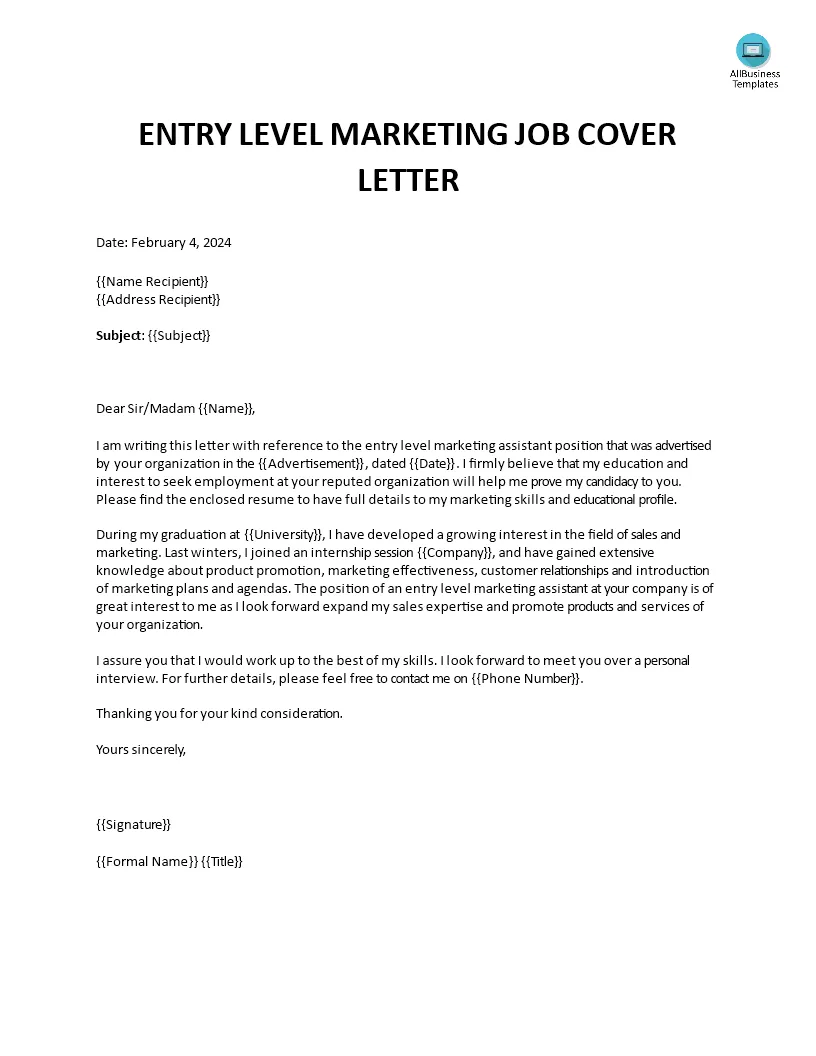
Why You Need a Standout Cover Letter
In the competitive job market, especially for entry-level positions, a cover letter is your first opportunity to make a lasting impression. It’s a chance to go beyond the basic information provided in your resume and showcase your personality, skills, and enthusiasm for the role. A well-crafted cover letter can significantly increase your chances of getting an interview. Think of it as your personal marketing document, designed to capture the hiring manager’s attention and convince them you’re the right fit. Without a compelling cover letter, your resume might get overlooked, even if you possess the necessary qualifications. This is where you can differentiate yourself from other applicants and demonstrate why you are the ideal candidate, setting the stage for a successful job search.
What to Include in Your Entry-Level Cover Letter
An effective entry-level cover letter requires a strategic approach to highlight your value. Your cover letter needs to create a narrative that sells your skills and passion. While the specific content will vary depending on the job, some elements are universal. Start by clearly stating the position you’re applying for and where you found the listing. Then, delve into your skills and experiences, tailoring your examples to match the job requirements. The body of the letter should showcase your understanding of the company and the role, demonstrating your genuine interest. Finally, always include a call to action, expressing your eagerness for an interview and providing your contact information for easy reach. The overall objective is to show that you have the potential, the interest, and the drive to succeed in the role.
Contact Information & Date

Begin your cover letter with your contact information in the top left corner. Include your full name, phone number, email address, and LinkedIn profile URL (if applicable). Ensure that your contact details are up-to-date and professional. Below your contact information, include the date you are sending the letter. If you know the hiring manager’s name and contact details, place their information below the date. This immediately provides a sense of professionalism and attention to detail, setting the tone for the rest of the letter. This shows you are organized and prepared, crucial qualities for any entry-level position. Getting these basics right builds credibility.
The Right Salutation for Your Cover Letter
The salutation is your first point of contact with the hiring manager. It sets the tone for your letter and helps you make a good first impression. If possible, address the hiring manager by name. This shows that you have taken the time to research the company and the role. Use “Dear Mr./Ms./Mx. [Last Name]” If you cannot find the hiring manager’s name, use a general greeting like “Dear Hiring Manager” or “Dear [Company Name] Hiring Team.” Avoid generic greetings like “To Whom It May Concern,” as they can come across as impersonal. Always ensure you spell the person’s name correctly, as this is a simple way to demonstrate attention to detail and professionalism. Choosing the right salutation is key to capturing the reader’s attention from the very beginning.
Grab Attention with a Strong Opening Paragraph
Your opening paragraph is your first opportunity to grab the hiring manager’s attention. Begin by stating the specific position you are applying for and where you found the job posting. Immediately follow this with a compelling hook that showcases your enthusiasm and demonstrates your understanding of the company’s needs. Briefly highlight your key skills or experiences that align with the job requirements. Avoid generic phrases. Instead, aim for a concise and enthusiastic statement that grabs the reader’s interest. This is your chance to make a strong first impression and compel the reader to continue reading. For instance, start with something like: “I am writing to express my keen interest in the Marketing Assistant position advertised on [Platform]. With my strong communication skills and proven ability to manage social media accounts, I am eager to contribute to [Company Name]’s marketing efforts.” Or you can highlight a specific accomplishment in a previous internship or academic project that aligns with the job requirements.
Highlight Your Skills & Experience

The body of your cover letter is where you elaborate on your skills and experience, tailoring them to the job requirements. Choose specific examples from your academic projects, internships, or volunteer work that demonstrate your abilities. Focus on transferable skills like communication, problem-solving, teamwork, and leadership. Use the STAR method (Situation, Task, Action, Result) to describe your achievements. First, describe the situation, the task you were assigned, the action you took, and the positive results you achieved. Quantify your accomplishments whenever possible. For example, instead of saying “Improved customer satisfaction,” state “Increased customer satisfaction by 15% through implementing a new feedback system.” This quantifiable data adds significant value and demonstrates the impact of your contributions. Always align your skills with the job description keywords, making it easy for the hiring manager to see you are a good fit.
Showcase Your Enthusiasm & Personality
Entry-level cover letters are a great place to let your personality shine through. While maintaining professionalism, use a tone that reflects your enthusiasm for the role and the company. Show that you have researched the company and understand its mission, values, and culture. Mention something specific that resonates with you, whether it’s a particular project, a company initiative, or an aspect of their work environment. Tailor the letter to show that you have a genuine interest in the company and the role. Inject a little bit of your personality to stand out, such as mentioning a relevant hobby or an interesting skill that isn’t directly work-related. This helps the hiring manager get a sense of who you are as a person and how you might fit into their team, creating a connection beyond just your skills and qualifications.
Emphasize Your Value Proposition
Throughout your cover letter, emphasize what you bring to the table. Your value proposition is a concise summary of how you can benefit the company. Articulate how your skills and experiences align with the job requirements and what you can contribute. Focus on your potential and your eagerness to learn and grow within the organization. Show them the benefits of hiring you, not just what you want from the job. Mention how your skills will help the company meet its goals, solve problems, or improve efficiency. This shows the hiring manager that you are a valuable investment, not just another applicant. Highlight your understanding of the company’s goals and how you can support them. Focus on the positive impact you can make, such as increasing sales, improving customer satisfaction, or streamlining processes.
Closing Your Cover Letter: Call to Action

The closing paragraph of your cover letter is your final opportunity to leave a lasting impression and to prompt the hiring manager to act. Start with a statement of your enthusiasm for the position and reiterate your interest in the company. Express your eagerness to discuss your qualifications further and secure an interview. Include a clear call to action, such as stating, “I am eager to discuss how my skills and enthusiasm can benefit your team. I am available for an interview at your earliest convenience.” Thank the hiring manager for their time and consideration. Always include your contact information again to make it easy for them to reach you. Close your letter with a professional closing, such as “Sincerely” or “Best regards,” followed by your full name. A strong call to action is essential for encouraging the hiring manager to move forward with your application.
Formatting & Proofreading Your Cover Letter
Formatting and proofreading are crucial steps to ensure your cover letter is professional and error-free. Use a clear and easy-to-read font, such as Times New Roman, Arial, or Calibri, and keep the font size between 10 and 12 points. Use standard margins (1 inch on all sides) and single-space your text, with a blank line between paragraphs. Ensure your letter is well-structured and easy to follow. Proofread your cover letter carefully for any grammatical errors, spelling mistakes, and typos. Ask a friend, family member, or career counselor to review your letter as a fresh set of eyes can often catch mistakes that you might miss. Poor formatting and errors create a negative impression and can undermine your credibility. Always tailor your cover letter to the specific job you are applying for, making it relevant and engaging. A well-formatted and error-free cover letter demonstrates attention to detail and professionalism.